Posted in 2025-2026, curation, Visit

Macklean and Kleeman

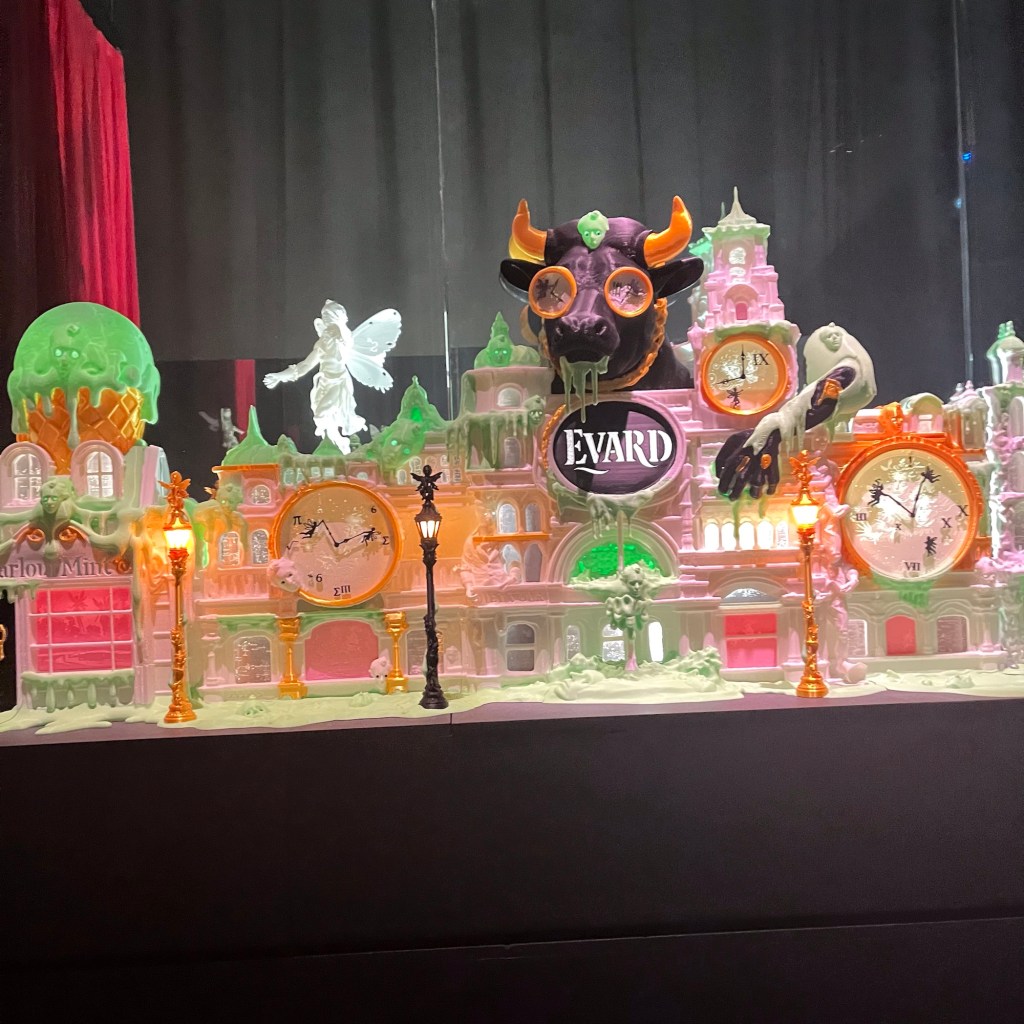
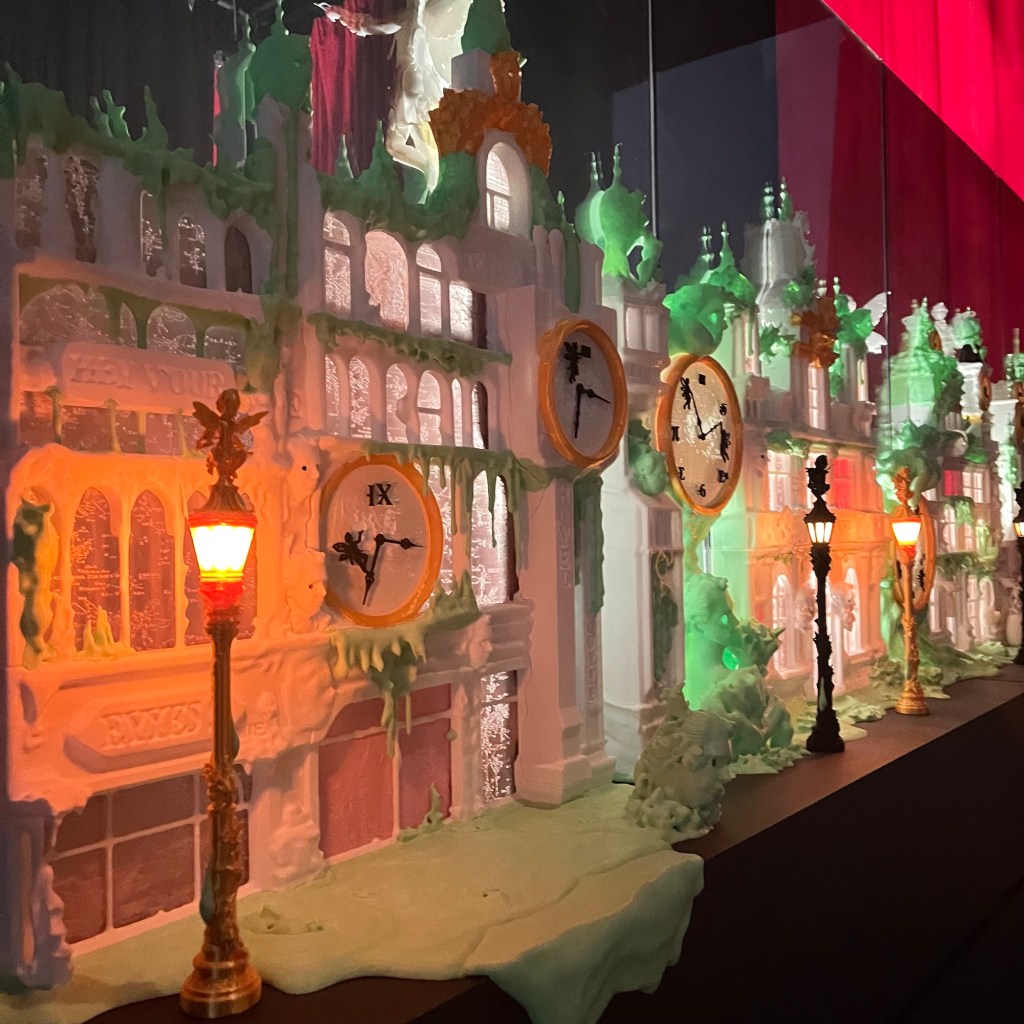
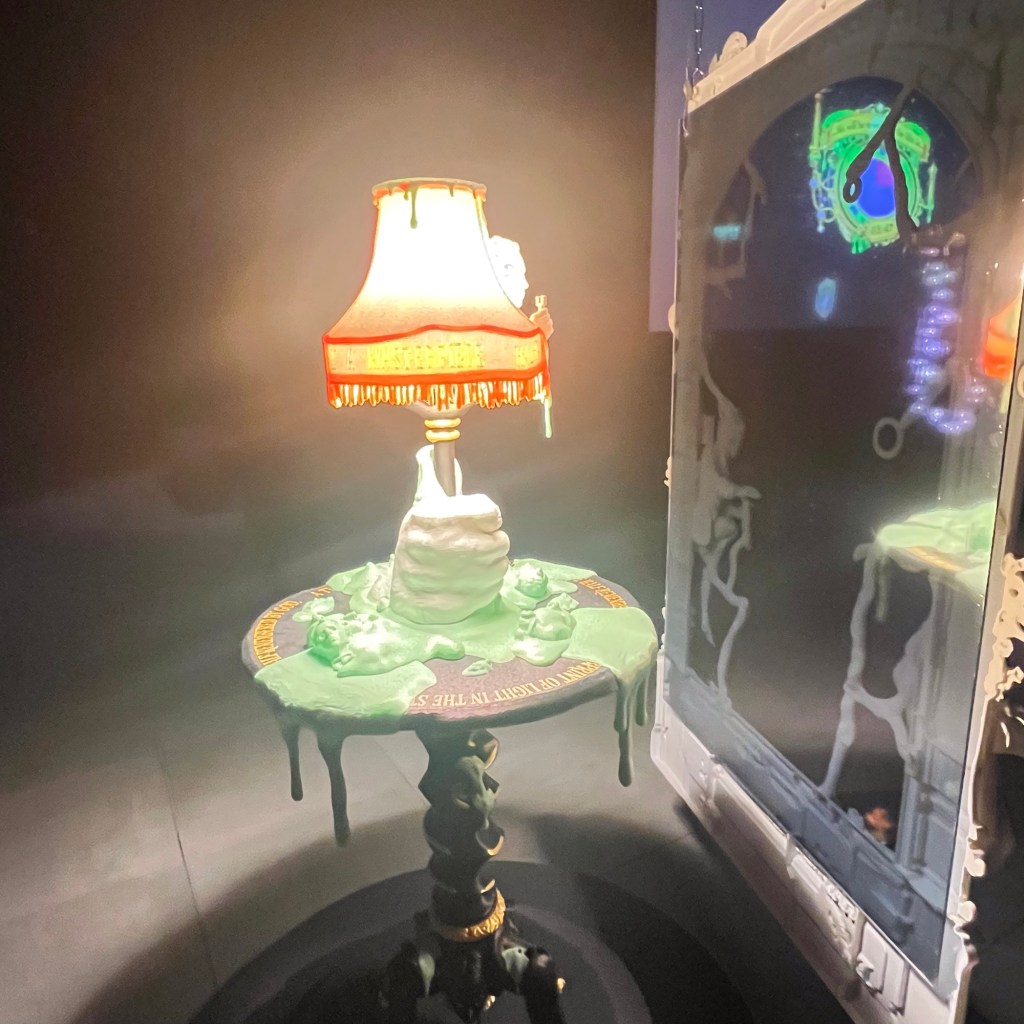
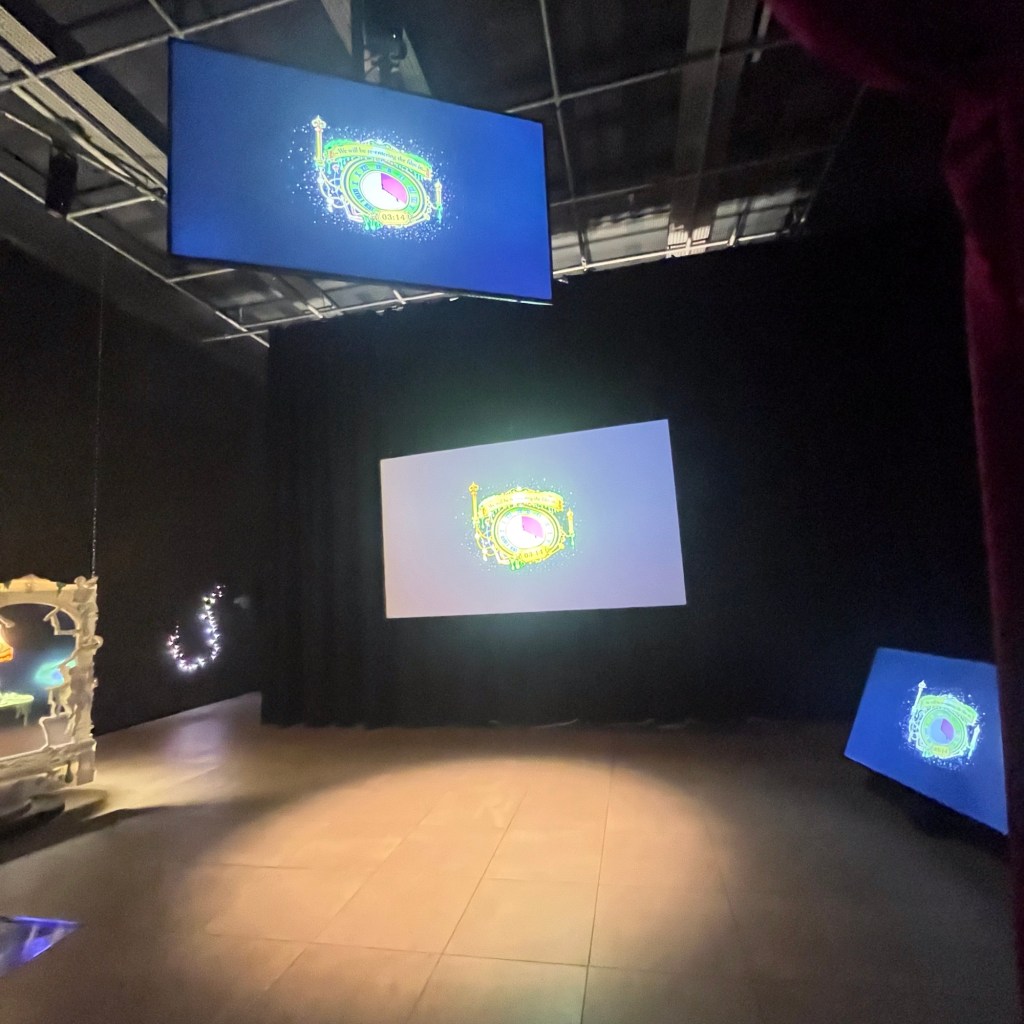
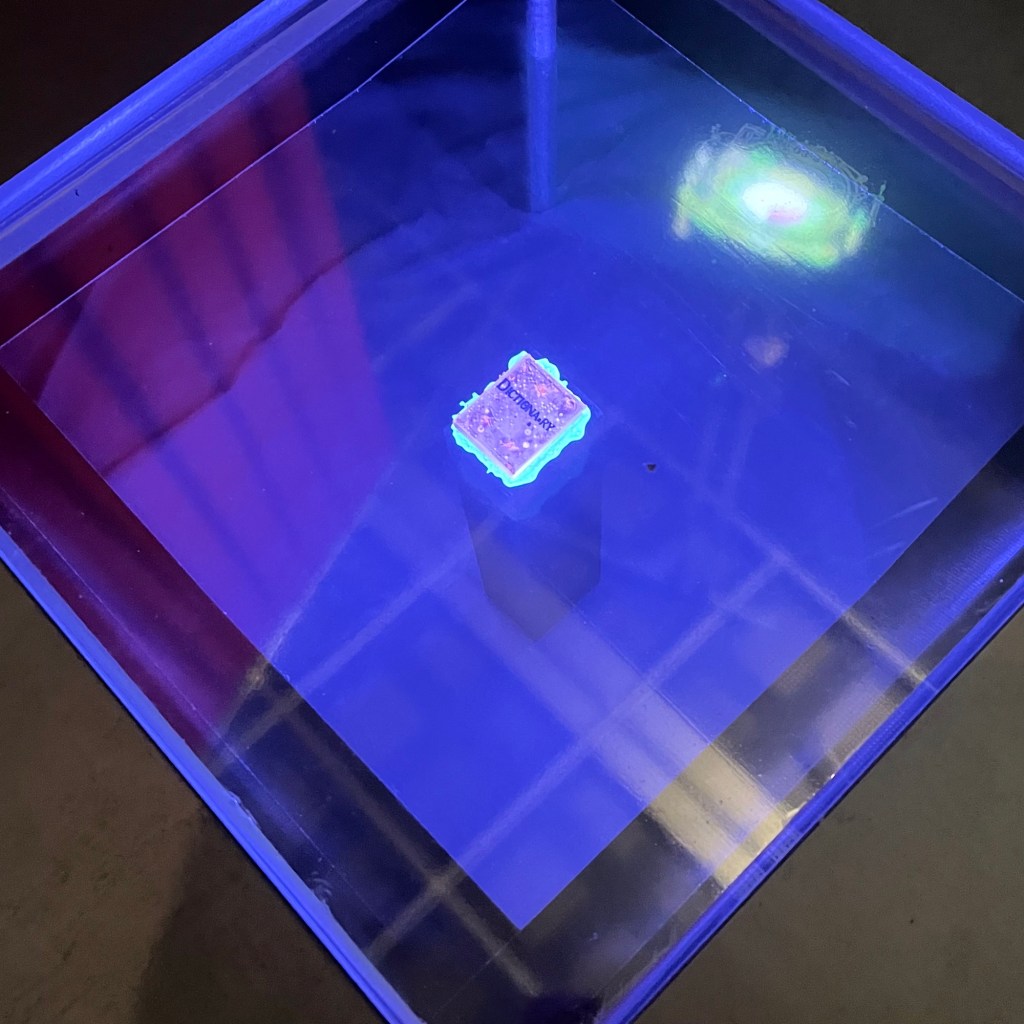
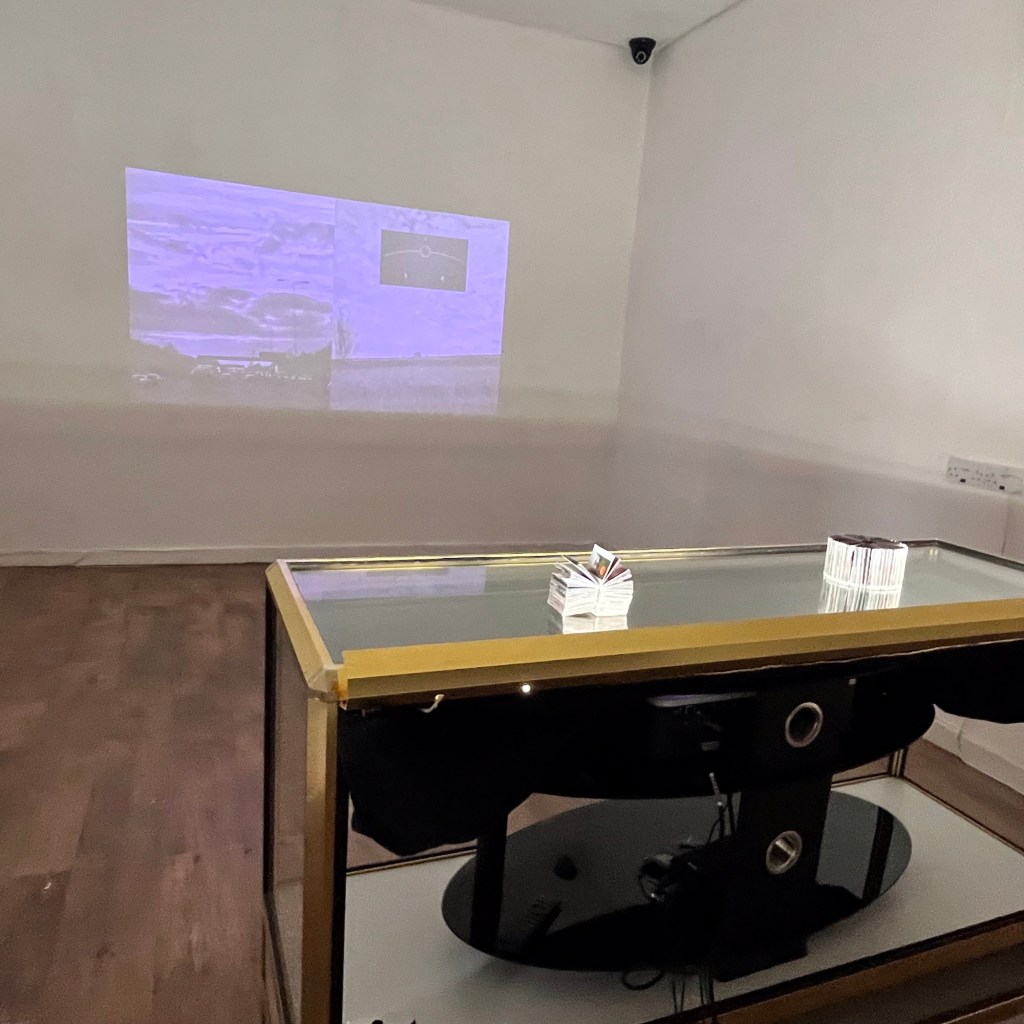
Went to visit FACT today. Jonathan recommended this exhibition by Rachel Maclean. I had heard of Rachel Maclean a long time ago, but then completely forgot about her, maybe because I had only experienced her work through Instagram. But seeing the work in person was completely different, a much deeper and more powerful experience.

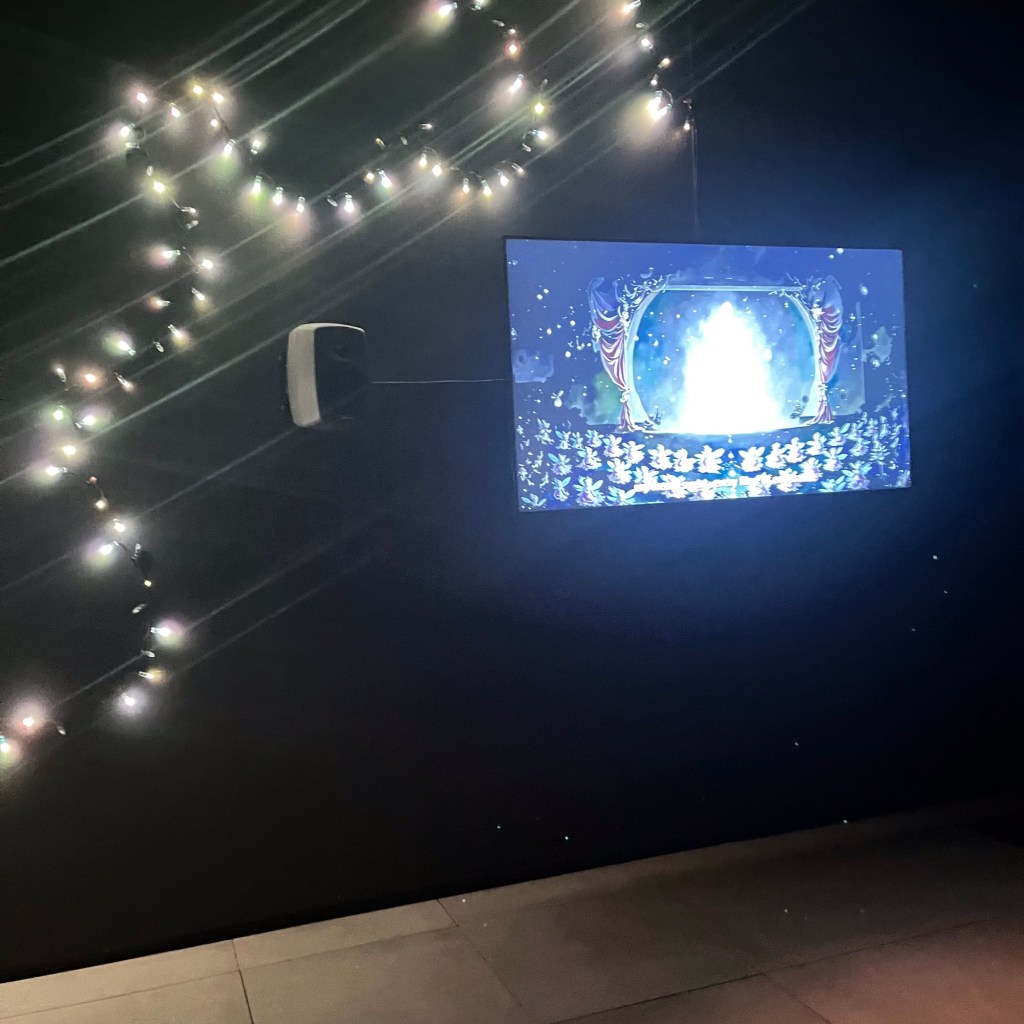
It was incredible. The story, the switching between the screens and the lights, the sculptures, and the sound all made you feel part of the installation. Moving from one room to another, following sounds and light, your whole body became involved. Everything asked you to stay alert because you did not want to miss anything. I’m so grateful for this experience. It made me realise how much difference there is when you experience an artist’s work in person, and also how much curation and installation can add to the work itself. You are building an experience, not just showing a piece of work.
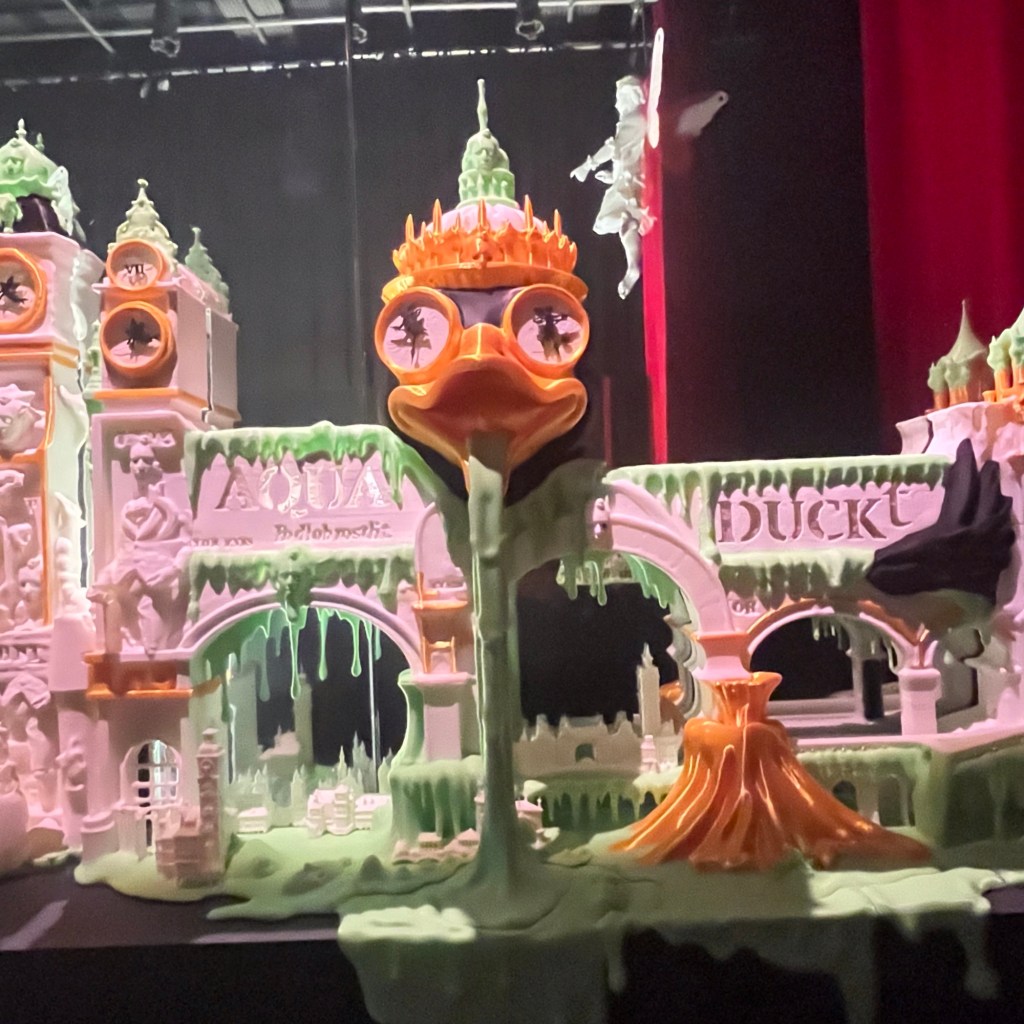
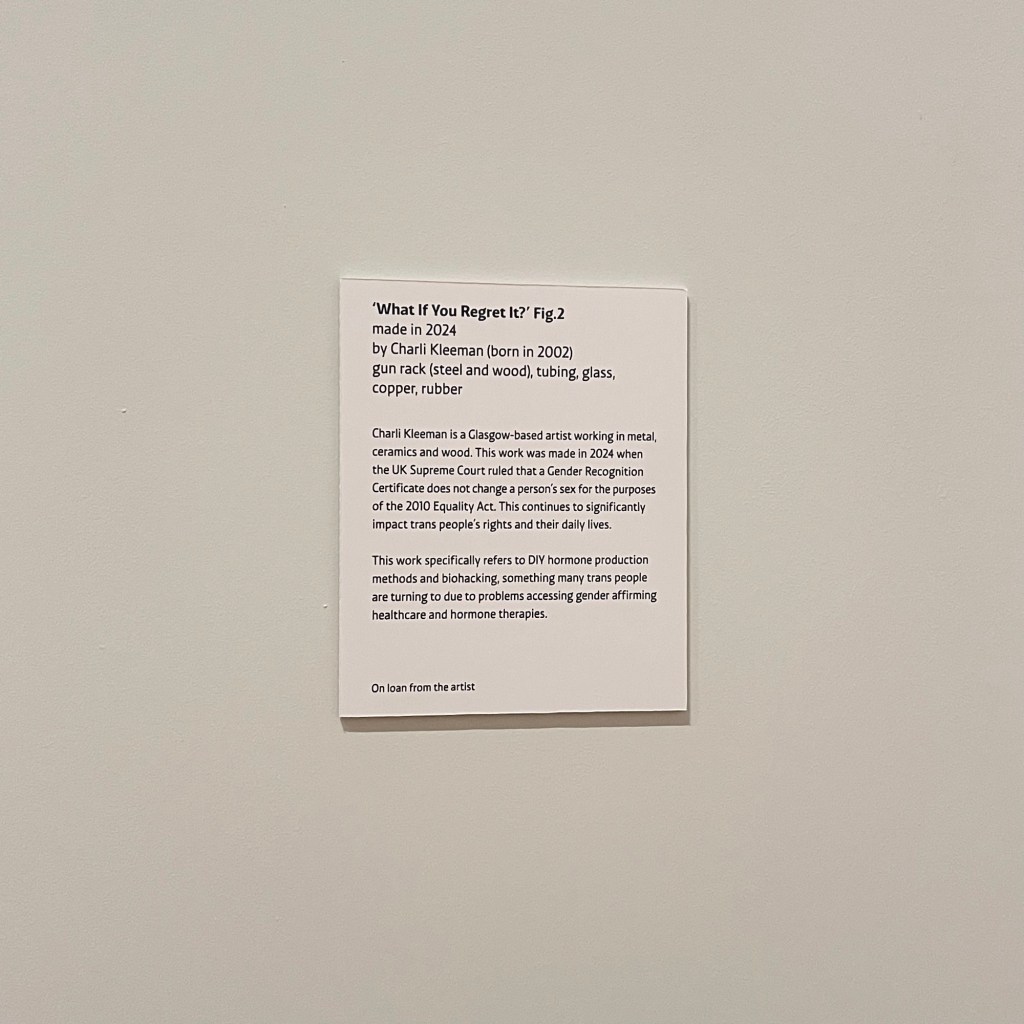
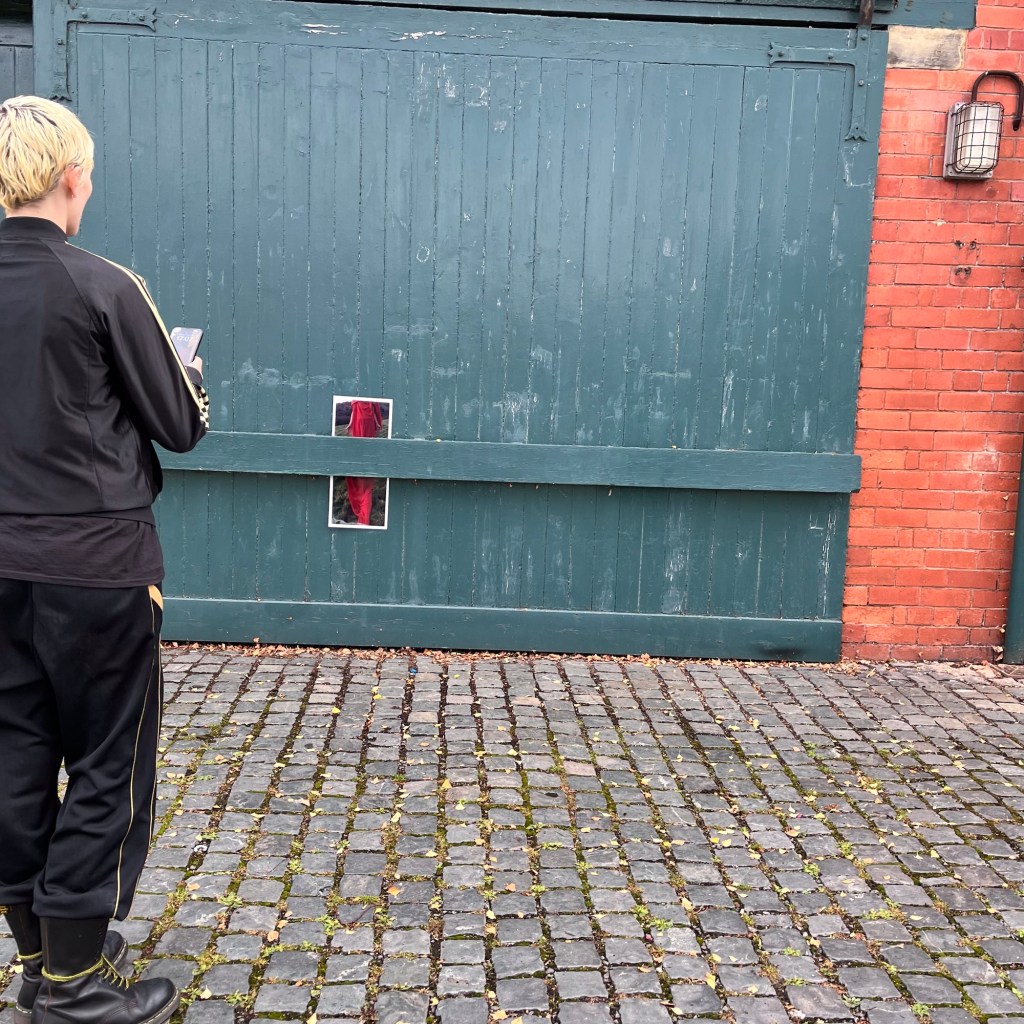
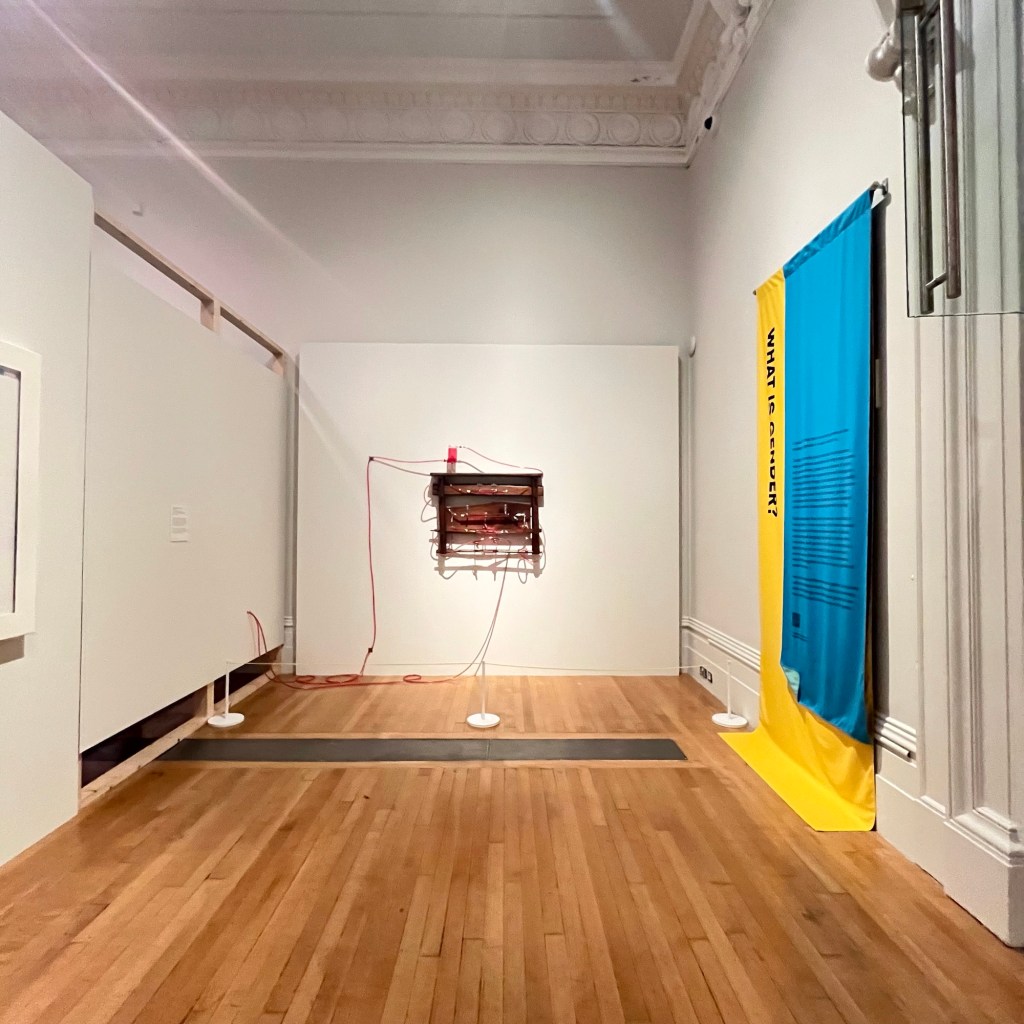
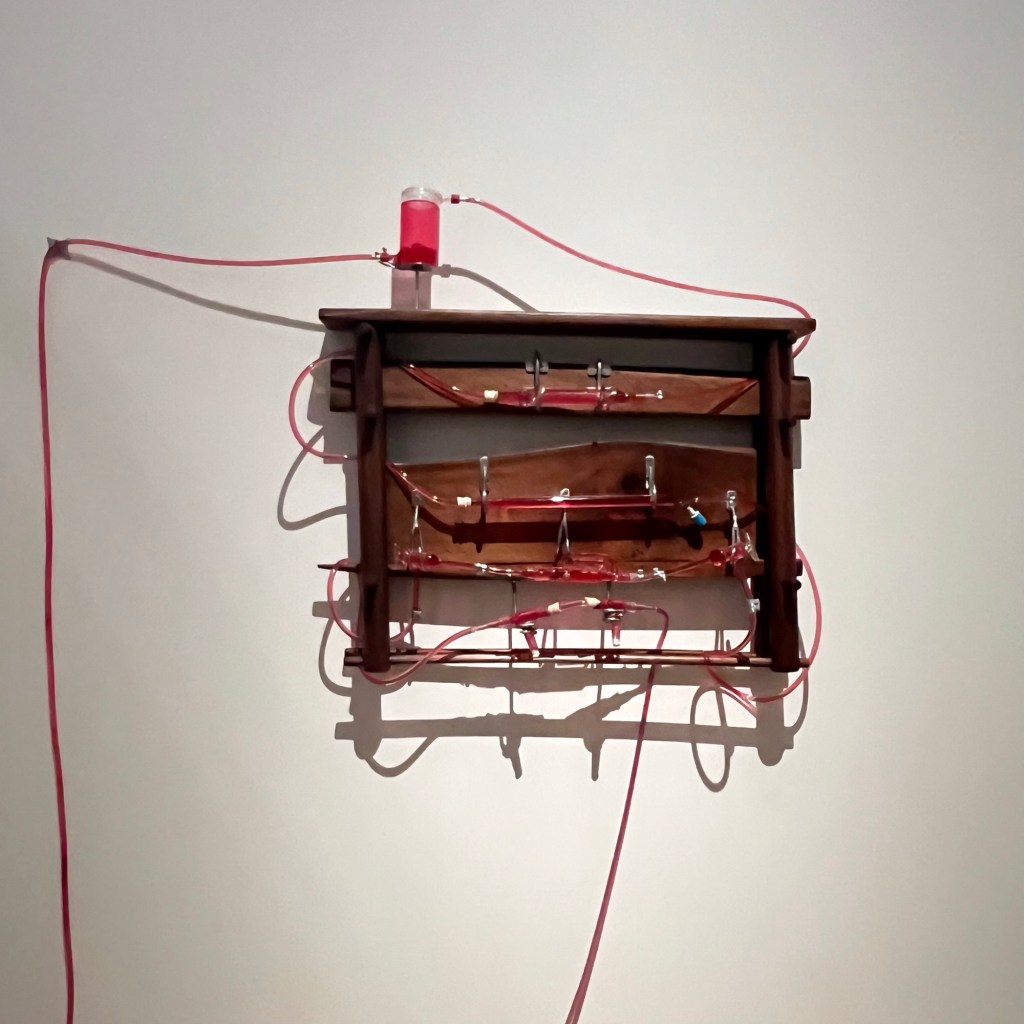
After that I went to work, and on my way home I stopped by the Walker Art Gallery. It was the last hour before the Walker closed, so I went to see the new group exhibition called Gender Stories, especially to see Charlie Kleeman. Charlie took part in The Right Map exhibitions and made large installations in the Port Sunlight stables. Last week they texted me saying they were coming to Liverpool, then we met after they had finished installing their work.. Charlie told me they had been invited to take part because one of the curators saw their work at The Right Map, last year.

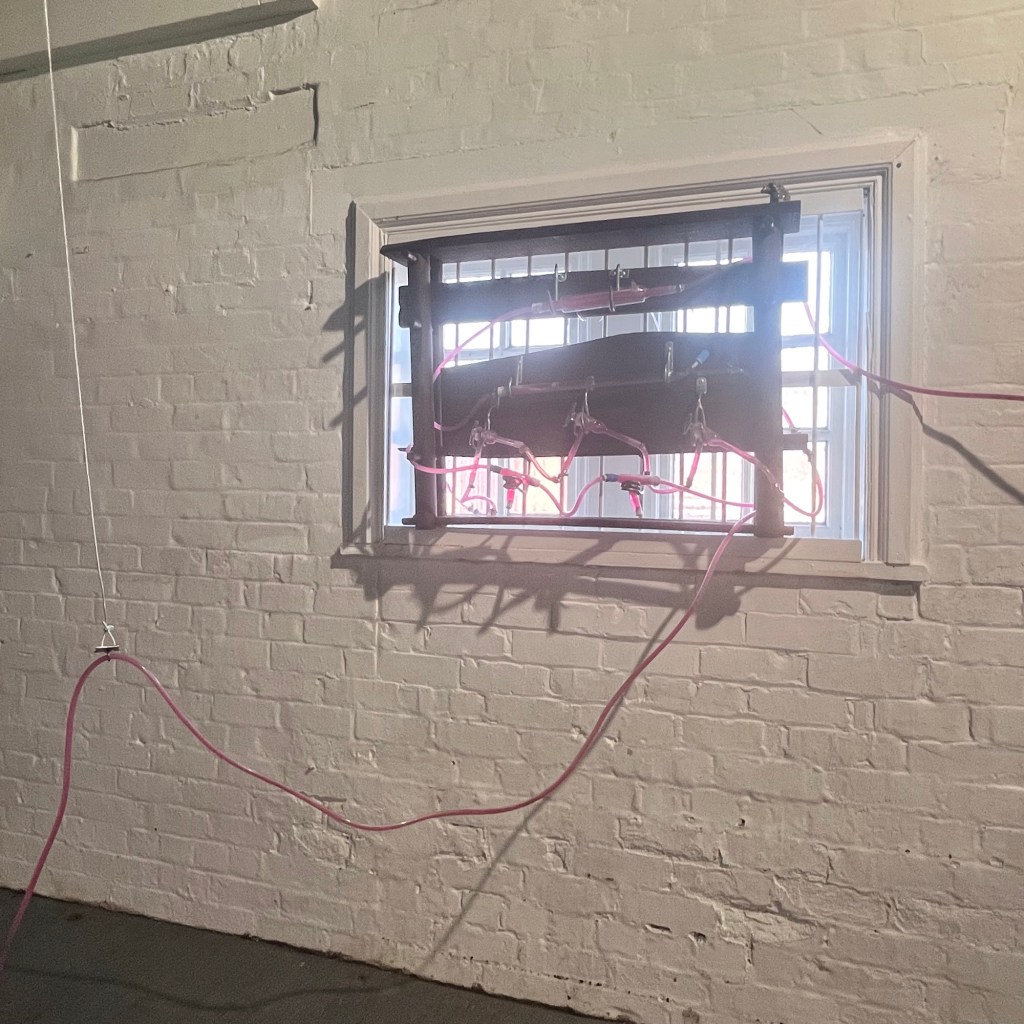
I felt so proud and happy! Charlie lives in Glasgow, and the only time they had come to Liverpool before was last year for The Right Map. Charlie took part through Rory Macbeth. We did not know each other before then. I loved their work immediately, it’s so cool and unusual. What makes me happiest is that, through the exhibitions I organised last year, I did not just make connections and learn how to create a small programme, but that some artists also benefited from that experience afterwards, like Charlie.
This also made me think about something Jonathan has mentioned many times. A curator might see your work and then, after months or even years, contact you because they remembered and liked it. Having an easy way to contact artists and keeping your work updated and visible is really important.

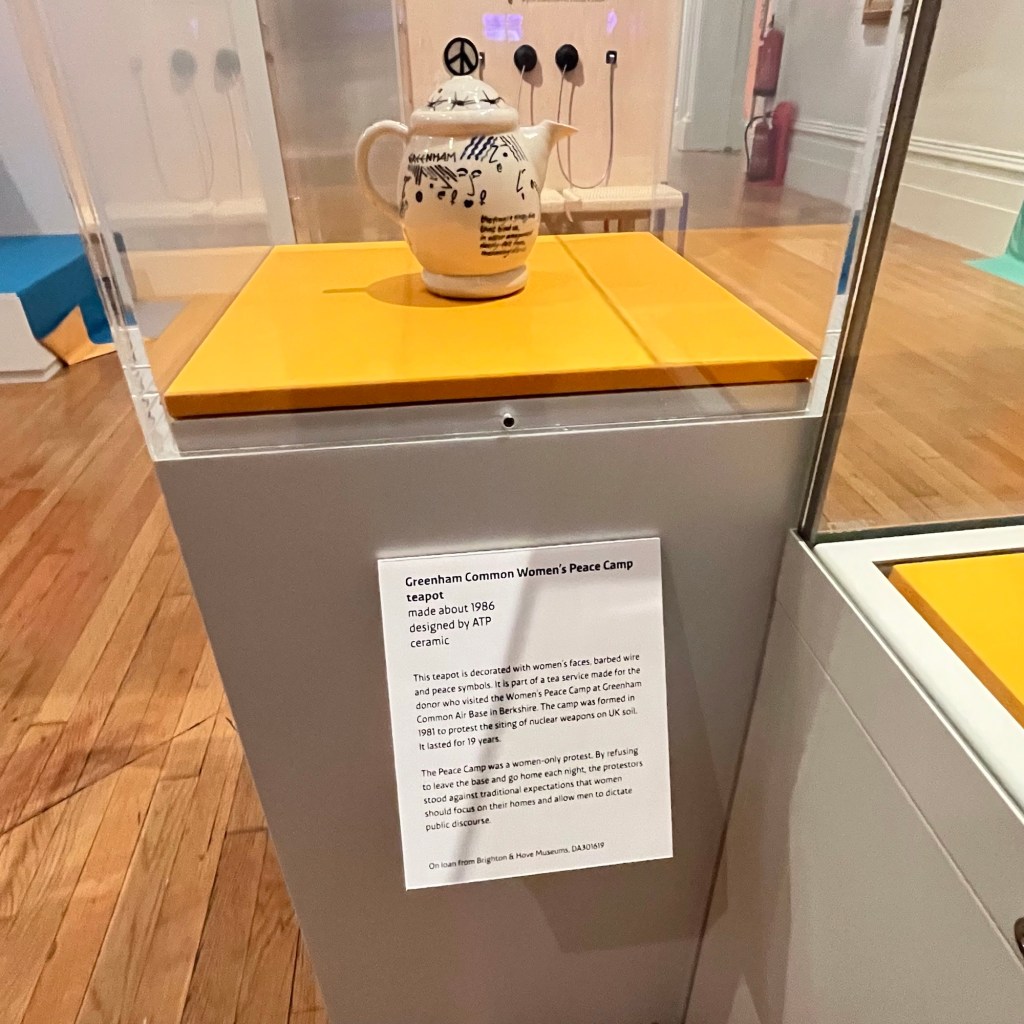
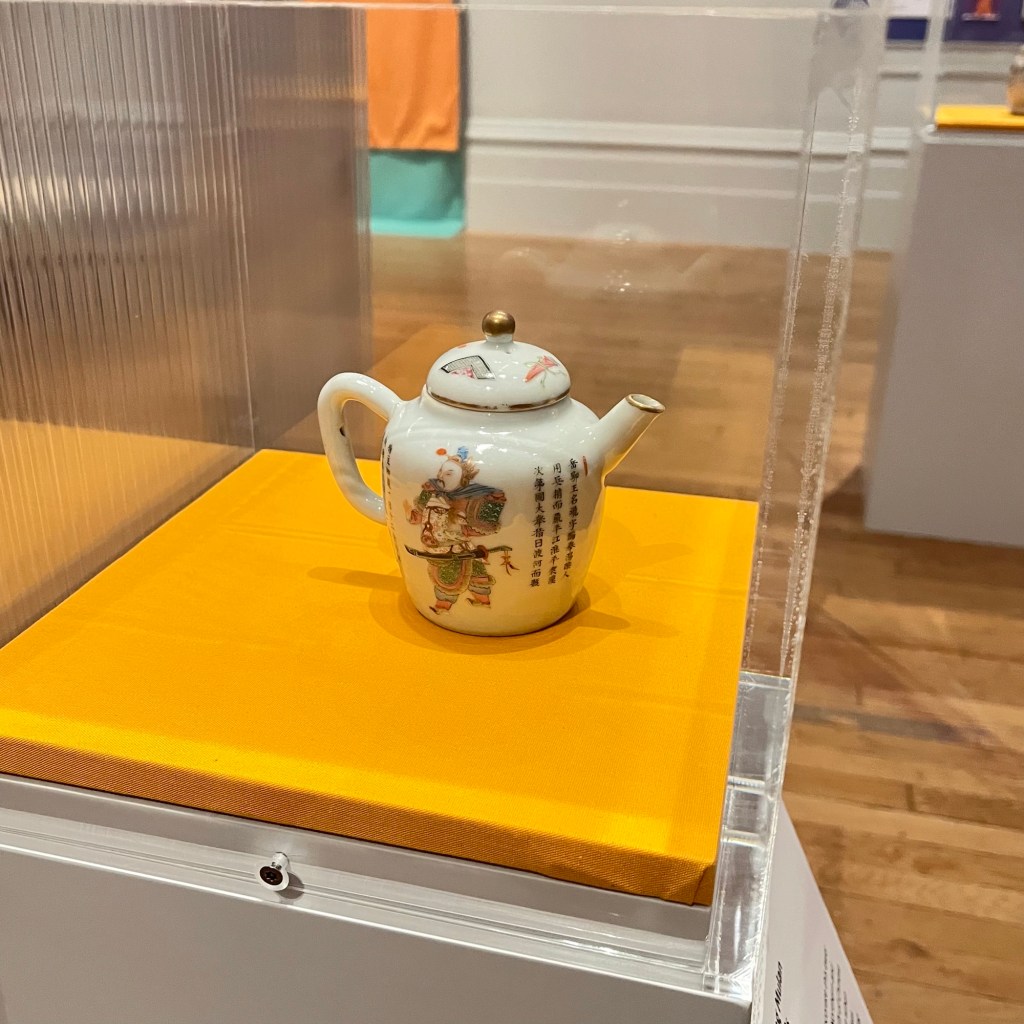
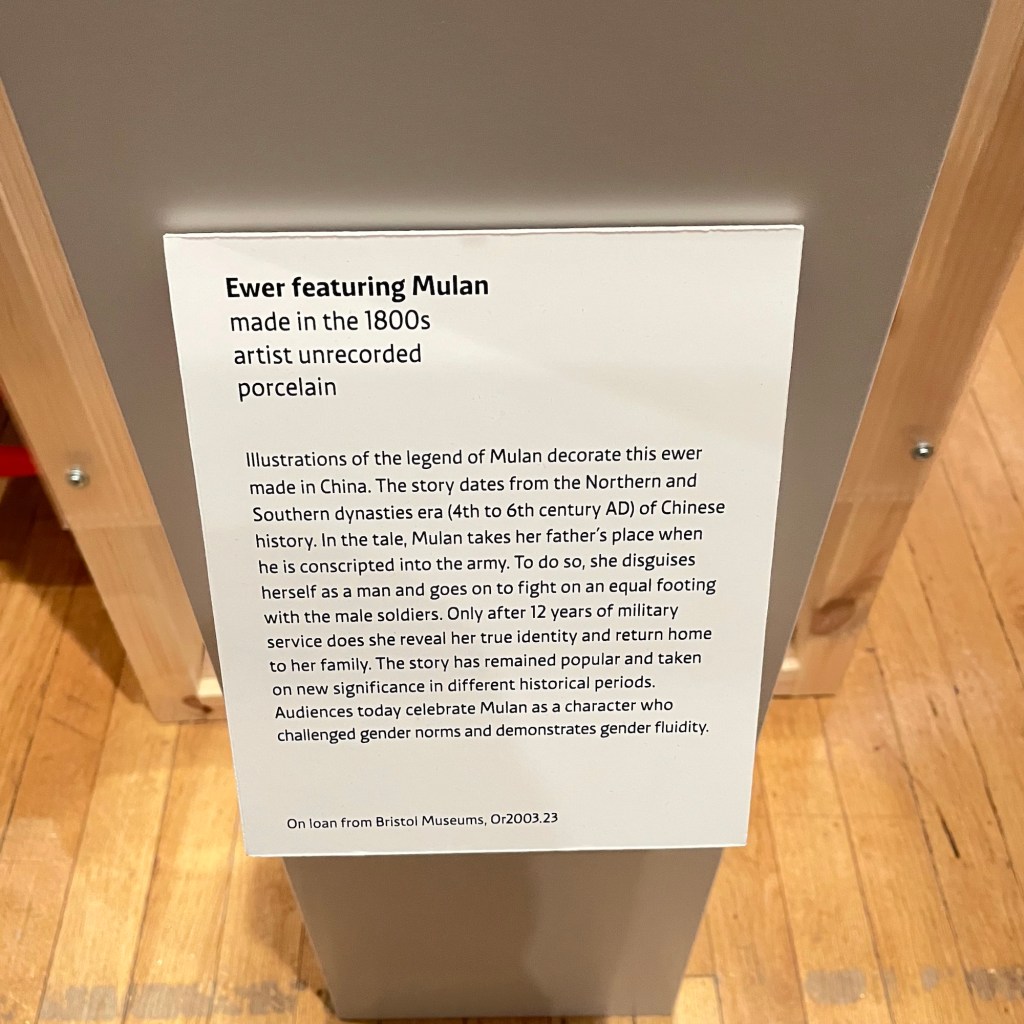
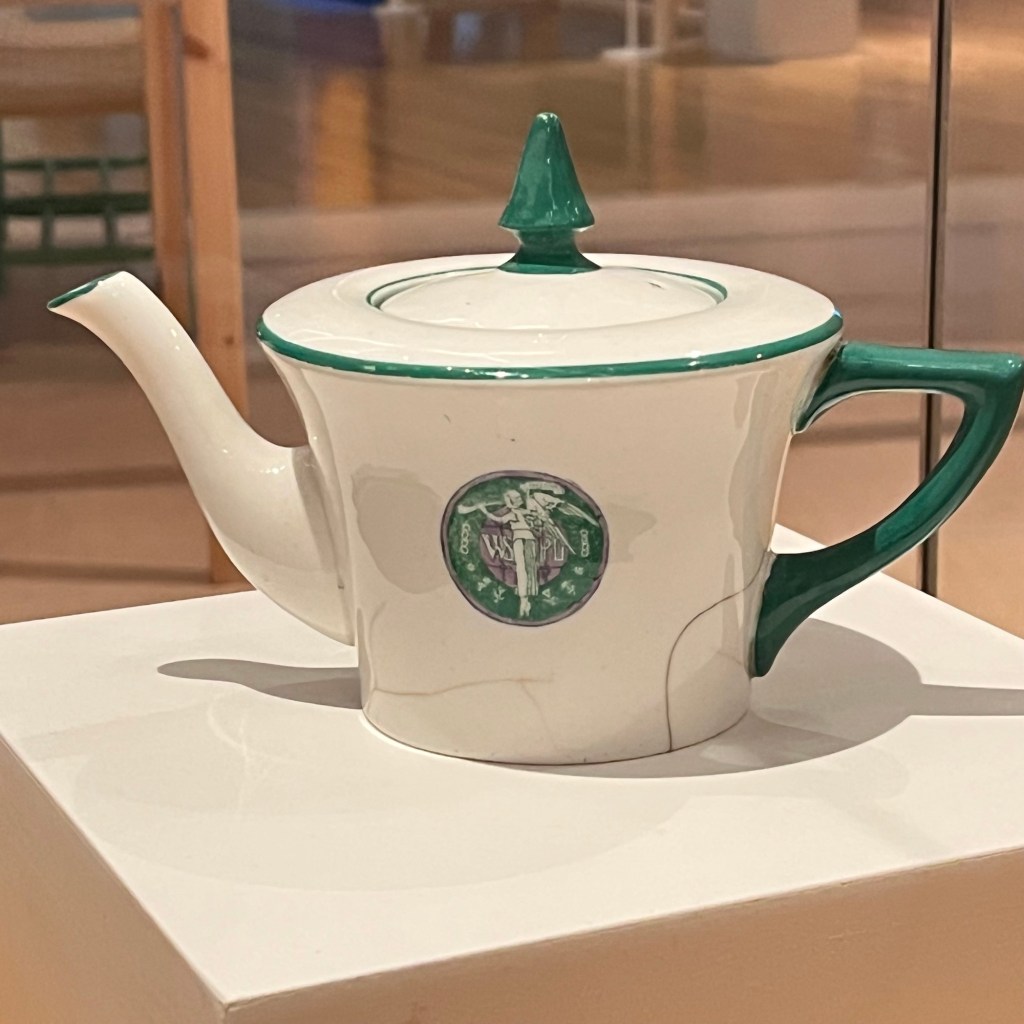
And finally, in the same room, I noticed three teapots from different times and places, each made by different artists and each carrying a different story. What I loved was that they all had a connection to women, either made by women or telling stories about women. I loved them so much, and they made me love my new teapot even more, because now I realise this isn’t the first time a woman has wanted to tell a story through a teapot!

Posted in 2025-2026, collaboration, Exhibitions, Moon

Home and Away

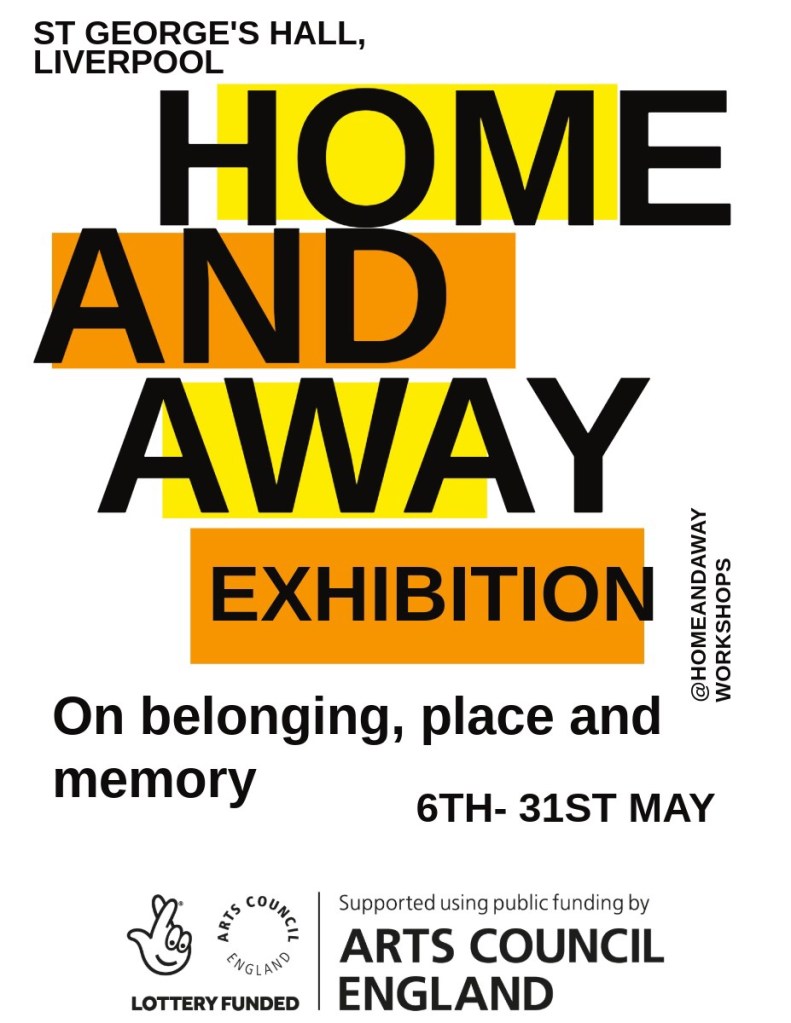
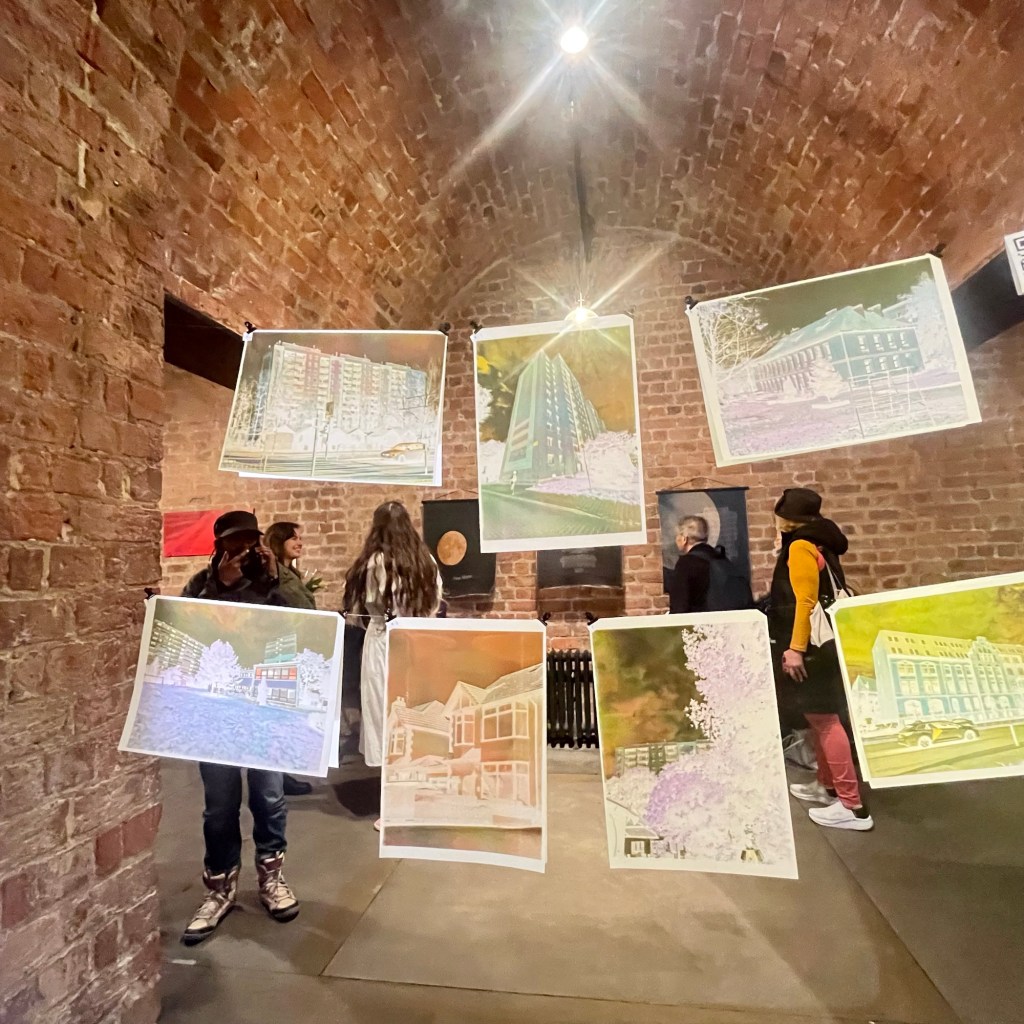
Home and Away exhibition is open to the public until the end of this month. It was a great opportunity to collaborate with women who share similar experiences of migration and displacement. The artists came from different countries, including the Philippines, Venezuela, Poland, Croatia, Sudan, and Argentina.

The process felt empowering for all of us, creating space for conversations, shared memories, and reflection. We also spoke about how the exhibition could continue to develop and potentially be shown in other places in the future.

This experience became an important reflection for my MA and good practice before the final show. It also opened doors for future collaborations with both the artists and the venue.

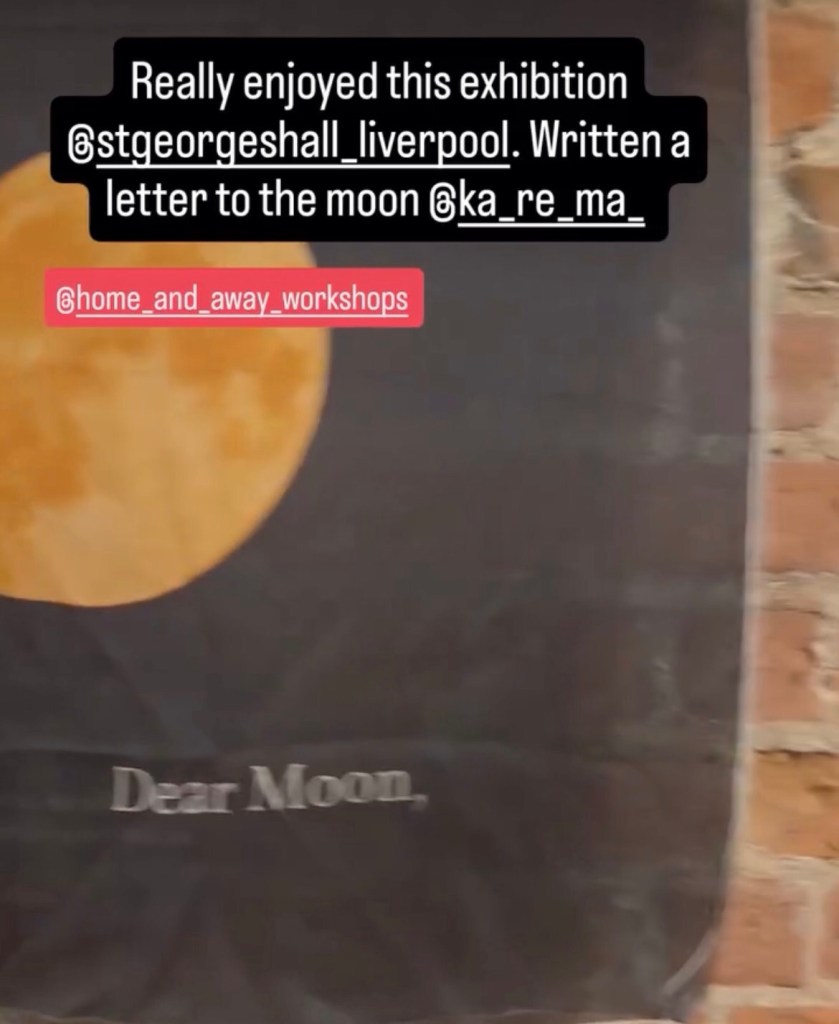
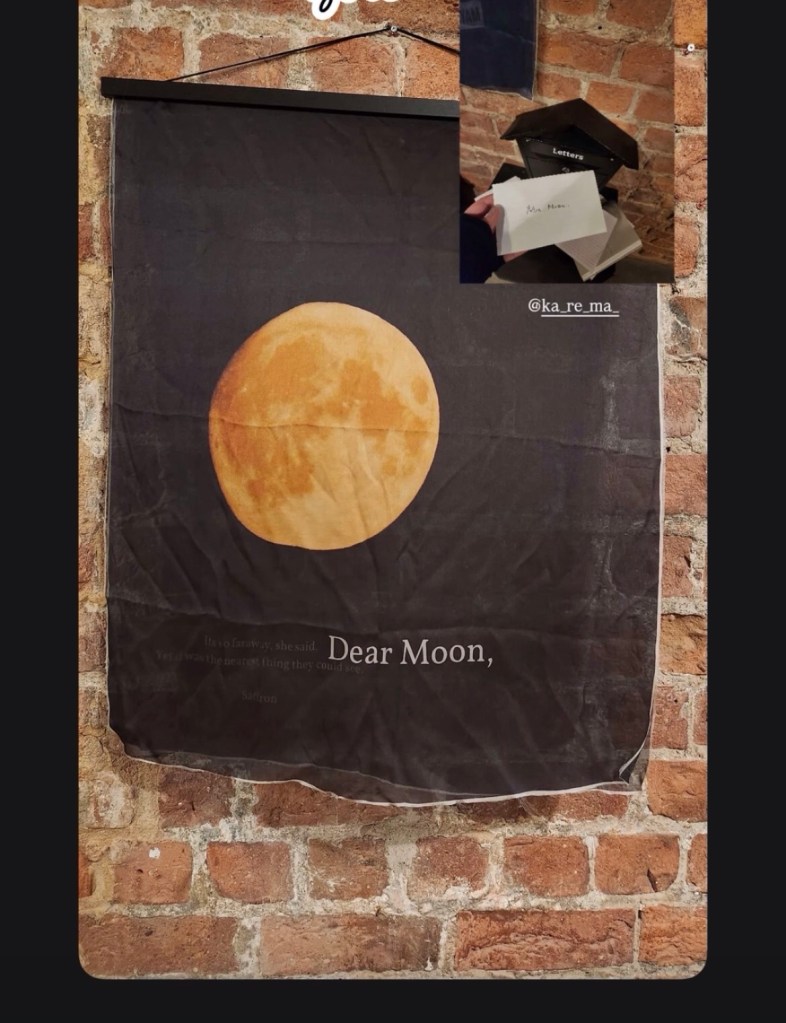
I also received more moon letters, which made me realise that the project has the potential to continue for as long as the letter box remains part of the exhibition. People still feel drawn to writing and sending physical letters, even without expecting a reply. The project reflects a sense of trust and connection between people, which feels especially meaningful today. This experience also encouraged me to think about how the project could keep evolving over time through future collections and publications.

Another important thing I learned was how I can present pages from the book in different formats. The book itself can exist as one form, but larger pieces can also work well and catch the viewer’s attention.

Home and Away is open to the public until the end of this month, and it has already attracted attention from Liverpool’s websites. Promotion was not something I initially wanted to focus on, but one of the fellow artists was very enthusiastic about spreading the word, and she did a great job. It was also a valuable opportunity to observe and learn from other artists, and to recognise how we might use and support each other’s skills in future collaborations.

https://explore-liverpool.com/home-and-away-art-exhibition-at-st-georges-hall/

https://liverpoolcityhalls.co.uk/events/event/home-away-exhibition-one-belonging-place-and-memory/

https://liverpoolnoise.com/arts-and-culture/home-and-away-workshops-exhibition-st-georges-hall/

Posted in 2025-2026, Colonial history, curation, Exhibitions, Reading, Reflection, Research

Coding Spaces and Archipelagic Thinking 

Yesterday we had an interesting discussion about coding exhibition spaces and curating. Jonathan shared some texts by Edouard Glissant and his ideas about continental and archipelagic thinking. We discussed global dialogue, where cultures meet and exchange with one another, and how these ideas could be applied within curating. We also questioned the difference between algorithmic and human curating.

My mind felt crowded with thoughts, words clashing against one another. Writing about it helped me untangle those ideas and find the right words..

So,

1- Continental and Archipelagic Thinking

First, I did not know about Edouard Glissant until Jonathan mentioned him. Before writing this, I did some research and discovered that Glissant attended the same school as Fanon during a similar period. I also found that Glissant was influenced by Aimé Césaire, the poet and politician who held important political positions in Martinique and was one of the founders of the Négritude movement.

What I found strange, however, was the name of the capital, Fort-de-France. The name feels heavily colonial and military in origin, and it made me question how much it represents the mixture and complexity of Caribbean identity that Glissant writes about. If Caribbean identity is shaped through creolisation, relation, and cultural mixture, why do many places still carry the language and structures of colonial power?

Returning to Glissant’s theory, it can sound idealistic unless we also discuss unequal power structures. What happens when one culture dominates the exchange? And who is speaking for whom?

I believe archipelagic thinking requires a degree of equality in power, position, and knowledge in order for genuine exchange to happen. People need to feel safe and respected enough to welcome openness, relation, and dialogue.

At times, I feel that Glissant’s ideas emerge from a context where it is easier to imagine archipelagic relationships, islands existing beside one another, sharing histories of colonialism, displacement, and struggle. However, in reality, relationships between places are rarely equal. If one nation or culture has greater resources, political influence, or economic power, it will inevitably shape the exchange more strongly than the other. Examples such as the UK and Ireland or Indonesia and the Philippines show how unequal power can influence cultural dialogue.

Because of this, I believe there is a responsibility not only to be welcoming and open, but also to avoid placing ourselves in vulnerable positions through a lack of knowledge, experience, or access. On a larger scale, this relates to power, science, dignity, and human rights. Without awareness, exchange can easily become influence or control by those who already hold authority.

How can this be applied to curating? For me, curating should involve both knowledge and empowerment. The curator should develop enough understanding and experience to support the work responsibly, while also empowering artists and contributors so that exchange becomes mutual rather than hierarchical. True dialogue cannot happen when one side only gives and the other only receives.

2- Algorithms and Human Curating

When thinking about algorithms and human curating, I believe that even AI is ultimately shaped by humans. Algorithms are built from data that is created, selected, and controlled by people, often within commercial or business systems. Because of this, algorithms tend to respond to behaviour patterns and visual preferences rather than deeper emotional or ethical understanding.

Algorithms are designed to please, predict, and reinforce engagement. They often agree with existing behaviours rather than challenge them, unless introducing something new becomes commercially useful. They cannot fully understand emotional complexity, vulnerability, or the human condition in a particular moment.

Human curators, however, allow space for emotion, ethics, care, and mistakes. Whether curating an exhibition, a book, a workshop, or a conversation, human curation carries sensitivity toward people and context. At the same time, curating also reflects the organisers themselves, their intentions, politics, feelings, and what they want to communicate through the work.

Curators are often the first audience to encounter an artwork, and that first encounter is important for both the artist and the curator. Curatorial work therefore carries significant responsibility. However, I believe curating should happen alongside the artist and the artwork, not over them. Also, it’s important to first experience the artwork on its own terms before being influenced by the artist’s explanation, while still maintaining a respectful and collaborative relationship.

Reflecting on all of this takes me back through the journey of the last two years, curating spaces, books, workshops, and even this blog. Technology has an important role in making processes easier, but humans still carry the responsibility of shaping narratives and telling stories.

Finally, archipelagic thinking may be an attempt to create ethical relations despite unequal histories and structures. And, from a curatorial perspective, curators must consider the needs of the artwork, including care, health and safety, protection, and the conditions the work requires within a space. Exchange between curator and artist is essential, because curators cannot exist without artists and contributors!

Posted in 2025-2026, Books, collaboration, Exhibitions, Moon, Reading, Tutorials 2025-26, Writing

1-1 Tutorial 22nd April

Last week I had my final 1–1 tutorial, and it was a very valuable conversation in which I was able to reflect on my work and plan for the coming months, thinking about challenges and what matters most right now. Having this discussion at this stage feels important, because I believe I need Jonathan’s insight and guidance while I’m still in the process of making.

The tutorial gave me a great deal of confidence, and the next day I began designing the bone-dry tea set. I made 21 pieces for the tea set, alongside over 20 small crescent forms, which I will use to make bookmarks for our MA Digital class. Each ceramic piece carrying a story from colonial history. I find that I can’t add anything to the work unless I’m sure it’s relevant and contributes to the overall narrative, and this does slow me down slightly. However, this has been one of the most important lessons during my MA: taking the time to build a cohesive body of work, without unnecessary additions or distractions. I can easily feel overwhelmed and distracted but I have learned to recognise that moment. When it happens, I stop adding and instead spend time reading around the theme or taking a break. This is how my ceramics project develops through slow reading, while the Moon Book has developed through slow writing.

I spent the week working with clay, while also setting up the new show at Liverpool St George’s Hall, where I will be showing Moon Book pages on silk (factory print). I made these last year for The Right Map 2025 but did not have the right opportunity to present them. Now they feel more suited to the theme (Home and Away) and to the space at St George’s Hall. I installed them over a long black heater, where the warm air creates a gentle movement in the work, subtly animating the delicate sheets.

At the core of my social sculpture practice is care and the intention to make a meaningful difference. The Moon Book demonstrates this clearly by connecting people and creating space for shared vulnerability. After the last workshop, some participants began sending me letters in response to others letters. I feel a deep sense of gratitude towards this project and the people involved. Writing letters feels especially meaningful, and I’m  excited about the next book Dear Friend (2027). What I find particularly beautiful is that some children are growing up through this process, and some participants who have never met are writing to each other with genuine care and intimacy. It shows how powerful and delicate these connections are. I feel I owe a great deal to everyone who has taken part.

The tea set also functions as a form of social sculpture. It consists of multiple pieces that invite interaction, through storytelling, through history, and through use. Sharing stories from the past is itself a way of engaging with people who are no longer here. In this sense, the work becomes a way to educate, to encourage questions, and to create opportunities for participation.

For example, discussing the Opium War  came up in my tutorial with Jonathan. We began asking: how many “opium wars” exist today? How many forms of addiction are being created, and how will these stories be told in the future? Simply bringing these questions to the table is part of the work. It opens up dialogue and that is where social sculpture begins to happen.

Posted in 2025-2026, Books, collaboration, Exhibitions, Moon, Social Sculpture, Writing

Dear Moon,

When I arrived in the UK, everything felt strange and new, but your face was the only one that remained old and familiar…

Today, I led a moon workshop at St George’s Hall, after weeks of preparing for the upcoming exhibition Home and Away, organised by artist Mariana Sequera. The project explores ideas of home, displacement, and migration. It’s a concepts that seem simple at first, but quickly unfold into something more complex the moment you invite others in.

Recently, images from Artemis II showing the Moon’s far side, pulled me back to the letters. I found myself rereading them, and with that came a quiet but firm feeling: it’s time to finish the book, and to stop collecting more.

While sharing the open call for Home and Away and encouraging people to participate, I noticed how easily themes like displacement are interpreted in narrow ways. There is often an assumption that such experiences belong only to certain groups, and not to others. This made me reflect on how art spaces frame experience, and how belonging is often defined, sometimes invisibly within those frames.

Since last year, I’ve chosen not to rush the second Dear Moon book. I’ve learned that timing is not separate from the work. Showing something in the wrong moment or context can mean it’s overlooked, or misunderstood. This awareness is shaped by my position as a woman, a mother, and a Muslim, identities that are often underestimated, even by those close to me.

I’m  learning to resist two opposing pressures: the demand to remain constantly visible, and the quiet acceptance of being marginalised. Somewhere between these, Dear Moon has become a space of its own. Writing to the Moon creates a particular kind of room, it allows for distance, but also intimacy. The letters themselves hold so much. They open memory, reflection, and connection. There is something therapeutic in that, but I try not to reduce it to therapy alone. Each contribution carries its own layers.

C, a retired nurse, shared a story she wrote in the 1970s, along with a receipt showing she was paid £8 when it was broadcast on Miri Mawar, a programme on Welsh HTV. Including her work now brings different times into conversation with each other, raising questions about value, recognition, and whose voices are remembered. In contrast, A’s drawing of the Moon’s phases offers another way of understanding participation. As a child with severe physical and learning difficulties, his contribution gently disrupts expectations of what artistic expression should look like. The Moon’s cycles, appearing and disappearing feel like a quiet reflection on resilience and change.

Through all of this, I’ve started to think of trust as a material within the work. People are not just contributing content..they are offering something personal. That comes with responsibility: to hold these contributions with care. As the book nears completion, I feel both excited and uncertain. I want to hold it, but Im still thinking about how to share it. In previous exhibitions, Dear Moon often felt unresolved, shaped by time pressure, or by divided attention.

Posted in 2025-2026, collaboration, Experiments, Social Sculpture, Visit

Reflection on Alex Schady Workshop Collaborative Making and Social Sculpture

I took part in a workshop led by Alex Schady as part of the Fine Art Digital Residency week which thoughtfully organised by Jonathan for both MA classes. 

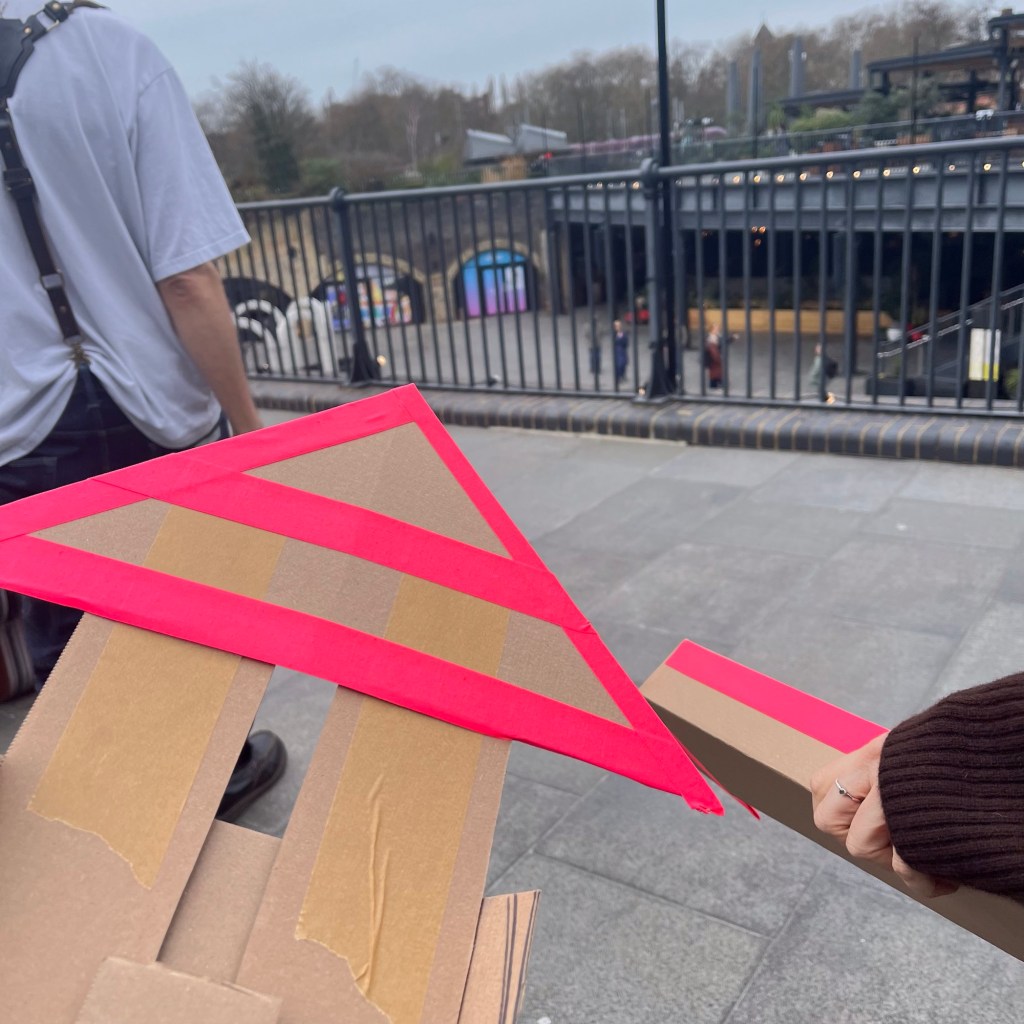
The session focused on collaborative making and began with a simple exercise: a flat sheet of cardboard was shared and each student created an arrow. I made a very simple arrow, similar to Alex’s example, while others explored more playful and experimental shapes. I noticed something familiar about my role in workshops I often observe more than I produce, watching how others approach the task becomes part of my learning process.

We then moved outside to the street and began performing with our objects, engaging with the urban environment and the people around us. The arrows shifted from being simple objects to becoming gestures in public space.. Accusatory fingers!

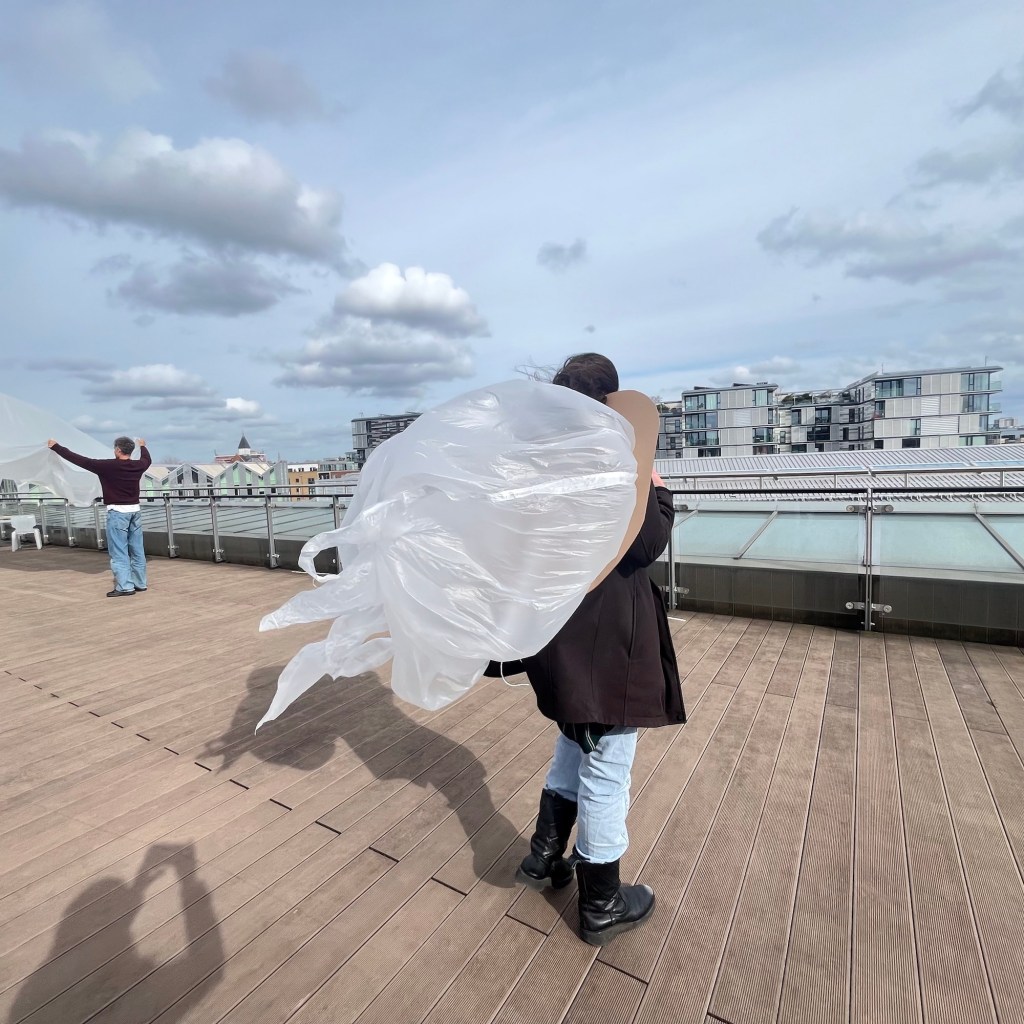
In the next stage we worked in pairs to create inflatable body extensions using plastic sheets. I collaborated with Rachael, and we agreed to make angel wings. The process was technically tricky, due to delicate material, but we managed to build them, and had a lot of fun experimenting with movement.

Afterwards we gathered outside for a collective performance where everyone presented their creations. Eventually groups merged and people began wearing multiple extensions, forming a kind of shared body. The performance ended with one large collective body.

What stayed with me most was the way Alex held the space. He allowed collaboration to happen naturally without pressure. No one felt forced to participate in a particular way. This made me think about concept of social sculpture and the idea that society itself can be shaped through collective processes.

The workshop felt like a small example of this idea. Through simple materials and shared actions we created a temporary social structure based on making, negotiating and performing together. 

Afterwards I visited the first-year MA students’ exhibition. It was interesting to see the space and reflect on how quickly time passes during the MA journey. It was also lovely meeting fellow artists in person for the first time there was an immediate sense of familiarity and trust. 

Although I could only stay for a few hours, the experience felt full. Sometimes a few meaningful hours can contain days of learning. Alex’s workshop demonstrated how much can happen in a short time  making, performing and collaborating and it left me wondering how much deeper this process could go if we had the opportunity to continue it over several sessions.

Posted in 2025-2026, curation, Exhibitions, Experiments, Project, Reflection, Research, Social Sculpture

Last Reflection on The Right Map

As I write this final reflection on The Right Map, I can see how many threads hold this project together. There is the community garden that Tom Doubtfire leads with steady optimism. There is the fundraiser that Tom and I organised as members of Ghost Art School, with generous support in kind from The Bakery in Liverpool. And there is the final day itself, which happened only because of the effort and kindness shown by Rory Macbeth, there was no funding and no safety net, there were only people who care and people who give far more than anyone could fairly expect.

The Community Garden

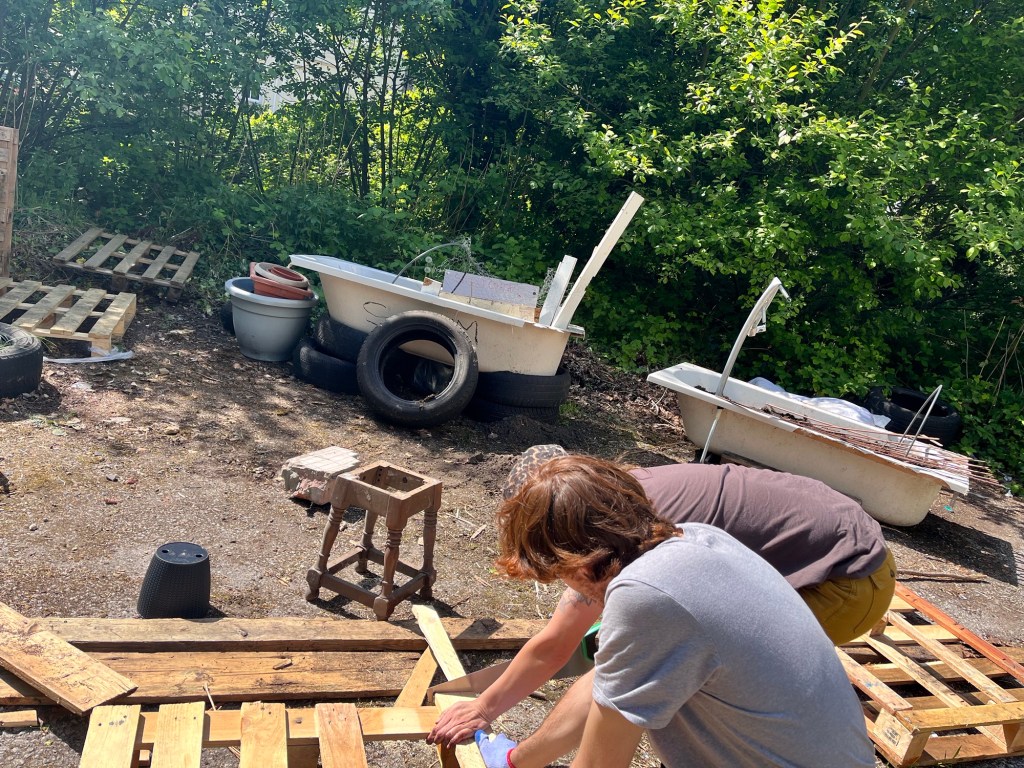
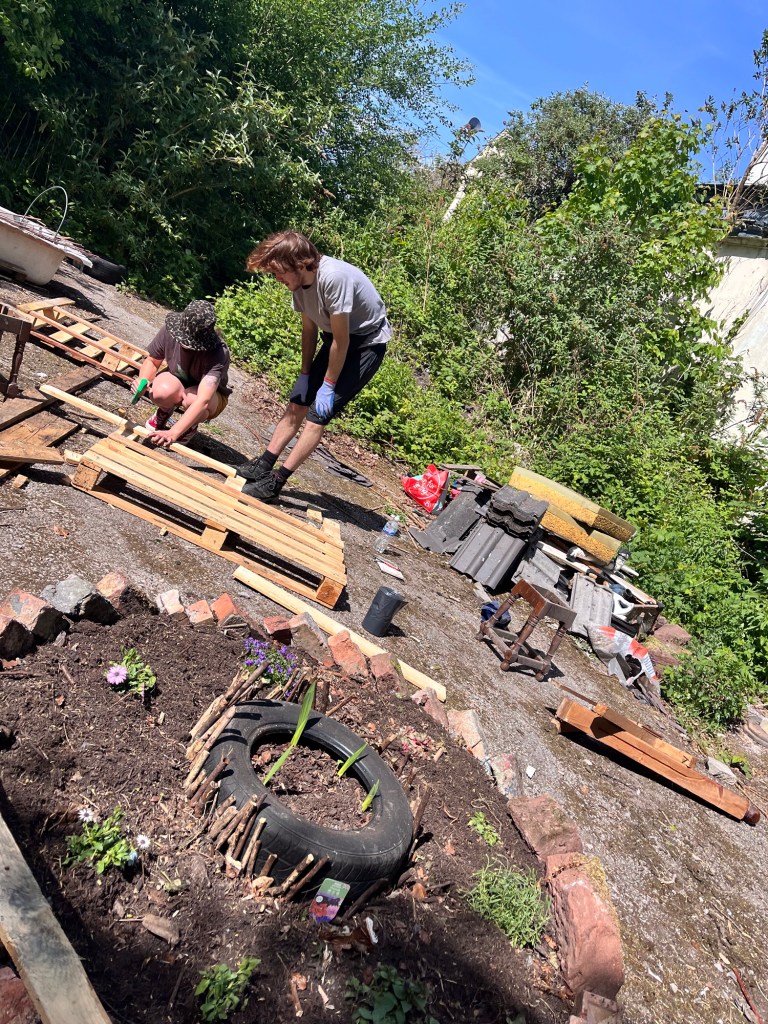
The garden at the old social club-Kensington was meant to be a shared space, a place for people to grow food, spend time, and reclaim something green together. We cleaned it again and again. We cleared rubbish, made plans and planted possibilities… Yet there were days when I felt defeated. Rubbish would reappear as soon as we removed it.. Things were stolen! Many times it felt as if the effort was swallowed by indifference!

But Tom is different.. He keeps turning up with a sense of commitment that is both hopeful and stubborn. He holds a belief in slow change that I respect deeply and I’ll continue to support him, not only as a friend but as an artist I respect.

Fundraising as a Collective Gesture

The fundraiser at The Bakery was a small moment when collective energy came together. With the help of visitors, friends, and many acts of generosity, we raised £300 for Thamara Organisation.

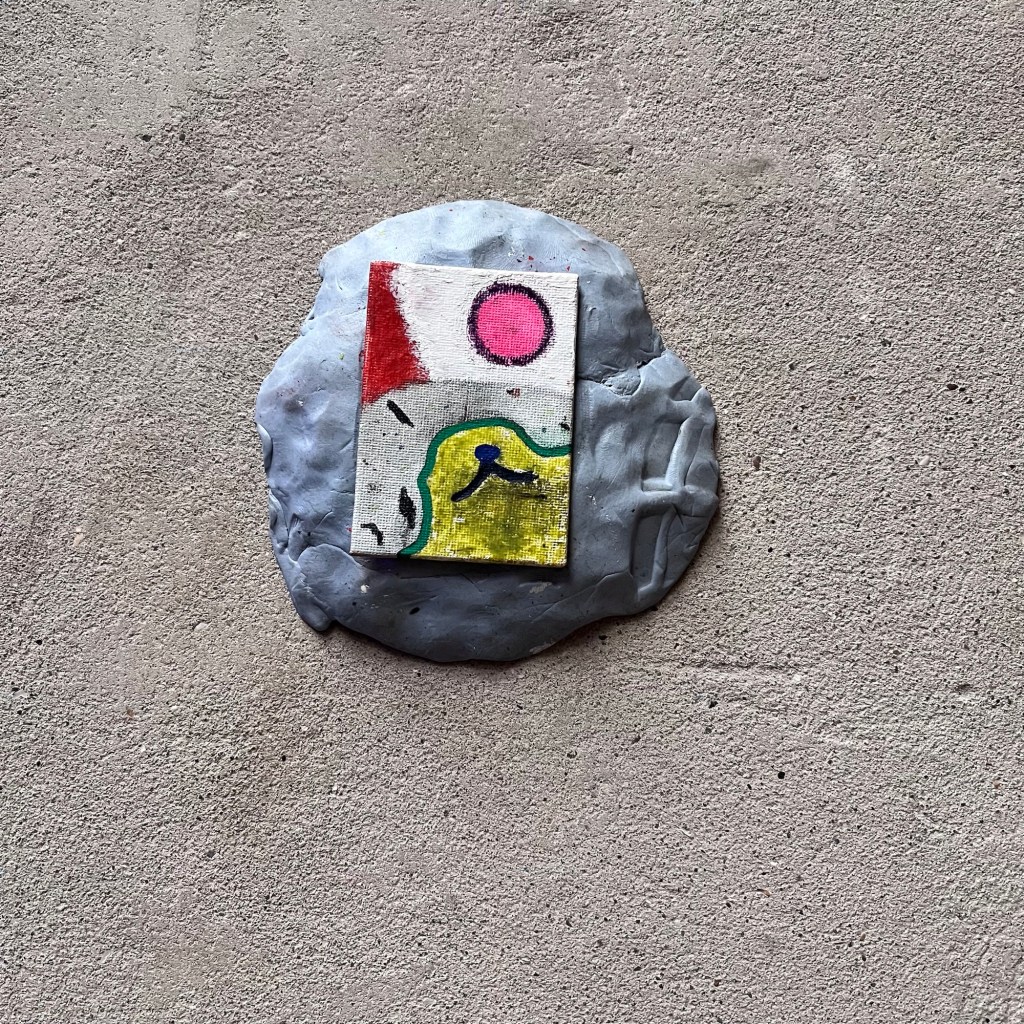
The rooms held an installation by Tom D, inspired by the community garden. There were drawings made by children in previous workshops Tom led. There were my political ceramics. There was a tiny painting by Tom Kelly, fixed to a huge blob of blue tack. There were paintings prints by Alison Reid.

And from food sales and prints and T shirts that I printed, some showing the map of Palestine and others carrying the Ghost Art School logo designed by Rory Macbeth, along with extra donations, the amount slowly gathered. It felt modest, but it carried meaning. It was a gesture of care that reflected the spirit of The Right Map.

The Final Day: Unstable 4 

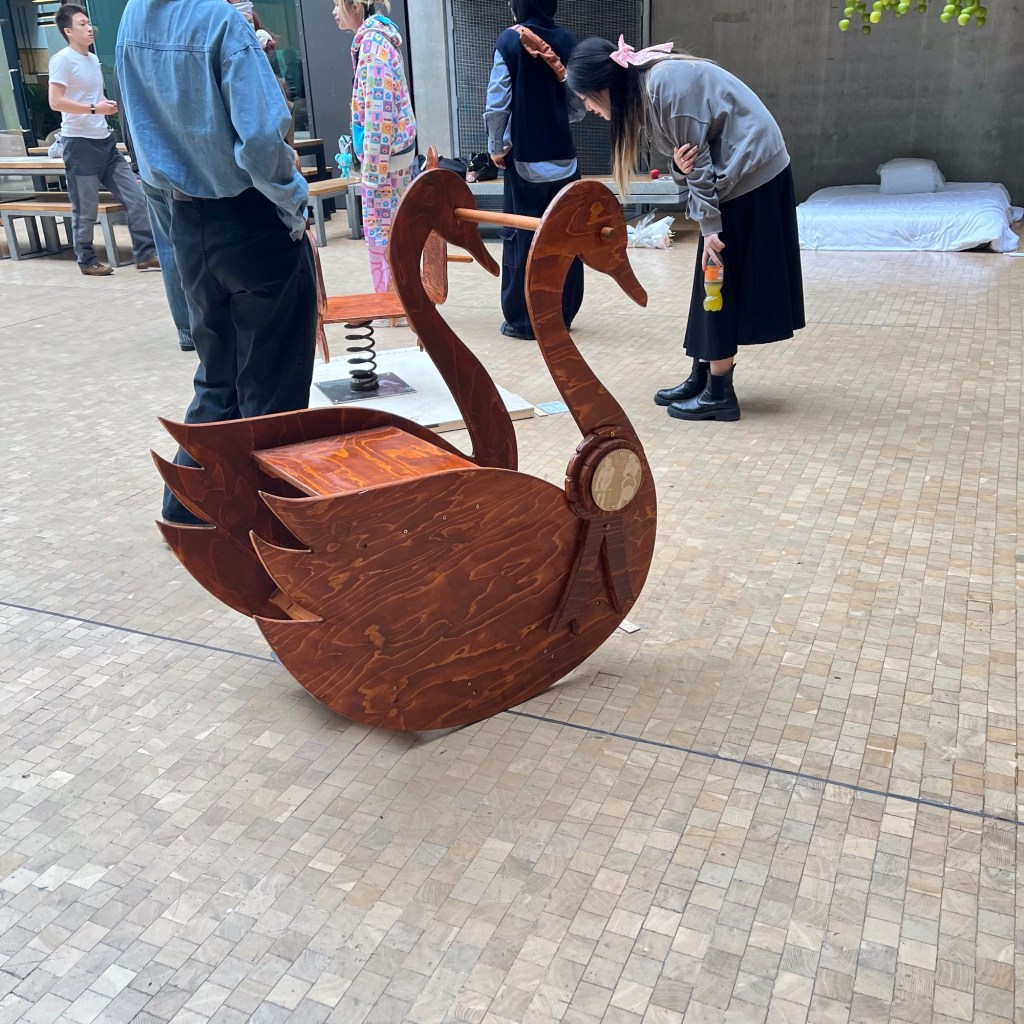
The final day of The Right Map was full of beautiful chaos.. I was working in other side at Crosby Library until the afternoon for a Liverpool Biennial event with the collective DARCH, so I arrived with no time to prepare anything special. Once again it was Rory who brought the day to a close and who held everything together with calmness and capability. I will not forget the amazing large carousel installation by Marie-Sofie Braune, who is now doing an MFA at CSM. It arrived from Germany and was too large to ship at a reasonable cost, so Rory travelled to deliver it and installed it.

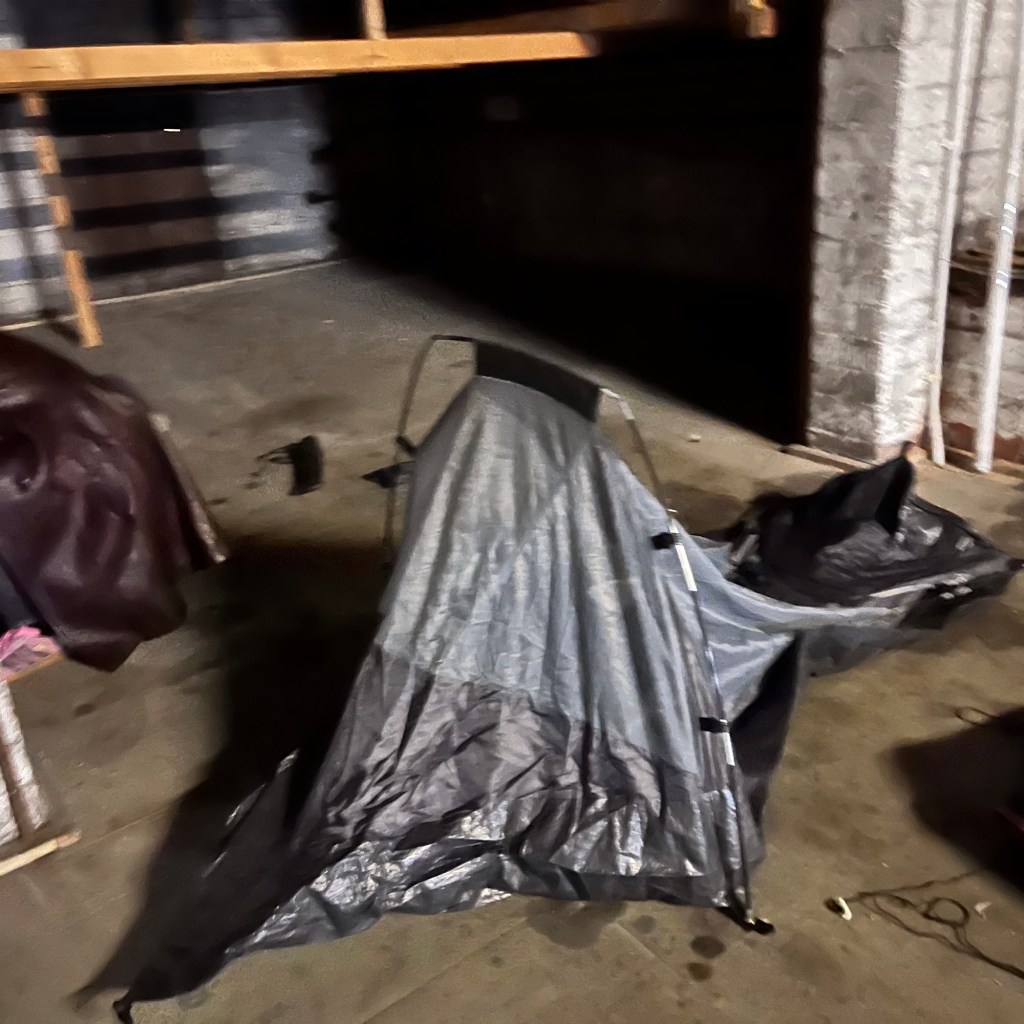
As Rory described it, the event became:“Unstable 4. The final event of Unstable at Port Sunlight fully embraced instability. A broken fever dream of a fairground carousel, a car trying to get into the gallery while playing dislocated tape loops, surplus images spat out of a machine, surplus films looping, noise performed, letters to the moon, records playing off centre, photographic sculptures hiding in half light, one to one performances in a tent.”

Somehow all of this disorder made sense. It was the right ending to a project that was never about polish but about presence. It showed what happens when artists, friends, and communities choose to take action even when resources are limited, even when schedules do not match, and even when the project is held together by human effort rather than funding.

Finally, The Right Map did not map places. It mapped relationships, labour, generosity, frustration, and persistence. It mapped the hidden work that supports community spaces and the unstability that becomes a creative method rather than a barrier.

The Right Map artists: Alison Reid, Alma Stritt, Charli Kleeman, Chelsea Johnson, Chris Roberts, Colm Moore, Conner Browne, Cos Ahmet, Danielle Freakley, David W Hicks, Eleanor Capstick, Finn Roberts, Gary Finnegan, Gwendolin Kircali, Halyna Maystrenko-Grant, Hannah Browne, Harriet Morley, Igor Prato Luna, Jasmir Creed, Jessica Crowe, Karema Munassar, Lily Patricija, Mai Sanchez, Marie-Sofie Braune, Molly Lindsay, Molly Mousdell, Phoebe Thomas, Priya Foster, Ritu Arya, Rory Macbeth, Sonic Relics, Theodora Koumbouzis, Tom Doubtfire, Tom Kelly, Valentina Passerini, and Xueying Zhang 

Posted in 2025-2026, Ceramic, Exhibitions, Moon, Reflection, Social Sculpture, Uncategorized, Writing

Reflections on Ornament–Intent: Home as Political Medium

Last Friday, I exhibited as part of Ornament–Intent, curated by Emma Rushton at her house in Manchester. The exhibition offered a chance to re-situate my practice within the intimacy of a domestic environment. The curatorial premise, that decoration and political intent flow through the home, aligned closely with my interest in how social and political meaning is transmitted through ordinary gestures, materials and language.

Rushton’s house, transformed into a living exhibition space, blurred the boundaries between art and life. The space carried traces of daily existence, forming a backdrop that resisted the neutrality of the white cube. Within this context, my ceramic works and participatory writing installation became part of an evolving conversation about the home as both refuge and political site.

On a handmade ceramic plate inscribed Sykes–Picot 1916, I presented a red velvet cake. The act of division mirrored the historical partition of the Middle East under the Sykes–Picot Agreement. I used the domestic ritual of cake-cutting, usually symbolic of celebration, generosity and communion, to expose its opposite: consumption, greed and geopolitical appetite.

This gesture was performative in the sense Joseph Beuys might describe as Soziale Plastik (social sculpture), where symbolic action and participation become material. The knife, crumbs and creamy surface formed an ephemeral installation that questioned how colonial histories persist within gestures of hospitality and everyday pleasure.

A second ceramic work consisted of 11 handmade spoons arranged in a circular formation across a white table. Each spoon was inscribed with the name of a country and a range of dates, including Gaza, Bosnia, Yemen, Cambodia, Congo, India, Ireland .. etc marking periods of famine, war and conflict. Together, they formed a kind of geopolitical clock, a cycle of recurring histories and unresolved wounds.

Unlike traditional cartography, this piece used domestic utensils, tools of nourishment and care, to map famines/conflicts. The spoons stood in for mouths, stories and silenced voices, suggesting that global politics is not abstract but deeply entangled with the rhythms of everyday life.

In the setting of Ornament–Intent, this work transformed the dining table into a site of memory. It invited viewers to confront histories of violence not through spectacle but through quiet familiarity. The domestic language of tableware became an entry point into questions of accountability and empathy. The work reflects my ongoing interest in social sculpture as an aesthetic of recontextualisation, where meaning is generated through the repositioning of ordinary materials within spaces of shared attention and care.

Another ceramic piece juxtaposed a sugar bowl labelled Third World with a spoon marked First World. Sugar, a substance historically tied to trade, slavery and colonial wealth, became a material metaphor for extraction and imbalance.

Placed in a domestic setting, the object drew attention to how structural inequalities are embedded in ordinary life. A simple act such as stirring sugar into tea carries invisible histories of power. In this sense, the work functioned as a micro-political sculpture, where meaning emerges not through spectacle but through subtle provocation within the familiar.

A handwritten note, in Arabic and English, listed key dates in Sudan’s history of famine and conflict: 1984, 1993, 2017, 2024, followed by the line (And Sudan’s issues remain words on paper…) with a ceramic spoon read (Money eats first)

Here, I explored the limits of communication and documentation, and how political struggle often becomes archived as text, detached from lived experience. The translation between languages paralleled the translation between activism and representation, between the urgency of lived crisis and the inertia of global indifference. The work questioned the gap between empathy and action, a recurring concern in my social sculpture practice. What is the role of the artist when language itself becomes complicit in the act of forgetting?

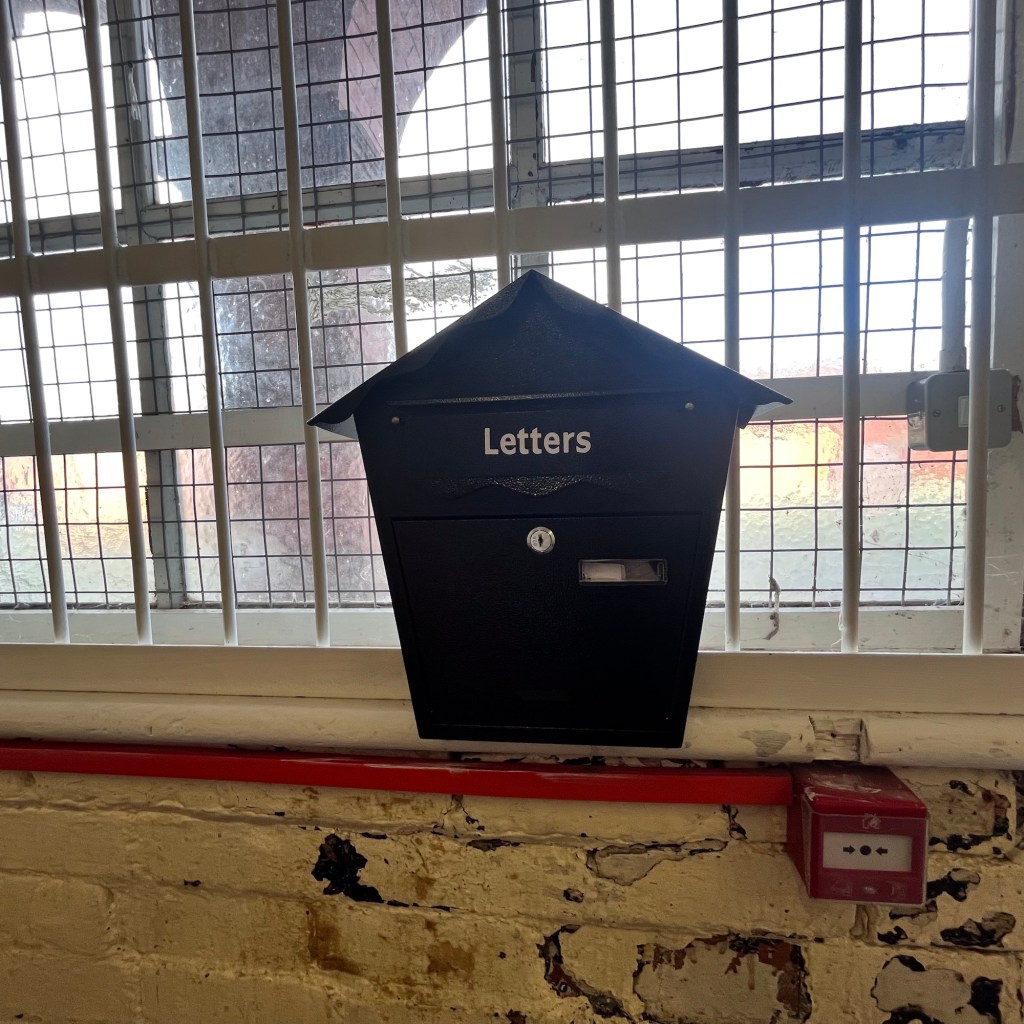
In another part of the house, I presented Dear Moon, a participatory installation inviting visitors to write letters to the moon. A small writing table, paper, envelopes and a black letterbox created a space for reflection and dialogue.

This piece extended my ongoing investigation into correspondence and indirect communication, letters that may never reach their destination yet carry emotional truth. The moon, as an unreachable listener, became a symbol of distance, empathy and collective longing.

Here, the act of writing functioned as a social sculpture, a participatory moment that transformed private thought into shared experience. It also reasserted my belief that art can hold silence as much as speech, offering space for what cannot be articulated in political discourse.

Ornament–Intent revealed how the domestic realm, often coded as private or decorative, is inherently political. Within Emma Rushton’s home, art entered the space of the everyday, resisting the hierarchies that separate aesthetic experience from lived reality.

My contribution sought to hold this tension between care and critique, ornament and intent, intimacy and history. Each ceramic object or written phrase acted as a small social gesture, reanimating the conversation between form, politics and communication.

Posted in 2025-2026, collaboration, curation, Exhibitions, Project, Reflection, Research, Social Sculpture

Account Not Recognised- Reflection of The Right Map

Account Not Recognised at Birch in June was part of The Right Map programme by Ghost Art School. The exhibition took place in the Hamilton building, which was once a bank. This setting shaped my thinking about the title and the idea of value, exchange and belonging. The phrase Account Not Recognised came from my digital text piece and reflected both a technical error and a human condition. It suggested exclusion, misunderstanding and the unstable ways in which identities and actions are acknowledged or denied.

Co- curating this show was a process of collaboration and care. We wanted to create a space that could hold protest and rest, activism and absurdity, humour and exhaustion. The title Account Not Recognised came from the familiar digital message, but in this context it became about being unseen or misread, and about the tensions between visibility and erasure.

My own contributions included a pillow, a fragment of wall text and a digital LED display. The pillow was printed with an image found online showing a crowded boat of migrants at sea, overlaid with a pixelated speech bubble saying “HELLO”. It appeared soft and domestic, yet the image beneath disrupted that comfort. The LED panel displayed inverted scrolling red text Account Not Recognised and the wall text read “Dear Moon, The war has sto…” and referred to my Dear Moon project. It was a sentence left unfinished, a letter that could not be completed…

In the centre of the gallery stood a large boat containing soil and growing sunflowers. The boat came from the Kensington community garden project by Tom D and functioned as a living sculpture. It was both landlocked and adrift, a fragile symbol of movement, care and survival.

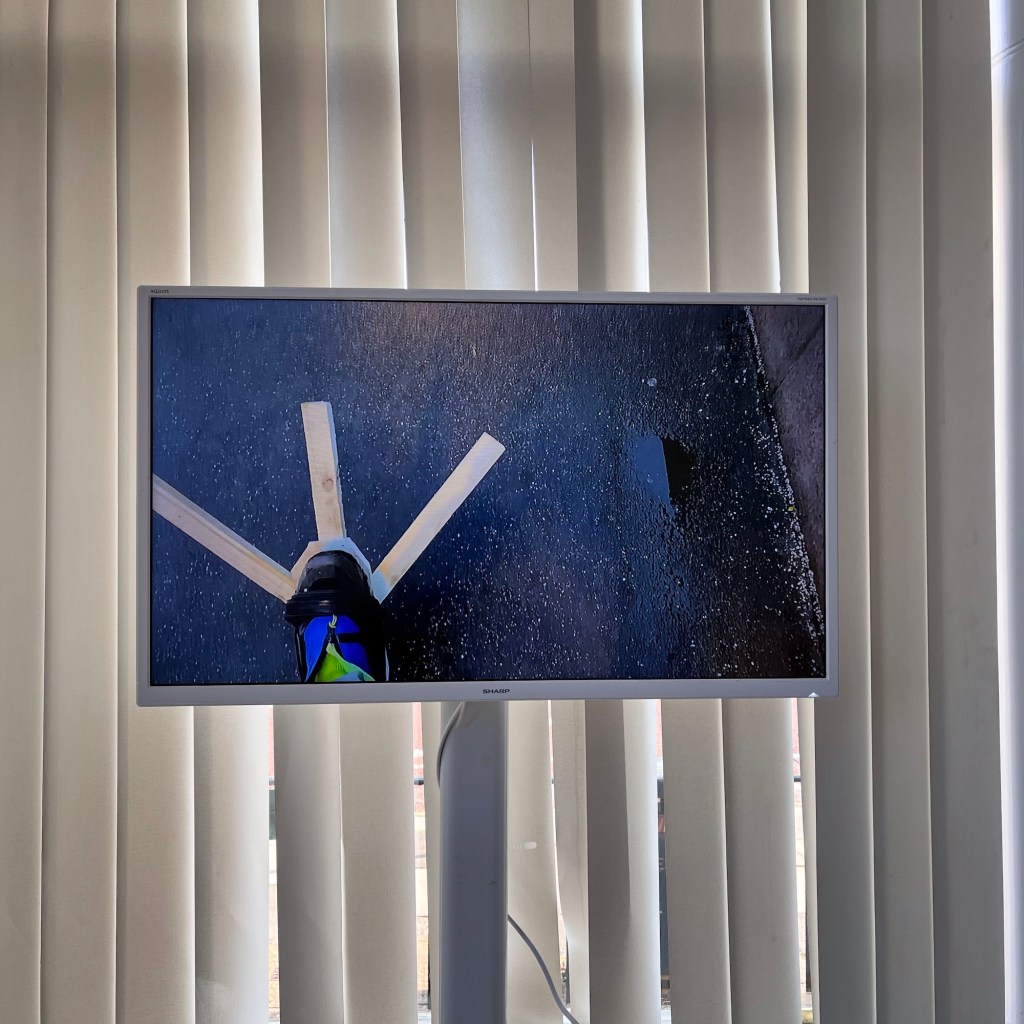
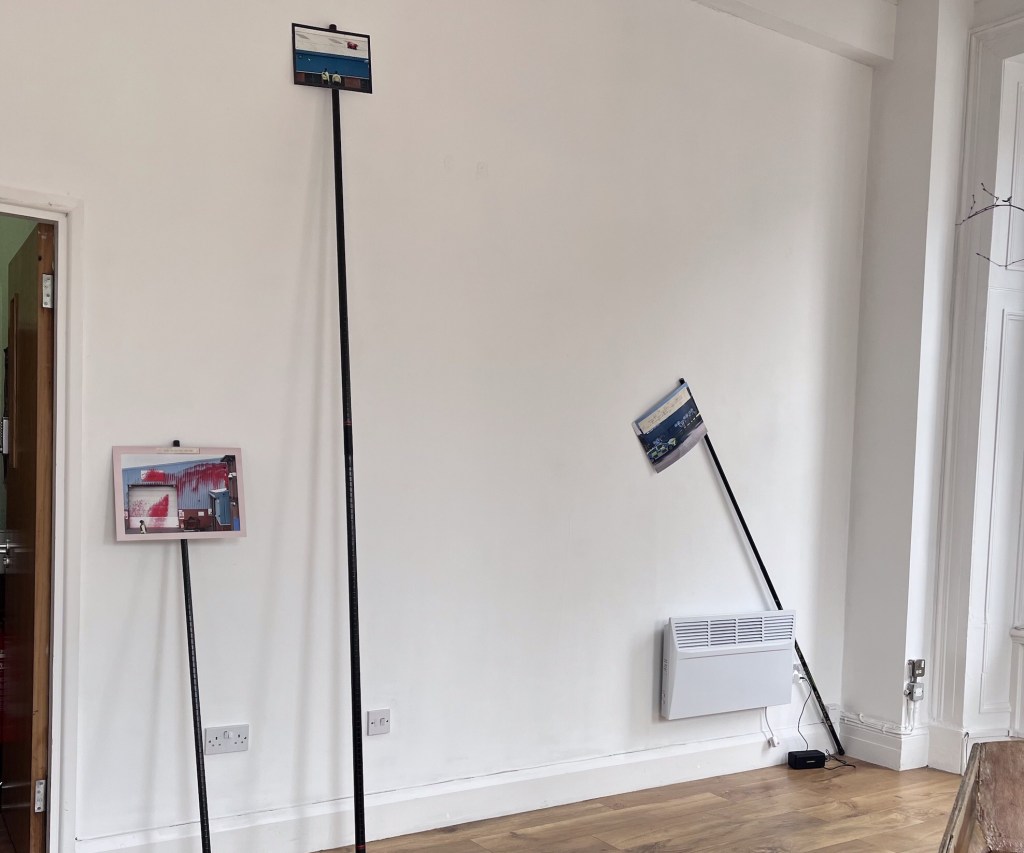
Other artists’ works brought further layers to the exhibition. Rory’s video showed a chicken foot strapped to his shoe, filmed during a protest in Russia on the second anniversary of the invasion of Ukraine. It was a quiet but powerful gesture that turned absurdity into endurance. Tom D’s photographs documented a Palestine Action protest at the Elbit Systems site in Oldham, where activists succeeded in stopping the production of weapons for the Israeli military. The red-stained facade of the building became both a wound and a mark of resistance.

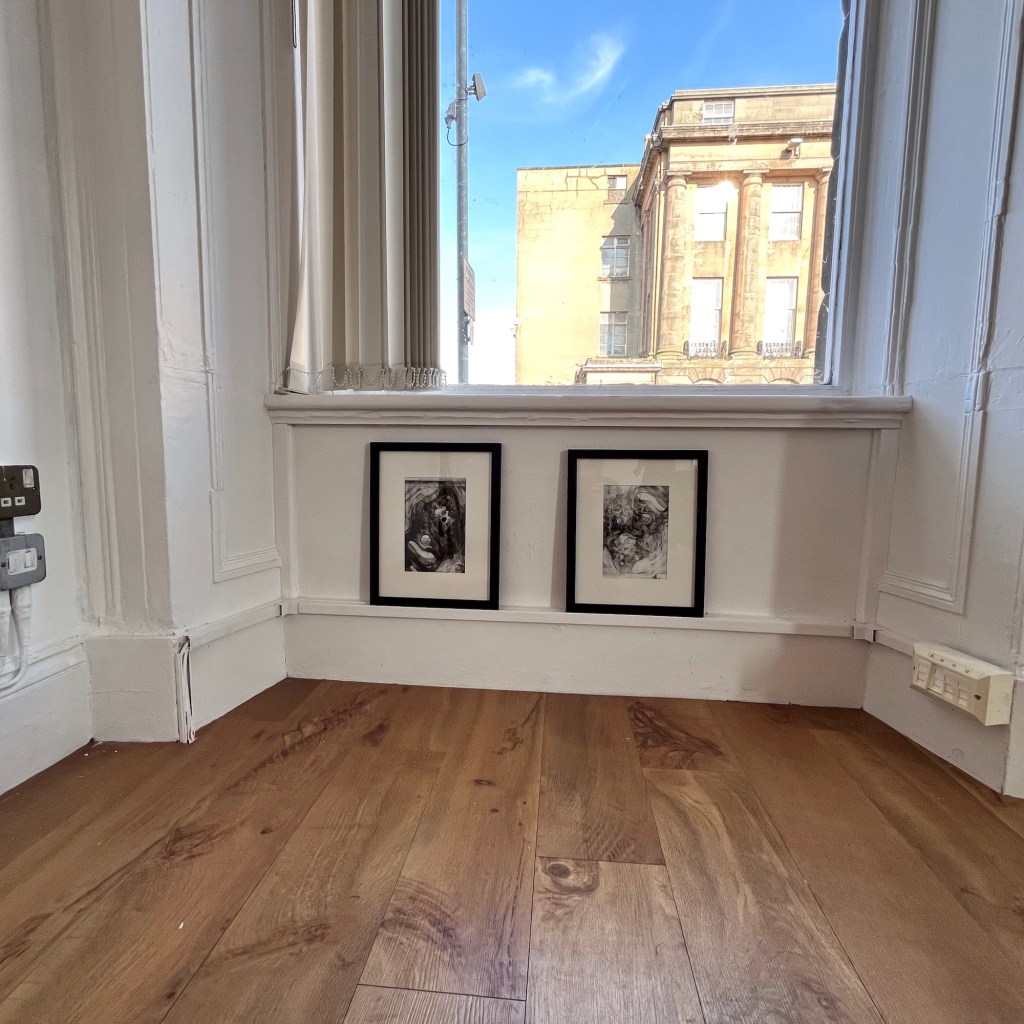
Molly’s black and white drawings added a more abstract presence.. Lily’s film, projected inside a small metal alcove, appeared to be caught mid-edit, reflecting on itself as it played.

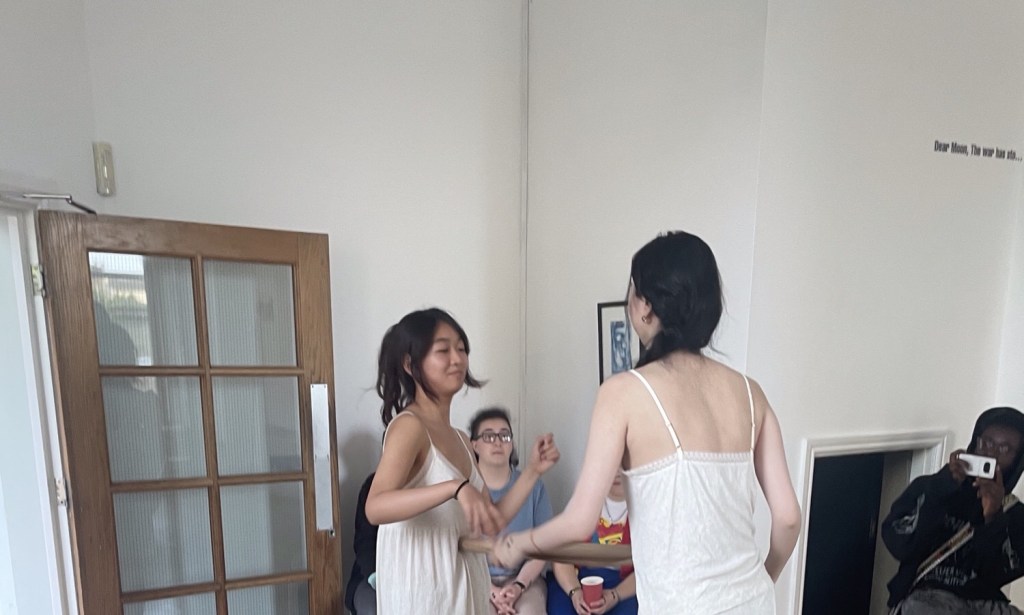
Two live performances took place on the opening night. Soop, by Hannah, Marie and Tom K, involved the audience in making a communal soup. It was messy, generous and unpredictable, reminding me of how collaboration relies on trust as well as misunderstanding. Xueying Zhang’s performance with her collaborator involved holding a cardboard pole between their bodies while slapping each other. It expressed the tension between cooperation and conflict, both intimate and absurd.

The work here whether documentary, performative or digital, asked what it means to be recognised and what is lost or gained in that process. It confirmed my interest in social sculpture and the politics of communication.

Finally, recognition is never simple or complete, yet within its uncertainty there is always room for empathy..

Posted in 2025-2026, Lectures 2025-2026, Reflection, Research, Writing

1–1 Tutorial 6th October 2025

On Monday, I joined the open 1–1 tutorial with Jonathan. I really needed that conversation, my thoughts were fighting inside my head, and sometimes talking is the best way to organise them.

We discussed many different things. Jonathan has a great way of asking the kind of questions I should be asking myself. I feel that if I had one good question every day, I’d probably write on my blog much more often.

We talked about The Right Map exhibition series and my experiences, how much I learned from working with different people, and how I feel about working with different groups: one more formal and structured, and the other relaxed and informal. Although I’m an organised person who likes to plan ahead, I found that I have the ability to be adaptable and ready to work in fast-paced situations, finding solutions in the moment. It was a challenge, but it also increased my confidence.

I know people have different styles of thinking and working, and as long as we trust each other’s intentions and skills, things go smoothly. We can fill each other’s gaps, and I was definitely learning so much from our team.

For me, the goal of The Right Map was to create a free and welcoming space where everyone could learn and grow together. That’s what makes a social sculpture, and that’s the goal of making this kind of art.

We also talked about the CBS show Sculpture (see my previous post), which reminded me that I should share the short text I wrote for it, along with the 50-word bio I submitted, and the one I received written by artist Cos Ahmet, which my sculpture responded to.

Here are the two secret bios:

Cos Ahmet:

Tropes corporeal fragmented, human, other. Limbs without a host, the skin of things physical, digital. Choreographic. The material’s immaterial states between liminal space on the threshold of self, other. Dust.

Me:

A child took up her pen, signing walls with her name. We’ll play socially… I’ll sculpt the riddle. Language won’t matter; wisdom gathered on page 104–105. Forgive the broken clock!

Another part of our discussion was about Social Publishing, a lecture by Allegra Baggio Corradi that I listened to after the printing meeting with Alex Schady. Jonathan had attended that session too, so it was wonderful to exchange thoughts and notes with someone who was there. We both agreed how inspiring it was. I realised how much it connected with my ongoing project Writing Letters to the Moon.

Learning about Social Publishing, even just understanding its definition, helped me see what I’ve been doing from a new perspective. I’ve always thought of my book as a sculpture, its process far removed from traditional publishing. I don’t see myself as an author but as an artist, still figuring out what that means!!

These days it’s hard not to wonder are artists becoming celebrities, activists, or something in between? Genuine voices, attention-seekers or good actors? There’s definitely more to write about this.. I feel like I’ve gathered so much new information, yet the more I learn, the more I realise how far I am from finding the right answers.. And the higher I try to rise, the lighter I have to become, learning to let go of things and sometimes people along the way..