Posted in 2025-2026, Blog, Books, Reading, Reflection

Rebecca Fortnum Talk-26th May

I thought I wouldn’t need to post anything this week… but who knows what you might hear or see that you simply can’t resist writing about.

“No Knowing” is a topic that feels complicated and confusing to me unless I break it down for myself. There are things I have experienced and felt, but there are also moments that make me stop and think: hang on, I need to understand this more, at least for myself! Because it’s also difficult to know whether you are right or wrong.

Rebecca Fortnum spoke about the unknown and the idea of “not knowing” within artistic practice, about allowing “the other” to become part of the process that helps you understand what you don’t yet know in your work. She mentioned an artist who brought oak trees to Tate, explaining how they didn’t choose where to place them and wished they could move them around and experiment more, but practicality meant the trees had to remain where they were installed. I missed the artist’s name, so I need to watch the recording again and read On Not Knowing: How Artists Think by Elizabeth Fisher and Rebecca Fortnum.

But if she was referring to Ackroyd & Harvey’s installation of 100 oak trees outside Tate Modern, celebrating Joseph Beuys, then the context becomes important. Entitled Beuys’ Acorns, the project began in 2007 and marked 100 years since the birth of Joseph Beuys. The work was inspired by Beuys’ 7000 Oaks. Knowing this information changes things for me. It becomes clear that the artists and organisers did, in fact, know what they wanted. There was intention, research, and historical context behind the project.

Another interesting example mentioned in the session was Bruce Nauman’s Fat Chance John Cage. For me, this work represents a healthier interpretation of “not knowing” and of relying on chance. an acceptance of imperfect and limited knowledge without necessarily becoming vulnerable or directionless. Even the inclusion of “John Cage” in the title, much like Beuys’ Acorns, offers information and context. It shows where the artist is coming from. There is still knowledge present.

So what happens when I do not know? And when I interact with someone else who also does not know what I really want or need? Sometimes that uncertainty can create chances, accidents, and unexpected discoveries, some beautiful, some uncomfortable. But completely removing knowledge can place artists in vulnerable situations.

If I’m playing with chance through repetition, as seen in Rebecca Fortnum’s drawings of children with closed eyes or the unknown death mask, then I understand that as an openness to what technical or practical processes might allow to happen. But there is still an underlying knowledge of intention. For example, if I decide to draw faces, I already know what I want to engage with. Through chance, I might then discover something beautiful or unexpected that leads me towards new research and new knowledge. To me, this feels like another healthy form of “not knowing”.

So what worries me is when “not knowing” becomes a comfort zone, something that leaves me vulnerable to gaslighting, manipulation, or losing my sense of direction altogether. It was difficult to express this during the session because I worried it could be misunderstood. But one of the great things about this course is that we have a blog for documentation and reflection.

Posted in 2025-2026, Colonial history, curation, Exhibitions, Reading, Reflection, Research

Coding Spaces and Archipelagic Thinking 

Yesterday we had an interesting discussion about coding exhibition spaces and curating. Jonathan shared some texts by Edouard Glissant and his ideas about continental and archipelagic thinking. We discussed global dialogue, where cultures meet and exchange with one another, and how these ideas could be applied within curating. We also questioned the difference between algorithmic and human curating.

My mind felt crowded with thoughts, words clashing against one another. Writing about it helped me untangle those ideas and find the right words..

So,

1- Continental and Archipelagic Thinking

First, I did not know about Edouard Glissant until Jonathan mentioned him. Before writing this, I did some research and discovered that Glissant attended the same school as Fanon during a similar period. I also found that Glissant was influenced by Aimé Césaire, the poet and politician who held important political positions in Martinique and was one of the founders of the Négritude movement.

What I found strange, however, was the name of the capital, Fort-de-France. The name feels heavily colonial and military in origin, and it made me question how much it represents the mixture and complexity of Caribbean identity that Glissant writes about. If Caribbean identity is shaped through creolisation, relation, and cultural mixture, why do many places still carry the language and structures of colonial power?

Returning to Glissant’s theory, it can sound idealistic unless we also discuss unequal power structures. What happens when one culture dominates the exchange? And who is speaking for whom?

I believe archipelagic thinking requires a degree of equality in power, position, and knowledge in order for genuine exchange to happen. People need to feel safe and respected enough to welcome openness, relation, and dialogue.

At times, I feel that Glissant’s ideas emerge from a context where it is easier to imagine archipelagic relationships, islands existing beside one another, sharing histories of colonialism, displacement, and struggle. However, in reality, relationships between places are rarely equal. If one nation or culture has greater resources, political influence, or economic power, it will inevitably shape the exchange more strongly than the other. Examples such as the UK and Ireland or Indonesia and the Philippines show how unequal power can influence cultural dialogue.

Because of this, I believe there is a responsibility not only to be welcoming and open, but also to avoid placing ourselves in vulnerable positions through a lack of knowledge, experience, or access. On a larger scale, this relates to power, science, dignity, and human rights. Without awareness, exchange can easily become influence or control by those who already hold authority.

How can this be applied to curating? For me, curating should involve both knowledge and empowerment. The curator should develop enough understanding and experience to support the work responsibly, while also empowering artists and contributors so that exchange becomes mutual rather than hierarchical. True dialogue cannot happen when one side only gives and the other only receives.

2- Algorithms and Human Curating

When thinking about algorithms and human curating, I believe that even AI is ultimately shaped by humans. Algorithms are built from data that is created, selected, and controlled by people, often within commercial or business systems. Because of this, algorithms tend to respond to behaviour patterns and visual preferences rather than deeper emotional or ethical understanding.

Algorithms are designed to please, predict, and reinforce engagement. They often agree with existing behaviours rather than challenge them, unless introducing something new becomes commercially useful. They cannot fully understand emotional complexity, vulnerability, or the human condition in a particular moment.

Human curators, however, allow space for emotion, ethics, care, and mistakes. Whether curating an exhibition, a book, a workshop, or a conversation, human curation carries sensitivity toward people and context. At the same time, curating also reflects the organisers themselves, their intentions, politics, feelings, and what they want to communicate through the work.

Curators are often the first audience to encounter an artwork, and that first encounter is important for both the artist and the curator. Curatorial work therefore carries significant responsibility. However, I believe curating should happen alongside the artist and the artwork, not over them. Also, it’s important to first experience the artwork on its own terms before being influenced by the artist’s explanation, while still maintaining a respectful and collaborative relationship.

Reflecting on all of this takes me back through the journey of the last two years, curating spaces, books, workshops, and even this blog. Technology has an important role in making processes easier, but humans still carry the responsibility of shaping narratives and telling stories.

Finally, archipelagic thinking may be an attempt to create ethical relations despite unequal histories and structures. And, from a curatorial perspective, curators must consider the needs of the artwork, including care, health and safety, protection, and the conditions the work requires within a space. Exchange between curator and artist is essential, because curators cannot exist without artists and contributors!
Posted in 2025-2026, Books, collaboration, Exhibitions, Moon, Reading, Tutorials 2025-26, Writing

1-1 Tutorial 22nd April

Last week I had my final 1–1 tutorial, and it was a very valuable conversation in which I was able to reflect on my work and plan for the coming months, thinking about challenges and what matters most right now. Having this discussion at this stage feels important, because I believe I need Jonathan’s insight and guidance while I’m still in the process of making.

The tutorial gave me a great deal of confidence, and the next day I began designing the bone-dry tea set. I made 21 pieces for the tea set, alongside over 20 small crescent forms, which I will use to make bookmarks for our MA Digital class. Each ceramic piece carrying a story from colonial history. I find that I can’t add anything to the work unless I’m sure it’s relevant and contributes to the overall narrative, and this does slow me down slightly. However, this has been one of the most important lessons during my MA: taking the time to build a cohesive body of work, without unnecessary additions or distractions. I can easily feel overwhelmed and distracted but I have learned to recognise that moment. When it happens, I stop adding and instead spend time reading around the theme or taking a break. This is how my ceramics project develops through slow reading, while the Moon Book has developed through slow writing.

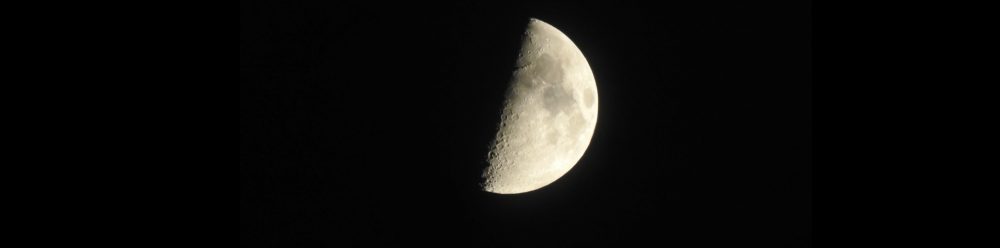
I spent the week working with clay, while also setting up the new show at Liverpool St George’s Hall, where I will be showing Moon Book pages on silk (factory print). I made these last year for The Right Map 2025 but did not have the right opportunity to present them. Now they feel more suited to the theme (Home and Away) and to the space at St George’s Hall. I installed them over a long black heater, where the warm air creates a gentle movement in the work, subtly animating the delicate sheets.

At the core of my social sculpture practice is care and the intention to make a meaningful difference. The Moon Book demonstrates this clearly by connecting people and creating space for shared vulnerability. After the last workshop, some participants began sending me letters in response to others letters. I feel a deep sense of gratitude towards this project and the people involved. Writing letters feels especially meaningful, and I’m  excited about the next book Dear Friend (2027). What I find particularly beautiful is that some children are growing up through this process, and some participants who have never met are writing to each other with genuine care and intimacy. It shows how powerful and delicate these connections are. I feel I owe a great deal to everyone who has taken part.

The tea set also functions as a form of social sculpture. It consists of multiple pieces that invite interaction, through storytelling, through history, and through use. Sharing stories from the past is itself a way of engaging with people who are no longer here. In this sense, the work becomes a way to educate, to encourage questions, and to create opportunities for participation.

For example, discussing the Opium War  came up in my tutorial with Jonathan. We began asking: how many “opium wars” exist today? How many forms of addiction are being created, and how will these stories be told in the future? Simply bringing these questions to the table is part of the work. It opens up dialogue and that is where social sculpture begins to happen.

Posted in 2025-2026, Reflection, Research, Tutorials 2025-26, Uncategorized

1-1 Tutorial 11th February

I took some time to reflect on this tutorial because I was so busy. I also needed to read more carefully, as these kinds of tutorials do not end when they finish; they tend to open further questions and lead me into deeper reading.

In this tutorial I had with Jonathan, we spoke about learning and what learning really means. We reflected on the assimilation and accommodation post, and on the idea that learning is not for display but for use. It should transform how you live. It needs to be functional, active, and embodied.

We also discussed translation and whether my practice is, in itself, a process of translation. I have been thinking that everything I do is a form of translation. There is a language I carry, a language of thoughts and ideas, constructed from the data my brain collects. This data is my lived experience: encounters with people, spaces, and time. Yet data alone is not enough, it must be translated into meaning, and meaning must then be translated into thought and action.

I can’t think about this without turning to Merleau-Ponty’s phenomenology. What interests me most is his insistence that perception is not a detached mental operation but something embodied, something that happens through our being in the world. Our understanding is not separate from our living, it’s shaped through the body’s continuous engagement with its environment.

Language itself offers a powerful example of this phenomenology. Language is collaborative, it’s formed through shared experiences within a community, shaped by surroundings and histories. Using Arabic as an example, because it’s my mother tongue, Arabic is built on a root and pattern system. Most Arabic words derive from a root of three consonants (rarely four). This structure allows the language to remain generative: new words can emerge as long as they remain faithful to the semantic core of the root.

Here are two examples one scientific and one poetic, the word حاسوب (computer) and حاسبة (calculator) both derive from the root ح س ب, meaning “to calculate”, similar to how “computer” and “calculator” trace back to Latin roots. Second one is حب (love), from the root ح ب ب, associated with seeds. Although I have not encountered this interpretation formally in literature, I’m drawn to the poetic possibility that “I love you” could be understood as “I carry/have a seed for you” a seed that has the potential to grow… For me, this aligns with the lived experience of love not as a finished/ready object, but as something cultivated and sustained. Here the language demonstrates embodied perception. Meaning does not emerge abstractly; it grows from how the body, historically and culturally, encounters the world.

Colour offers another compelling example. We identify colours based on how our brains interpret light wavelengths. Yet colour is not an intrinsic property of objects. A green card is not “green” in itself, it absorbs most wavelengths and reflects the one we perceive as green. What we call colour is the result of an interaction between light, object, and perceiver. From a phenomenological perspective, colour is relational. It exists in the encounter. Different animals perceive different spectra, therefore, the world of colour shifts depending on the perceiving body. In this sense, colour is not a fixed external fact but an event that occurs within perception.

This becomes even more complex when considering visual impairment… A relative has Stargardt disease, and many people assume that eye disease results in darkness or emptiness. But in his case the brain uses surrounding visual information (often background colour) to fill in gaps where central vision is weakened. This is not simply a defect, it’s evidence of the brain’s active participation in constructing perception. Perception is not produced by the eyes alone; it’s a whole body phenomenon. The body is not a passive receiver of data; it’s an intelligent, adaptive system constantly negotiating meaning. What my relative experiences demonstrates that perception is collaborative between eye, brain, memory, environment, and prior experience.

This also raises further questions for me: how does the brain decide which colour to use to fill a gap? Why that tone rather than another? These questions do not weaken the phenomenological argument; rather, they reveal how perception is both structured and creative. The body does not merely record reality, it actively composes it. There is undeniably a relational dynamic shaping human perception. At the same time, there is an astonishing intelligence within the body itself a continuous, largely unconscious orchestration. The heart beats, the lungs breathe, cells regenerate, all without instruction from conscious thought… In recognising this, I feel both philosophical and spiritual awe, and all I can say is: glory to the One who created this body.

Finally, I return to learning. Learning is about becoming informed and being able to decode what was previously inaccessible. Ideally, learning should help solve a problem, generate new questions, or bring you closer to an answer. Yet the information we receive is always filtered through perception, our minds process what they are capable of processing and what feels significant within our lived experience.

Posted in 2025-2026, collaboration, Motivations, Reflection, Research, Uncategorized, Writing

Feedback!

What can I say… this experience has reminded me why I love working collectively and why it is so important not to rely on a single resource or only on self-knowledge.

Giving feedback as a group is such a powerful idea and such a beautiful way to enrich one another’s reflection on our practice. I genuinely loved sharing my thoughts with each of my peers and reading theirs in return. The work is amazing, it expresses human experience in such diverse ways, full of richness, honesty and genuine emotion. I felt truly honoured to be among them and lucky to witness their progress over time.

It was emotional to reflect on how we are growing together, holding each other’s hands virtually on this journey with such care and generosity. It reminded me of Jonathan’s first session in October 2024, when he spoke about kindness and compassion and how these could become the strength of our collective and our cohort. Throughout the course, he has guided us with constant care and kindness, so it is no surprise that he created this opportunity: for each of us to write short feedback for one another on a shared Miro board dedicated to every artist.

My peers’ feedback has genuinely boosted my confidence and trust in my practice. Of course, there are always things missing, intentionally or not, due to circumstances and the challenges of process. But receiving feedback that recognises your efforts is deeply energising, especially as a socially engaged artist, where the social aspect is the heart of the work.

I will definitely return to this Miro board whenever I need to. It has become a beautiful space, full of thoughts floating in this quiet corner of cyberspace.

Posted in 2025-2026, Reflection, Tutorials 2025-26

1–1 Tutorial 17th Nov

I had a tutorial with Jonathan on Monday. As always, it was eye-opening and thoughtful, almost like thinking out loud with someone who asks the questions you don’t necessarily want to confront yourself. We discussed my last two blog posts and reflected on how I feel about my ceramics (as the sugar bowl) which could stand alone in a show, compared with the collective work at the library (as the table-cloth)

Jonathan described the library project as a pure form of social sculpture and I agree with him. I see social sculpture built from “bricks” with each brick made by a volunteer. My ceramics are an interpretation of the world around me, a sculpture that begins with a thought engaged with the world and is then transformed into material. The library work, however, only comes into existence after contributors engage directly with the materials first. That distinction became clearer when I repeated Jonathan’s question to myself..

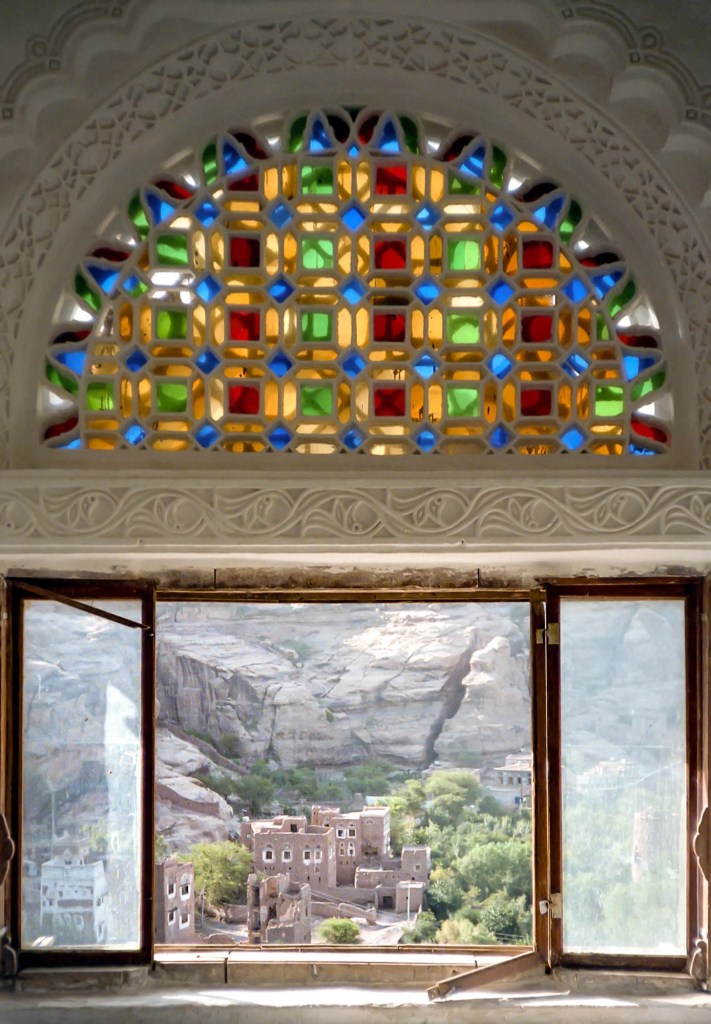
I also shared something that might have sounded a bit silly: an idea to create new work inspired by Yemeni qamariyya (قمرية) the moon windows. Then I discovered a Yemeni artist, Afraa, who is already making them in Egypt. Her beautiful pieces made from plaster and glass. And, I’m genuinely happy that a Yemeni artist is doing this work, but it now feels as though I would simply be repeating what she has already developed.

https://albukhari.com/3835/

I still love the idea because it is part of my culture and such a distinctive feature of Yemeni architecture. But at the moment, I don’t feel I have a new angle that differs from Afraa’s. Unfortunately, I have gaps in my identity; much of what I know comes from stories I’ve heard or fragments of childhood memory. This places us in different positions. Afraa’s work feels rooted in presence, while mine often reflects absence something missing, yet shaping the space around it.

https://www.instagram.com/afraa_ahmed?igsh=bG1sY3o3ZnJobzJo

Posted in 2025-2026, Lectures 2025-2026, Reflection, Research, Writing

1–1 Tutorial 6th October 2025

On Monday, I joined the open 1–1 tutorial with Jonathan. I really needed that conversation, my thoughts were fighting inside my head, and sometimes talking is the best way to organise them.

We discussed many different things. Jonathan has a great way of asking the kind of questions I should be asking myself. I feel that if I had one good question every day, I’d probably write on my blog much more often.

We talked about The Right Map exhibition series and my experiences, how much I learned from working with different people, and how I feel about working with different groups: one more formal and structured, and the other relaxed and informal. Although I’m an organised person who likes to plan ahead, I found that I have the ability to be adaptable and ready to work in fast-paced situations, finding solutions in the moment. It was a challenge, but it also increased my confidence.

I know people have different styles of thinking and working, and as long as we trust each other’s intentions and skills, things go smoothly. We can fill each other’s gaps, and I was definitely learning so much from our team.

For me, the goal of The Right Map was to create a free and welcoming space where everyone could learn and grow together. That’s what makes a social sculpture, and that’s the goal of making this kind of art.

We also talked about the CBS show Sculpture (see my previous post), which reminded me that I should share the short text I wrote for it, along with the 50-word bio I submitted, and the one I received written by artist Cos Ahmet, which my sculpture responded to.

Here are the two secret bios:

Cos Ahmet:

Tropes corporeal fragmented, human, other. Limbs without a host, the skin of things physical, digital. Choreographic. The material’s immaterial states between liminal space on the threshold of self, other. Dust.

Me:

A child took up her pen, signing walls with her name. We’ll play socially… I’ll sculpt the riddle. Language won’t matter; wisdom gathered on page 104–105. Forgive the broken clock!

Another part of our discussion was about Social Publishing, a lecture by Allegra Baggio Corradi that I listened to after the printing meeting with Alex Schady. Jonathan had attended that session too, so it was wonderful to exchange thoughts and notes with someone who was there. We both agreed how inspiring it was. I realised how much it connected with my ongoing project Writing Letters to the Moon.

Learning about Social Publishing, even just understanding its definition, helped me see what I’ve been doing from a new perspective. I’ve always thought of my book as a sculpture, its process far removed from traditional publishing. I don’t see myself as an author but as an artist, still figuring out what that means!!

These days it’s hard not to wonder are artists becoming celebrities, activists, or something in between? Genuine voices, attention-seekers or good actors? There’s definitely more to write about this.. I feel like I’ve gathered so much new information, yet the more I learn, the more I realise how far I am from finding the right answers.. And the higher I try to rise, the lighter I have to become, learning to let go of things and sometimes people along the way.. 

Posted in Reflection, Tutorials 2024/2025, Writing

A Tutorial Reflection

Yesterday, I had a 1-1 tutorial with Jonathan, and it was a great opportunity to think aloud about my practice and research. It helped me reflect on where I’m, what comes next, and how I want to present my work in the interim show. More importantly, it allowed me to articulate the intentions behind my work—what I’m truly trying to communicate through it.

At the moment, I’m working on collecting all the moon letters people have submitted into a book, which I see as a sculpture—not just because of the process involved, but also due to the layers I’ve applied throughout its creation. Here, I wanted to make a book—not just a representation of one, but a real, physical book as a sculptural form. I wasn’t trying to turn a book into a sculpture; rather, I wanted to sculpt a book itself. This distinction has been crucial for me, and I feel I’ve achieved a lot through this approach.

The process remains ongoing—collecting letters, designing the book, and considering communication in both content and form. The creative process has pushed me in new ways and opening many doors.

Jonathan shared some useful links to researchers and artists, including Donna Haraway, Claire Bishop and Lucy & Jorge Orta. He also gave valuable advice on selecting the right paper type for the book, its cover, and how different inks could react on specific papers.

We also discussed different ways the book could be displayed, which made me think more deeply about its presence in a space and how the audience will engage with it—what I could add or take away. This reaffirmed that my work is not just about making an object; it’s about layering meaning, process, and interaction.