Posted in 2025-2026, curation, Visit

Macklean and Kleeman

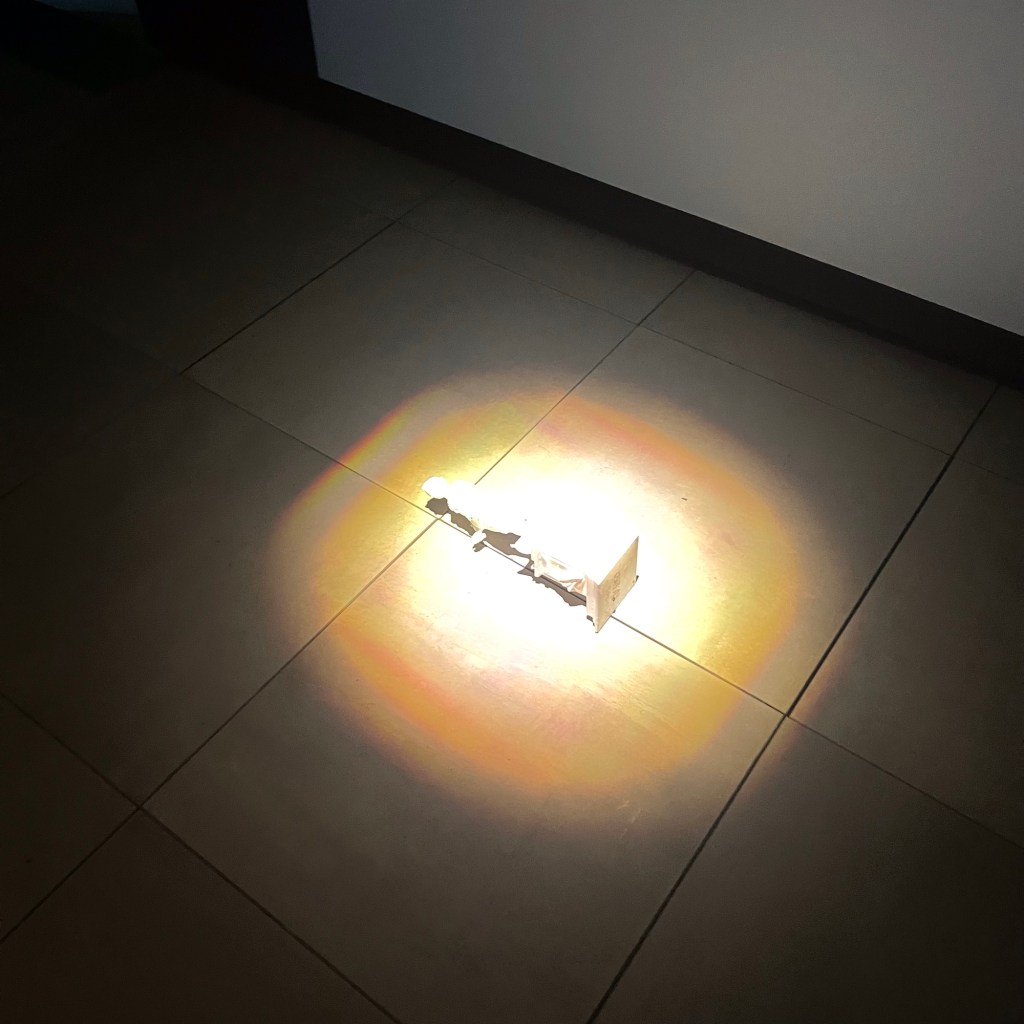
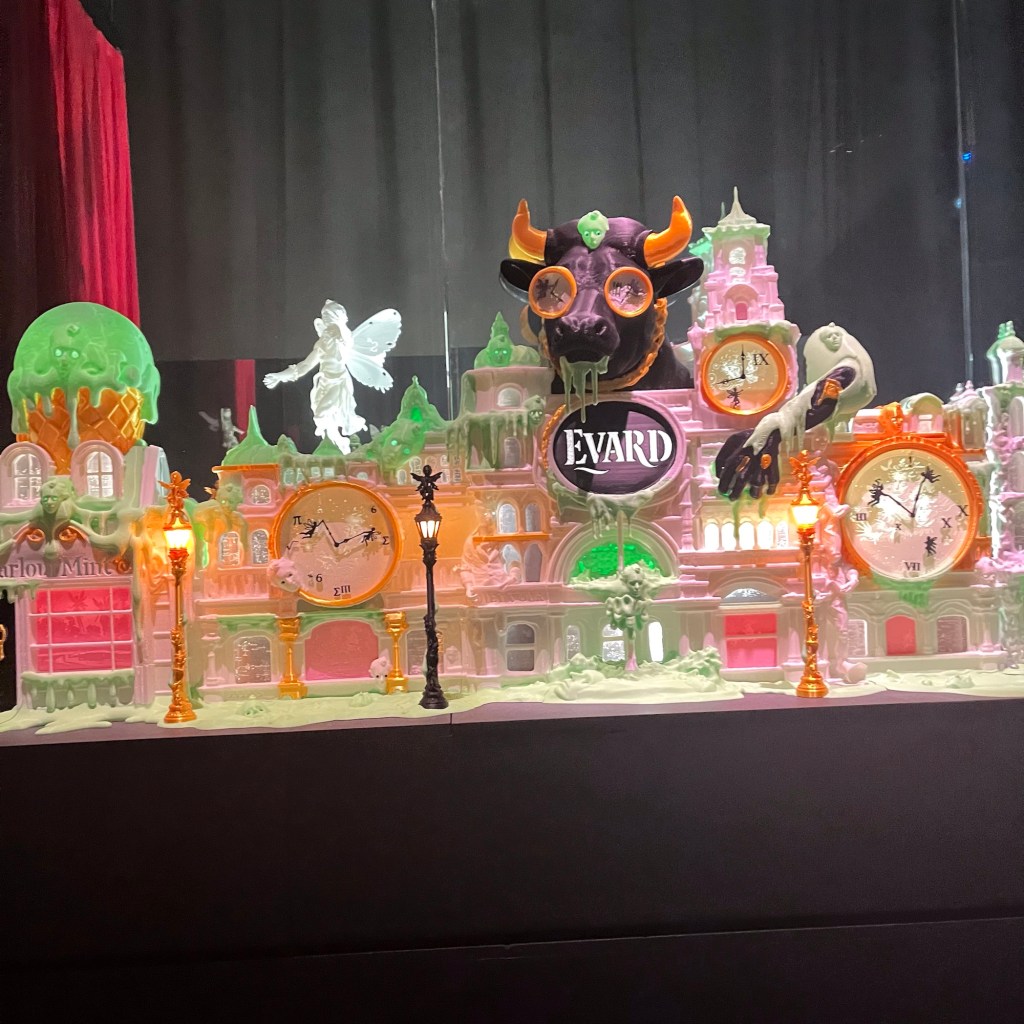
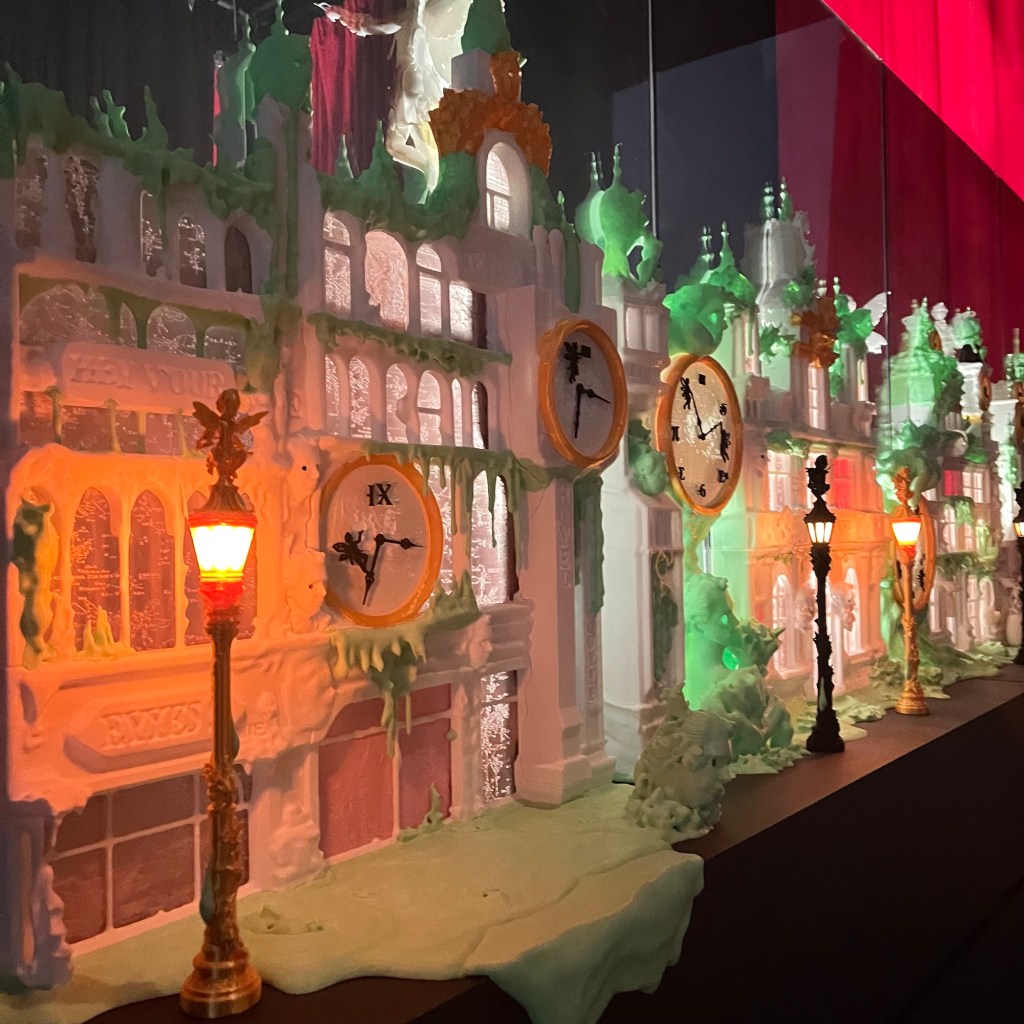
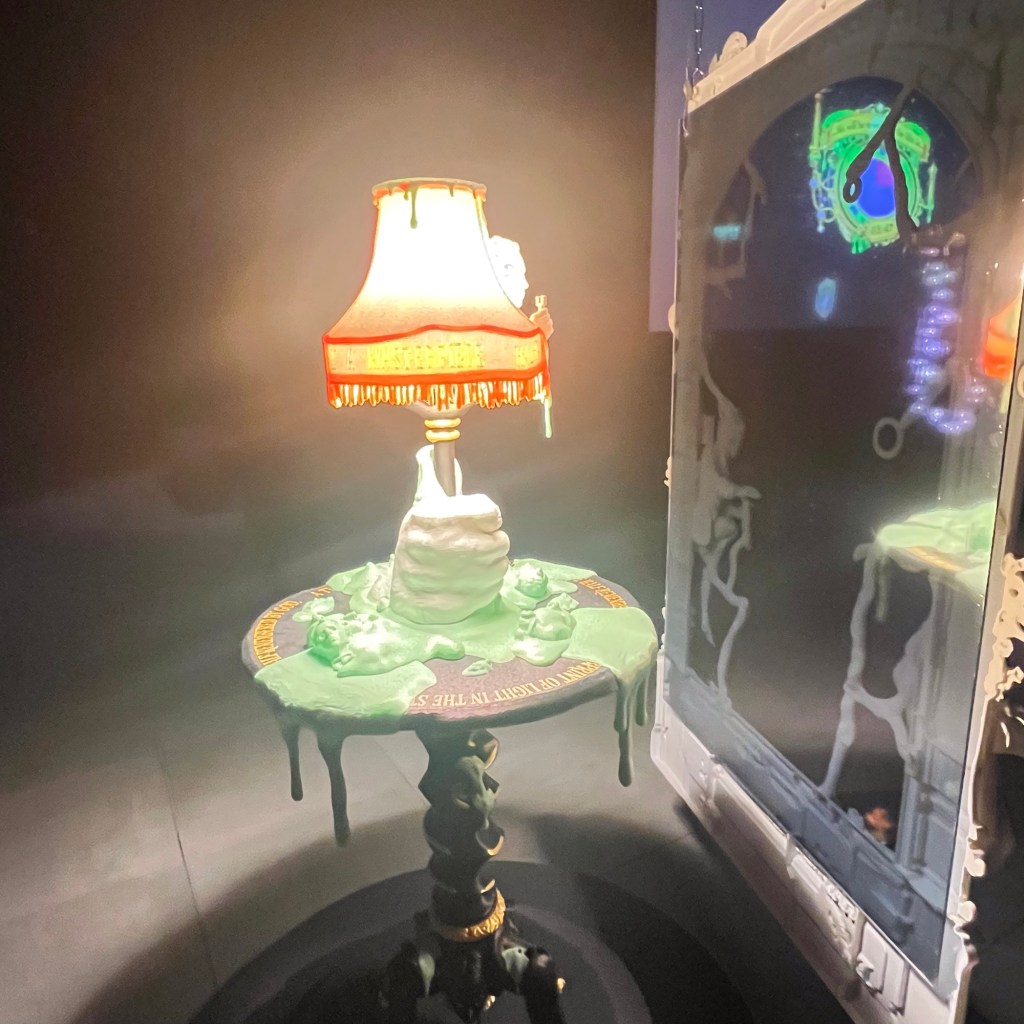
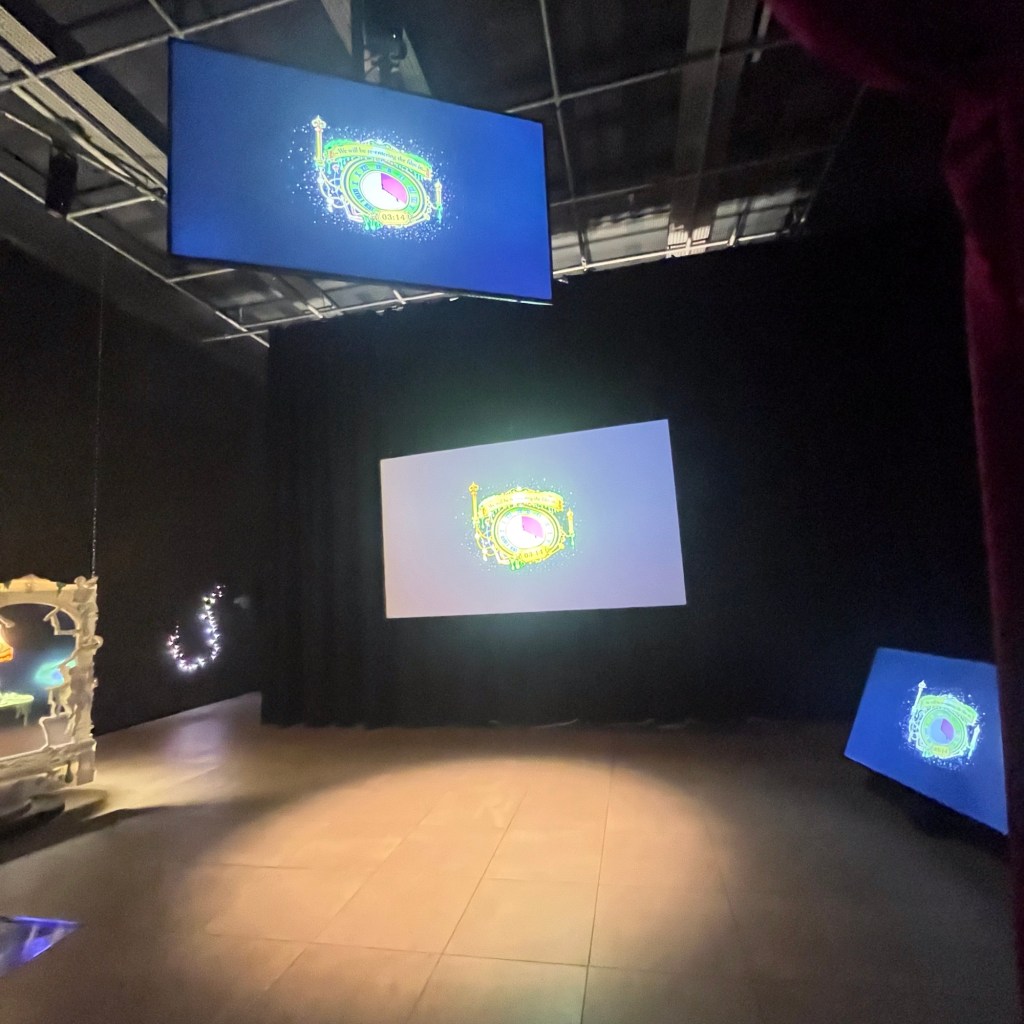
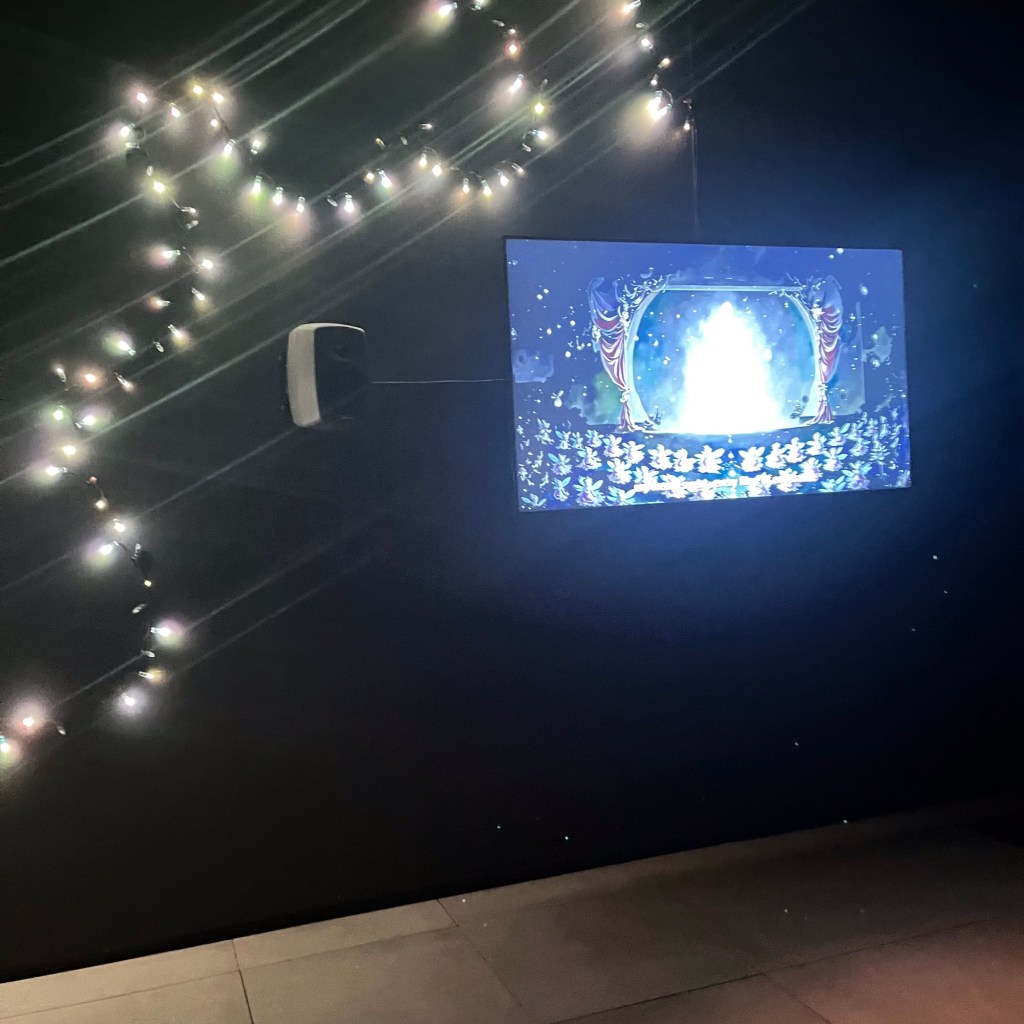
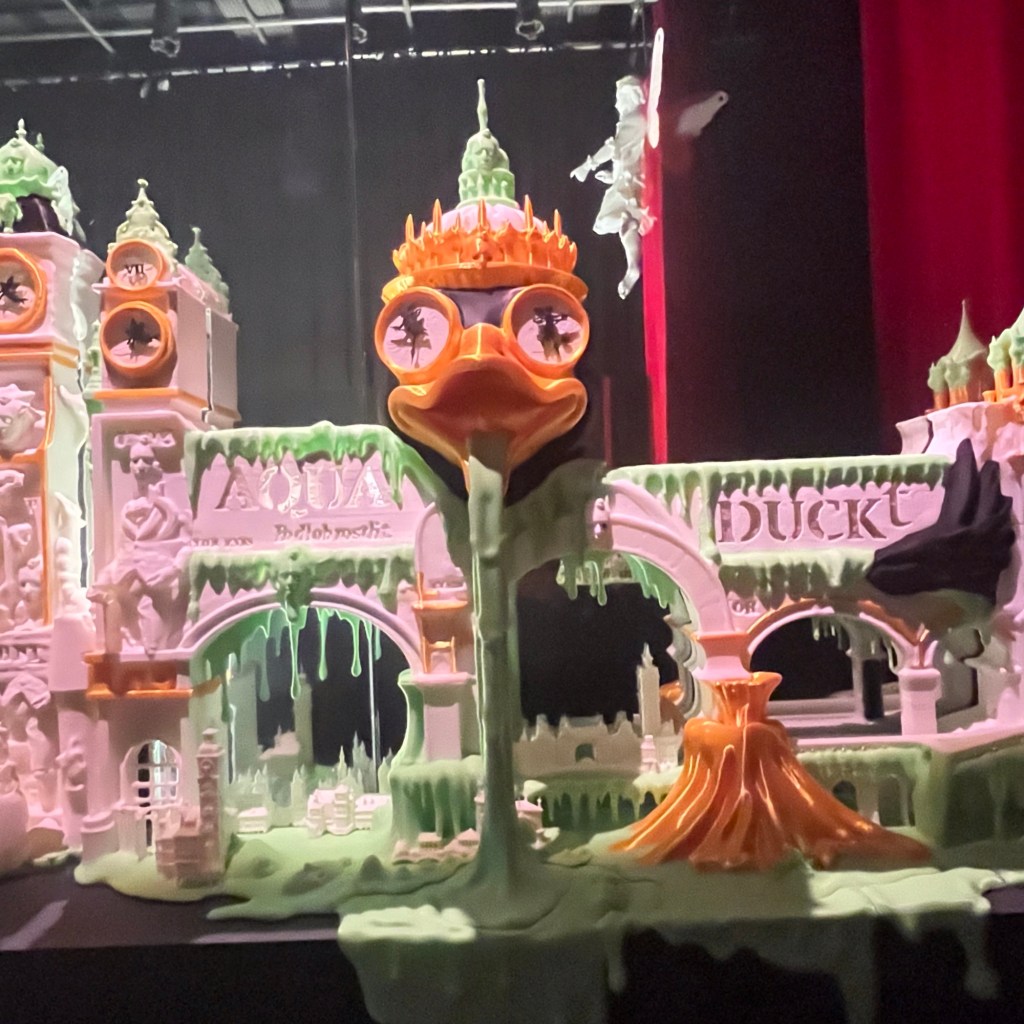
Went to visit FACT today. Jonathan recommended this exhibition by Rachel Maclean. I had heard of Rachel Maclean a long time ago, but then completely forgot about her, maybe because I had only experienced her work through Instagram. But seeing the work in person was completely different, a much deeper and more powerful experience.

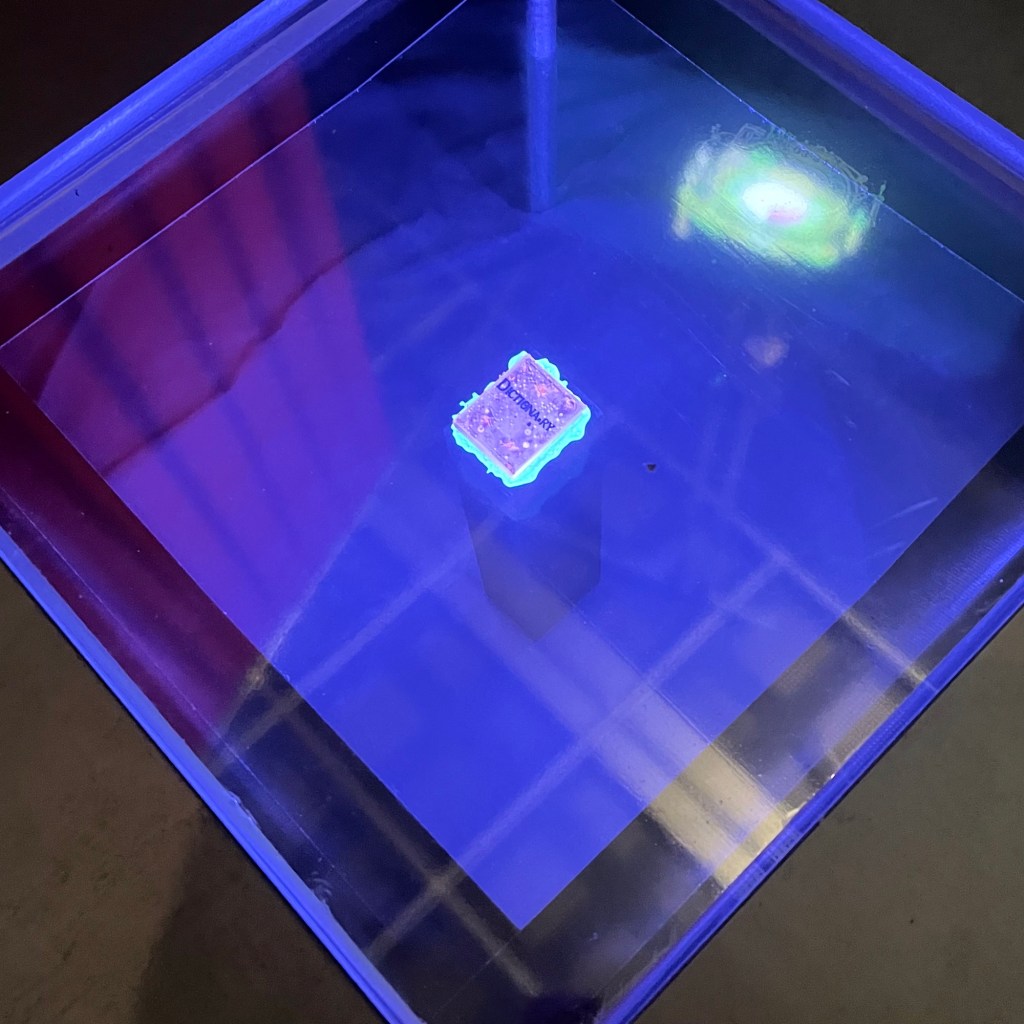
It was incredible. The story, the switching between the screens and the lights, the sculptures, and the sound all made you feel part of the installation. Moving from one room to another, following sounds and light, your whole body became involved. Everything asked you to stay alert because you did not want to miss anything. I’m so grateful for this experience. It made me realise how much difference there is when you experience an artist’s work in person, and also how much curation and installation can add to the work itself. You are building an experience, not just showing a piece of work.
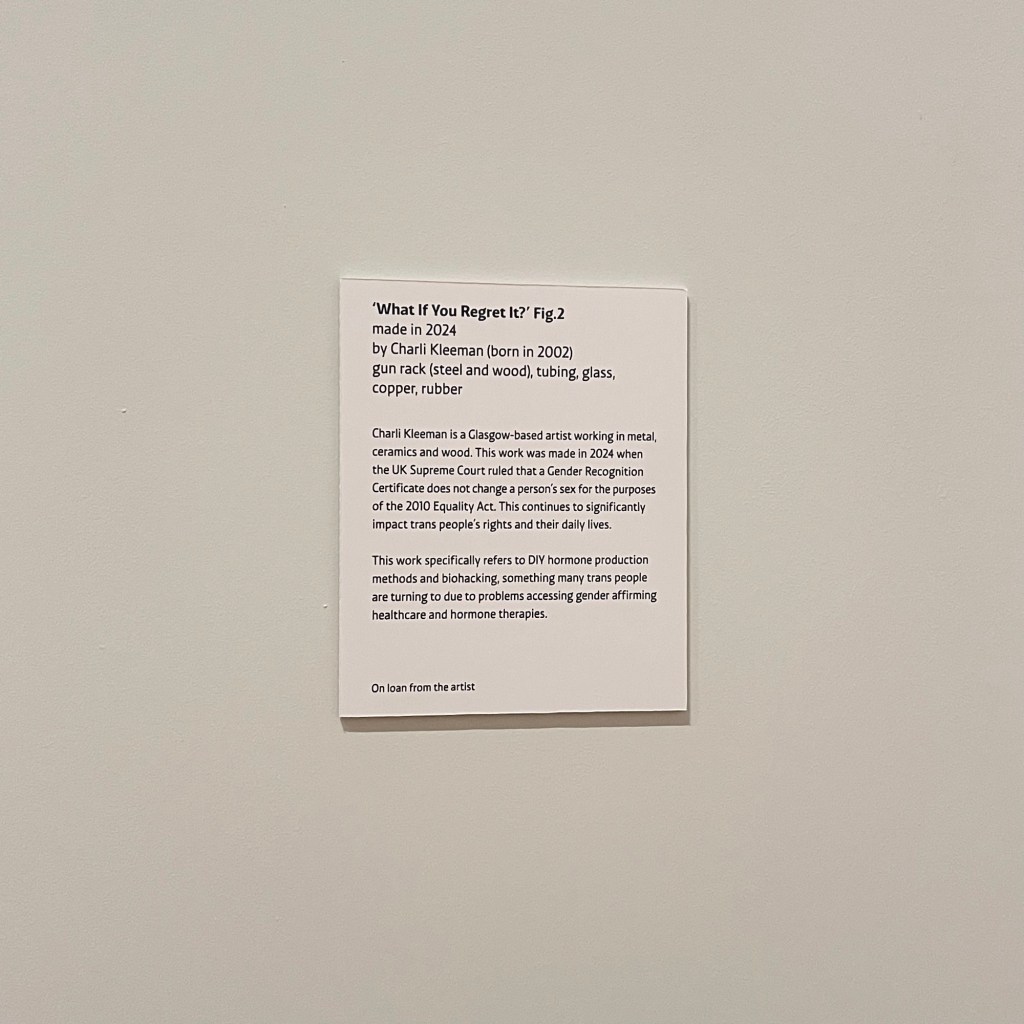
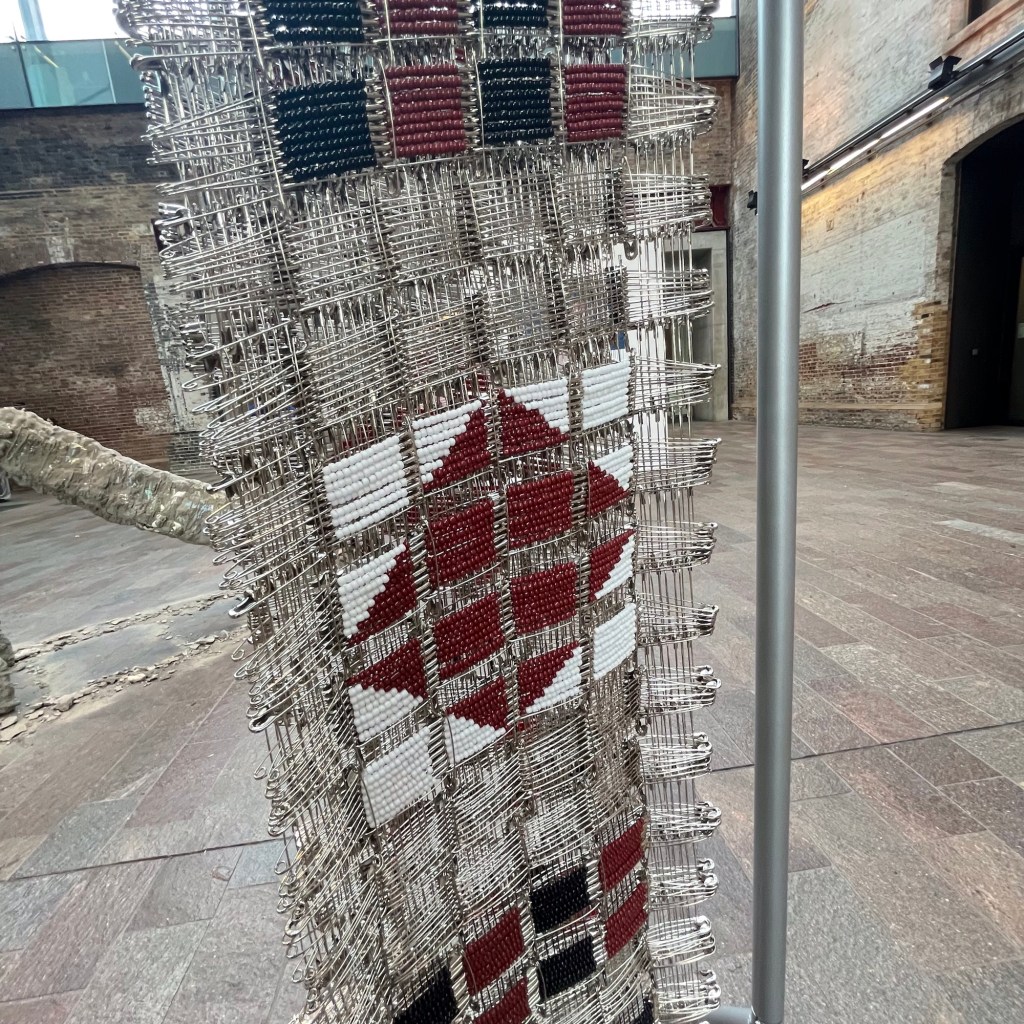
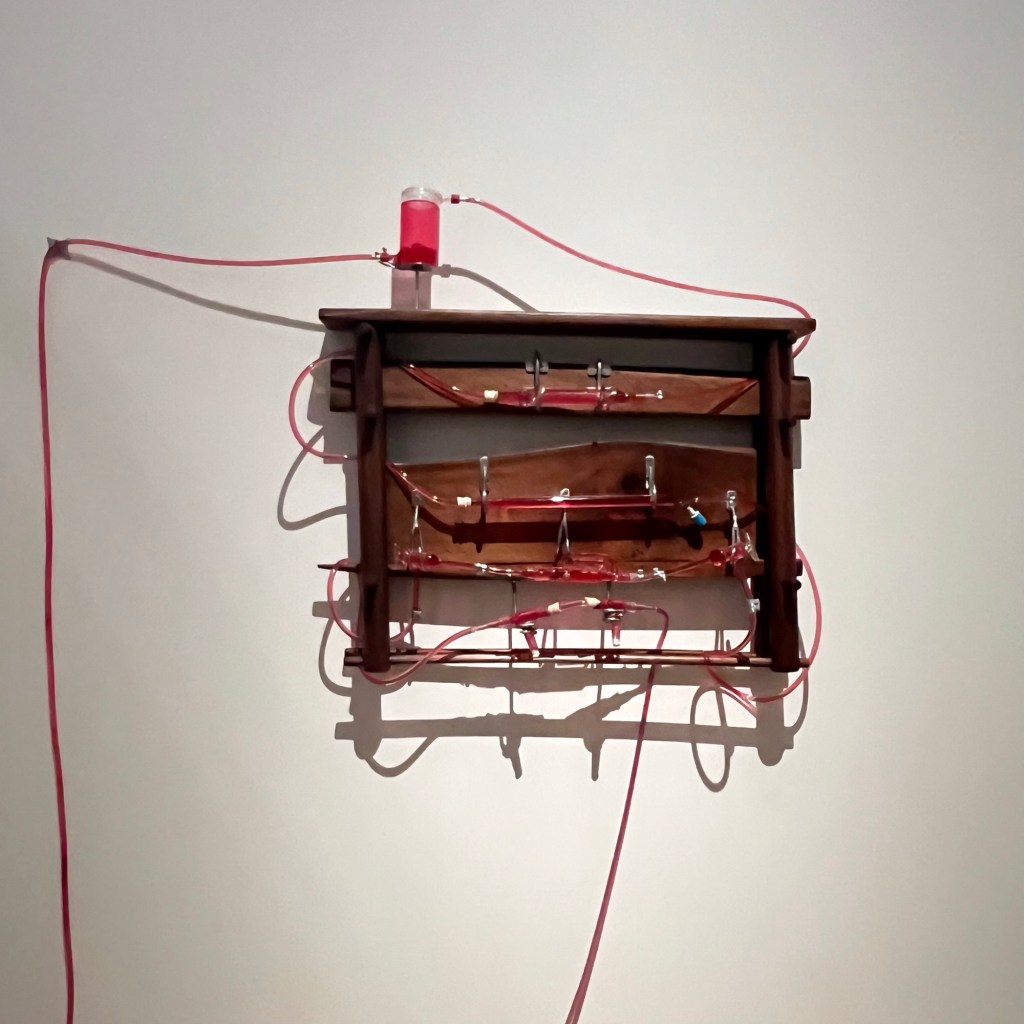
After that I went to work, and on my way home I stopped by the Walker Art Gallery. It was the last hour before the Walker closed, so I went to see the new group exhibition called Gender Stories, especially to see Charlie Kleeman. Charlie took part in The Right Map exhibitions and made large installations in the Port Sunlight stables. Last week they texted me saying they were coming to Liverpool, then we met after they had finished installing their work.. Charlie told me they had been invited to take part because one of the curators saw their work at The Right Map, last year.

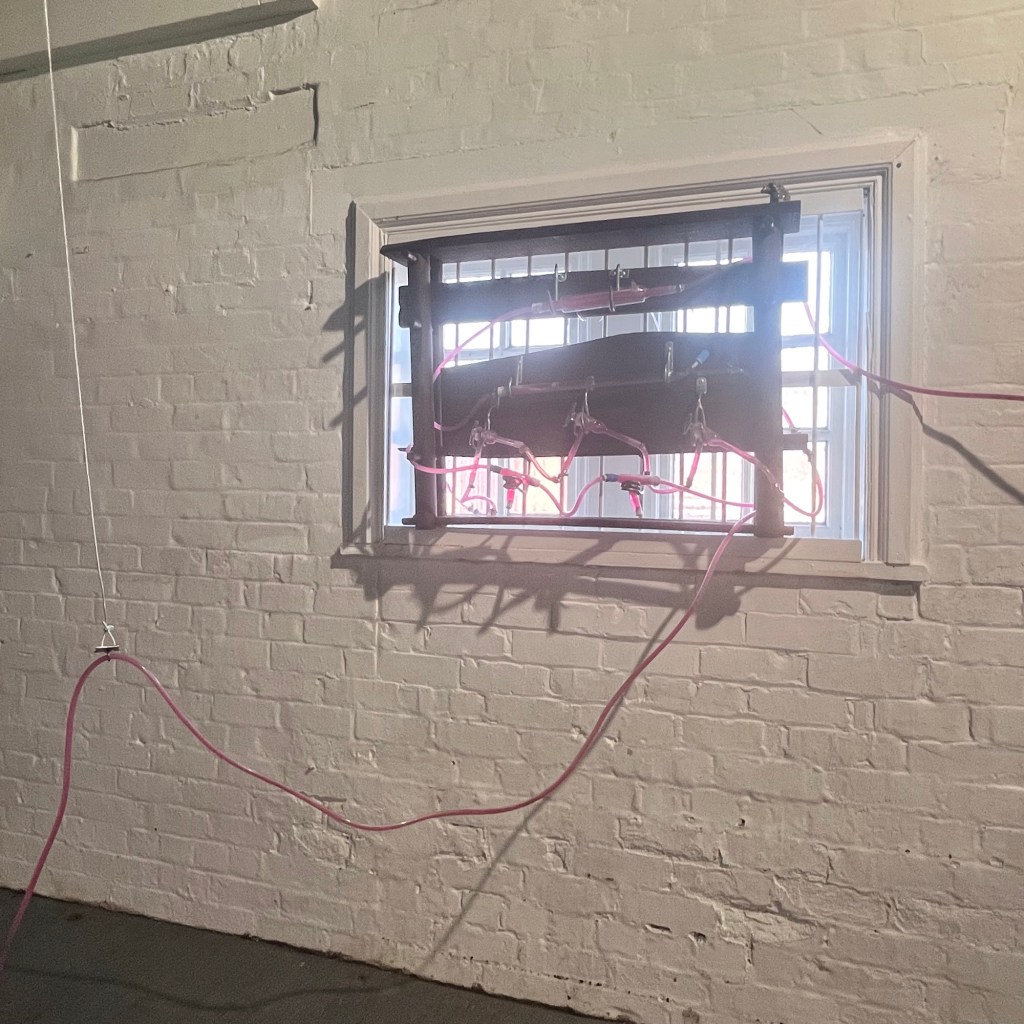
I felt so proud and happy! Charlie lives in Glasgow, and the only time they had come to Liverpool before was last year for The Right Map. Charlie took part through Rory Macbeth. We did not know each other before then. I loved their work immediately, it’s so cool and unusual. What makes me happiest is that, through the exhibitions I organised last year, I did not just make connections and learn how to create a small programme, but that some artists also benefited from that experience afterwards, like Charlie.
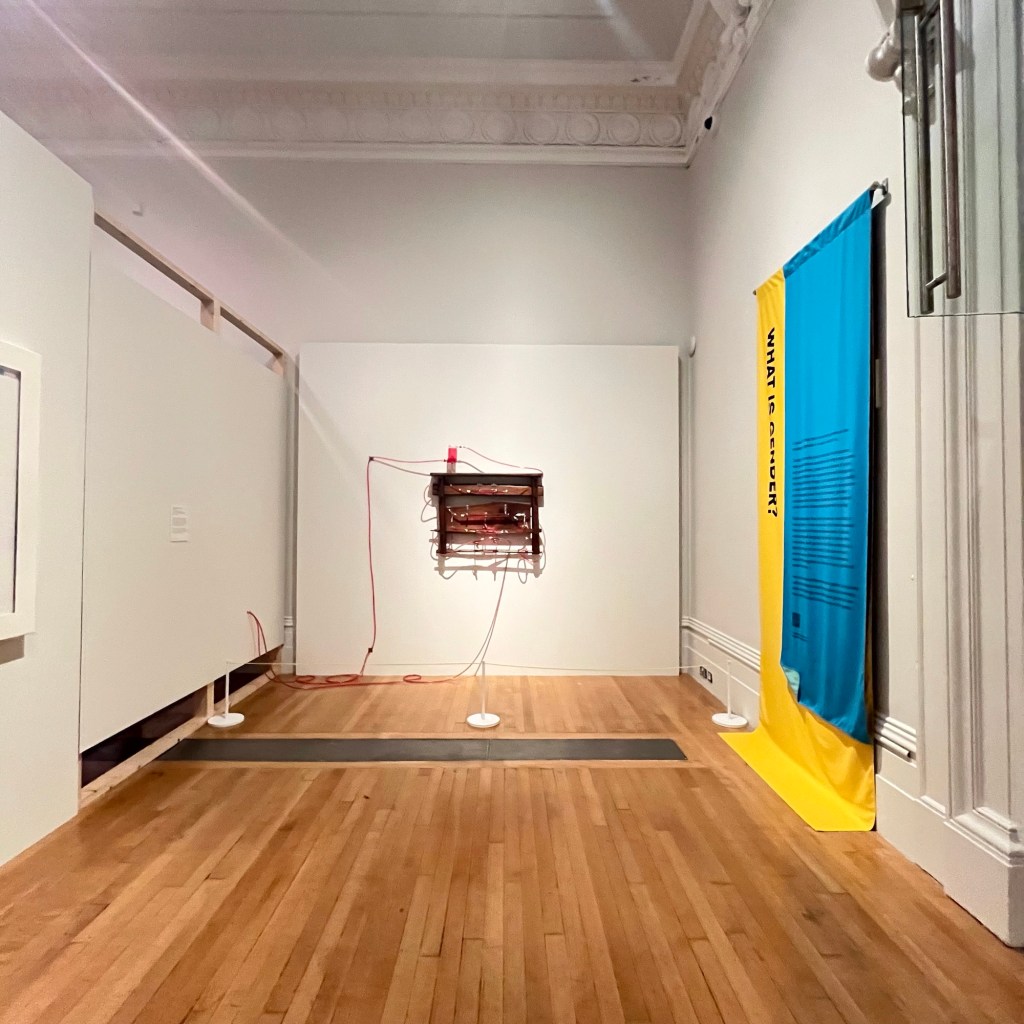
This also made me think about something Jonathan has mentioned many times. A curator might see your work and then, after months or even years, contact you because they remembered and liked it. Having an easy way to contact artists and keeping your work updated and visible is really important.

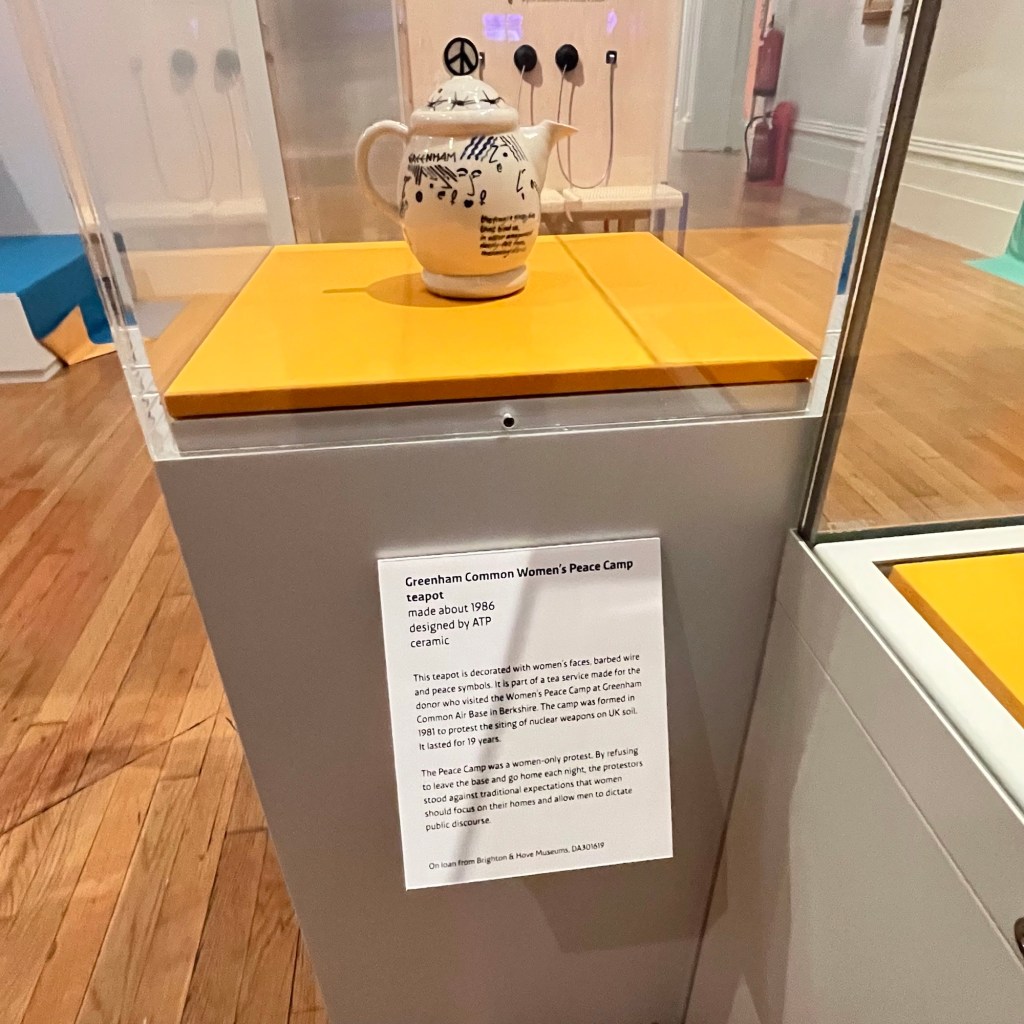
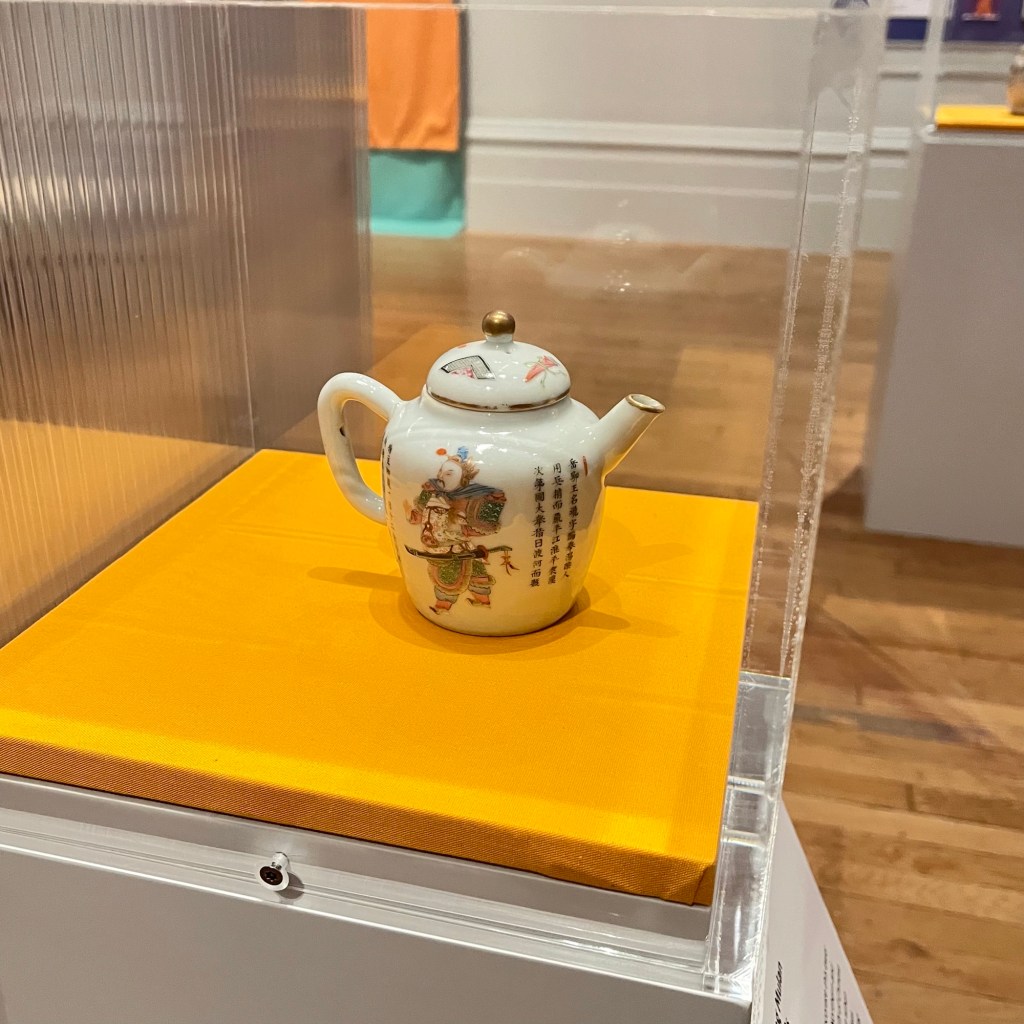
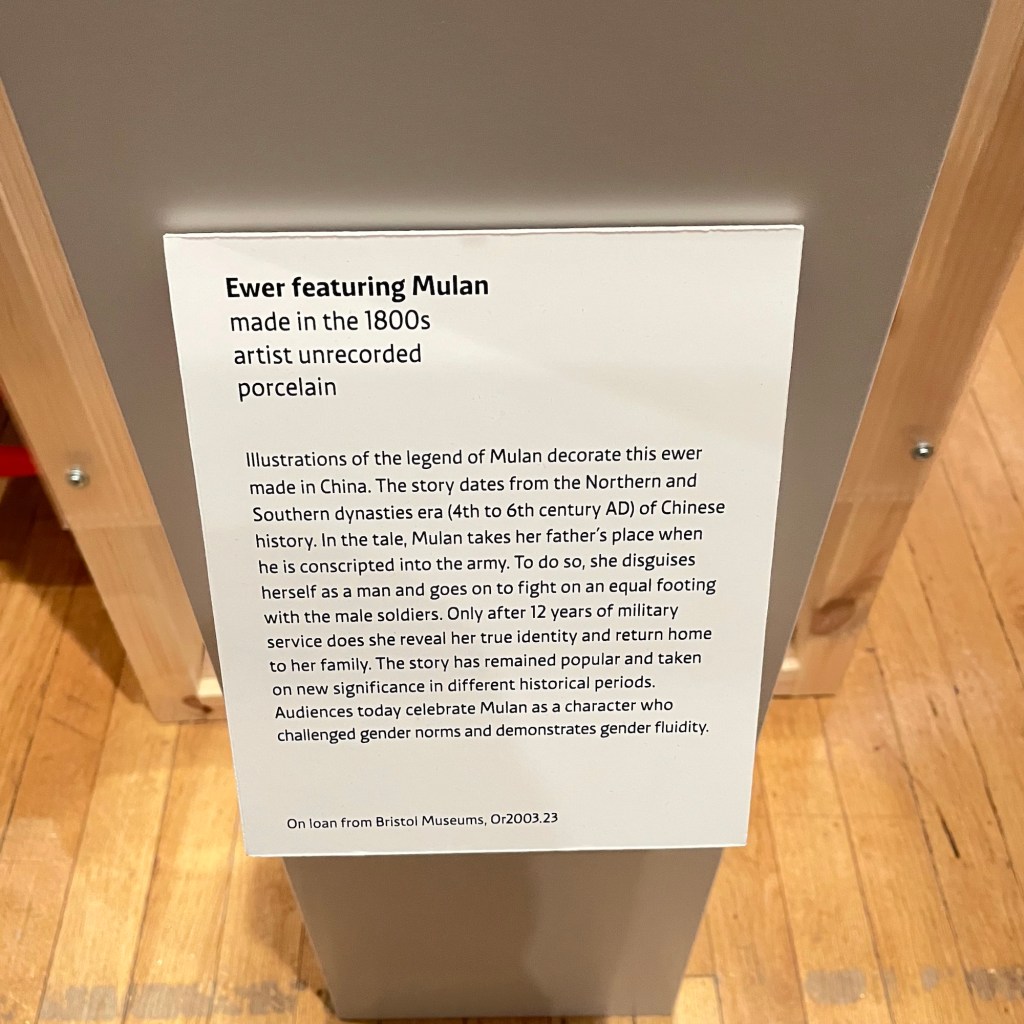
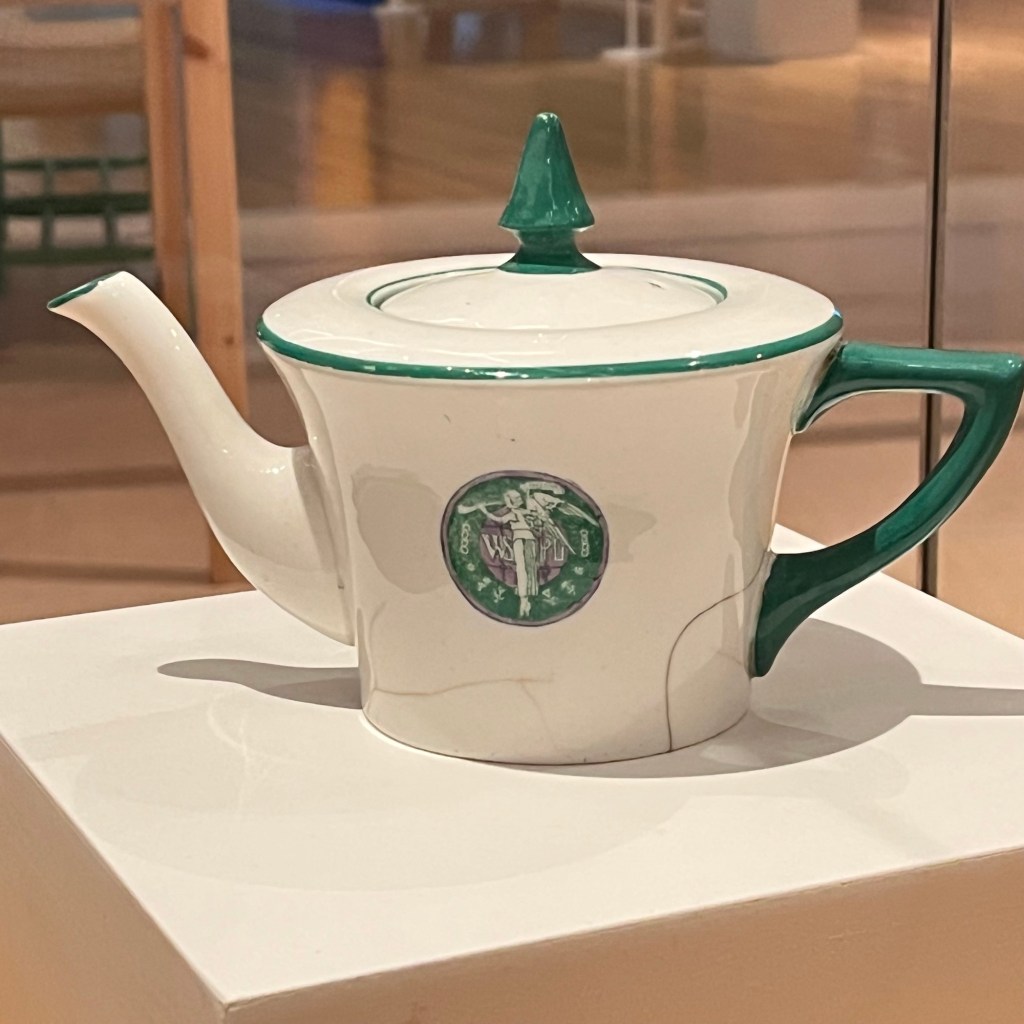
And finally, in the same room, I noticed three teapots from different times and places, each made by different artists and each carrying a different story. What I loved was that they all had a connection to women, either made by women or telling stories about women. I loved them so much, and they made me love my new teapot even more, because now I realise this isn’t the first time a woman has wanted to tell a story through a teapot!

Posted in 2025-2026, Ceramic, Colonial history, Visit

Artist’s Office

Last week, I gave a short talk about my current tea set work at a monthly meeting at the library called Artist Office, which gives artists the chance to use the library as a workspace and creates opportunities to exchange and discuss ideas. I took the opportunity to speak about the work while it’s still in progress, and to reflect on what could still be improved or added.

I began by talking about social sculpture as both a starting point and a space for ideas. From there, I spoke about my research through clay, drawing, site visits and storylines connected to colonial history.

Presenting my work to others benefited me. It helped me practise communicating my ideas and explaining my work more clearly. I also received useful feedback, especially when someone shared a link to The Common Salt performance with me, which I appreciated very much.

https://youtu.be/i3yWr4U3umQ?si=cHlTaOo4xQMMT4WW

That evening, I watched the video. The work felt deeply connected to my work. The performance was provocative, beautiful, simple, and creative in the way it explored the history of British colonialism in India.

What I especially loved was how, within one hour, the artists managed to communicate their ideas so clearly and powerfully. By the end of the performance, the table itself had transformed into an assemblage sculpture. It reminded me that art can tell similar stories through many different forms and materials.

The next day, I designed the final small pot in my tea set. Before that, I was unsure of its purpose. But after watching the performance, I understood: it’s for salt!

Posted in 2025-2026, collaboration, Exhibitions, Moon

Home and Away

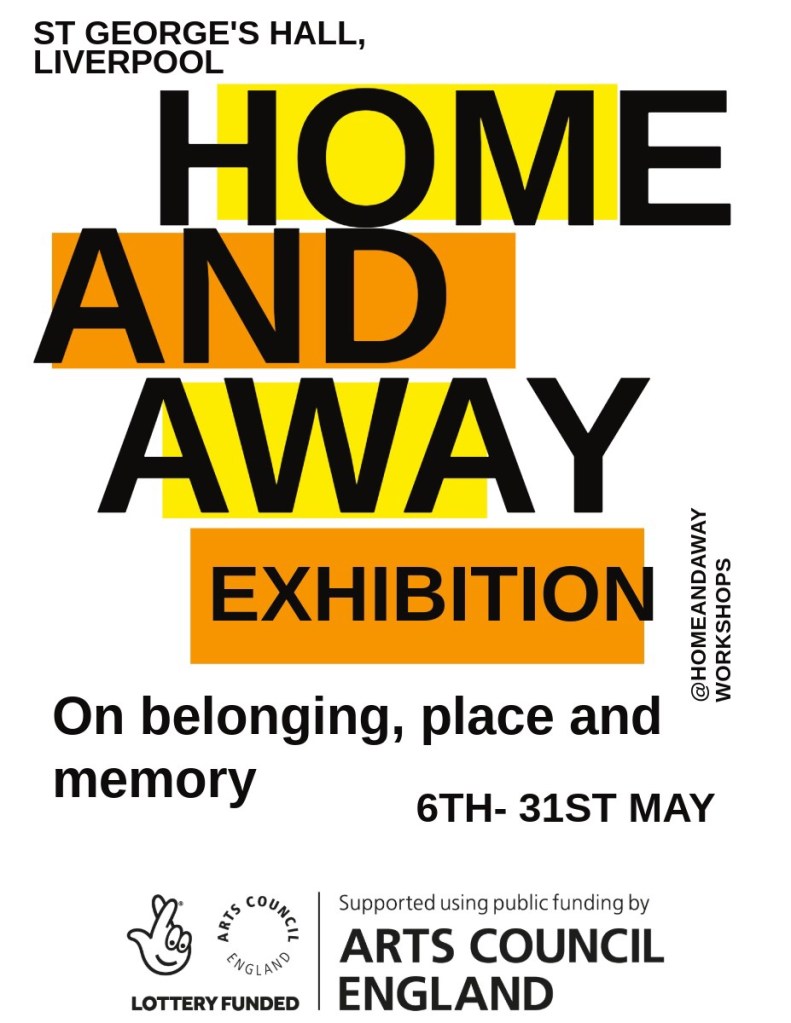
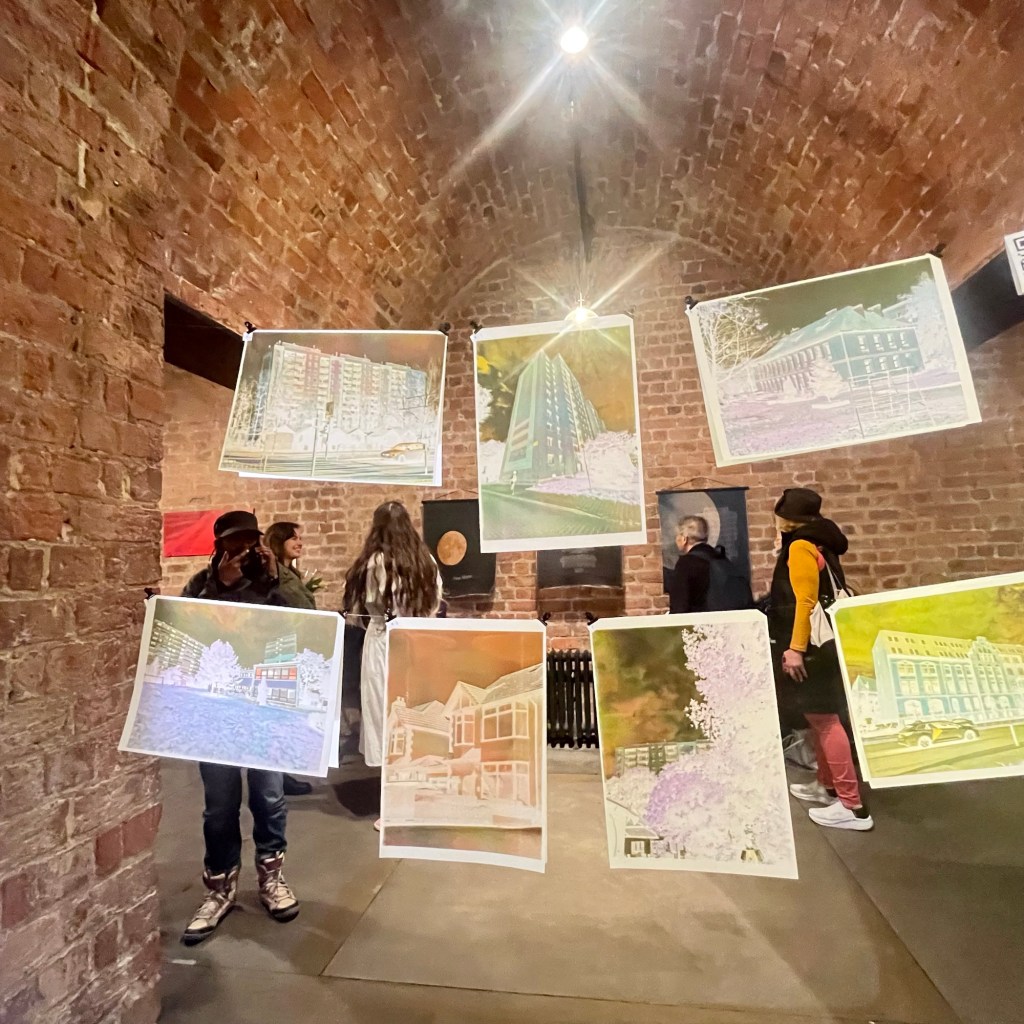
Home and Away exhibition is open to the public until the end of this month. It was a great opportunity to collaborate with women who share similar experiences of migration and displacement. The artists came from different countries, including the Philippines, Venezuela, Poland, Croatia, Sudan, and Argentina.

The process felt empowering for all of us, creating space for conversations, shared memories, and reflection. We also spoke about how the exhibition could continue to develop and potentially be shown in other places in the future.

This experience became an important reflection for my MA and good practice before the final show. It also opened doors for future collaborations with both the artists and the venue.

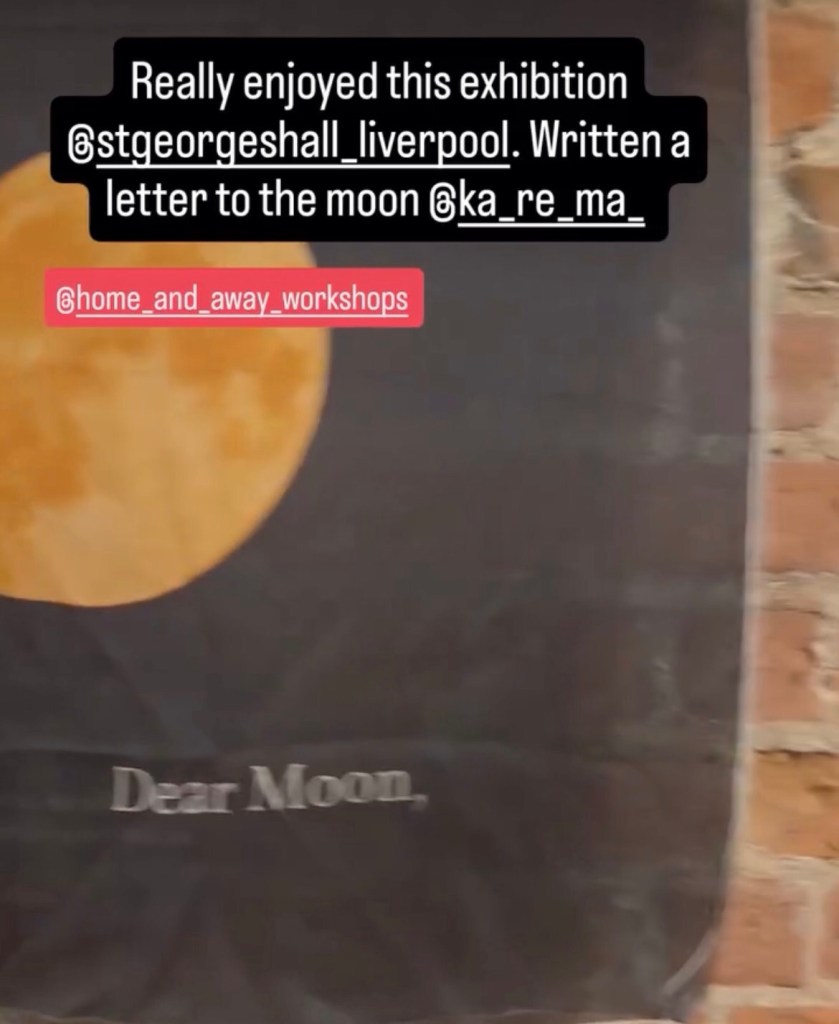
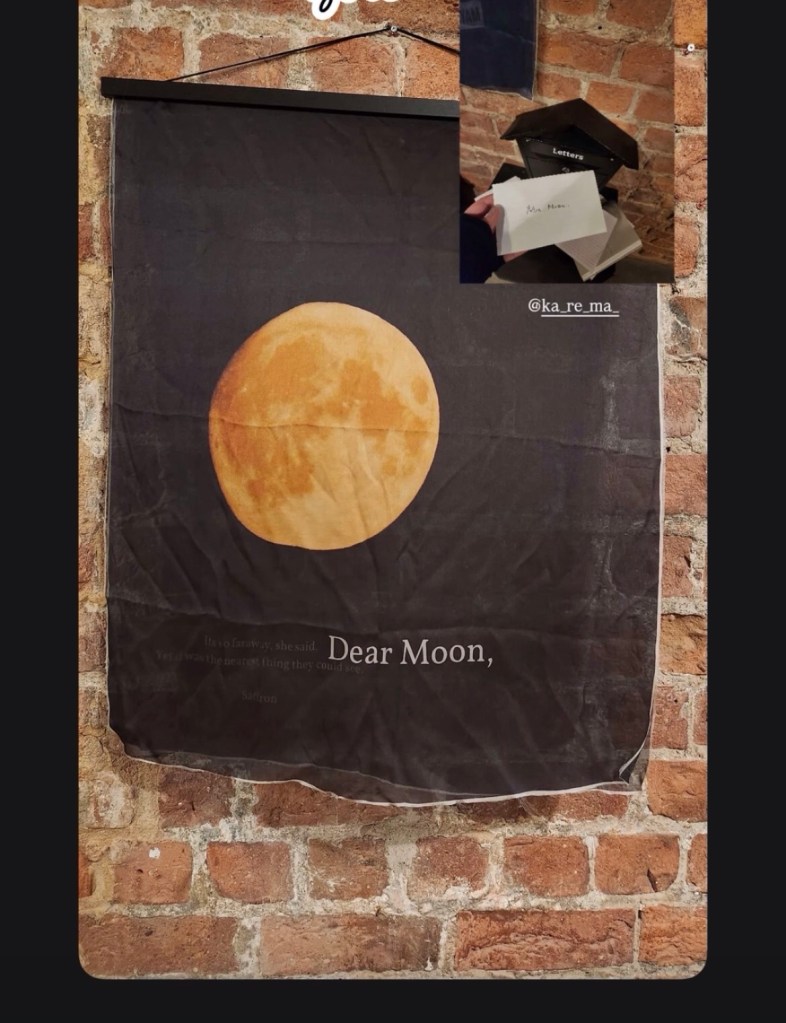
I also received more moon letters, which made me realise that the project has the potential to continue for as long as the letter box remains part of the exhibition. People still feel drawn to writing and sending physical letters, even without expecting a reply. The project reflects a sense of trust and connection between people, which feels especially meaningful today. This experience also encouraged me to think about how the project could keep evolving over time through future collections and publications.

Another important thing I learned was how I can present pages from the book in different formats. The book itself can exist as one form, but larger pieces can also work well and catch the viewer’s attention.

Home and Away is open to the public until the end of this month, and it has already attracted attention from Liverpool’s websites. Promotion was not something I initially wanted to focus on, but one of the fellow artists was very enthusiastic about spreading the word, and she did a great job. It was also a valuable opportunity to observe and learn from other artists, and to recognise how we might use and support each other’s skills in future collaborations.

https://explore-liverpool.com/home-and-away-art-exhibition-at-st-georges-hall/

https://liverpoolcityhalls.co.uk/events/event/home-away-exhibition-one-belonging-place-and-memory/

https://liverpoolnoise.com/arts-and-culture/home-and-away-workshops-exhibition-st-georges-hall/

Posted in 2025-2026, Colonial history, curation, Exhibitions, Reading, Reflection, Research

Coding Spaces and Archipelagic Thinking 

Yesterday we had an interesting discussion about coding exhibition spaces and curating. Jonathan shared some texts by Edouard Glissant and his ideas about continental and archipelagic thinking. We discussed global dialogue, where cultures meet and exchange with one another, and how these ideas could be applied within curating. We also questioned the difference between algorithmic and human curating.

My mind felt crowded with thoughts, words clashing against one another. Writing about it helped me untangle those ideas and find the right words..

So,

1- Continental and Archipelagic Thinking

First, I did not know about Edouard Glissant until Jonathan mentioned him. Before writing this, I did some research and discovered that Glissant attended the same school as Fanon during a similar period. I also found that Glissant was influenced by Aimé Césaire, the poet and politician who held important political positions in Martinique and was one of the founders of the Négritude movement.

What I found strange, however, was the name of the capital, Fort-de-France. The name feels heavily colonial and military in origin, and it made me question how much it represents the mixture and complexity of Caribbean identity that Glissant writes about. If Caribbean identity is shaped through creolisation, relation, and cultural mixture, why do many places still carry the language and structures of colonial power?

Returning to Glissant’s theory, it can sound idealistic unless we also discuss unequal power structures. What happens when one culture dominates the exchange? And who is speaking for whom?

I believe archipelagic thinking requires a degree of equality in power, position, and knowledge in order for genuine exchange to happen. People need to feel safe and respected enough to welcome openness, relation, and dialogue.

At times, I feel that Glissant’s ideas emerge from a context where it is easier to imagine archipelagic relationships, islands existing beside one another, sharing histories of colonialism, displacement, and struggle. However, in reality, relationships between places are rarely equal. If one nation or culture has greater resources, political influence, or economic power, it will inevitably shape the exchange more strongly than the other. Examples such as the UK and Ireland or Indonesia and the Philippines show how unequal power can influence cultural dialogue.

Because of this, I believe there is a responsibility not only to be welcoming and open, but also to avoid placing ourselves in vulnerable positions through a lack of knowledge, experience, or access. On a larger scale, this relates to power, science, dignity, and human rights. Without awareness, exchange can easily become influence or control by those who already hold authority.

How can this be applied to curating? For me, curating should involve both knowledge and empowerment. The curator should develop enough understanding and experience to support the work responsibly, while also empowering artists and contributors so that exchange becomes mutual rather than hierarchical. True dialogue cannot happen when one side only gives and the other only receives.

2- Algorithms and Human Curating

When thinking about algorithms and human curating, I believe that even AI is ultimately shaped by humans. Algorithms are built from data that is created, selected, and controlled by people, often within commercial or business systems. Because of this, algorithms tend to respond to behaviour patterns and visual preferences rather than deeper emotional or ethical understanding.

Algorithms are designed to please, predict, and reinforce engagement. They often agree with existing behaviours rather than challenge them, unless introducing something new becomes commercially useful. They cannot fully understand emotional complexity, vulnerability, or the human condition in a particular moment.

Human curators, however, allow space for emotion, ethics, care, and mistakes. Whether curating an exhibition, a book, a workshop, or a conversation, human curation carries sensitivity toward people and context. At the same time, curating also reflects the organisers themselves, their intentions, politics, feelings, and what they want to communicate through the work.

Curators are often the first audience to encounter an artwork, and that first encounter is important for both the artist and the curator. Curatorial work therefore carries significant responsibility. However, I believe curating should happen alongside the artist and the artwork, not over them. Also, it’s important to first experience the artwork on its own terms before being influenced by the artist’s explanation, while still maintaining a respectful and collaborative relationship.

Reflecting on all of this takes me back through the journey of the last two years, curating spaces, books, workshops, and even this blog. Technology has an important role in making processes easier, but humans still carry the responsibility of shaping narratives and telling stories.

Finally, archipelagic thinking may be an attempt to create ethical relations despite unequal histories and structures. And, from a curatorial perspective, curators must consider the needs of the artwork, including care, health and safety, protection, and the conditions the work requires within a space. Exchange between curator and artist is essential, because curators cannot exist without artists and contributors!
Posted in 2025-2026, Books, collaboration, Exhibitions, Moon, Reading, Tutorials 2025-26, Writing

1-1 Tutorial 22nd April

Last week I had my final 1–1 tutorial, and it was a very valuable conversation in which I was able to reflect on my work and plan for the coming months, thinking about challenges and what matters most right now. Having this discussion at this stage feels important, because I believe I need Jonathan’s insight and guidance while I’m still in the process of making.

The tutorial gave me a great deal of confidence, and the next day I began designing the bone-dry tea set. I made 21 pieces for the tea set, alongside over 20 small crescent forms, which I will use to make bookmarks for our MA Digital class. Each ceramic piece carrying a story from colonial history. I find that I can’t add anything to the work unless I’m sure it’s relevant and contributes to the overall narrative, and this does slow me down slightly. However, this has been one of the most important lessons during my MA: taking the time to build a cohesive body of work, without unnecessary additions or distractions. I can easily feel overwhelmed and distracted but I have learned to recognise that moment. When it happens, I stop adding and instead spend time reading around the theme or taking a break. This is how my ceramics project develops through slow reading, while the Moon Book has developed through slow writing.

I spent the week working with clay, while also setting up the new show at Liverpool St George’s Hall, where I will be showing Moon Book pages on silk (factory print). I made these last year for The Right Map 2025 but did not have the right opportunity to present them. Now they feel more suited to the theme (Home and Away) and to the space at St George’s Hall. I installed them over a long black heater, where the warm air creates a gentle movement in the work, subtly animating the delicate sheets.

At the core of my social sculpture practice is care and the intention to make a meaningful difference. The Moon Book demonstrates this clearly by connecting people and creating space for shared vulnerability. After the last workshop, some participants began sending me letters in response to others letters. I feel a deep sense of gratitude towards this project and the people involved. Writing letters feels especially meaningful, and I’m  excited about the next book Dear Friend (2027). What I find particularly beautiful is that some children are growing up through this process, and some participants who have never met are writing to each other with genuine care and intimacy. It shows how powerful and delicate these connections are. I feel I owe a great deal to everyone who has taken part.

The tea set also functions as a form of social sculpture. It consists of multiple pieces that invite interaction, through storytelling, through history, and through use. Sharing stories from the past is itself a way of engaging with people who are no longer here. In this sense, the work becomes a way to educate, to encourage questions, and to create opportunities for participation.

For example, discussing the Opium War  came up in my tutorial with Jonathan. We began asking: how many “opium wars” exist today? How many forms of addiction are being created, and how will these stories be told in the future? Simply bringing these questions to the table is part of the work. It opens up dialogue and that is where social sculpture begins to happen.

Posted in 2025-2026, collaboration, Experiments, Social Sculpture, Visit

Reflection on Alex Schady Workshop Collaborative Making and Social Sculpture

I took part in a workshop led by Alex Schady as part of the Fine Art Digital Residency week which thoughtfully organised by Jonathan for both MA classes. 

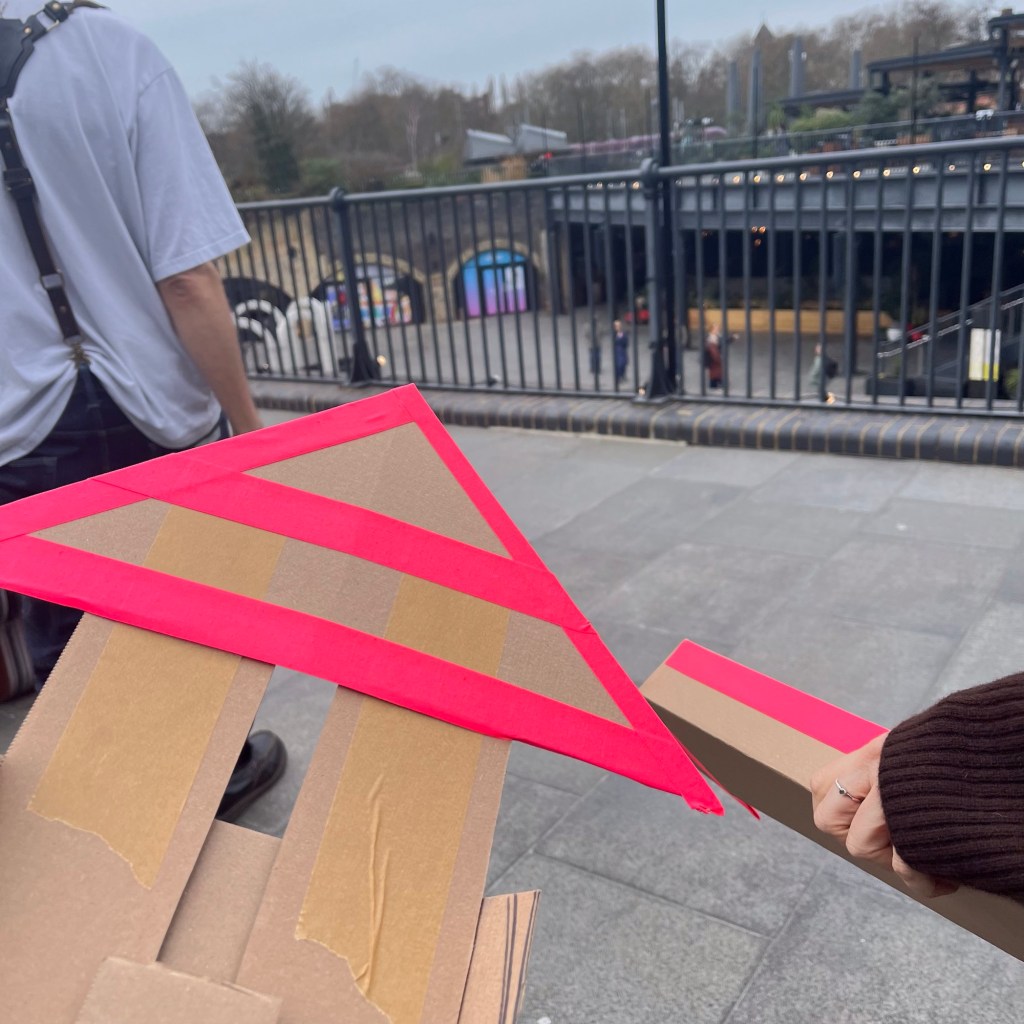
The session focused on collaborative making and began with a simple exercise: a flat sheet of cardboard was shared and each student created an arrow. I made a very simple arrow, similar to Alex’s example, while others explored more playful and experimental shapes. I noticed something familiar about my role in workshops I often observe more than I produce, watching how others approach the task becomes part of my learning process.

We then moved outside to the street and began performing with our objects, engaging with the urban environment and the people around us. The arrows shifted from being simple objects to becoming gestures in public space.. Accusatory fingers!

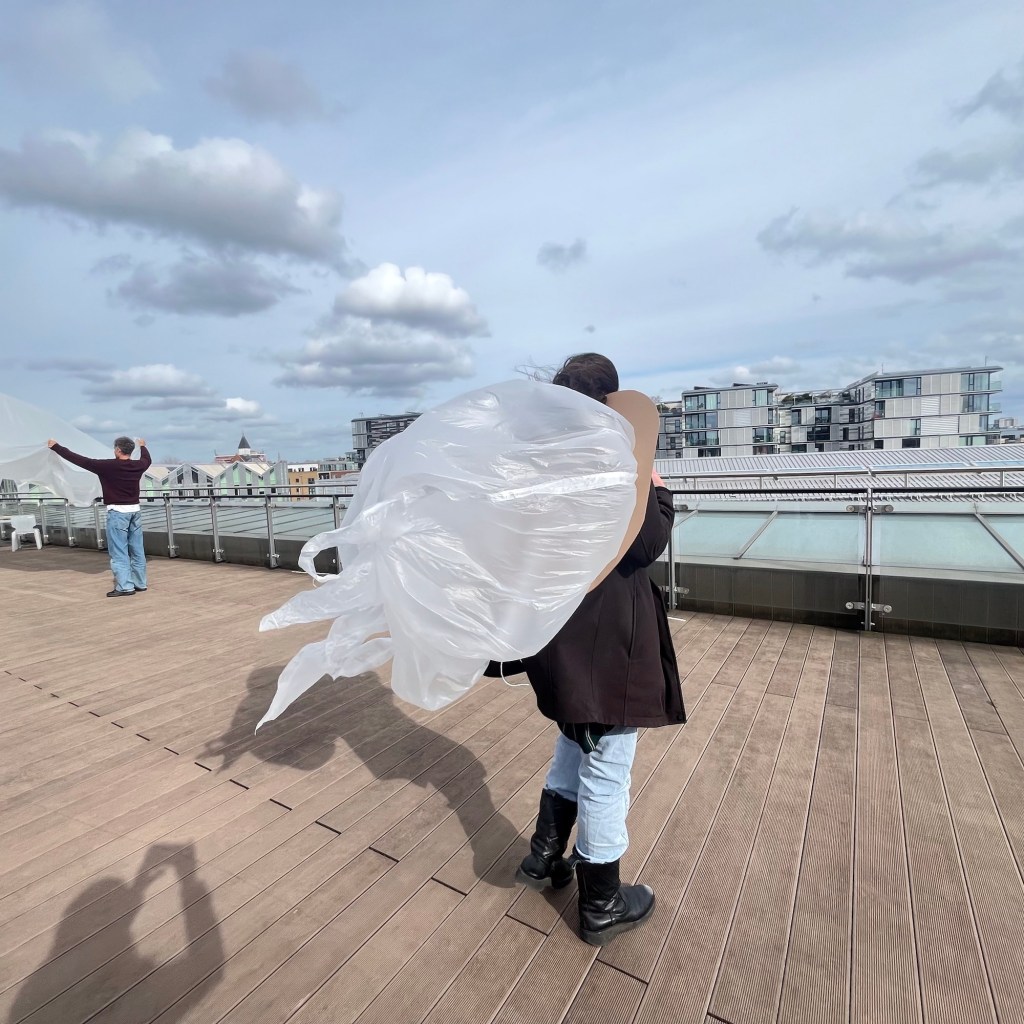
In the next stage we worked in pairs to create inflatable body extensions using plastic sheets. I collaborated with Rachael, and we agreed to make angel wings. The process was technically tricky, due to delicate material, but we managed to build them, and had a lot of fun experimenting with movement.

Afterwards we gathered outside for a collective performance where everyone presented their creations. Eventually groups merged and people began wearing multiple extensions, forming a kind of shared body. The performance ended with one large collective body.

What stayed with me most was the way Alex held the space. He allowed collaboration to happen naturally without pressure. No one felt forced to participate in a particular way. This made me think about concept of social sculpture and the idea that society itself can be shaped through collective processes.

The workshop felt like a small example of this idea. Through simple materials and shared actions we created a temporary social structure based on making, negotiating and performing together. 

Afterwards I visited the first-year MA students’ exhibition. It was interesting to see the space and reflect on how quickly time passes during the MA journey. It was also lovely meeting fellow artists in person for the first time there was an immediate sense of familiarity and trust. 

Although I could only stay for a few hours, the experience felt full. Sometimes a few meaningful hours can contain days of learning. Alex’s workshop demonstrated how much can happen in a short time  making, performing and collaborating and it left me wondering how much deeper this process could go if we had the opportunity to continue it over several sessions.

Posted in 2025-2026, collaboration, curation, Project, Social Sculpture

Iftar as Social Sculpture

Last year I was invited to organise a community iftar a few months after the Southport attack and the rise of far right protests. I accepted immediately, but I kept the first event simple. It felt important to move carefully. After it went well, we decided to make it a regular gathering that people in the community could expect and look forward to.

This year the project developed in three connected parts. The first was a shared reading session on the second day of Ramadan ( check previous post). The second was an anti racism cooking workshop. The third was a collective iftar meal at the library where around forty people gathered to break the fast together.

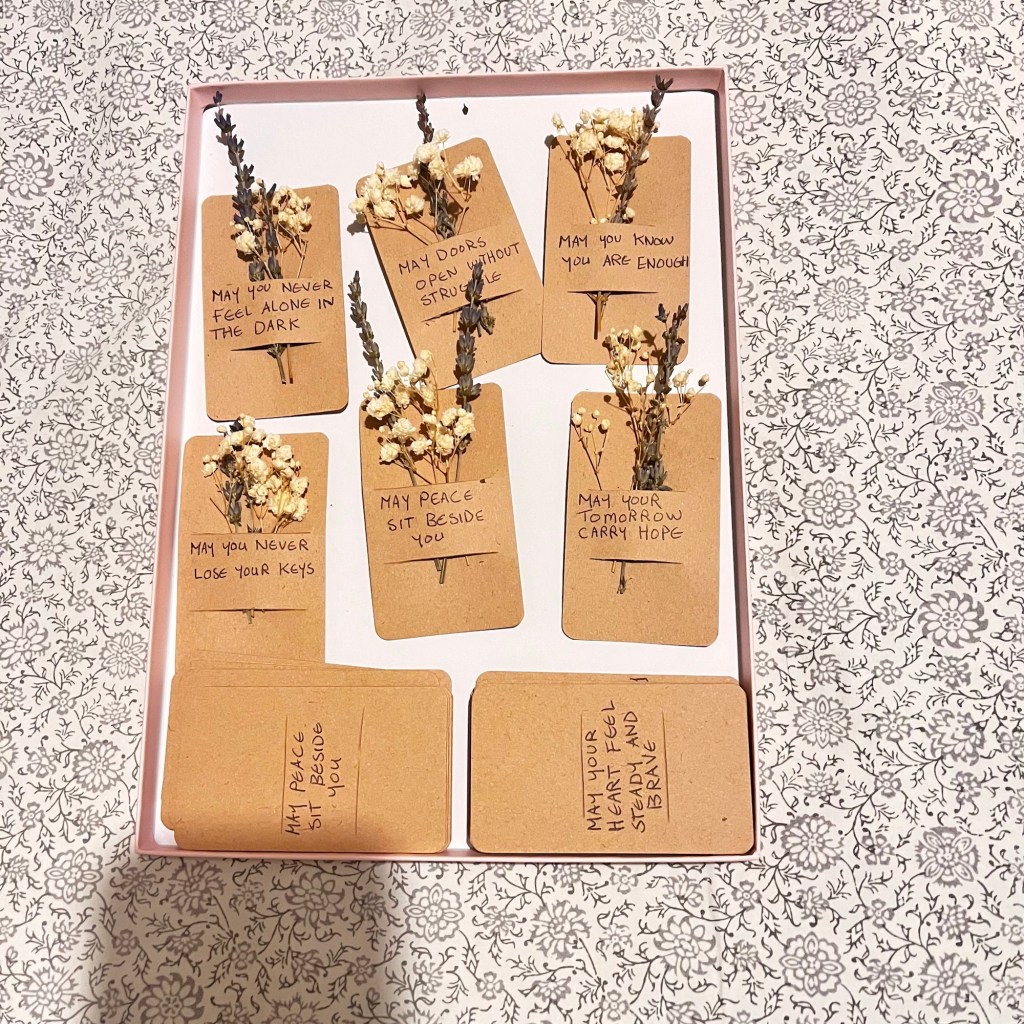
For the cooking session I invited an Iranian chef to lead a workshop where we prepared a vegetable curry. Participants from the Kitchen Library, mostly local English speaking volunteers, joined colleagues and other volunteers. People cooked together, shared food, and stayed to talk before leaving. Later that day I prepared small blessing cards for the following evening.

The next day my colleague Niamh, artist and producer for the Kitchen Library, and I went shopping for ingredients and refreshments. Back at the library we started preparing the meal. Niamh made stuffed dates for dessert. I cooked a vegan curry and bulgur while Greg and Joe helped with preparation and logistics. At the same time we rearranged the library space so it felt less like an institutional environment and more like a shared domestic space.

By the time the guests arrived everything was ready. Before breaking the fast I welcomed everyone and spoke briefly about Ramadan. I also shared this small story:

Recently I called my sister to ask how the first day of Ramadan had gone. She told me that her youngest daughter 4 yrs old  saw the dinner table prepared and suddenly asked “Where is he?” They asked, “Who?”.. She replied, “Ramadan! Everything is ready.. Why hasn’t he arrived?” 

For my niece, Ramadan was not an abstract period of time..it was a guest expected at the table!

In many ways this reflects how the month is often experienced. People prepare for it, welcome it, and look forward to its arrival. In Arabic we say Ahlan Ramadan. The phrase comes from Ahlan wa sahlan ( أهلا وسهلاً) which has been used to welcome guests in Arabic culture for centuries.

It is often translated as “welcome”, but the meaning is deeper. Ahlan comes from ahl (أهل) meaning family. It suggests that the guest is not a stranger but someone among their own people. Sahlan comes from (سهل)sahl, meaning ease or smooth ground. It suggests that the path between host and guest should be easy and open. Together the phrase expresses a form of hospitality that goes beyond politeness. It means you belong here and this space is open to you. Another common greeting is (مرحبا)marhaban. The word comes from (رحب) rahb, meaning wide or spacious. It also suggests openness and generosity. After sharing this, I invited people to say “welcome” in their own languages. We heard it in Chinese, Dari, Farsi, Urdu, German, Norwegian, and Portuguese. This small moment helped set the tone for the evening.

Ramadan is the ninth month of the Islamic lunar calendar, and fasting during this month is one of the five pillars of Islam. From before sunrise until sunset, Muslims do not eat or drink.. They also avoid smoking and intimacy. Not everyone fasts, children, people who are ill, elderly people, pregnant or breastfeeding women, women during menstruation, and travellers are exempt.

The fast is usually broken with dates and water. After a long day without food or drink the body returns to eating slowly. But fasting is not only about the body. It is also about awareness. It interrupts habits of consumption and invites reflection about what we need and what shapes our desires. Hunger changes how we feel and how we see the world. It makes the body more present, but it also reminds us of people who live with food insecurity every day. For a moment the difference between abundance and scarcity becomes more visible.. This can open space for empathy!

The project worked with the fragile conditions through which community is formed. Cooking, waiting, and breaking the fast together created a pause in everyday life. For a short time the library changed from an institutional space into a shared domestic space shaped by the people who were there. The iftar was not only an event. It became a temporary social form created through shared work, food, and conversation. Even small acts of welcome can change how a public space feels, even if only for a short time.

Posted in 2025-2026, collaboration, Project, Reading, Social Sculpture, Writing

March Shared Reading

We recently started a new group in my programme called International Shared Reading, with the support of The Reader. Instead of taking the training myself, I recommended two women from my group an assistant from Afghanistan and a volunteer from Portugal to take the paid training and co-lead the sessions alongside my co-producer, while I support them where needed. I believe that our strength comes from building a strong team rather than individual effort.

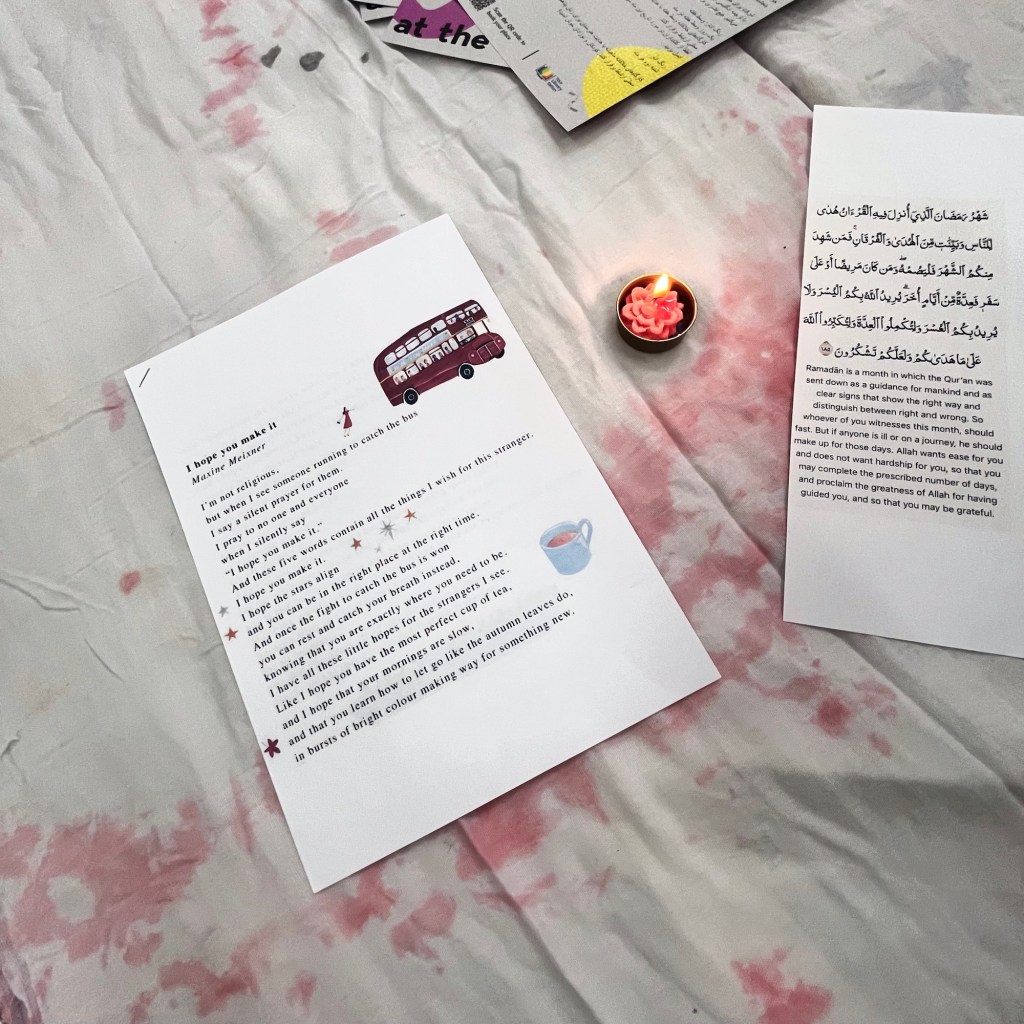
As part of the preparations for our upcoming Iftar gathering, I led a special reading session. It created a space to ask questions and learn more about Ramadan. We read a poem together, spoke about prayer, and people asked many questions about fasting and other related topics. Questions are welcome, they help clarify misunderstandings. When I went home that evening, I kept thinking about our conversation. Later, a volunteer sent a beautiful message in our group chat thanking me for the session.

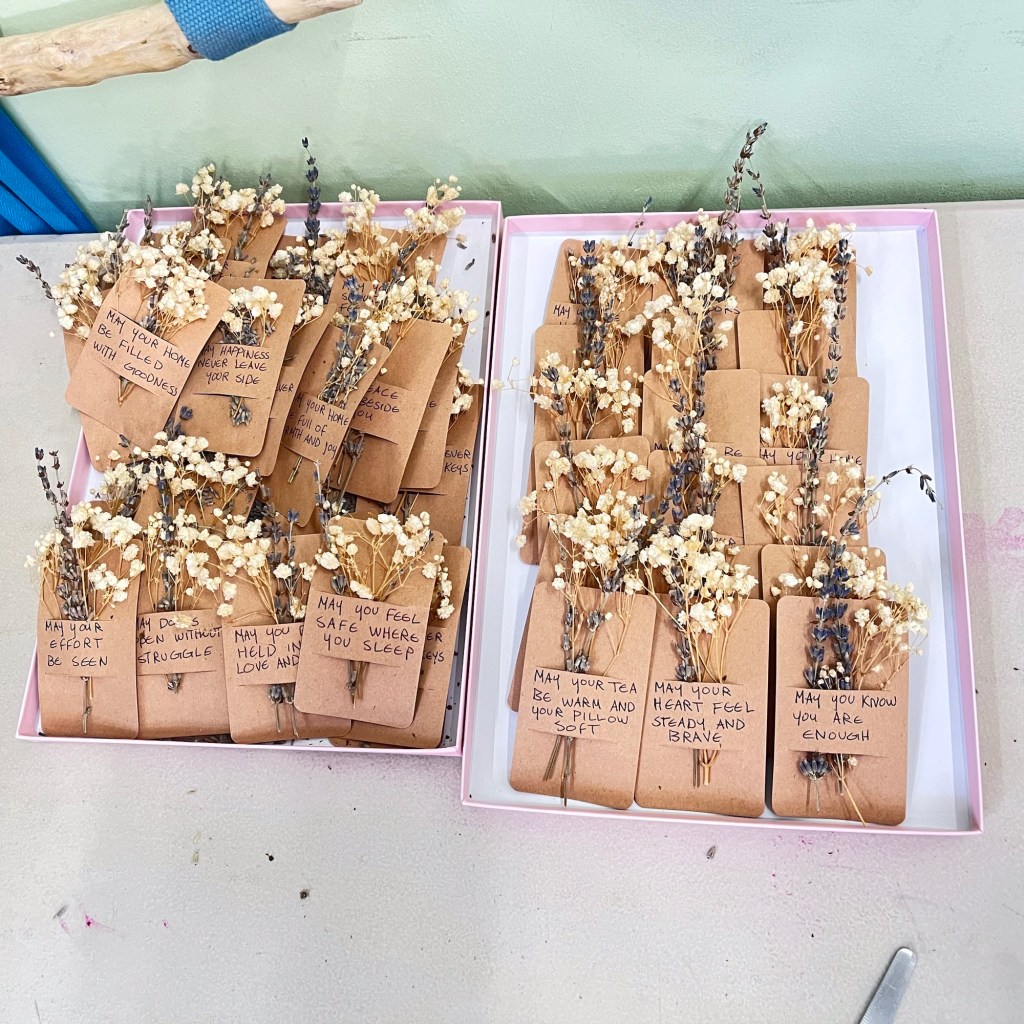
The next day I decided to create small blessing or affirmation cards for our guests, inspired by the poem we read together. I Hope You Make It, a poem by Maxine Meixner, is written in a simple and beautiful way. The words can reach people without challenging them with difficult language. I spent the day writing my simple prayers and preparing the cards so I could finish them at the library the next day.

The cards are simple and decorated with flowers. I chose lavender because it has a gentle, calming scent. In a way, the cards became a small social sculpture, something guests could take with them, carrying the memory of the Iftar after they leave.

Posted in 2025-2026, collaboration, curation, Experiments, Motivations, Research, Social Sculpture, Visit

Free Workshops

Last Sunday, I spent a rewarding day with Ghost Art School and creatives from October Salon (a new collective in Preston led byHannah Browne). My aim was to organise a free workshops day, focused on sharing knowledge and skills without the need for materials or money. I offered an introductory session in British Sign Language (BSL), while Liverpool-based artists Tom Kelly and Tom Doubtfire generously shared aspects of their practices. Hannah provided the space in Preston, making the event possible through collaboration rather than institutional support.

The day had several clear intentions. Firstly, I wanted to gather with peers and begin the year in a meaningful, collaborative way, learning together and exchanging knowledge. Secondly, the event allowed us to engage with October Salon, an emerging creative group, and to demonstrate what can happen through collective artistic practice.

The programme began with Tom Doubtfire leading a discussion on the role of the artist and the relationship between art and activism. His reflections centred on disturbance, sustainability, sacrifice, and focus. The group discussed what it means for art to be disturbing, what sustainable practice might look like, how much we are willing to sacrifice and the importance of setting limits, also how to remain focused on our aims.

This was followed by my one-hour introduction to BSL. My motivation for teaching BSL stems from both personal conviction and historical awareness. The language was banned in the United Kingdom between 1880 and 1970, and despite its cultural and social importance, it still receives limited funding in education. BSL was officially recognised as a language in 2003 and granted legal status in 2022, yet it is still not included in the GCSE curriculum. In this context, teaching BSL freely can be understood as a quiet form of activism! Challenging ableism, questioning unequal access to culture, and sharing knowledge rather than gatekeeping it.

BSL is also highly visual and expressive, connecting strongly with creative disciplines. It can influence performance, filmmaking, choreography, and storytelling, functioning not only as a language but also as an artistic medium. More broadly, offering knowledge without payment can be seen as a response to the increasing commercialisation of the arts. It reminds us that generosity and collective growth still hold value.

The day concluded with a workshop led by Tom Kelly, which provided a joyful ending. His approach to clowning demonstrated that it’s not simply about being silly, but about exploring human emotions through humour and vulnerability. Through simple games and spontaneous interaction, the group communicated naturally, without preparation. There was a strong sense of care, kindness, and mutual respect among participants.

The structure of the day loosely echoed Joseph Beuys’ idea of the Free International University, an artist-led model of education independent from institutions and grounded in dialogue and shared learning. By offering knowledge freely and prioritising exchange over production, the gathering became less about outcomes and more about shaping a temporary community through participation.

For me, the impact of this day was more meaningful than any individual artwork I’ve made recently. It highlighted the importance of shared time, laughter, and informal learning within creative communities. It felt like an encouraging and significant beginning for the group, grounded in connection rather than productivity alone

Posted in 2025-2026, Books, Reading, Reflection, Research, Translation, Writing

Translation #2

After reading Translation, I found myself asking what I would add if I were given the chance to contribute more pages to the book. Three came to mind: Omar Bahabri the translator, Arnaud Balard’s Deaf Flag, Adriano Celentano’s Prisencolinensinainciusol, and Wanderer by Rory Macbeth particularly after What Is a Minor Literature?//1986 by Deleuze and Guattari page.

The first story is a Yemeni tale set during the period of British occupation in southern Yemen. Omar Bahabri was a Yemeni tea merchant who spoke English through his work with foreign traders. At a time when the British struggled to communicate with the local population due to the lack of Arabic translators, Omar was called upon to help. The British asked him to translate pamphlets intended to win the trust and loyalty of the Yemeni people. Omar translated their demands into Arabic, and pamphlets were printed and distributed by aircraft across the country.

Some time later, a British general visited Aden to inspect the situation. He was familiar with Arabic, so he picked up a handful of the pamphlets and read them. He asked the officer in charge about their purpose and was told they were meant to encourage public support for British rule. The officer explained that the pamphlets called on people to join the Allies and support them. The general replied that the pamphlets read “Buy the finest tea from Omar Bahabri” . And here only reference I found in English: https://www.jstor.org/stable/48752006

Whether the story is true or not is hardly important here. What matters is how brilliantly it portrays the fate of outsiders who believe they can exploit local language and people for their own ends, only to find those intentions quietly undermined in favour of distinctly Yemeni interests. It also led me to reflect on the fact that the British occupied Aden for 128 years, from 1839 to 1967, yet hardly any of them learned Arabic. From this, it becomes easier to understand why the French aggressively imposed their language in colonised territories, and how English was forced upon Indigenous populations in North America, Australia, and New Zealand. This reinforces my belief that language is essential to the survival of culture and heritage.

Thinking about this story alongside Translation, I realised that what draws me in is not accuracy, but refusal. Translation here is not a neutral act. It becomes a space of misalignment, humour, survival, and agency. Language appears to serve power, while quietly redirecting it elsewhere.

So yes, I already know what my next ceramic piece will be.. A tea set! A familiar site of hospitality, negotiation, and politeness. Cups that sit between people, holding conversation, holding silence or things that are never quite said…