I thought I wouldn’t need to post anything this week… but who knows what you might hear or see that you simply can’t resist writing about.
“No Knowing” is a topic that feels complicated and confusing to me unless I break it down for myself. There are things I have experienced and felt, but there are also moments that make me stop and think: hang on, I need to understand this more, at least for myself! Because it’s also difficult to know whether you are right or wrong.
Rebecca Fortnum spoke about the unknown and the idea of “not knowing” within artistic practice, about allowing “the other” to become part of the process that helps you understand what you don’t yet know in your work. She mentioned an artist who brought oak trees to Tate, explaining how they didn’t choose where to place them and wished they could move them around and experiment more, but practicality meant the trees had to remain where they were installed. I missed the artist’s name, so I need to watch the recording again and read On Not Knowing: How Artists Think by Elizabeth Fisher and Rebecca Fortnum.
But if she was referring to Ackroyd & Harvey’s installation of 100 oak trees outside Tate Modern, celebrating Joseph Beuys, then the context becomes important. Entitled Beuys’ Acorns, the project began in 2007 and marked 100 years since the birth of Joseph Beuys. The work was inspired by Beuys’ 7000 Oaks. Knowing this information changes things for me. It becomes clear that the artists and organisers did, in fact, know what they wanted. There was intention, research, and historical context behind the project.
Another interesting example mentioned in the session was Bruce Nauman’s Fat Chance John Cage. For me, this work represents a healthier interpretation of “not knowing” and of relying on chance. an acceptance of imperfect and limited knowledge without necessarily becoming vulnerable or directionless. Even the inclusion of “John Cage” in the title, much like Beuys’ Acorns, offers information and context. It shows where the artist is coming from. There is still knowledge present.
So what happens when I do not know? And when I interact with someone else who also does not know what I really want or need? Sometimes that uncertainty can create chances, accidents, and unexpected discoveries, some beautiful, some uncomfortable. But completely removing knowledge can place artists in vulnerable situations.
If I’m playing with chance through repetition, as seen in Rebecca Fortnum’s drawings of children with closed eyes or the unknown death mask, then I understand that as an openness to what technical or practical processes might allow to happen. But there is still an underlying knowledge of intention. For example, if I decide to draw faces, I already know what I want to engage with. Through chance, I might then discover something beautiful or unexpected that leads me towards new research and new knowledge. To me, this feels like another healthy form of “not knowing”.
So what worries me is when “not knowing” becomes a comfort zone, something that leaves me vulnerable to gaslighting, manipulation, or losing my sense of direction altogether. It was difficult to express this during the session because I worried it could be misunderstood. But one of the great things about this course is that we have a blog for documentation and reflection.
Holding the second edition feels incredibly special and precious. I can see years of effort gathered within its pages. Looking through the photographs and reading people’s letters has been deeply emotional, and it also makes me long for the years when we sent personal handwritten letters instead of quick text messages.
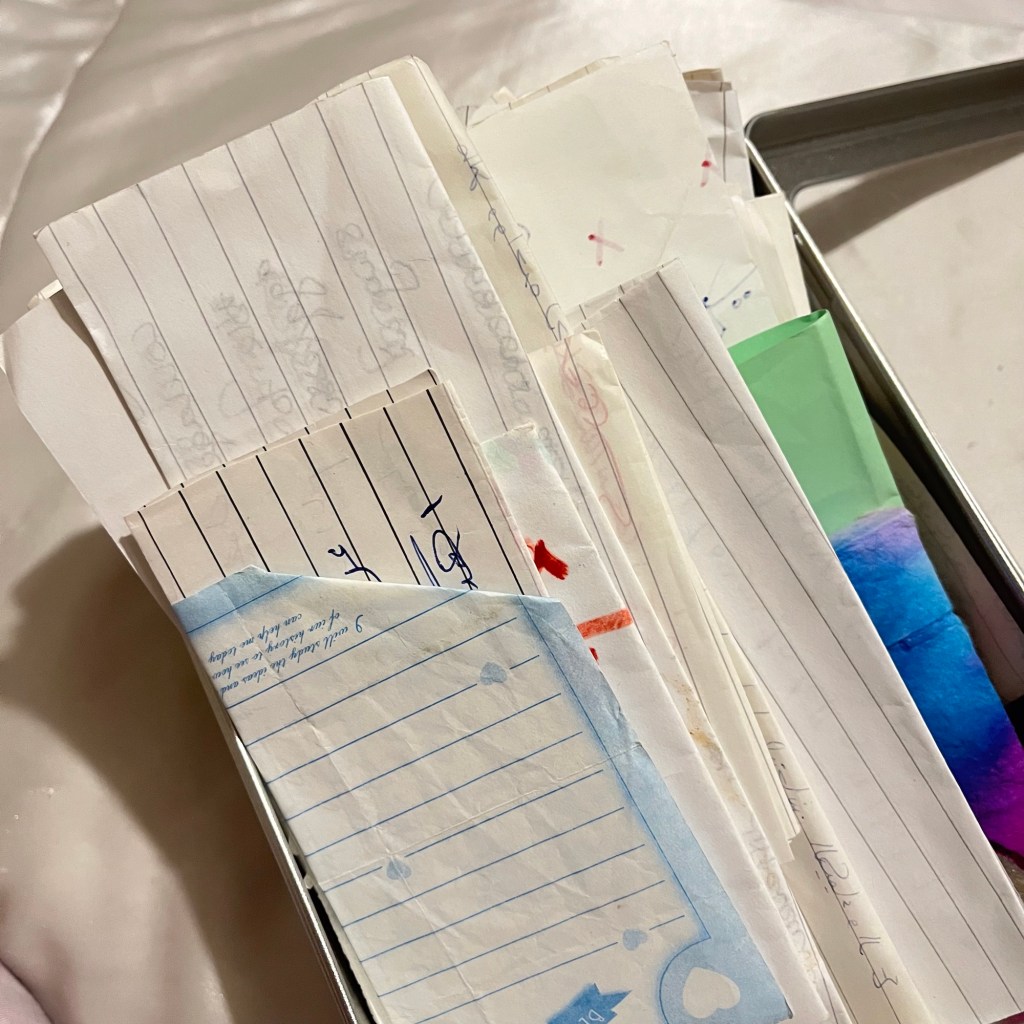
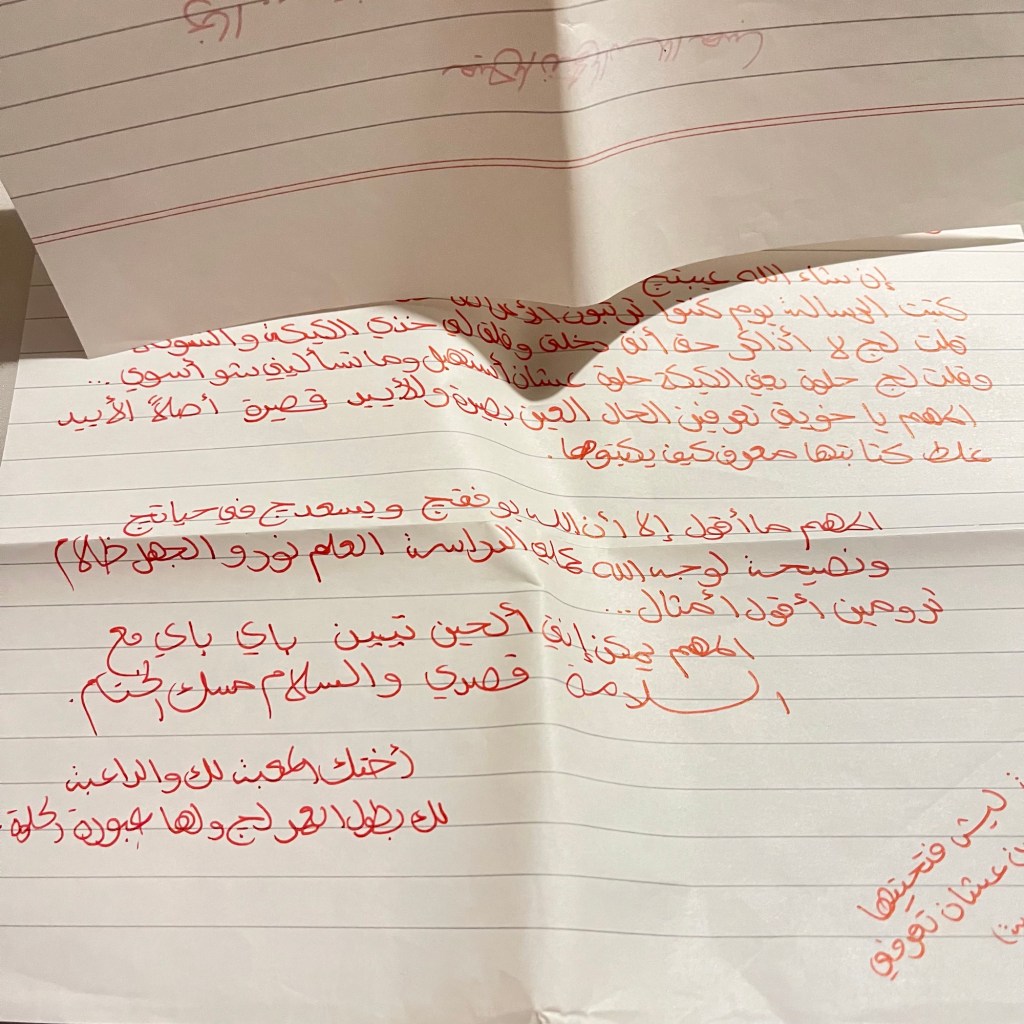
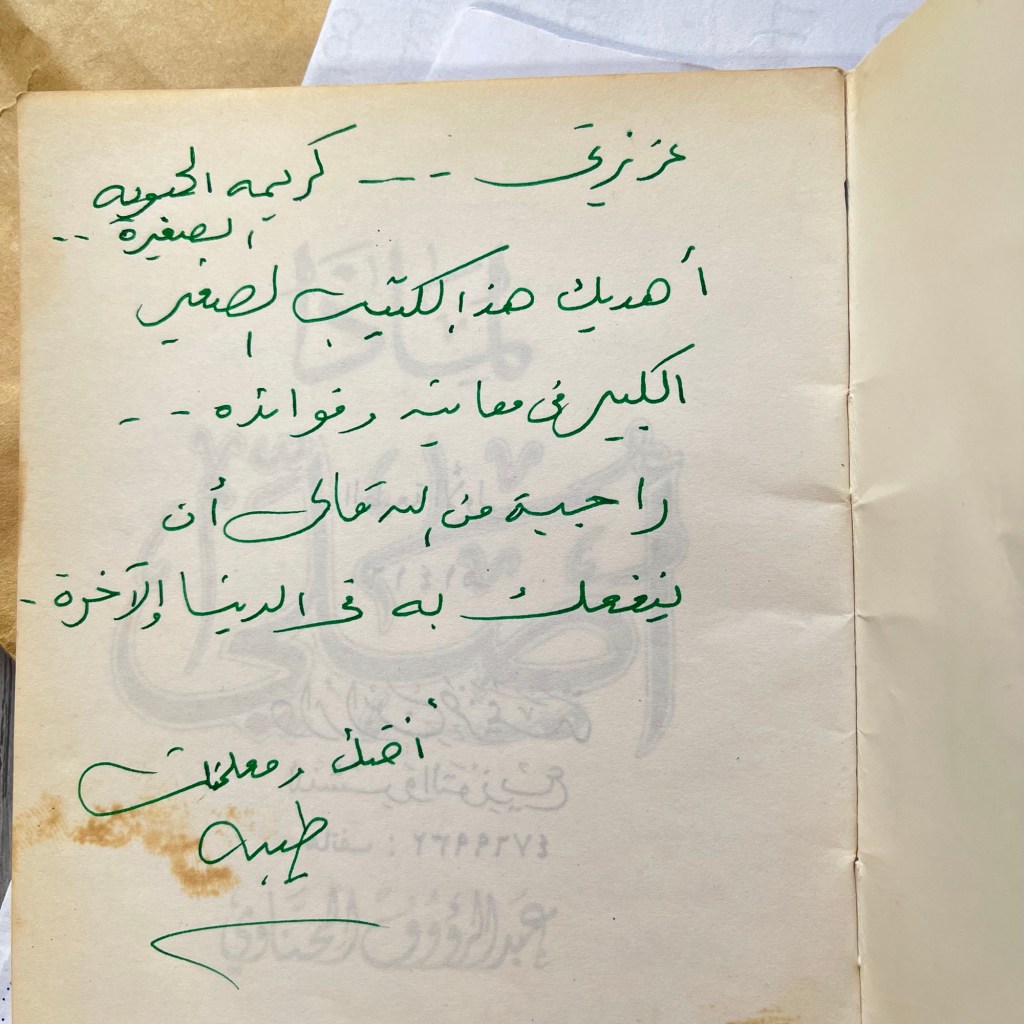
Perhaps this is why I still treasure the letters from my own childhood, safely kept in a small box. They are funny, emotional, and incredibly valuable to me, especially when I think about where everyone has ended up in life and how relationships shift and change over time. Handwritten letters hold traces of people that digital communication often loses.
Mixed of letters from 90s and early 2000-2003A letter from my sis, she put it inside my suitcase when I left my dad house 2002Message from my teacher in a little book she gave me 1997
As an artist with hyperactivity, and as someone who uses art as a survival tool, I made two interconnected bodies of work: a book and a tea set. I feel there’s something comforting and timeless about reading books while drinking a cup of tea.
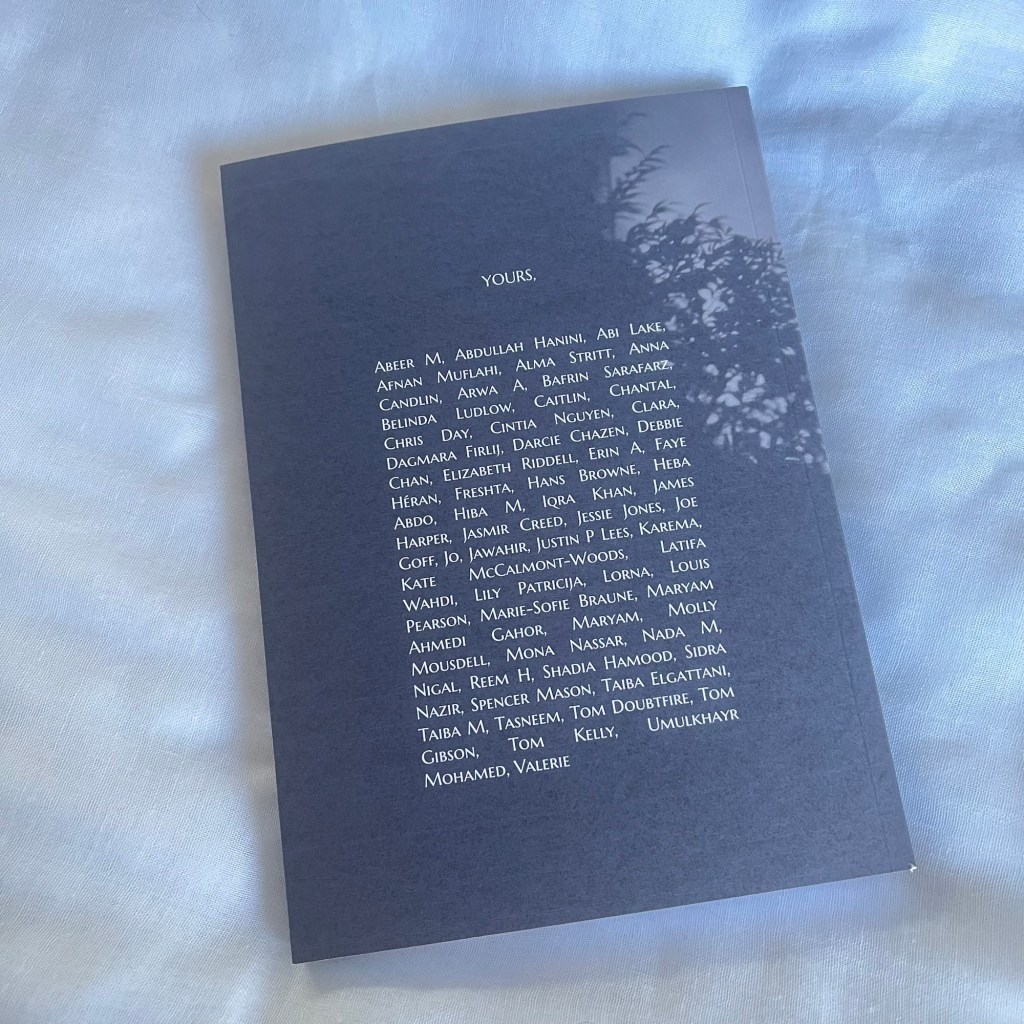
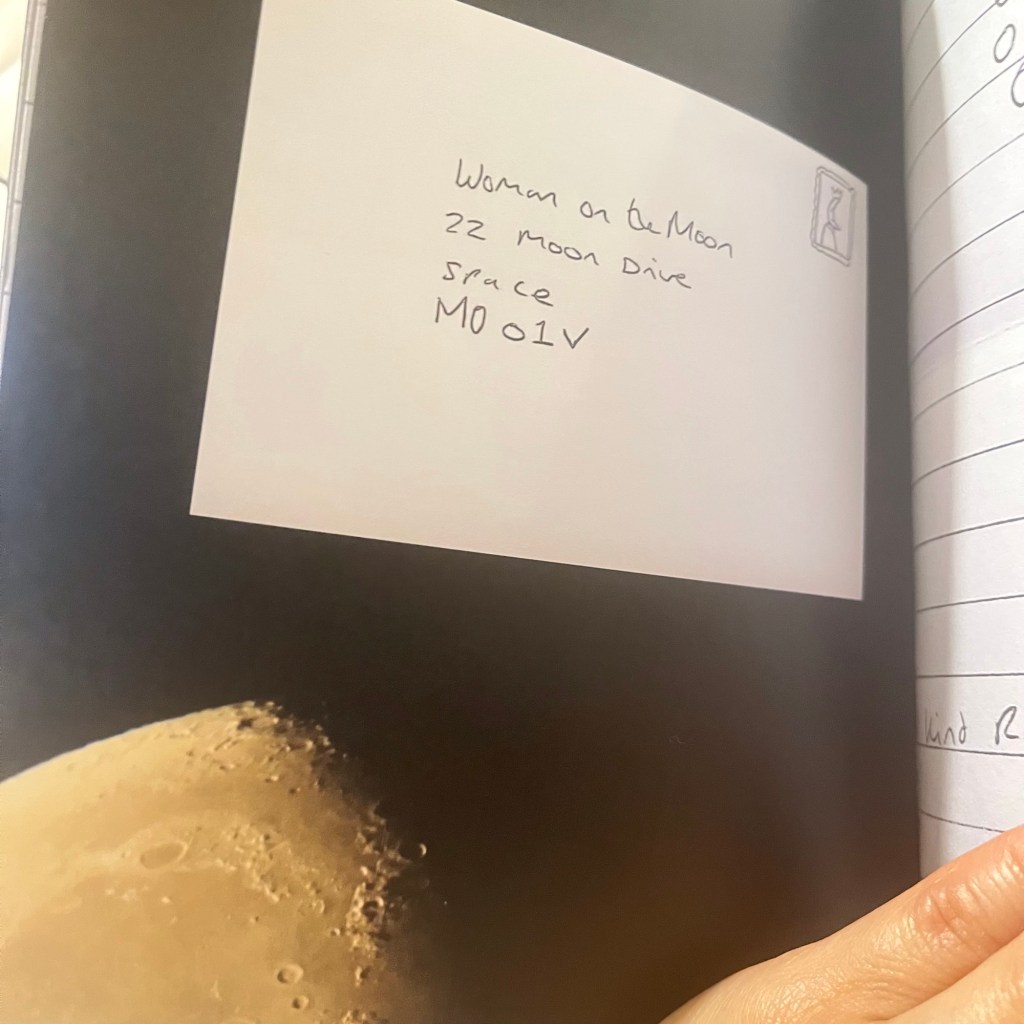
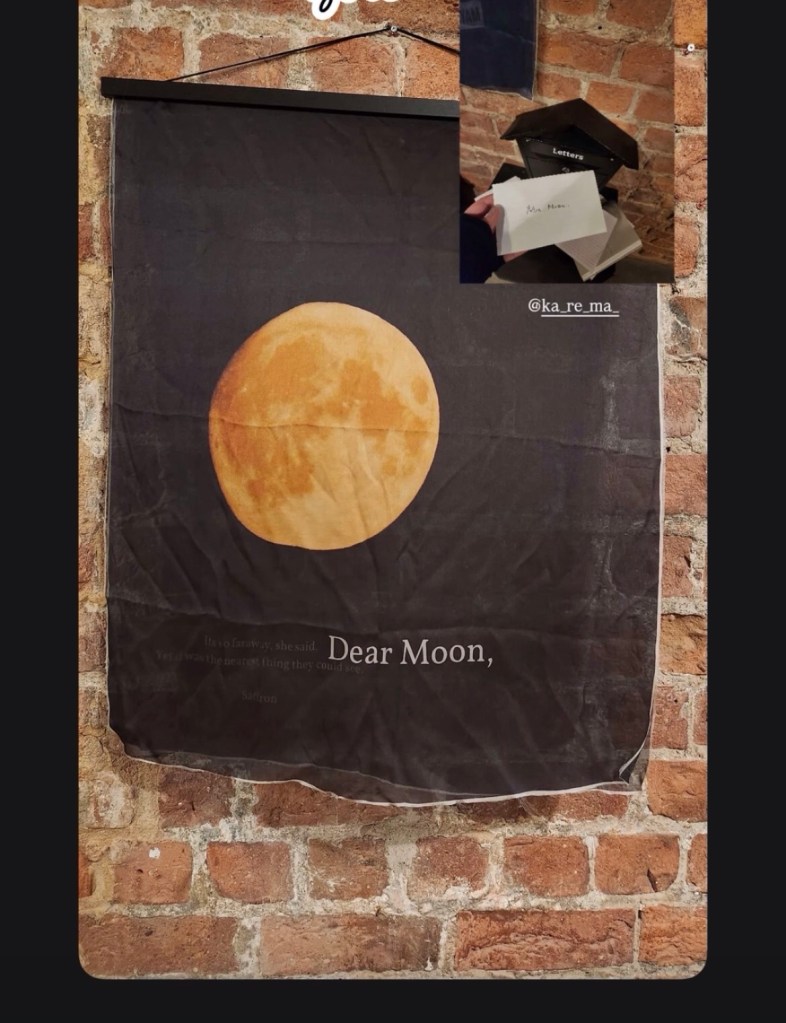
Dear Moon is the main work I have developed over the last two years, and I believe it should be the piece I present in the final exhibition. More than a book, it has become a form of social sculpture, a collective artwork shaped through care, participation, and exchange. It includes the names of 57 participants alongside anonymous contributions and my own letters woven throughout the pages. I eventually removed my name from each individual page because it felt unnecessary to repeat it so many times, especially when my presence already exists throughout the project as its organiser, editor, and contributor.
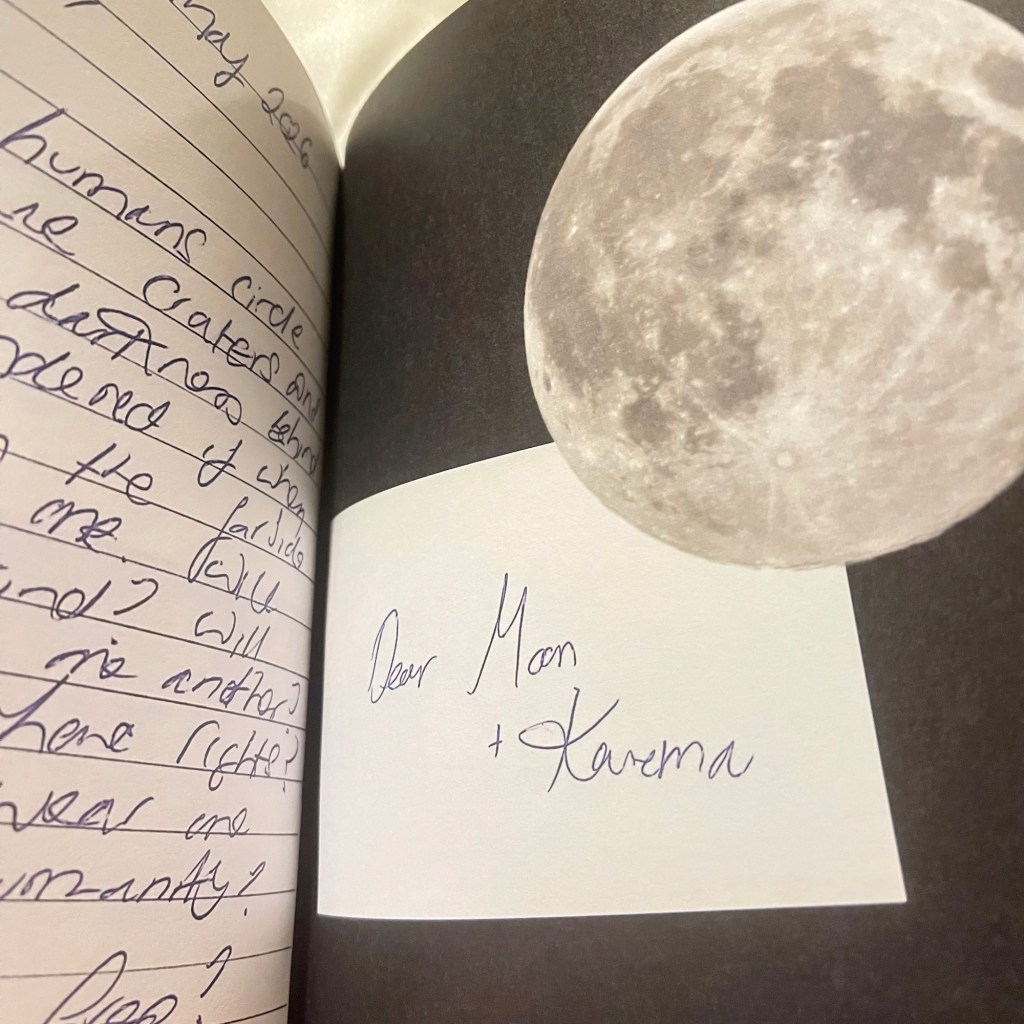
The book is 184 pages long, rich with different stories, voices, languages, and histories. Some texts date back to 1974, while others were written as recently as May 2026. Several contributors chose to write in their home languages, which adds another layer of intimacy and authenticity to the work. People continue to engage with the project and send new letters whenever I exhibit the letter box, allowing the project to remain alive rather than fixed or complete.
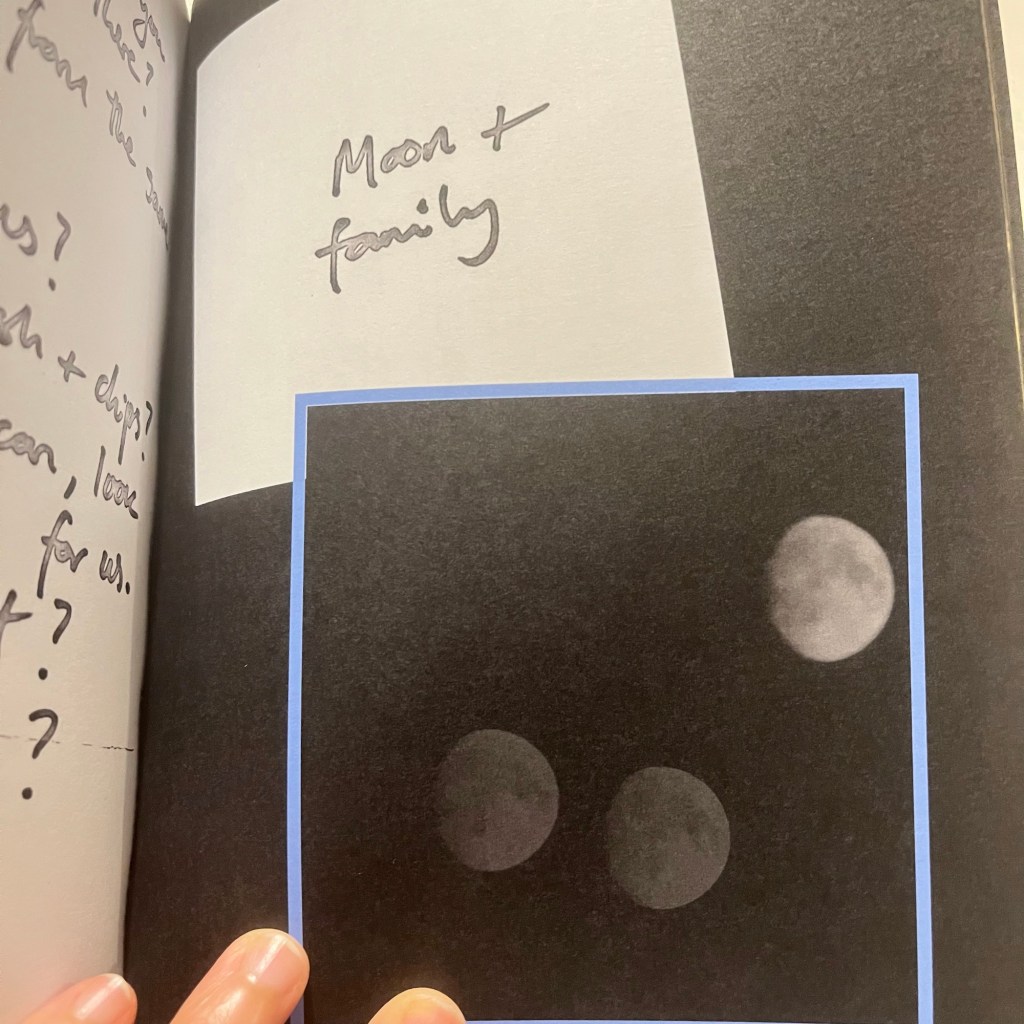
This year, I also spent much more time refining my moon photography, both while taking the photographs and later through editing, especially in relation to light and colour. The images feel more resolved and intentional now, and together with the letters they create a stronger emotional atmosphere. For these reasons, I feel Dear Moon deserves to be shown at Central Saint Martins. I’ll display two copies of the book on two different stands at different heights, one lower for accessibility and one at a standard height. I’ll also include the black letter box with paper and pens.
Copies of the book will also be available to borrow through Sefton Libraries in Crosby, Bootle, and Netherton. I also have a digital version prepared, although I’m still undecided about uploading it to my website. Part of me feels I should wait until every participant has received their physical copy first.
I’m also planning a shared reading session at Bootle Library this summer, where contributors from Liverpool will be invited to read and celebrate their work together. I hope Chris Day, the eldest participant, will attend and share the beautiful story she wrote about the moon in 1974. Another participant I would love to attend is Belinda Ludlow, another mature participant who studied English Literature some time ago. She told me she has always found it difficult to publish her writing because she tends to approach it from a highly analytical perspective. Hopefully, her letter to the moon will become the first step towards restarting her writing journey.
What I love most about Dear Moon is that it carries a genuine sense of community, care, and mutual respect. It reminds me that art can hold people together across generations, languages, and experiences.
Next month, I’ll deliver a Dear Moon workshop as part of the come back programme, in collaboration with the Arab British Centre and Longsight Art Space in Manchester. This will be the first Dear Moon workshop outside Liverpool.
The programme supports adults who have taken long breaks from creative practice, or who always wished they had the opportunity to study art. My workshop will focus on building connections, encouraging confidence, and demonstrating that art does not require expensive materials or complicated equipment. Art begins with stories, and every person carries a story worth telling.
Another meaningful part of this experience was being asked by the Arab British Centre to create a very short 30 seconds video for social media. Their request was inspired by something I had spoken about previously: how, after having children, I rediscovered creativity by making art personal rather than treating it as a chore, something meaningful that didn’t depend on money or expensive materials.
At first, I thought, “This is even harder than the 3 minute video Jonathan asked us to make” I asked a filmmaker friend whether 30 seconds could truly hold a story, and she replied “Plenty of time!”
So, the first thing I did was write my words and record my voice so I could understand the rhythm and timing. I removed unnecessary sentences and focused only on the essence of what I wanted to communicate. Afterwards, I asked a friend to help me film footage at St George’s Hall.
I made the video in Arabic because the programme hopes to reach Arab participants, but I also included English subtitles so everyone could feel welcome and included. The process felt surprisingly natural, and I realised how much the short film assignments from the course had prepared me for this experience. It showed me how learning within an educational structure can become a practical tool in the real world.
Also, in July, I’ll be running a family creative session as part of the Liverpool Arab Arts Festival 2026.
Looking ahead, I can already see Dear Moon continuing to grow through more workshops, new letters, exchanges, and future collaborations. In particular, I’m planning to publish Dear Friend in 2027, a book that will carry replies from the moon.
I’ll also be co-producing Turkish Day at the library in December 2026 and helping organise a Community Iftar at the library in February 2027.
So rather than feeling like the end of the MA, it feels like the beginning of a much longer conversation, where all this knowledge can continue to grow and live within my work and everyday life.
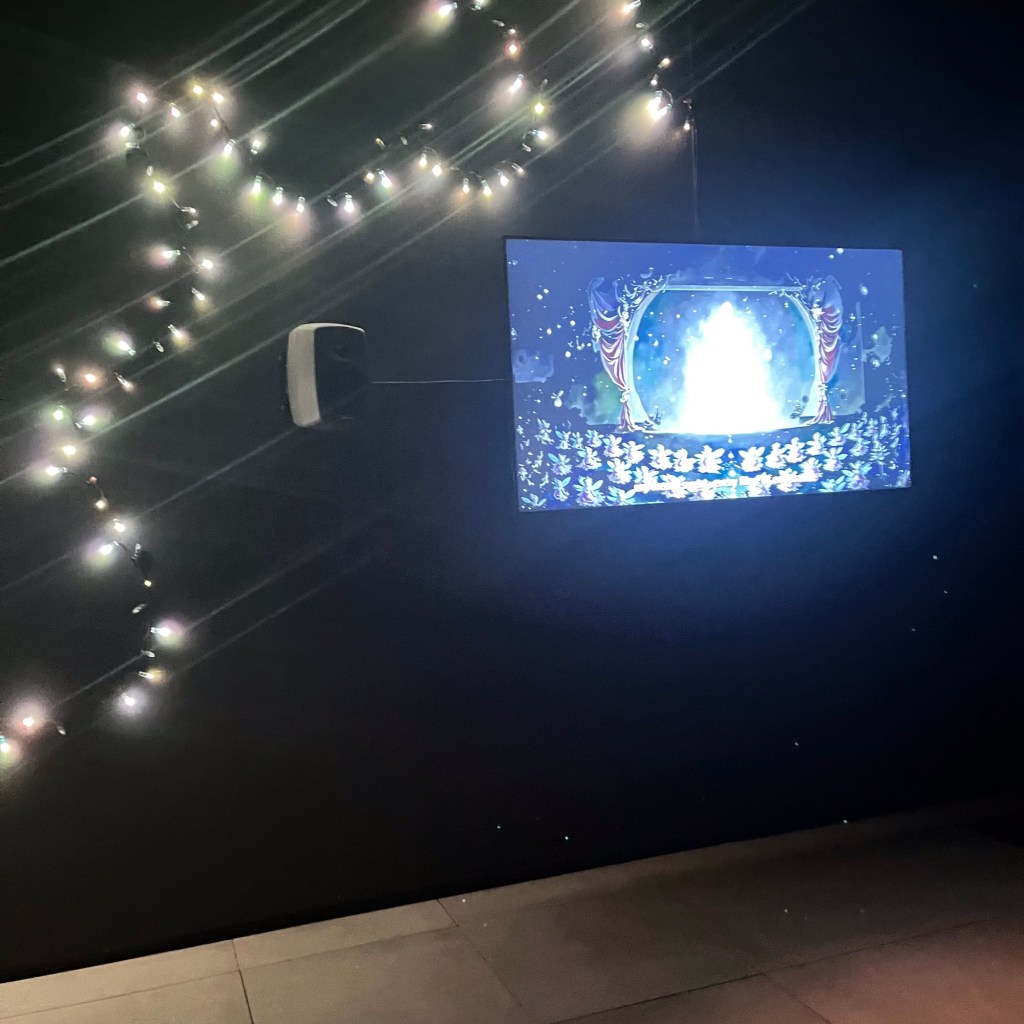
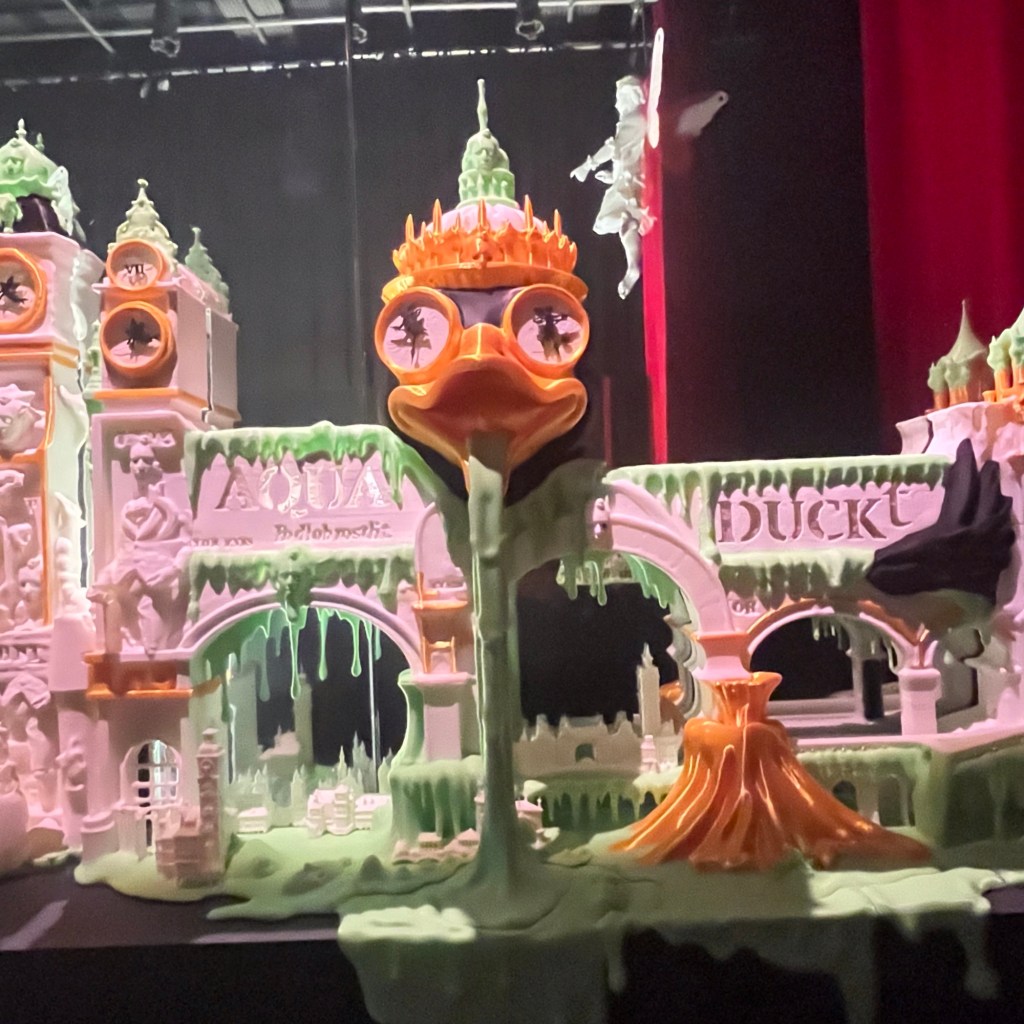
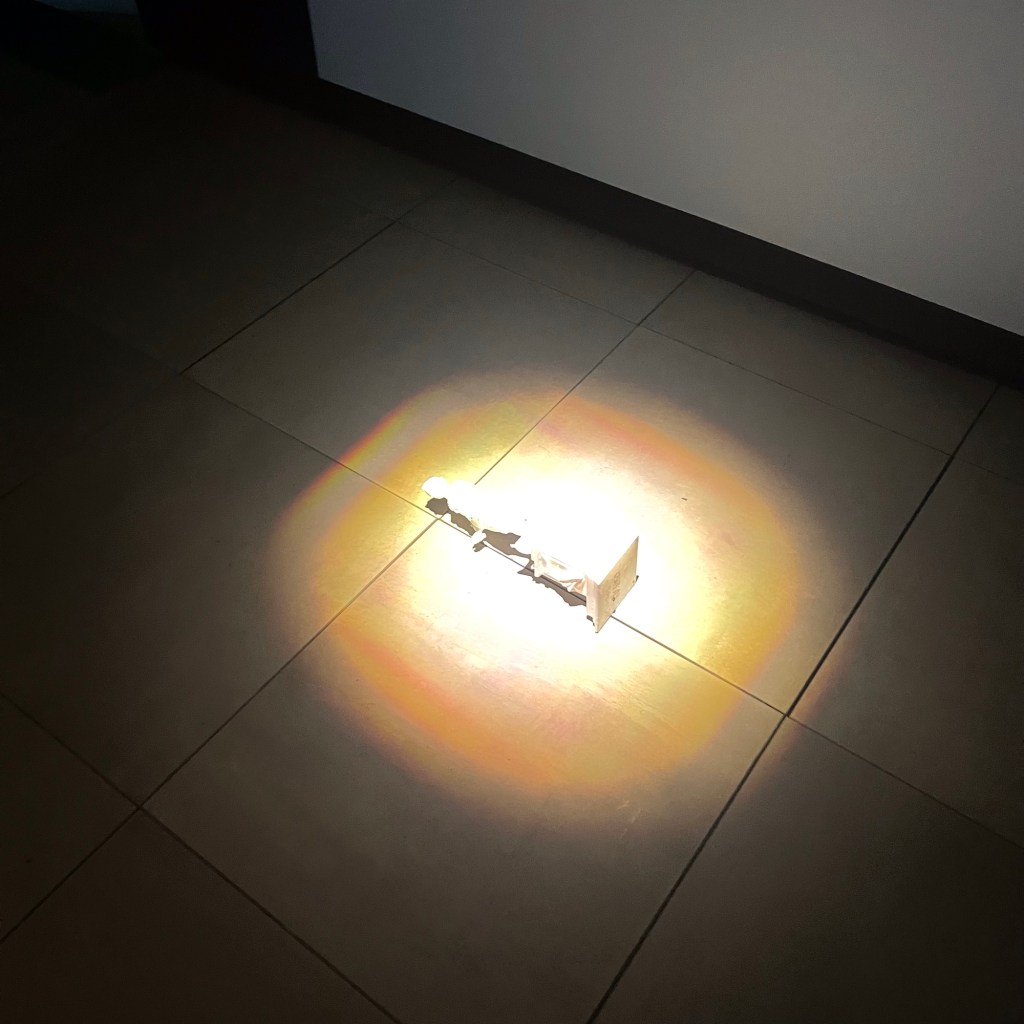
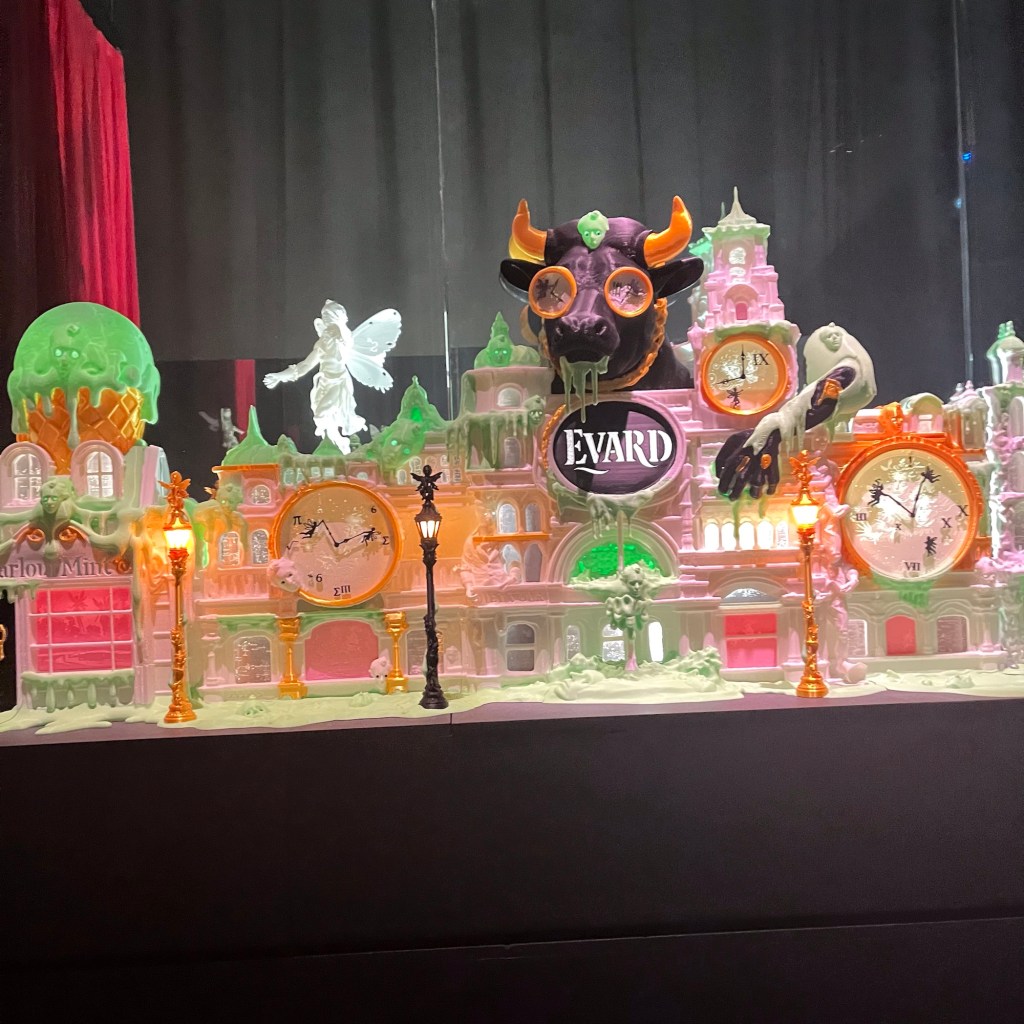
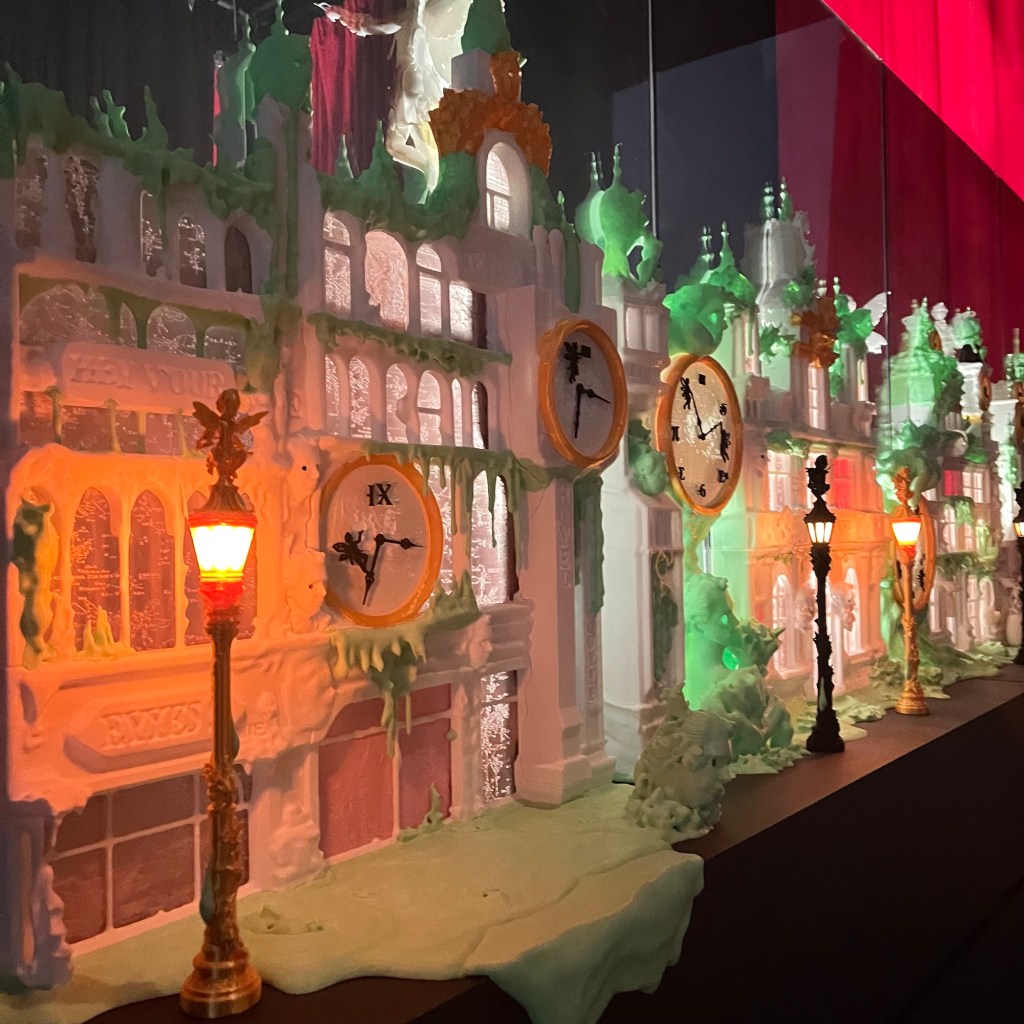
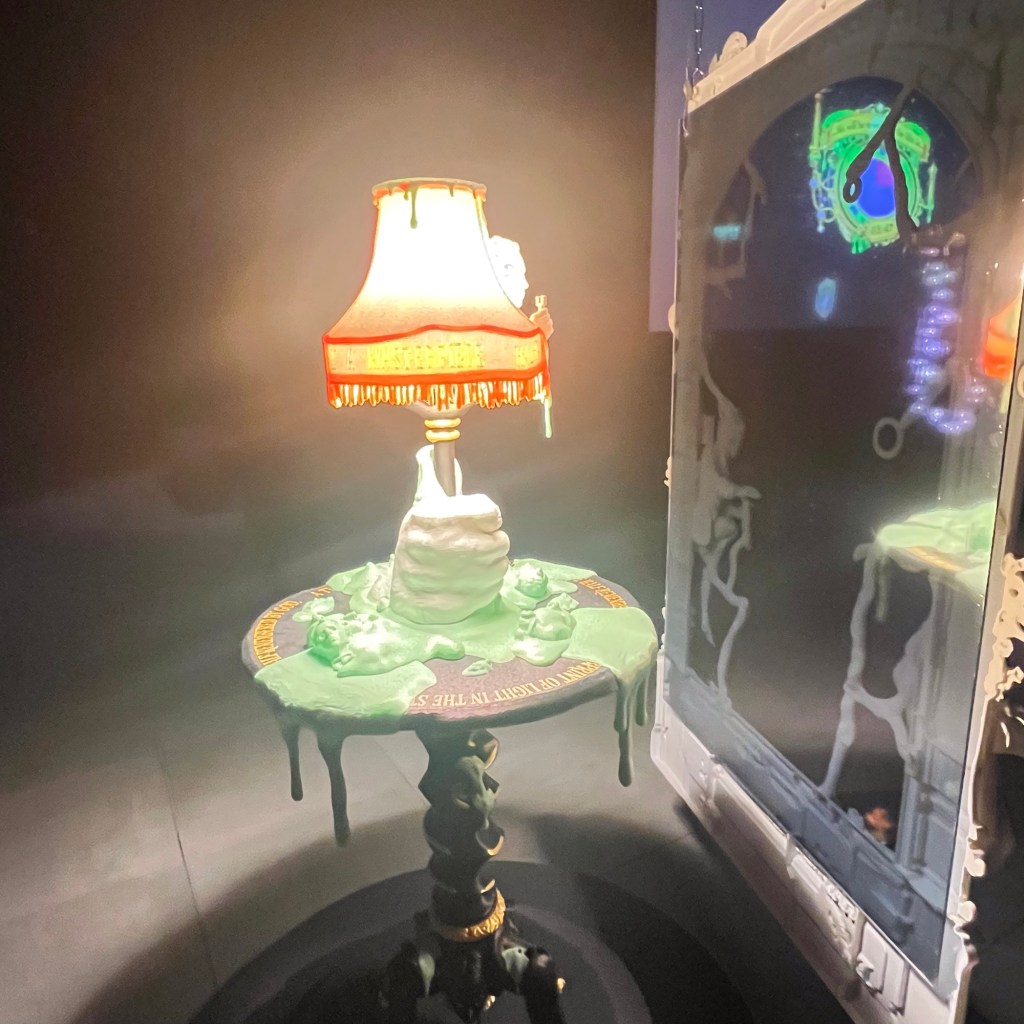
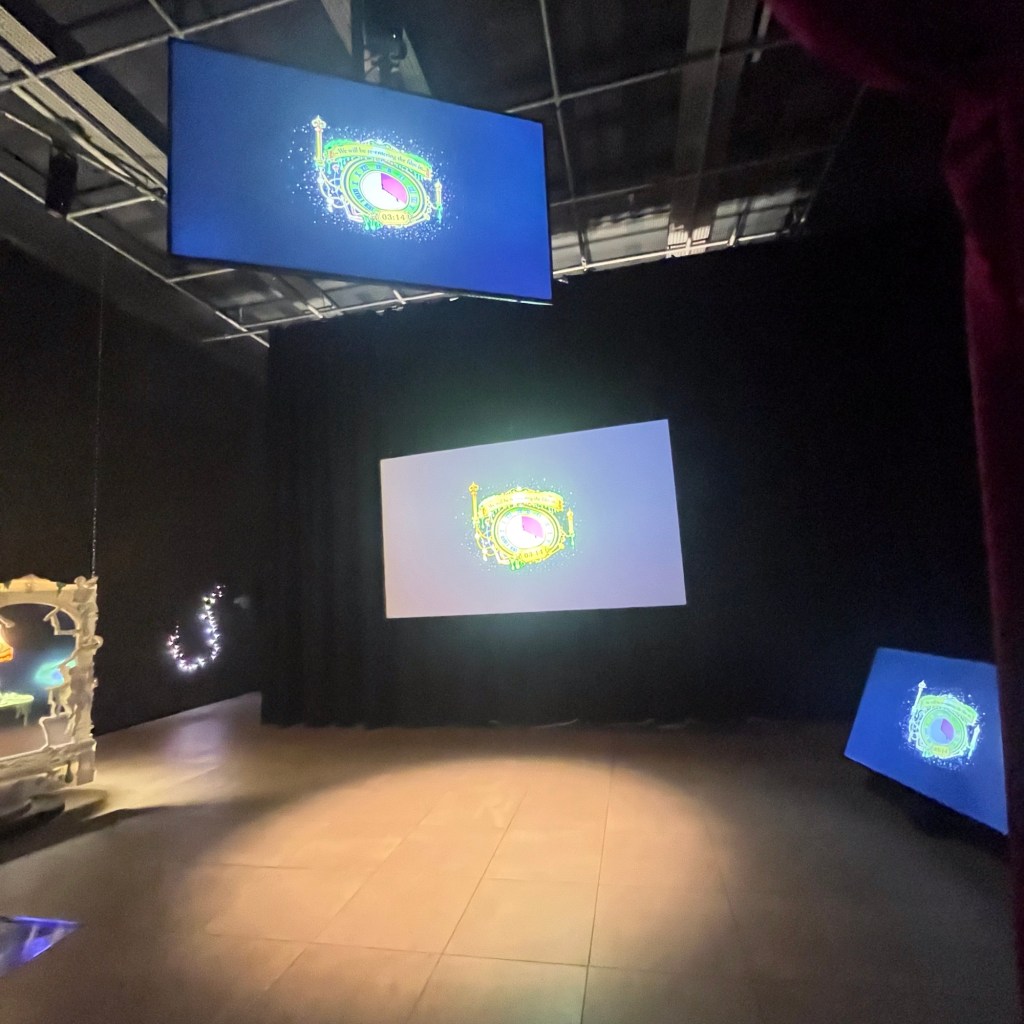
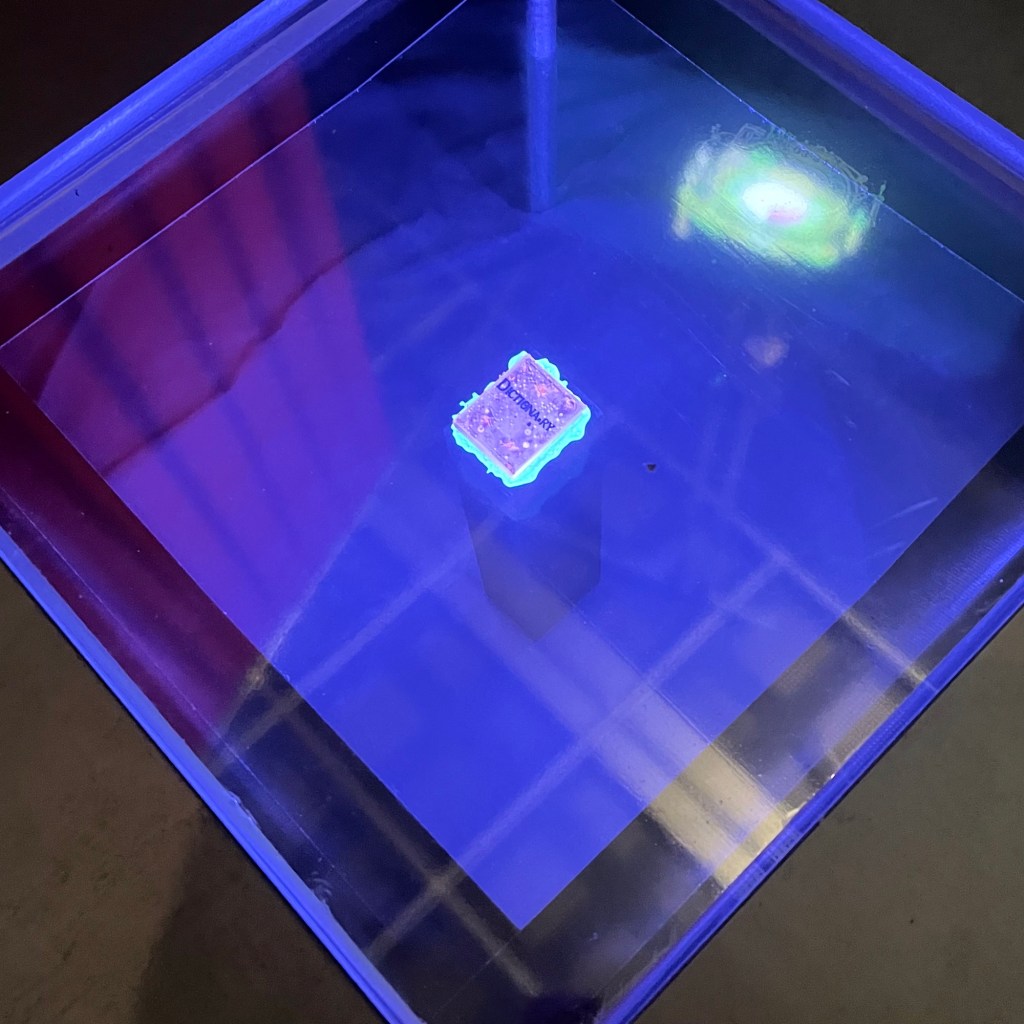
Went to visit FACT today. Jonathan recommended this exhibition by Rachel Maclean. I had heard of Rachel Maclean a long time ago, but then completely forgot about her, maybe because I had only experienced her work through Instagram. But seeing the work in person was completely different, a much deeper and more powerful experience.
It was incredible. The story, the switching between the screens and the lights, the sculptures, and the sound all made you feel part of the installation. Moving from one room to another, following sounds and light, your whole body became involved. Everything asked you to stay alert because you did not want to miss anything. I’m so grateful for this experience. It made me realise how much difference there is when you experience an artist’s work in person, and also how much curation and installation can add to the work itself. You are building an experience, not just showing a piece of work.
Macklean at FACT 2026
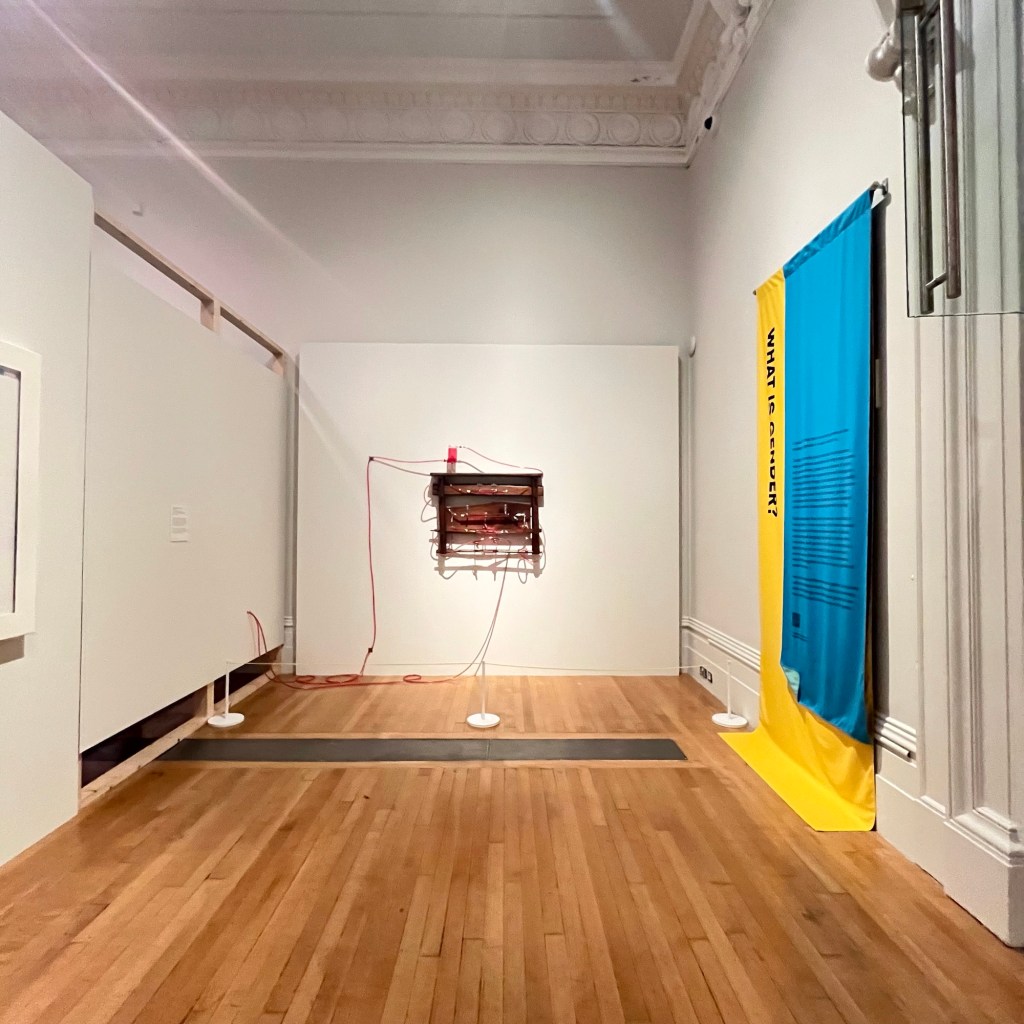
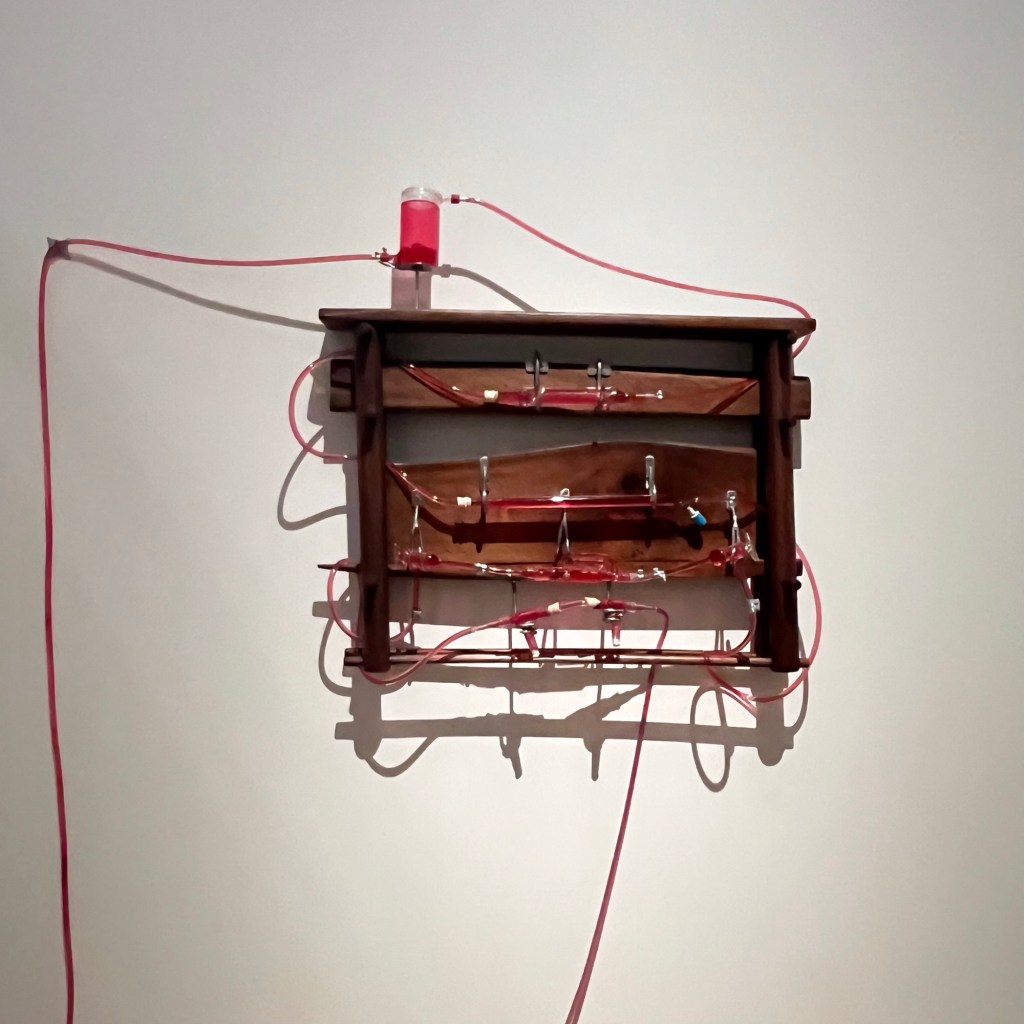
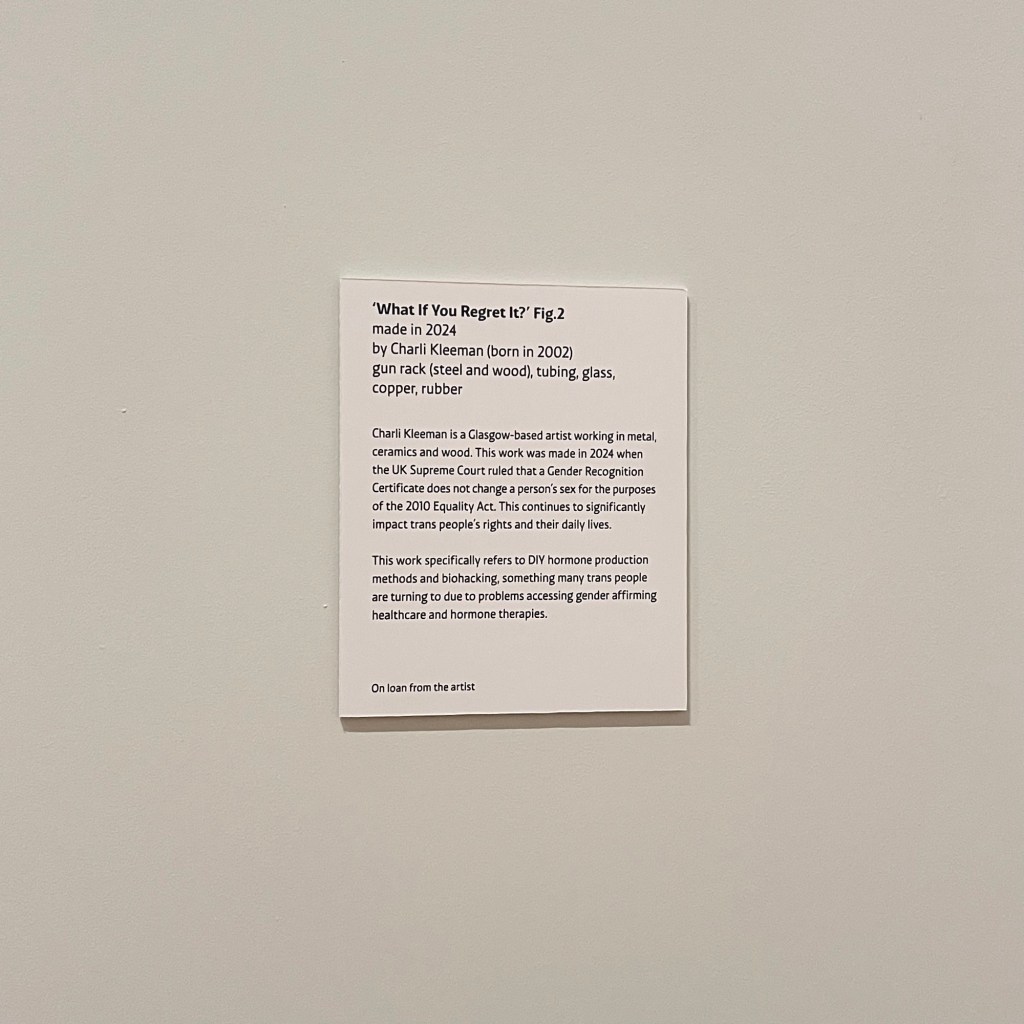
After that I went to work, and on my way home I stopped by the Walker Art Gallery. It was the last hour before the Walker closed, so I went to see the new group exhibition called Gender Stories, especially to see Charlie Kleeman. Charlie took part in The Right Map exhibitions and made large installations in the Port Sunlight stables. Last week they texted me saying they were coming to Liverpool, then we met after they had finished installing their work.. Charlie told me they had been invited to take part because one of the curators saw their work at The Right Map, last year.
Kleeman installation at Port Sunlight’s Stable 2025
I felt so proud and happy! Charlie lives in Glasgow, and the only time they had come to Liverpool before was last year for The Right Map. Charlie took part through Rory Macbeth. We did not know each other before then. I loved their work immediately, it’s so cool and unusual. What makes me happiest is that, through the exhibitions I organised last year, I did not just make connections and learn how to create a small programme, but that some artists also benefited from that experience afterwards, like Charlie.
At the Walker Gallery 2026
This also made me think about something Jonathan has mentioned many times. A curator might see your work and then, after months or even years, contact you because they remembered and liked it. Having an easy way to contact artists and keeping your work updated and visible is really important.
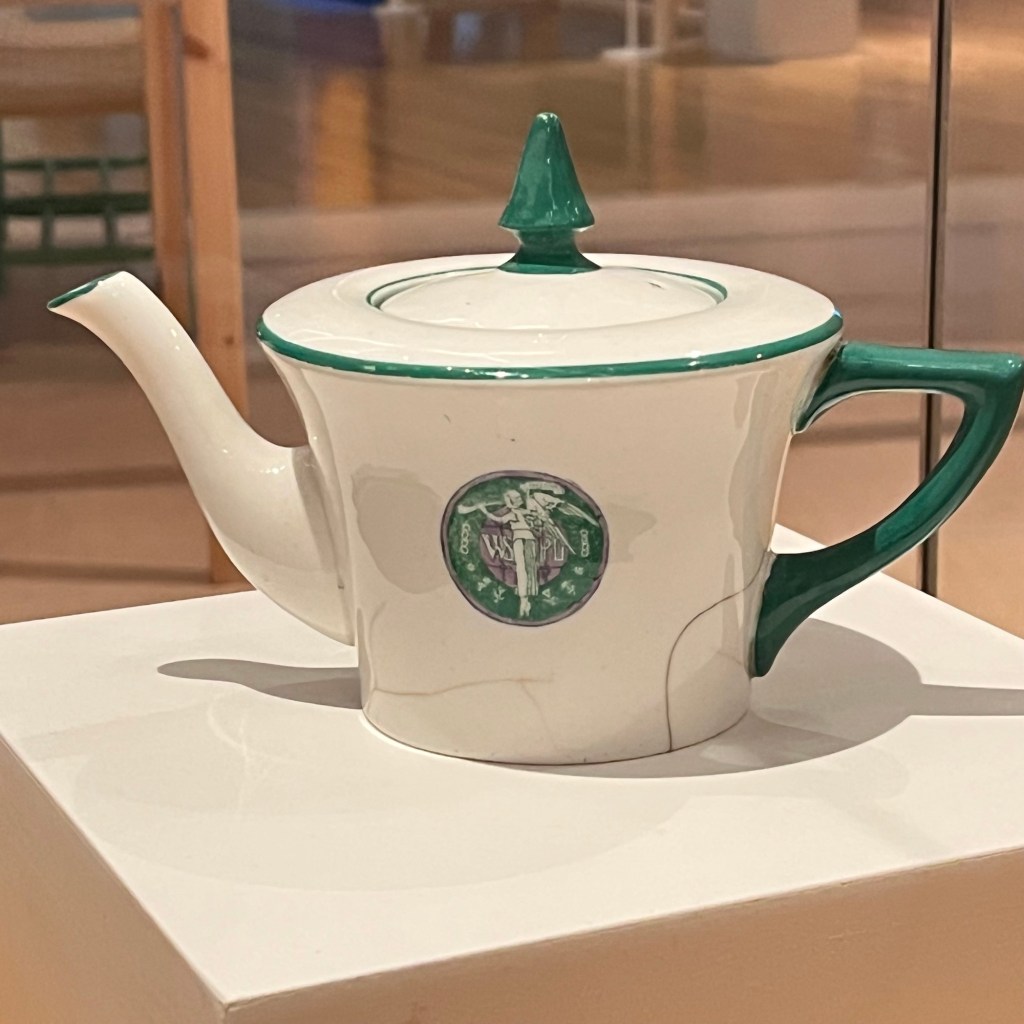
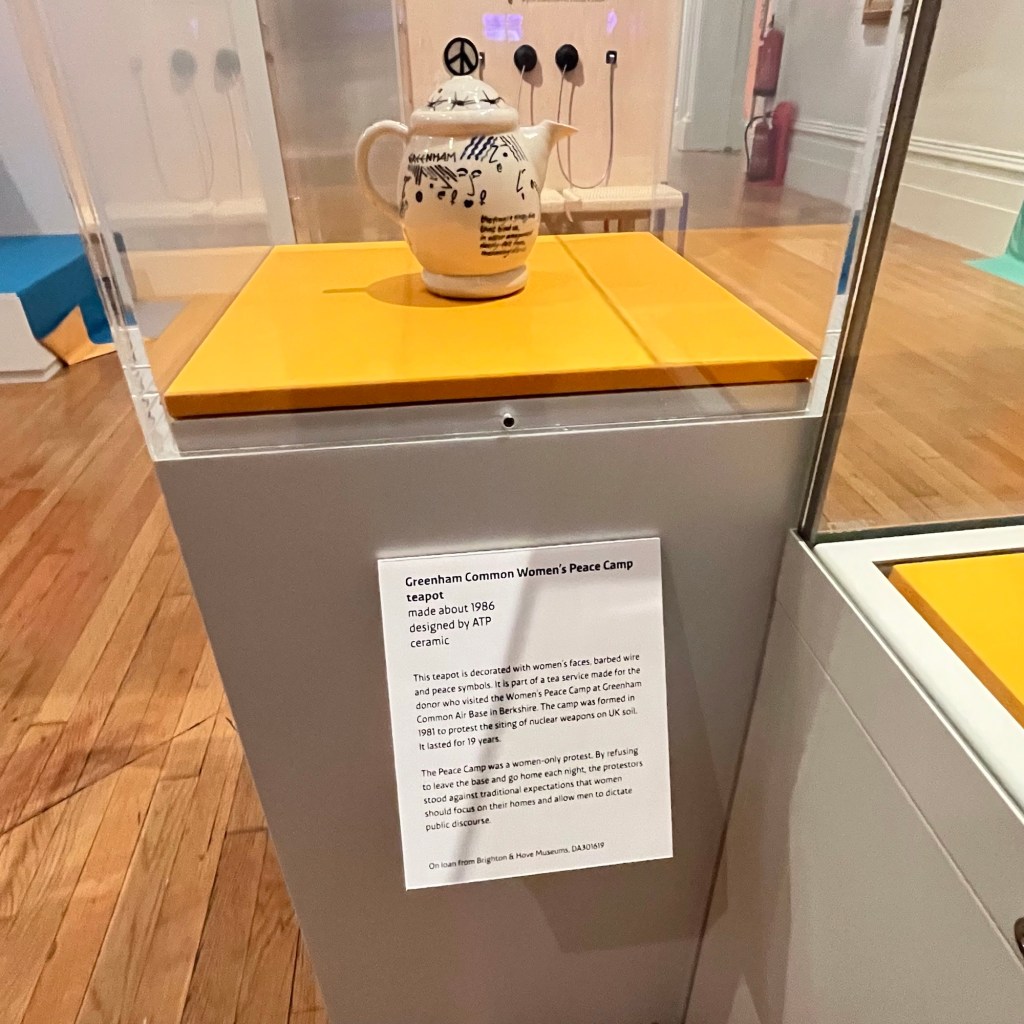
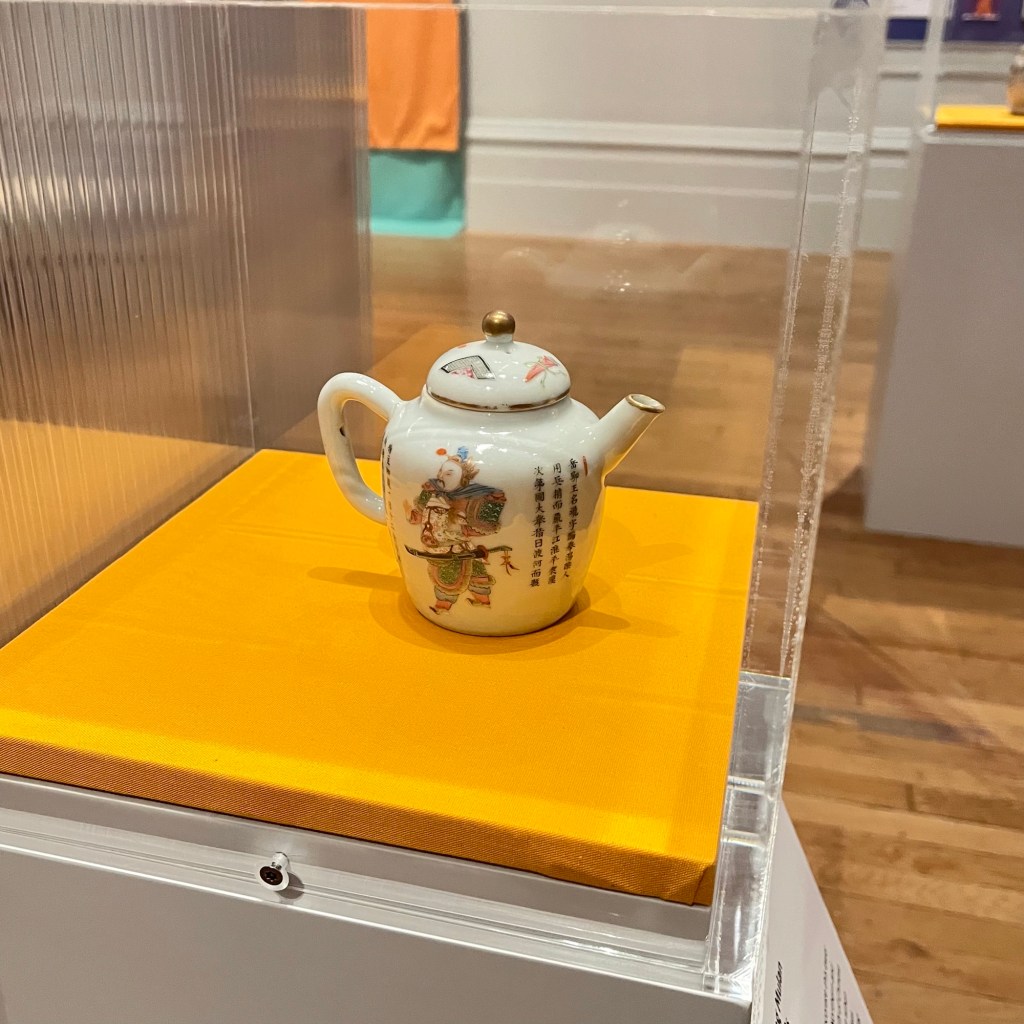
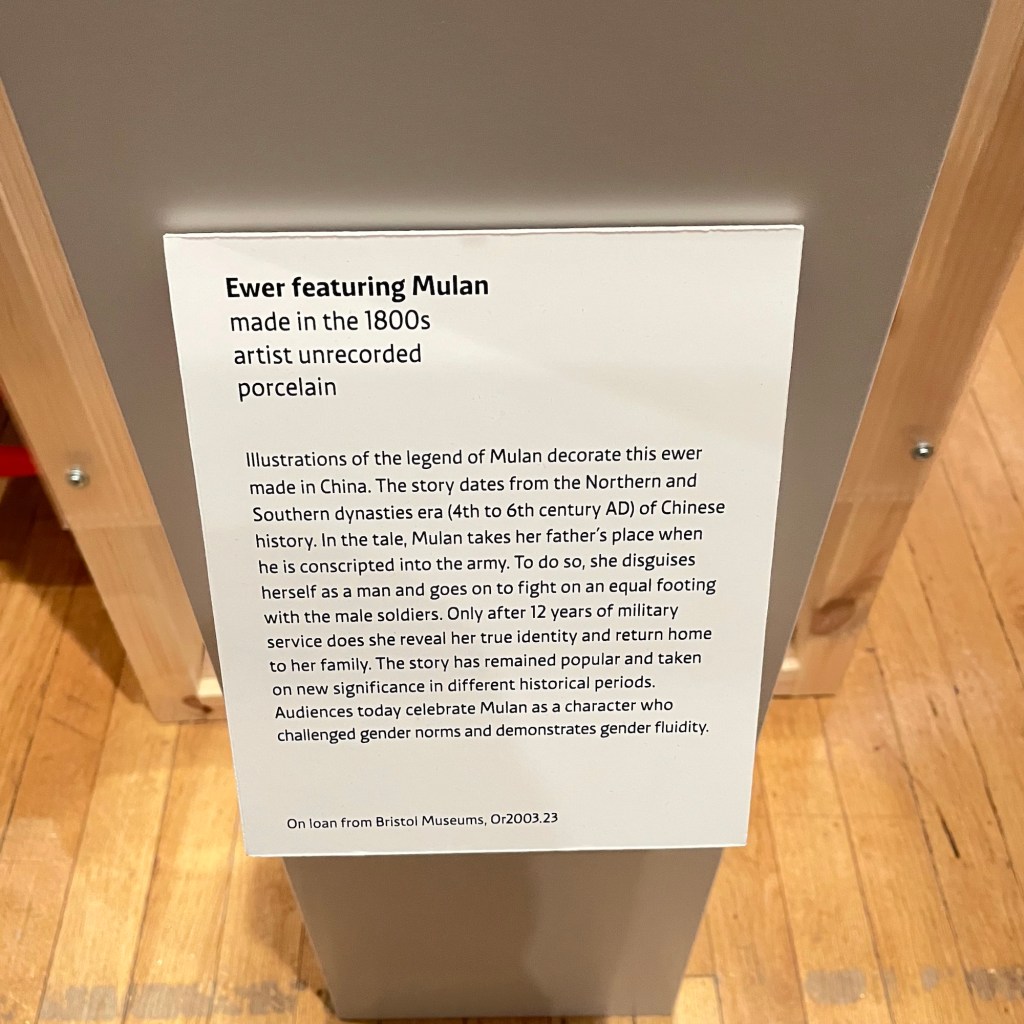
And finally, in the same room, I noticed three teapots from different times and places, each made by different artists and each carrying a different story. What I loved was that they all had a connection to women, either made by women or telling stories about women. I loved them so much, and they made me love my new teapot even more, because now I realise this isn’t the first time a woman has wanted to tell a story through a teapot!
Last week, I gave a short talk about my current tea set work at a monthly meeting at the library called Artist Office, which gives artists the chance to use the library as a workspace and creates opportunities to exchange and discuss ideas. I took the opportunity to speak about the work while it’s still in progress, and to reflect on what could still be improved or added.
I began by talking about social sculpture as both a starting point and a space for ideas. From there, I spoke about my research through clay, drawing, site visits and storylines connected to colonial history.
Presenting my work to others benefited me. It helped me practise communicating my ideas and explaining my work more clearly. I also received useful feedback, especially when someone shared a link to The Common Salt performance with me, which I appreciated very much.
That evening, I watched the video. The work felt deeply connected to my work. The performance was provocative, beautiful, simple, and creative in the way it explored the history of British colonialism in India.
What I especially loved was how, within one hour, the artists managed to communicate their ideas so clearly and powerfully. By the end of the performance, the table itself had transformed into an assemblage sculpture. It reminded me that art can tell similar stories through many different forms and materials.
The next day, I designed the final small pot in my tea set. Before that, I was unsure of its purpose. But after watching the performance, I understood: it’s for salt!
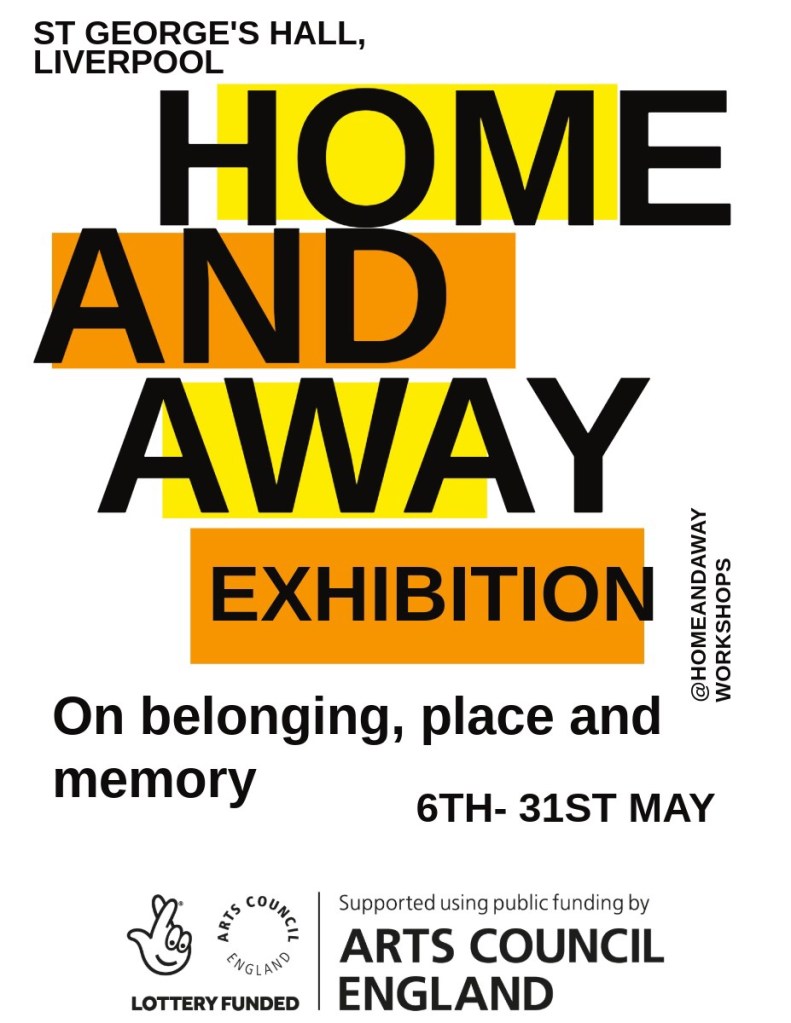
Home and Away exhibition is open to the public until the end of this month. It was a great opportunity to collaborate with women who share similar experiences of migration and displacement. The artists came from different countries, including the Philippines, Venezuela, Poland, Croatia, Sudan, and Argentina.
The process felt empowering for all of us, creating space for conversations, shared memories, and reflection. We also spoke about how the exhibition could continue to develop and potentially be shown in other places in the future.
This experience became an important reflection for my MA and good practice before the final show. It also opened doors for future collaborations with both the artists and the venue.
I also received more moon letters, which made me realise that the project has the potential to continue for as long as the letter box remains part of the exhibition. People still feel drawn to writing and sending physical letters, even without expecting a reply. The project reflects a sense of trust and connection between people, which feels especially meaningful today. This experience also encouraged me to think about how the project could keep evolving over time through future collections and publications.
Another important thing I learned was how I can present pages from the book in different formats. The book itself can exist as one form, but larger pieces can also work well and catch the viewer’s attention.
Home and Away is open to the public until the end of this month, and it has already attracted attention from Liverpool’s websites. Promotion was not something I initially wanted to focus on, but one of the fellow artists was very enthusiastic about spreading the word, and she did a great job. It was also a valuable opportunity to observe and learn from other artists, and to recognise how we might use and support each other’s skills in future collaborations.
Yesterday we had an interesting discussion about coding exhibition spaces and curating. Jonathan shared some texts by Edouard Glissant and his ideas about continental and archipelagic thinking. We discussed global dialogue, where cultures meet and exchange with one another, and how these ideas could be applied within curating. We also questioned the difference between algorithmic and human curating.
My mind felt crowded with thoughts, words clashing against one another. Writing about it helped me untangle those ideas and find the right words..
So,
1- Continental and Archipelagic Thinking
First, I did not know about Edouard Glissant until Jonathan mentioned him. Before writing this, I did some research and discovered that Glissant attended the same school as Fanon during a similar period. I also found that Glissant was influenced by Aimé Césaire, the poet and politician who held important political positions in Martinique and was one of the founders of the Négritude movement.
What I found strange, however, was the name of the capital, Fort-de-France. The name feels heavily colonial and military in origin, and it made me question how much it represents the mixture and complexity of Caribbean identity that Glissant writes about. If Caribbean identity is shaped through creolisation, relation, and cultural mixture, why do many places still carry the language and structures of colonial power?
Returning to Glissant’s theory, it can sound idealistic unless we also discuss unequal power structures. What happens when one culture dominates the exchange? And who is speaking for whom?
I believe archipelagic thinking requires a degree of equality in power, position, and knowledge in order for genuine exchange to happen. People need to feel safe and respected enough to welcome openness, relation, and dialogue.
At times, I feel that Glissant’s ideas emerge from a context where it is easier to imagine archipelagic relationships, islands existing beside one another, sharing histories of colonialism, displacement, and struggle. However, in reality, relationships between places are rarely equal. If one nation or culture has greater resources, political influence, or economic power, it will inevitably shape the exchange more strongly than the other. Examples such as the UK and Ireland or Indonesia and the Philippines show how unequal power can influence cultural dialogue.
Because of this, I believe there is a responsibility not only to be welcoming and open, but also to avoid placing ourselves in vulnerable positions through a lack of knowledge, experience, or access. On a larger scale, this relates to power, science, dignity, and human rights. Without awareness, exchange can easily become influence or control by those who already hold authority.
How can this be applied to curating? For me, curating should involve both knowledge and empowerment. The curator should develop enough understanding and experience to support the work responsibly, while also empowering artists and contributors so that exchange becomes mutual rather than hierarchical. True dialogue cannot happen when one side only gives and the other only receives.
2- Algorithms and Human Curating
When thinking about algorithms and human curating, I believe that even AI is ultimately shaped by humans. Algorithms are built from data that is created, selected, and controlled by people, often within commercial or business systems. Because of this, algorithms tend to respond to behaviour patterns and visual preferences rather than deeper emotional or ethical understanding.
Algorithms are designed to please, predict, and reinforce engagement. They often agree with existing behaviours rather than challenge them, unless introducing something new becomes commercially useful. They cannot fully understand emotional complexity, vulnerability, or the human condition in a particular moment.
Human curators, however, allow space for emotion, ethics, care, and mistakes. Whether curating an exhibition, a book, a workshop, or a conversation, human curation carries sensitivity toward people and context. At the same time, curating also reflects the organisers themselves, their intentions, politics, feelings, and what they want to communicate through the work.
Curators are often the first audience to encounter an artwork, and that first encounter is important for both the artist and the curator. Curatorial work therefore carries significant responsibility. However, I believe curating should happen alongside the artist and the artwork, not over them. Also, it’s important to first experience the artwork on its own terms before being influenced by the artist’s explanation, while still maintaining a respectful and collaborative relationship.
Reflecting on all of this takes me back through the journey of the last two years, curating spaces, books, workshops, and even this blog. Technology has an important role in making processes easier, but humans still carry the responsibility of shaping narratives and telling stories.
Finally, archipelagic thinking may be an attempt to create ethical relations despite unequal histories and structures. And, from a curatorial perspective, curators must consider the needs of the artwork, including care, health and safety, protection, and the conditions the work requires within a space. Exchange between curator and artist is essential, because curators cannot exist without artists and contributors!
Last week I had my final 1–1 tutorial, and it was a very valuable conversation in which I was able to reflect on my work and plan for the coming months, thinking about challenges and what matters most right now. Having this discussion at this stage feels important, because I believe I need Jonathan’s insight and guidance while I’m still in the process of making.
The tutorial gave me a great deal of confidence, and the next day I began designing the bone-dry tea set. I made 21 pieces for the tea set, alongside over 20 small crescent forms, which I will use to make bookmarks for our MA Digital class. Each ceramic piece carrying a story from colonial history. I find that I can’t add anything to the work unless I’m sure it’s relevant and contributes to the overall narrative, and this does slow me down slightly. However, this has been one of the most important lessons during my MA: taking the time to build a cohesive body of work, without unnecessary additions or distractions. I can easily feel overwhelmed and distracted but I have learned to recognise that moment. When it happens, I stop adding and instead spend time reading around the theme or taking a break. This is how my ceramics project develops through slow reading, while the Moon Book has developed through slow writing.
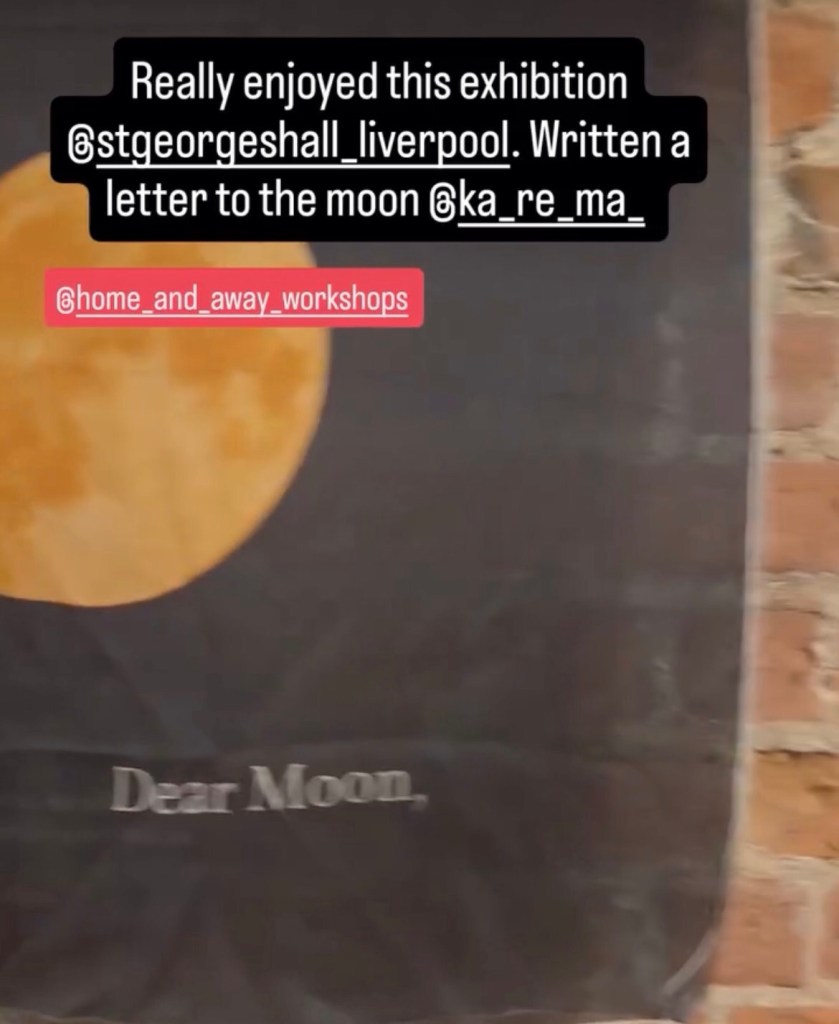
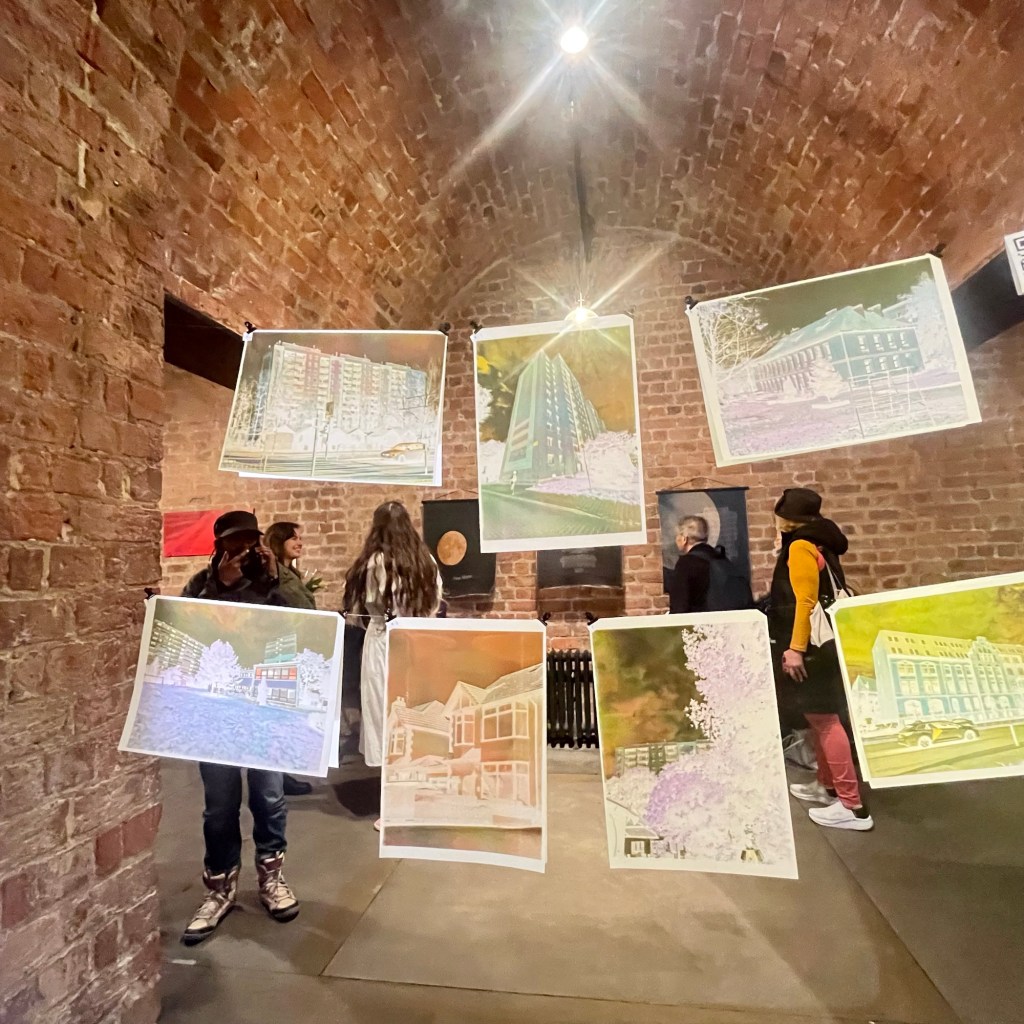
I spent the week working with clay, while also setting up the new show at Liverpool St George’s Hall, where I will be showing Moon Book pages on silk (factory print). I made these last year for The Right Map 2025 but did not have the right opportunity to present them. Now they feel more suited to the theme (Home and Away) and to the space at St George’s Hall. I installed them over a long black heater, where the warm air creates a gentle movement in the work, subtly animating the delicate sheets.
At the core of my social sculpture practice is care and the intention to make a meaningful difference. The Moon Book demonstrates this clearly by connecting people and creating space for shared vulnerability. After the last workshop, some participants began sending me letters in response to others letters. I feel a deep sense of gratitude towards this project and the people involved. Writing letters feels especially meaningful, and I’m excited about the next book Dear Friend (2027). What I find particularly beautiful is that some children are growing up through this process, and some participants who have never met are writing to each other with genuine care and intimacy. It shows how powerful and delicate these connections are. I feel I owe a great deal to everyone who has taken part.
The tea set also functions as a form of social sculpture. It consists of multiple pieces that invite interaction, through storytelling, through history, and through use. Sharing stories from the past is itself a way of engaging with people who are no longer here. In this sense, the work becomes a way to educate, to encourage questions, and to create opportunities for participation.
For example, discussing the Opium War came up in my tutorial with Jonathan. We began asking: how many “opium wars” exist today? How many forms of addiction are being created, and how will these stories be told in the future? Simply bringing these questions to the table is part of the work. It opens up dialogue and that is where social sculpture begins to happen.
The bone-dry teapot and cups still waiting, as if holding a story yet to be told. The tea set idea emerged from the story of a Yemeni translator, Omar Bahabri, which led me to delve deeper into the history of beverages, particularly tea. I was already familiar with the history of coffee, its origins in Ethiopia, its early cultivation and consumption in Yemen, and its spread along pilgrimage routes to Mecca, then through Muslim traders to Turkey, and onward to Italy and the rest of Europe. However, tea carries a different, more complex, and more painful history.
In Yemen, tea exists in multiple forms: Adeni tea, influenced by Indian chai, and red/ black tea in the Turkish style. This diversity reflects Yemen’s social fabric, shaped by non Arab communities of Indian, African, and Turkish origin who have both contributed to and been shaped by Yemeni culture, particularly its cuisine. Yet, despite this richness, my focus is not on tea in Yemen. Although the idea began with Omar’s story, I instead return to tea’s original homeland, China, where the narrative unfolds differently.
In its early history, tea in China was a simple drink associated with medicine and daily ritual. By the 17th century, however, it had transformed into a globally desired commodity, particularly after being embraced by Britain, where it became central to social life. As demand grew rapidly, Britain faced a significant economic imbalance. It was importing vast quantities of tea from China without having sufficient goods to offer in return.
To resolve this imbalance, Britain turned to the opium trade, cultivating opium in India and exporting it to China on a massive scale. Opium became a tool of domination. Its spread led to widespread addiction across Chinese society, causing profound social and economic harm. In response, the Chinese state attempted to halt the crisis. The official Lin Zexu confiscated and destroyed large quantities of opium in an effort to protect the population. This act became the spark that ignited the First Opium War from 1839 to 1842. Britain with its superior naval and military defeated China and imposed the Treaty of Nanking. This marked the beginning of a period of political and economic subjugation. Chinese ports were forcibly opened to foreign trade, heavy reparations were imposed and Hong Kong was ceded to Britain.
Good read!
In the Second Opium War from 1856 to 1860, Britain and France launched another campaign against China, advancing as far as Beijing and burning the Old Summer Palace, one of the country’s most significant cultural landmarks. China was then forced into further agreements that expanded foreign influence, legalised the opium trade, and granted extensive privileges to foreigners within its borders. These events deepened the weakening of the state, eroded economic control, and contributed to the eventual fall of the Qing dynasty.
This era is known in Chinese history as the Century of Humiliation, a period marked by repeated foreign intervention, internal fragmentation, and a profound loss of sovereignty. The impact of these wars was not only immediate but long lasting, shaping modern China’s political consciousness and its complex relationship with the West. In this context, tea is no longer just a drink. It becomes an entry point into a layered history of colonialism and coerced trade. A simple cup of tea conceals networks of power, economics, and violence, where demand alone was enough to ignite wars and reshape nations.
For this reason, I chose opium as the motif to be carried on the teapot and cups, so I experimented with pen and watercolour, searching for a visual language capable of expressing this narrative.
Then I realised that my project required a deeper level of research, which led me to visit the Victoria Gallery and Museum. As a space I’m already familiar with, particularly for its ceramics and china collection, it offered both a point of return and a site for re-reading objects through a more critical lens.
Upon entering the gallery, I experienced an immediate sense of recognition, I was drawn to the Willow pattern. Its storytelling operates as a form of visual fiction circulated, repeated, and widely accepted, yet detached from its cultural origins. The blue and white aesthetic, often perceived as timeless and decorative, began to reveal itself instead as a coded visual language shaped by histories of translation, imitation, and appropriation.
This encounter also sharpened my awareness of Liverpool’s historical entanglement with colonial trade. The city’s material culture cannot be separated from these conditions.. I became particularly interested in the development of transfer printing the process that enabled the mass reproduction of ceramic which was pioneered locally at the Herculaneum Pottery.
Extending this research, I visited few antique shops, observing ceramic objects more closely in terms of form, surface, and wear. These encounters grounded my understanding of how such objects exist not only as historical artefacts but also as carriers of layered narratives. I documented these visits through photographs and began a series of blue pen drawings as an initial visual response, testing how line, repetition, and colour might translate into my own practice.
I’m drawn to the seed capsule as a central motif, the origin of opium, and a form that holds both fragility and consequence. Its presence operates quietly, yet it carries a dense network of associations: trade, addiction, control, and empire… It functions as a more precise and restrained symbol, resisting overt representation while still holding critical weight. The decision to work with blue and white visual language reinforces this tension between surface beauty and underlying histories.
Early stages
At this stage, I feel prepared to begin planning my final design. What feels significant is how this research, which initially seemed distant and external, has gradually folded back into both local history and my own practice. During my BA, I used a teapot for assembled sculpture featuring a Willow pattern titled Gossip. Revisiting this work now, it reads differently, less as a formal exploration and more as an early, intuitive engagement with themes of narrative, circulation, and miscommunication.
This process has also deepened my awareness of the responsibility embedded in design choices. Selecting what imagery appears on the tea set is not merely aesthetic, it’s conceptual and political. The act of placing an image becomes an act of framing meaning. I think of this as similar to cutting beetroot: the more carefully and precisely it’s handled, the more it stains.. The mark is unavoidable, just as histories do!
When I arrived in the UK, everything felt strange and new, but your face was the only one that remained old and familiar…
Today, I led a moon workshop at St George’s Hall, after weeks of preparing for the upcoming exhibition Home and Away, organised by artist Mariana Sequera. The project explores ideas of home, displacement, and migration. It’s a concepts that seem simple at first, but quickly unfold into something more complex the moment you invite others in.
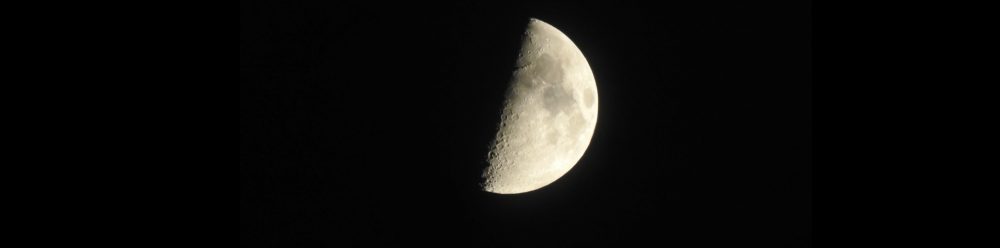
Recently, images from Artemis II showing the Moon’s far side, pulled me back to the letters. I found myself rereading them, and with that came a quiet but firm feeling: it’s time to finish the book, and to stop collecting more.
While sharing the open call for Home and Away and encouraging people to participate, I noticed how easily themes like displacement are interpreted in narrow ways. There is often an assumption that such experiences belong only to certain groups, and not to others. This made me reflect on how art spaces frame experience, and how belonging is often defined, sometimes invisibly within those frames.
Since last year, I’ve chosen not to rush the second Dear Moon book. I’ve learned that timing is not separate from the work. Showing something in the wrong moment or context can mean it’s overlooked, or misunderstood. This awareness is shaped by my position as a woman, a mother, and a Muslim, identities that are often underestimated, even by those close to me.
I’m learning to resist two opposing pressures: the demand to remain constantly visible, and the quiet acceptance of being marginalised. Somewhere between these, Dear Moon has become a space of its own. Writing to the Moon creates a particular kind of room, it allows for distance, but also intimacy. The letters themselves hold so much. They open memory, reflection, and connection. There is something therapeutic in that, but I try not to reduce it to therapy alone. Each contribution carries its own layers.
C, a retired nurse, shared a story she wrote in the 1970s, along with a receipt showing she was paid £8 when it was broadcast on Miri Mawar, a programme on Welsh HTV. Including her work now brings different times into conversation with each other, raising questions about value, recognition, and whose voices are remembered. In contrast, A’s drawing of the Moon’s phases offers another way of understanding participation. As a child with severe physical and learning difficulties, his contribution gently disrupts expectations of what artistic expression should look like. The Moon’s cycles, appearing and disappearing feel like a quiet reflection on resilience and change.
Through all of this, I’ve started to think of trust as a material within the work. People are not just contributing content..they are offering something personal. That comes with responsibility: to hold these contributions with care. As the book nears completion, I feel both excited and uncertain. I want to hold it, but Im still thinking about how to share it. In previous exhibitions, Dear Moon often felt unresolved, shaped by time pressure, or by divided attention.
I took part in a workshop led by Alex Schady as part of the Fine Art Digital Residency week which thoughtfully organised by Jonathan for both MA classes.
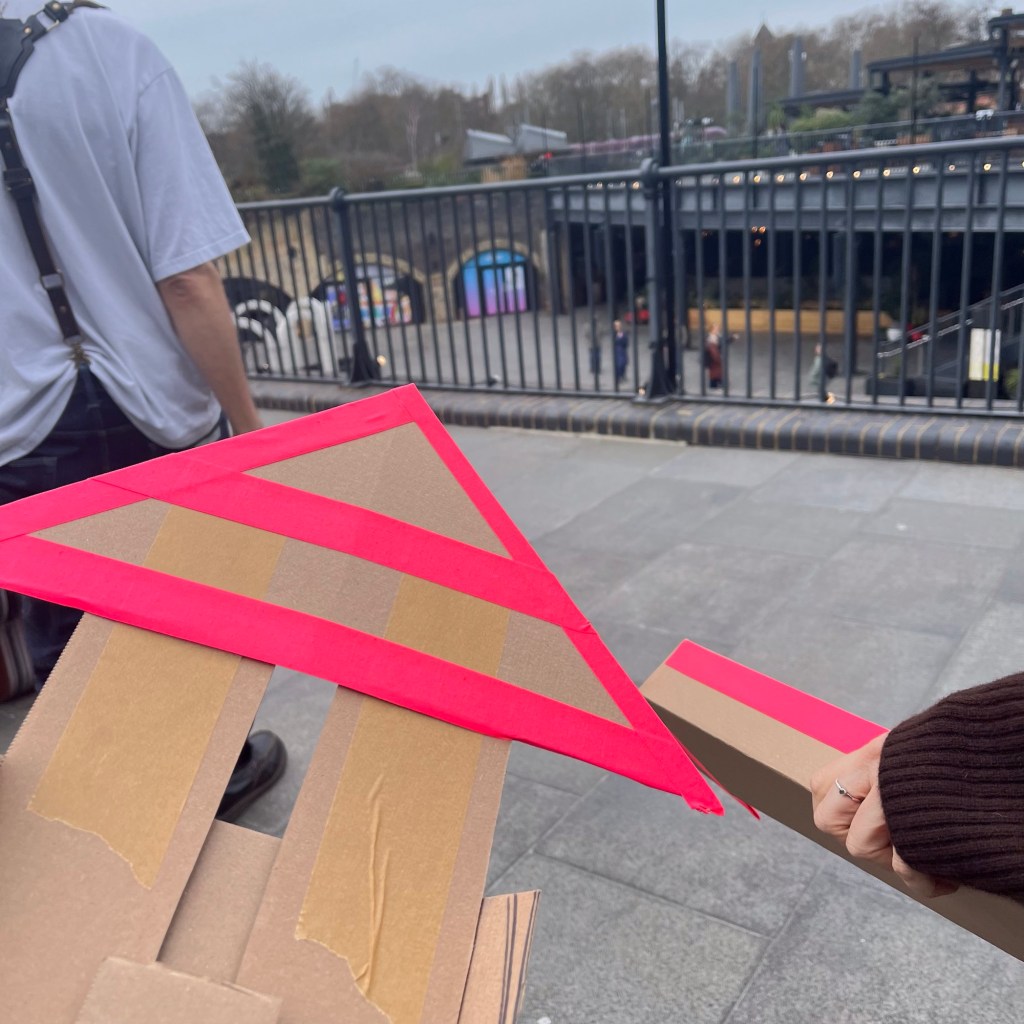
The session focused on collaborative making and began with a simple exercise: a flat sheet of cardboard was shared and each student created an arrow. I made a very simple arrow, similar to Alex’s example, while others explored more playful and experimental shapes. I noticed something familiar about my role in workshops I often observe more than I produce, watching how others approach the task becomes part of my learning process.
We then moved outside to the street and began performing with our objects, engaging with the urban environment and the people around us. The arrows shifted from being simple objects to becoming gestures in public space.. Accusatory fingers!
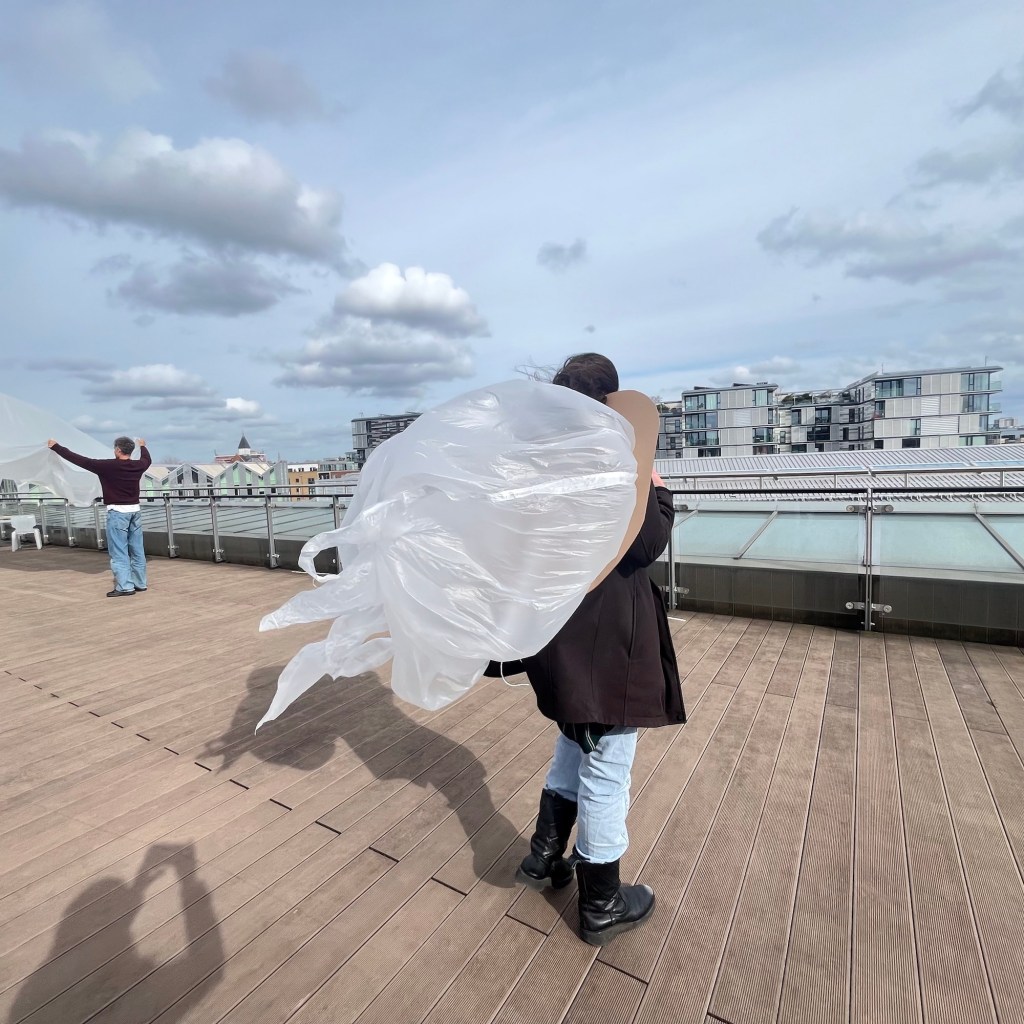
In the next stage we worked in pairs to create inflatable body extensions using plastic sheets. I collaborated with Rachael, and we agreed to make angel wings. The process was technically tricky, due to delicate material, but we managed to build them, and had a lot of fun experimenting with movement.
Afterwards we gathered outside for a collective performance where everyone presented their creations. Eventually groups merged and people began wearing multiple extensions, forming a kind of shared body. The performance ended with one large collective body.
What stayed with me most was the way Alex held the space. He allowed collaboration to happen naturally without pressure. No one felt forced to participate in a particular way. This made me think about concept of social sculpture and the idea that society itself can be shaped through collective processes.
The workshop felt like a small example of this idea. Through simple materials and shared actions we created a temporary social structure based on making, negotiating and performing together.
Afterwards I visited the first-year MA students’ exhibition. It was interesting to see the space and reflect on how quickly time passes during the MA journey. It was also lovely meeting fellow artists in person for the first time there was an immediate sense of familiarity and trust.
Although I could only stay for a few hours, the experience felt full. Sometimes a few meaningful hours can contain days of learning. Alex’s workshop demonstrated how much can happen in a short time making, performing and collaborating and it left me wondering how much deeper this process could go if we had the opportunity to continue it over several sessions.
















 Karema