A two-year journey has brought us here, side by side. It has been such an honour and privilege to be part of such a special group. We started as strangers, each bringing our own experiences and questions, and arrived here as friends and a community.
It was a privilege to witness my peers’ hard work in person and finally see the artworks we had watched develop over time. What made this experience so special was that we built this community online, regardless of borders, cultures, and backgrounds, yet we all shared the same longing to finally meet face to face.
We finished the course, received our results, and celebrated our work and the effort that brought us here. Perhaps there is no need for this post, but I feel it is important to mark and document this moment. It’s a journey I hope future students will benefit from. We all travel a similar path, and I believe it’s our responsibility to pass on our knowledge and experience to those who come after us.
For the degree show, I exhibited two works: Dear Moon, which I had always planned to show, and Spell Te, which Jonathan encouraged me to include. The opening was wonderfully busy, and it was a joy to see so many people engaging with our work and sharing such generous feedback.
I remember starting this course simply listening and learning, without really knowing what would come next. I couldn’t imagine what my degree show would look like or how my research would develop. What I never doubted, however, was the course itself. It was exactly the kind of learning I had been searching for, and I believed it would fit perfectly around my life. I also knew that what I gained from it would depend on my own commitment, curiosity, and willingness to put in the work and time would reveal the rest.
My advice to new students is not to judge your work or your research too early. The whole purpose is to begin with uncertainty and limited knowledge. Gradually, through practice, reflection, and conversation, you build a richer understanding of your own practice and of the wider world around it.
What made this course so successful was its organic and deeply human approach to learning. Everything grew through practice, guided by compassion, generosity, and care. When those values become part of your journey, everything else begins to find its place.
As I always say, if I can do it, anyone can. And perhaps they will do it even better than I did.
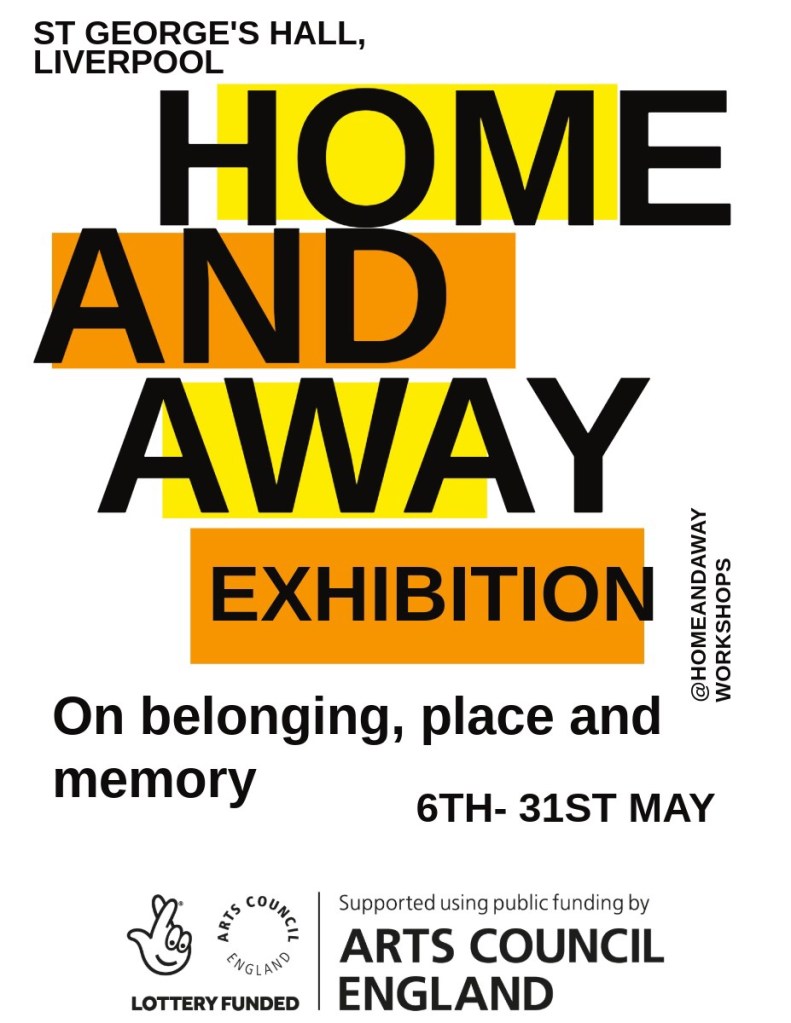
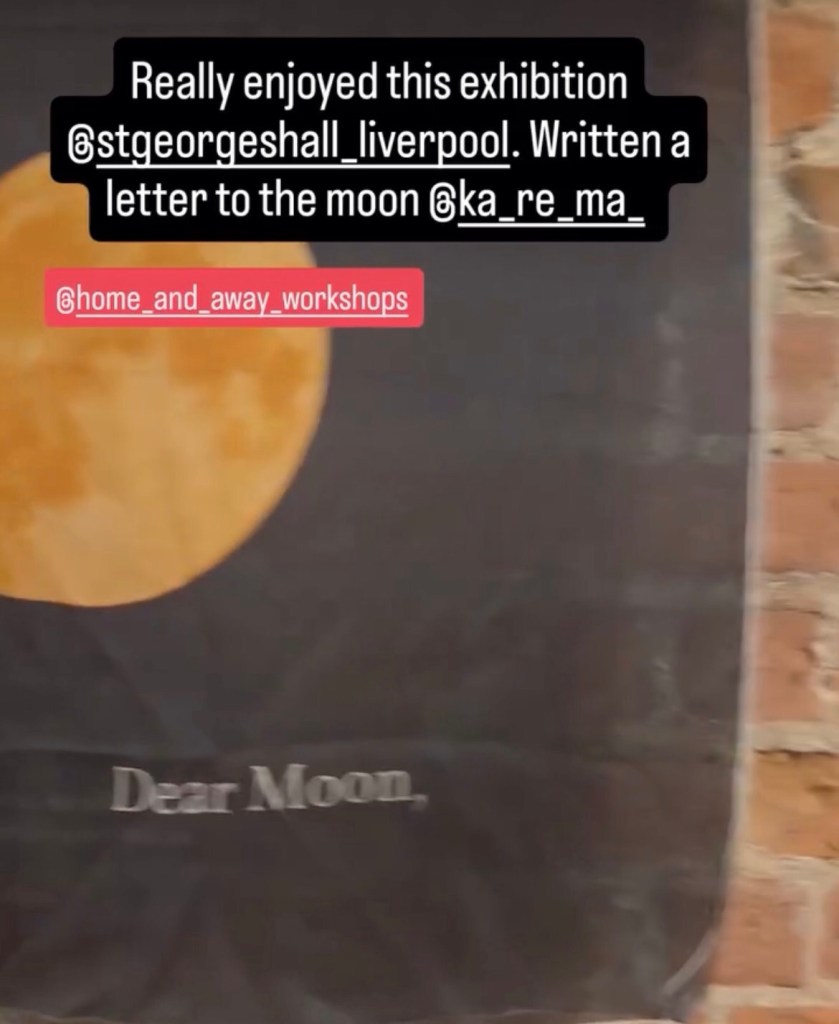
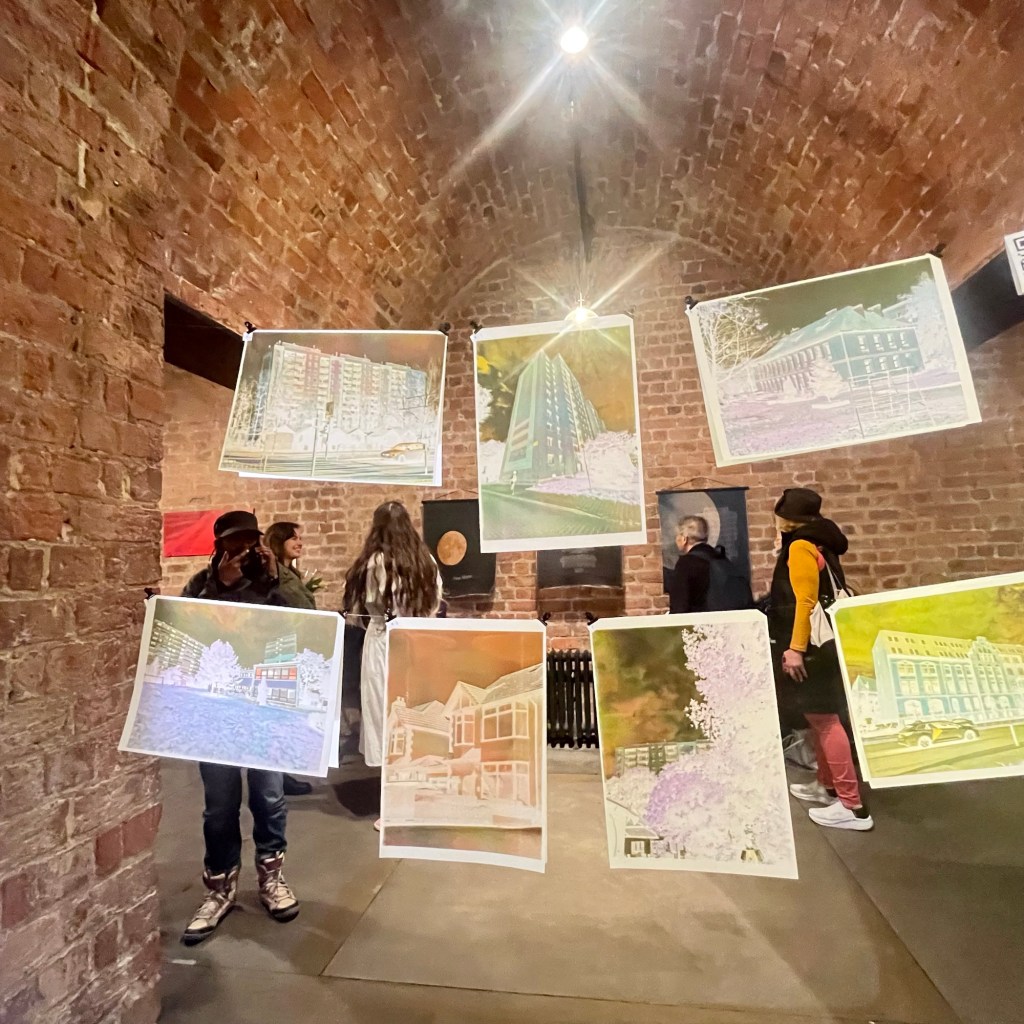
Today I went to deinstall my work from St George’s Hall. The Home and Away exhibition has come to an end after four weeks on display. What I found particularly interesting about this exhibition was the amount of attention it received and the number of letters that were sent, especially compared to other exhibitions I took part in last year, such as Unstable in Port Sunlight and the exhibition at Rushton’s House in Manchester.
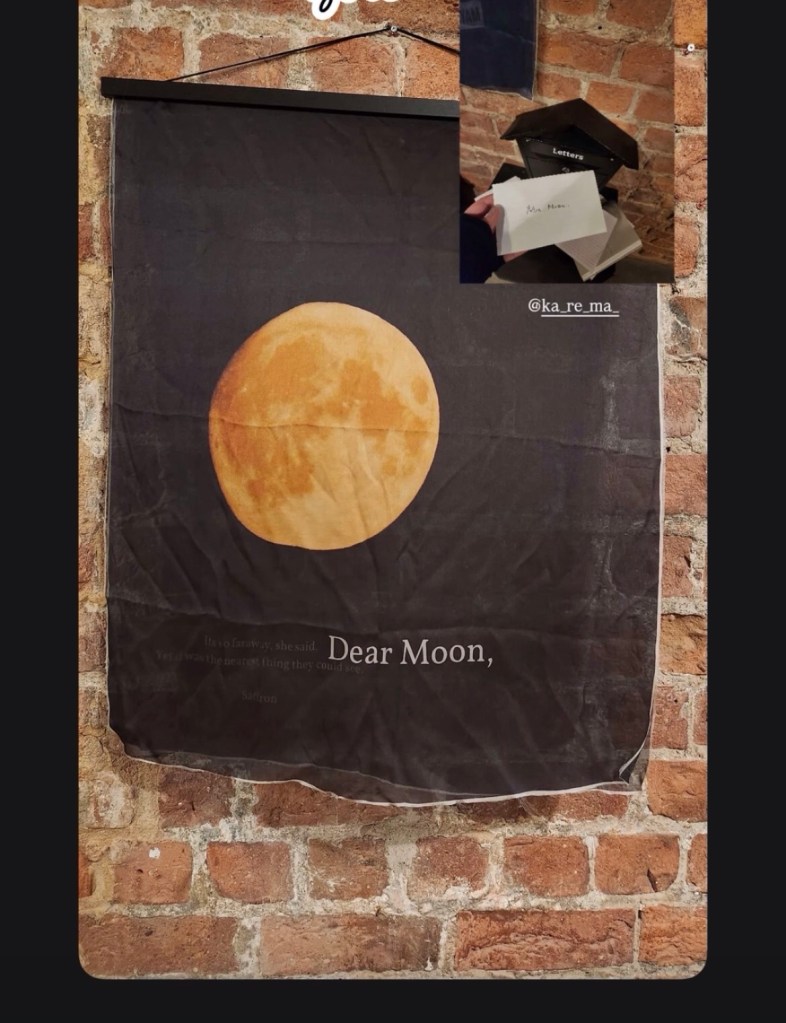
I’m glad I used the silk prints, and it was encouraging to see how many people responded positively to them. The letterbox also encouraged visitors to leave their thoughts. I collected letters three times during the exhibition, and I included the first batch in the second edition of the book so that as many voices as possible could be part of the work.
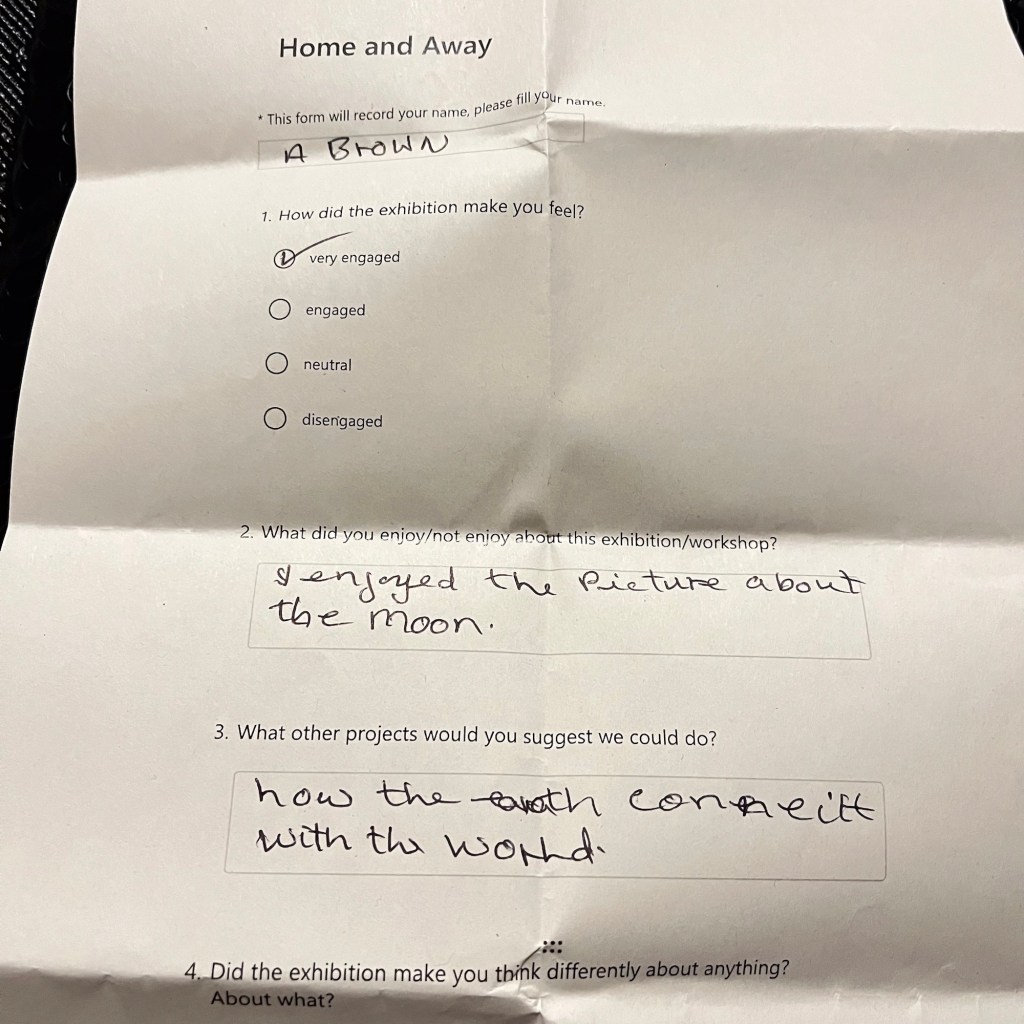
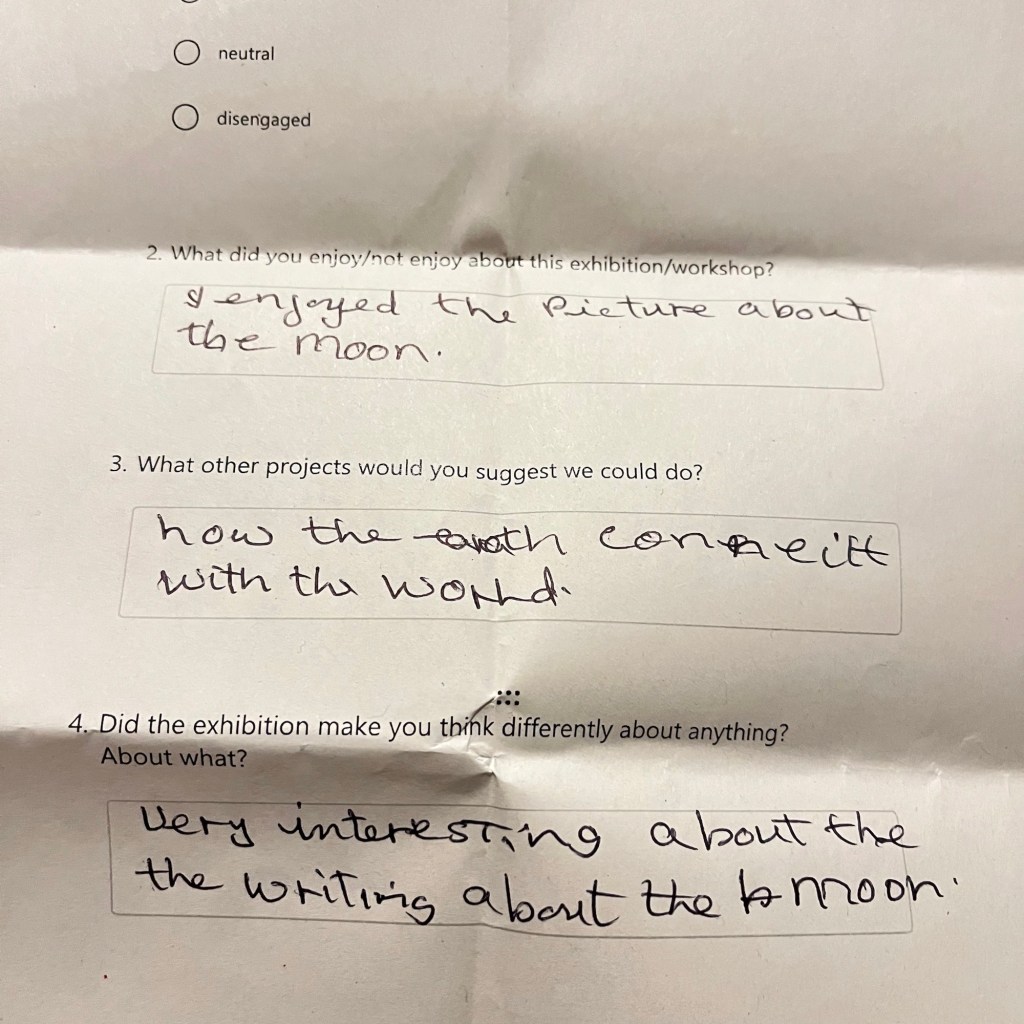
Today, when I opened the letterbox, I found five letters and a feedback form, which people would usually leave on Mariana’s table for reporting purposes. I’m probably the worst person when it comes to actively asking for feedback, and I can be quite stubborn. If I believe in something, I tend not to rely on feedback in order to pursue it. However, I do believe feedback is important for improving the quality of the work and for understanding how people connect with it.
When I read the feedback that had been placed inside the letterbox, it seemed to be responding to the Moon work, and I really appreciated it. It reminded me that all the hard work over the past few years, the slow progress, the time, energy, printing, and experimentation, has been worthwhile. It also made me think about all the people who have been part of this journey.
Another note I found simply said, “Best art ever” written in tired ink. I don’t know whether it came from someone I know or a complete stranger, but it made me wish I could have given free copies to everyone who wanted or needed one.
From this experience, I’ve learned something that maybe useful for the MA show: 1-The letterbox is important. 2- Having additional prints alongside the book is also important, as they allow for quick engagement and can act as an introduction to the book itself. 3- Feedback is appreciated and valuable, but it should never feel required or forced.
Holding the second edition feels incredibly special and precious. I can see years of effort gathered within its pages. Looking through the photographs and reading people’s letters has been deeply emotional, and it also makes me long for the years when we sent personal handwritten letters instead of quick text messages.
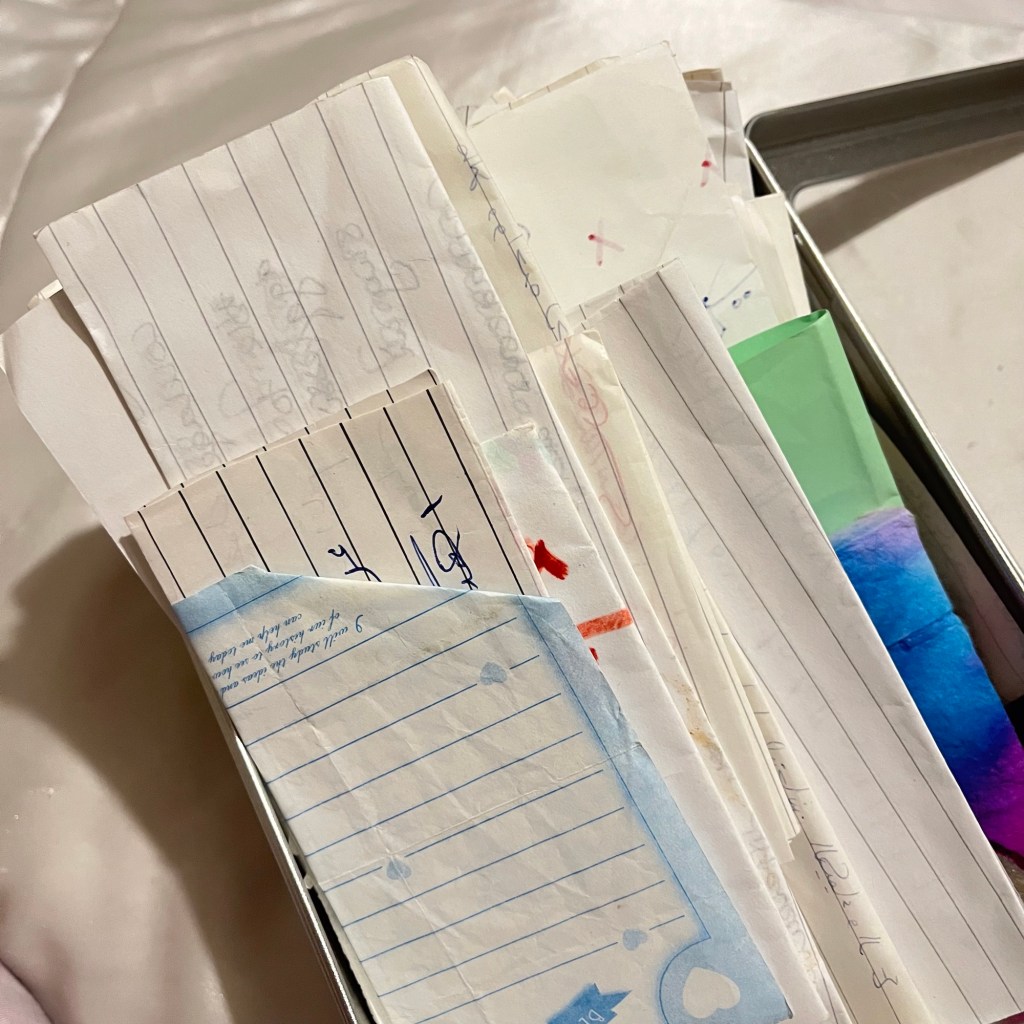
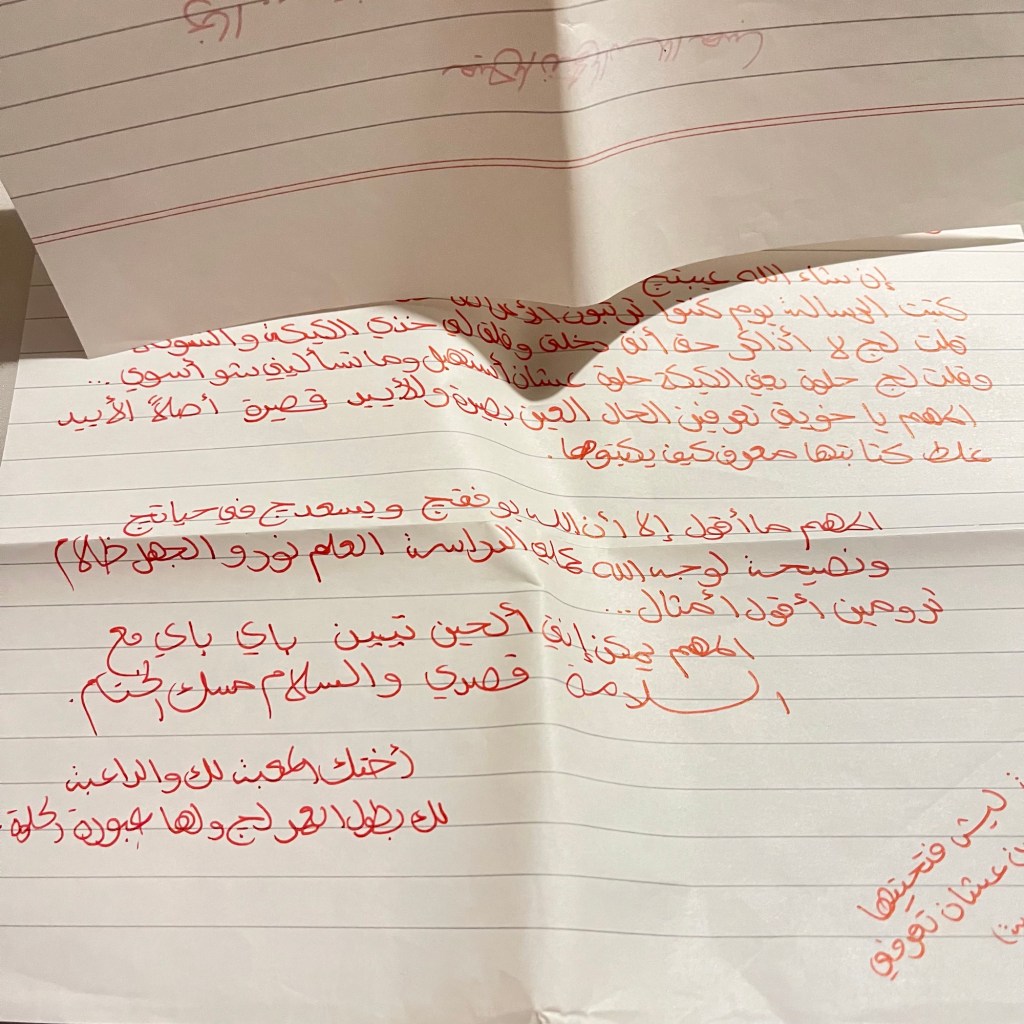
Perhaps this is why I still treasure the letters from my own childhood, safely kept in a small box. They are funny, emotional, and incredibly valuable to me, especially when I think about where everyone has ended up in life and how relationships shift and change over time. Handwritten letters hold traces of people that digital communication often loses.
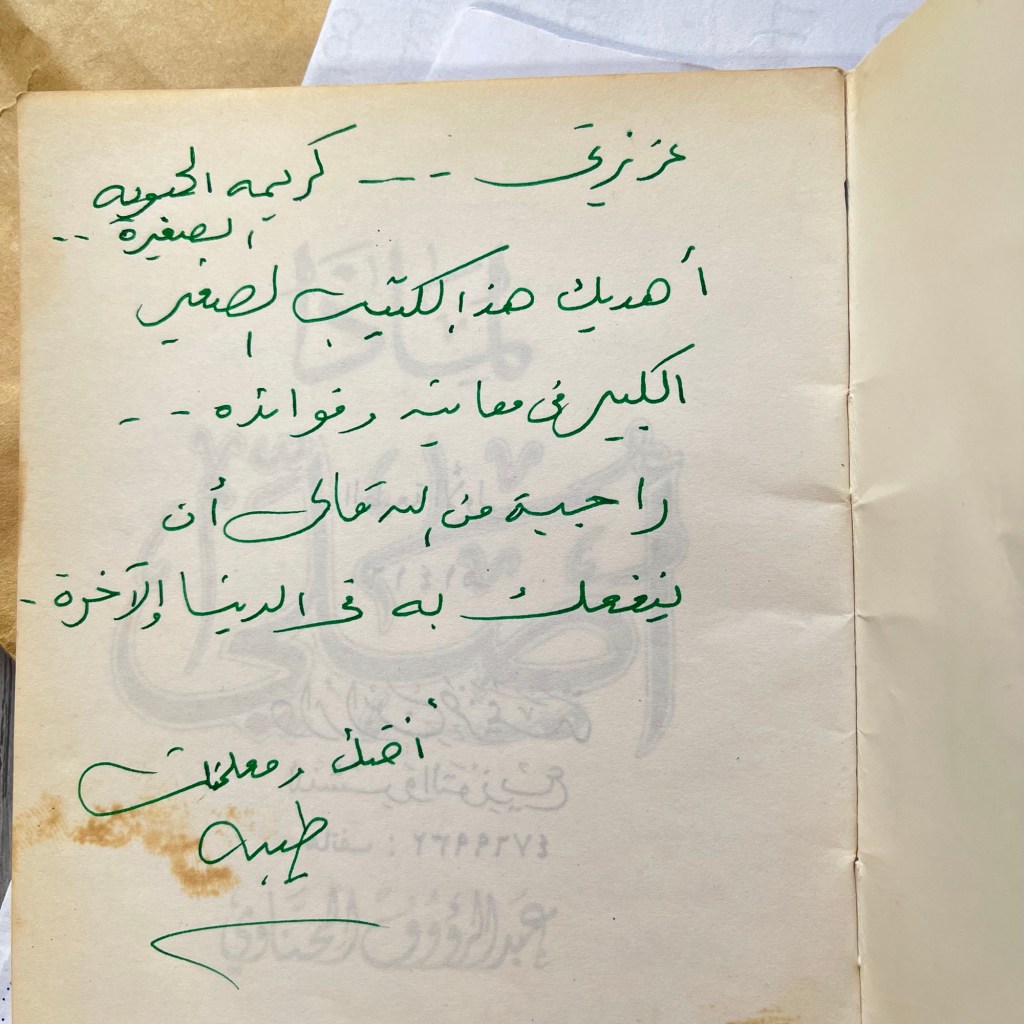
Mixed of letters from 90s and early 2000-2003A letter from my sis, she put it inside my suitcase when I left my dad house 2002Message from my teacher in a little book she gave me 1997
As an artist with hyperactivity, and as someone who uses art as a survival tool, I made two interconnected bodies of work: a book and a tea set. I feel there’s something comforting and timeless about reading books while drinking a cup of tea.
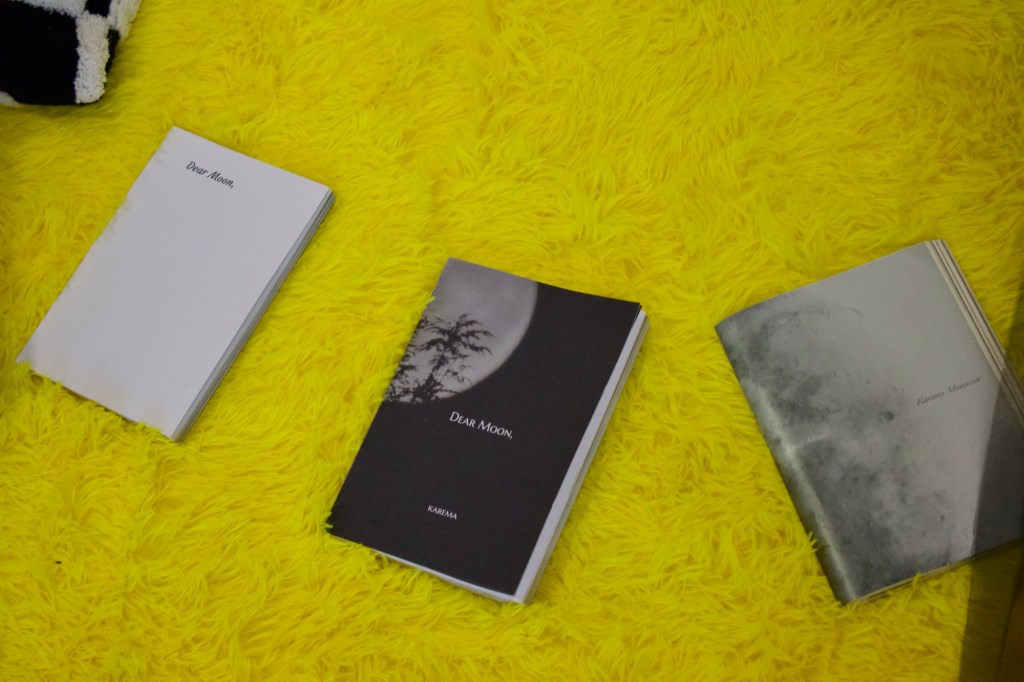
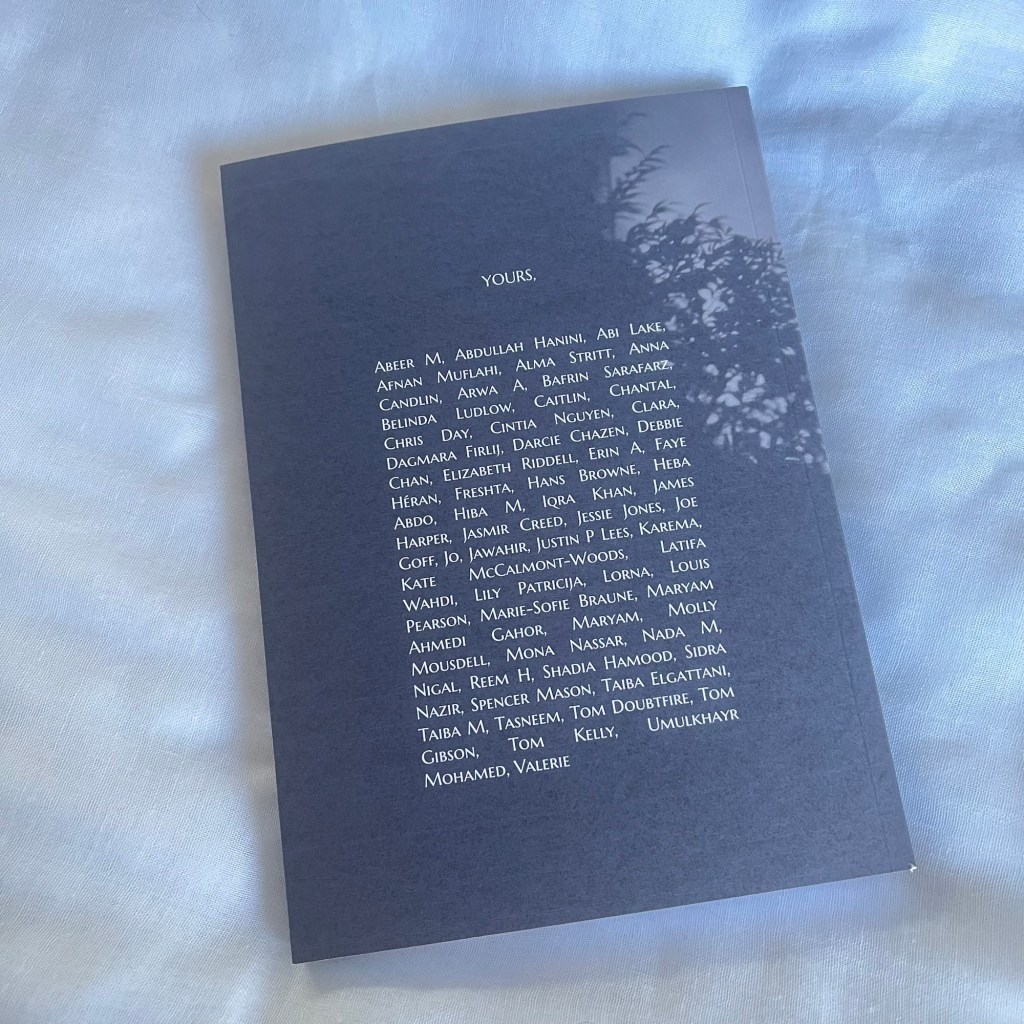
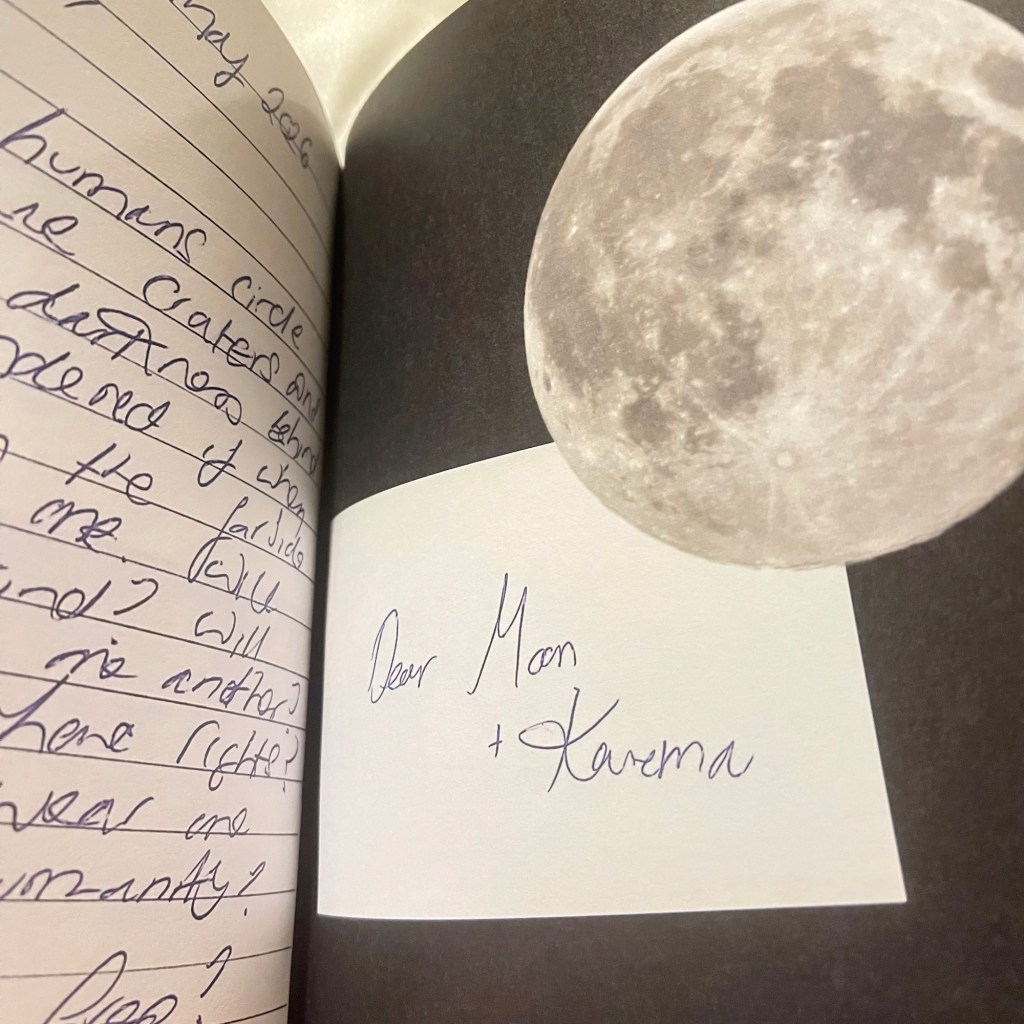
Dear Moon is the main work I have developed over the last two years, and I believe it should be the piece I present in the final exhibition. More than a book, it has become a form of social sculpture, a collective artwork shaped through care, participation, and exchange. It includes the names of 57 participants alongside anonymous contributions and my own letters woven throughout the pages. I eventually removed my name from each individual page because it felt unnecessary to repeat it so many times, especially when my presence already exists throughout the project as its organiser, editor, and contributor.
The book is 184 pages long, rich with different stories, voices, languages, and histories. Some texts date back to 1974, while others were written as recently as May 2026. Several contributors chose to write in their home languages, which adds another layer of intimacy and authenticity to the work. People continue to engage with the project and send new letters whenever I exhibit the letter box, allowing the project to remain alive rather than fixed or complete.
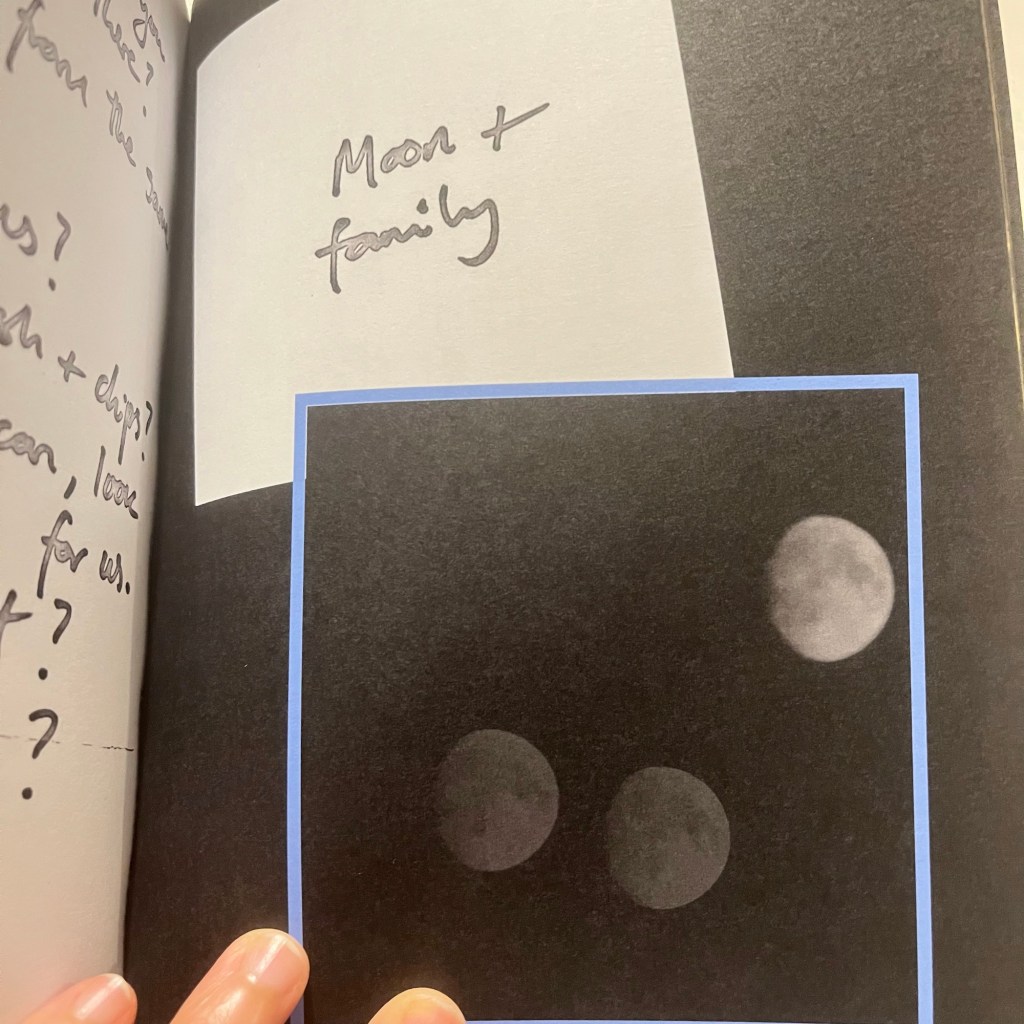
This year, I also spent much more time refining my moon photography, both while taking the photographs and later through editing, especially in relation to light and colour. The images feel more resolved and intentional now, and together with the letters they create a stronger emotional atmosphere. For these reasons, I feel Dear Moon deserves to be shown at Central Saint Martins. I’ll display two copies of the book on two different stands at different heights, one lower for accessibility and one at a standard height. I’ll also include the black letter box with paper and pens.
Copies of the book will also be available to borrow through Sefton Libraries in Crosby, Bootle, and Netherton. I also have a digital version prepared, although I’m still undecided about uploading it to my website. Part of me feels I should wait until every participant has received their physical copy first.
I’m also planning a shared reading session at Bootle Library this summer, where contributors from Liverpool will be invited to read and celebrate their work together. I hope Chris Day, the eldest participant, will attend and share the beautiful story she wrote about the moon in 1974. Another participant I would love to attend is Belinda Ludlow, another mature participant who studied English Literature some time ago. She told me she has always found it difficult to publish her writing because she tends to approach it from a highly analytical perspective. Hopefully, her letter to the moon will become the first step towards restarting her writing journey.
What I love most about Dear Moon is that it carries a genuine sense of community, care, and mutual respect. It reminds me that art can hold people together across generations, languages, and experiences.
Next month, I’ll deliver a Dear Moon workshop as part of the come back programme, in collaboration with the Arab British Centre and Longsight Art Space in Manchester. This will be the first Dear Moon workshop outside Liverpool.
The programme supports adults who have taken long breaks from creative practice, or who always wished they had the opportunity to study art. My workshop will focus on building connections, encouraging confidence, and demonstrating that art does not require expensive materials or complicated equipment. Art begins with stories, and every person carries a story worth telling.
Another meaningful part of this experience was being asked by the Arab British Centre to create a very short 30 seconds video for social media. Their request was inspired by something I had spoken about previously: how, after having children, I rediscovered creativity by making art personal rather than treating it as a chore, something meaningful that didn’t depend on money or expensive materials.
At first, I thought, “This is even harder than the 3 minute video Jonathan asked us to make” I asked a filmmaker friend whether 30 seconds could truly hold a story, and she replied “Plenty of time!”
So, the first thing I did was write my words and record my voice so I could understand the rhythm and timing. I removed unnecessary sentences and focused only on the essence of what I wanted to communicate. Afterwards, I asked a friend to help me film footage at St George’s Hall.
I made the video in Arabic because the programme hopes to reach Arab participants, but I also included English subtitles so everyone could feel welcome and included. The process felt surprisingly natural, and I realised how much the short film assignments from the course had prepared me for this experience. It showed me how learning within an educational structure can become a practical tool in the real world.
Also, in July, I’ll be running a family creative session as part of the Liverpool Arab Arts Festival 2026.
Looking ahead, I can already see Dear Moon continuing to grow through more workshops, new letters, exchanges, and future collaborations. In particular, I’m planning to publish Dear Friend in 2027, a book that will carry replies from the moon.
I’ll also be co-producing Turkish Day at the library in December 2026 and helping organise a Community Iftar at the library in February 2027.
So rather than feeling like the end of the MA, it feels like the beginning of a much longer conversation, where all this knowledge can continue to grow and live within my work and everyday life.
Home and Away exhibition is open to the public until the end of this month. It was a great opportunity to collaborate with women who share similar experiences of migration and displacement. The artists came from different countries, including the Philippines, Venezuela, Poland, Croatia, Sudan, and Argentina.
The process felt empowering for all of us, creating space for conversations, shared memories, and reflection. We also spoke about how the exhibition could continue to develop and potentially be shown in other places in the future.
This experience became an important reflection for my MA and good practice before the final show. It also opened doors for future collaborations with both the artists and the venue.
I also received more moon letters, which made me realise that the project has the potential to continue for as long as the letter box remains part of the exhibition. People still feel drawn to writing and sending physical letters, even without expecting a reply. The project reflects a sense of trust and connection between people, which feels especially meaningful today. This experience also encouraged me to think about how the project could keep evolving over time through future collections and publications.
Another important thing I learned was how I can present pages from the book in different formats. The book itself can exist as one form, but larger pieces can also work well and catch the viewer’s attention.
Home and Away is open to the public until the end of this month, and it has already attracted attention from Liverpool’s websites. Promotion was not something I initially wanted to focus on, but one of the fellow artists was very enthusiastic about spreading the word, and she did a great job. It was also a valuable opportunity to observe and learn from other artists, and to recognise how we might use and support each other’s skills in future collaborations.
Last week I had my final 1–1 tutorial, and it was a very valuable conversation in which I was able to reflect on my work and plan for the coming months, thinking about challenges and what matters most right now. Having this discussion at this stage feels important, because I believe I need Jonathan’s insight and guidance while I’m still in the process of making.
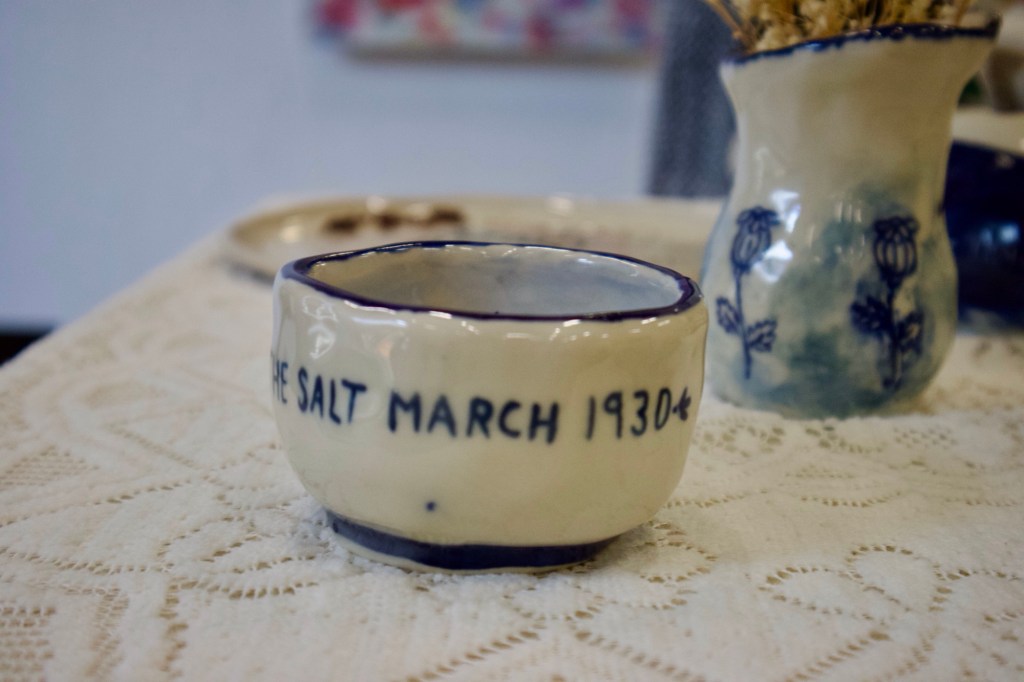
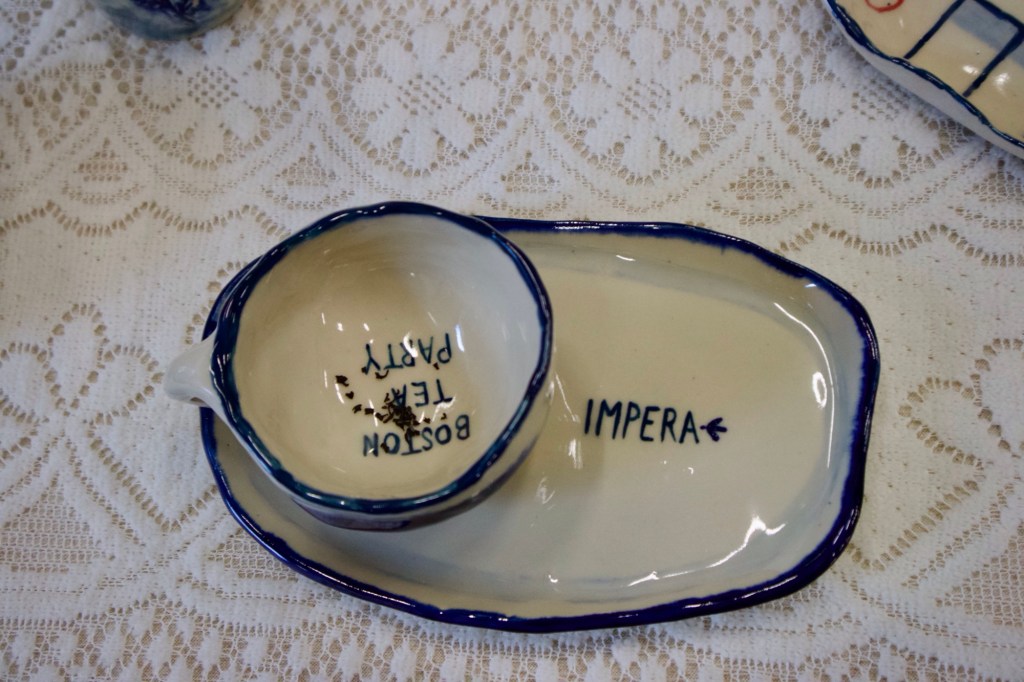
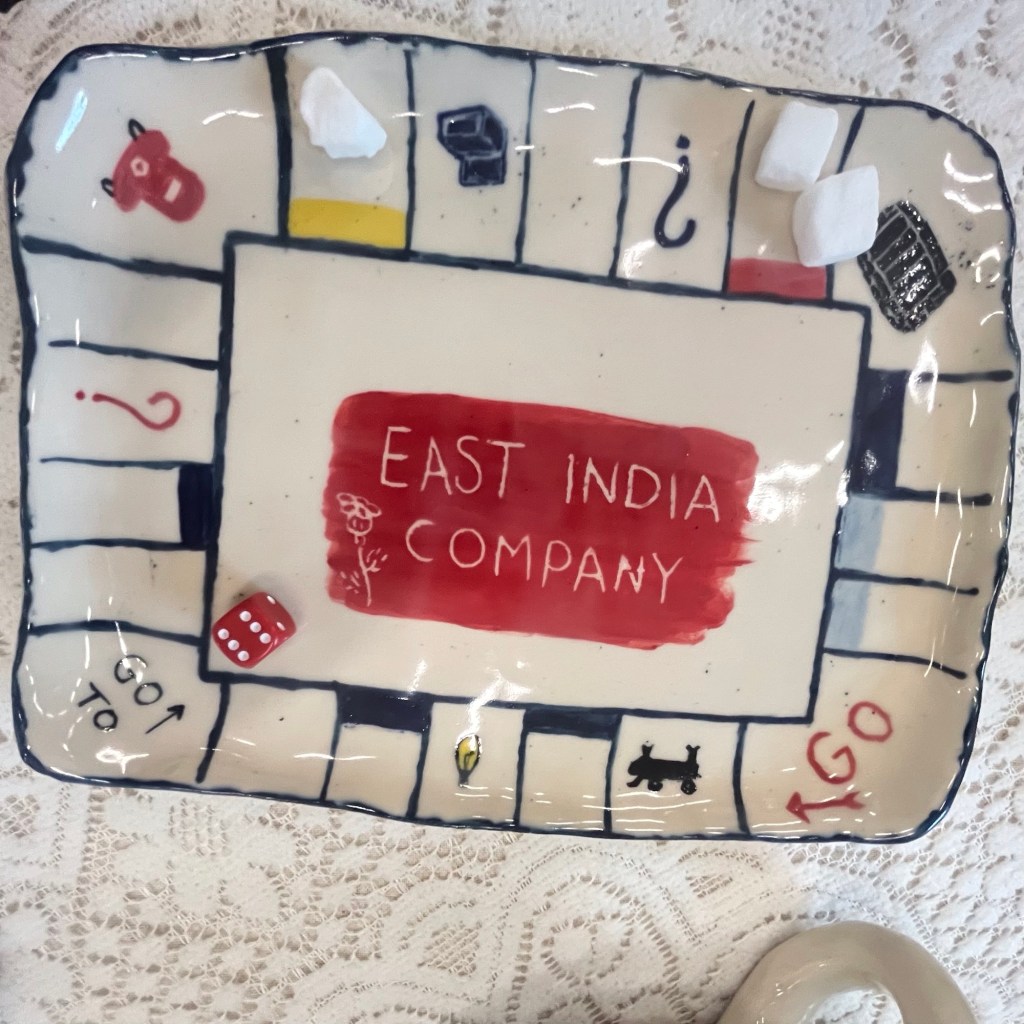
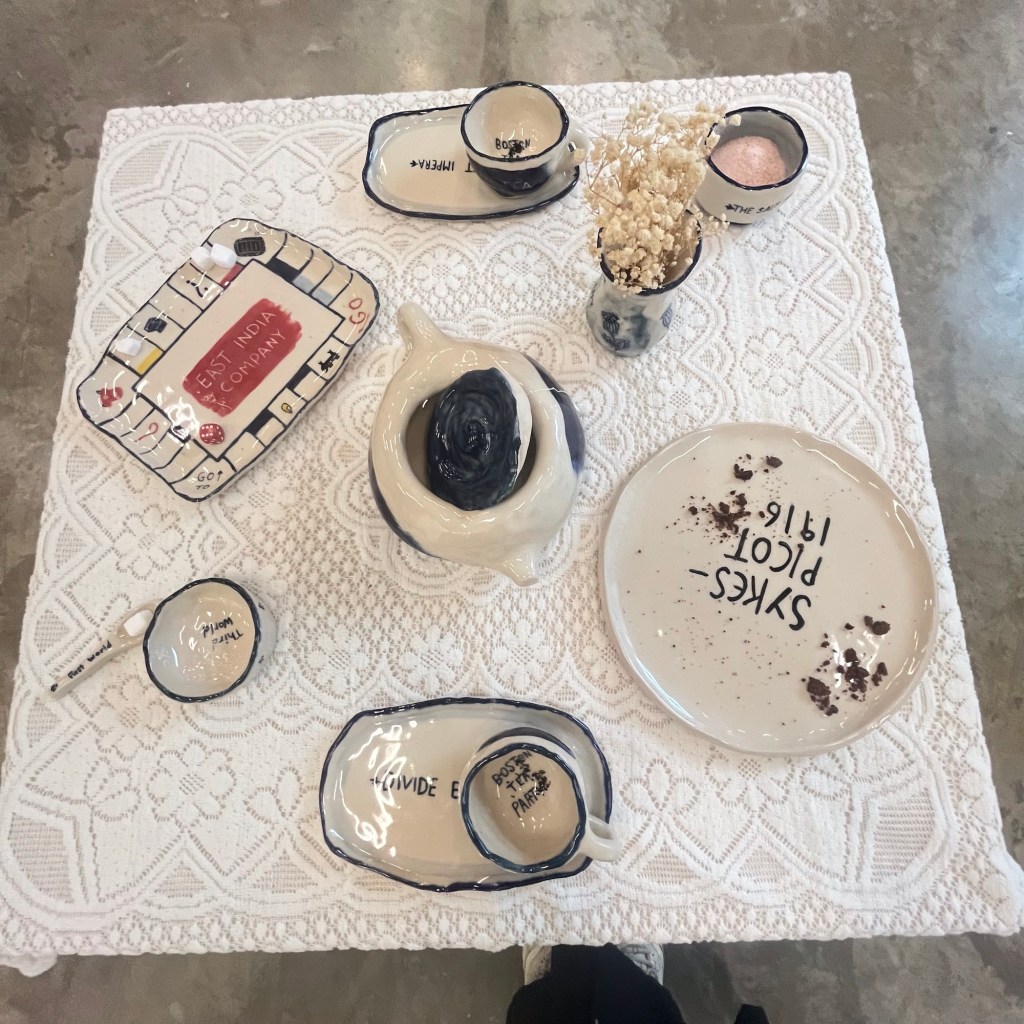
The tutorial gave me a great deal of confidence, and the next day I began designing the bone-dry tea set. I made 21 pieces for the tea set, alongside over 20 small crescent forms, which I will use to make bookmarks for our MA Digital class. Each ceramic piece carrying a story from colonial history. I find that I can’t add anything to the work unless I’m sure it’s relevant and contributes to the overall narrative, and this does slow me down slightly. However, this has been one of the most important lessons during my MA: taking the time to build a cohesive body of work, without unnecessary additions or distractions. I can easily feel overwhelmed and distracted but I have learned to recognise that moment. When it happens, I stop adding and instead spend time reading around the theme or taking a break. This is how my ceramics project develops through slow reading, while the Moon Book has developed through slow writing.
I spent the week working with clay, while also setting up the new show at Liverpool St George’s Hall, where I will be showing Moon Book pages on silk (factory print). I made these last year for The Right Map 2025 but did not have the right opportunity to present them. Now they feel more suited to the theme (Home and Away) and to the space at St George’s Hall. I installed them over a long black heater, where the warm air creates a gentle movement in the work, subtly animating the delicate sheets.
At the core of my social sculpture practice is care and the intention to make a meaningful difference. The Moon Book demonstrates this clearly by connecting people and creating space for shared vulnerability. After the last workshop, some participants began sending me letters in response to others letters. I feel a deep sense of gratitude towards this project and the people involved. Writing letters feels especially meaningful, and I’m excited about the next book Dear Friend (2027). What I find particularly beautiful is that some children are growing up through this process, and some participants who have never met are writing to each other with genuine care and intimacy. It shows how powerful and delicate these connections are. I feel I owe a great deal to everyone who has taken part.
The tea set also functions as a form of social sculpture. It consists of multiple pieces that invite interaction, through storytelling, through history, and through use. Sharing stories from the past is itself a way of engaging with people who are no longer here. In this sense, the work becomes a way to educate, to encourage questions, and to create opportunities for participation.
For example, discussing the Opium War came up in my tutorial with Jonathan. We began asking: how many “opium wars” exist today? How many forms of addiction are being created, and how will these stories be told in the future? Simply bringing these questions to the table is part of the work. It opens up dialogue and that is where social sculpture begins to happen.
When I arrived in the UK, everything felt strange and new, but your face was the only one that remained old and familiar…
Today, I led a moon workshop at St George’s Hall, after weeks of preparing for the upcoming exhibition Home and Away, organised by artist Mariana Sequera. The project explores ideas of home, displacement, and migration. It’s a concepts that seem simple at first, but quickly unfold into something more complex the moment you invite others in.
Recently, images from Artemis II showing the Moon’s far side, pulled me back to the letters. I found myself rereading them, and with that came a quiet but firm feeling: it’s time to finish the book, and to stop collecting more.
While sharing the open call for Home and Away and encouraging people to participate, I noticed how easily themes like displacement are interpreted in narrow ways. There is often an assumption that such experiences belong only to certain groups, and not to others. This made me reflect on how art spaces frame experience, and how belonging is often defined, sometimes invisibly within those frames.
Since last year, I’ve chosen not to rush the second Dear Moon book. I’ve learned that timing is not separate from the work. Showing something in the wrong moment or context can mean it’s overlooked, or misunderstood. This awareness is shaped by my position as a woman, a mother, and a Muslim, identities that are often underestimated, even by those close to me.
I’m learning to resist two opposing pressures: the demand to remain constantly visible, and the quiet acceptance of being marginalised. Somewhere between these, Dear Moon has become a space of its own. Writing to the Moon creates a particular kind of room, it allows for distance, but also intimacy. The letters themselves hold so much. They open memory, reflection, and connection. There is something therapeutic in that, but I try not to reduce it to therapy alone. Each contribution carries its own layers.
C, a retired nurse, shared a story she wrote in the 1970s, along with a receipt showing she was paid £8 when it was broadcast on Miri Mawar, a programme on Welsh HTV. Including her work now brings different times into conversation with each other, raising questions about value, recognition, and whose voices are remembered. In contrast, A’s drawing of the Moon’s phases offers another way of understanding participation. As a child with severe physical and learning difficulties, his contribution gently disrupts expectations of what artistic expression should look like. The Moon’s cycles, appearing and disappearing feel like a quiet reflection on resilience and change.
Through all of this, I’ve started to think of trust as a material within the work. People are not just contributing content..they are offering something personal. That comes with responsibility: to hold these contributions with care. As the book nears completion, I feel both excited and uncertain. I want to hold it, but Im still thinking about how to share it. In previous exhibitions, Dear Moon often felt unresolved, shaped by time pressure, or by divided attention.
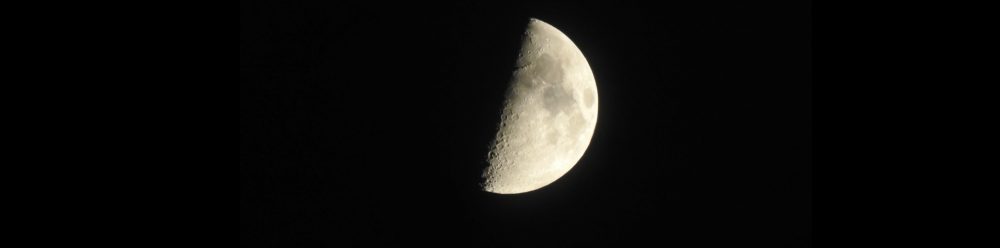
Watching the last full moon of 2025 felt unexpectedly emotional. It was calm, yet it carried the feeling of an ending. Standing beneath it, I became aware of how much the year had held, and knowing it was the final full moon of the year added to its weight.
The year won’t close with certainty or clarity, but that feels honest. Some things remain unsettled, and perhaps they are meant to. Was it a success or a failure? Worth it or not? Happy or sad? Peace or war? Friend or enemy? Continue or leave? Life always carries these questions. But the moon reminds us that there is always a return. A new moon will be born, and the phases will continue, because the moon does not seek resolution.
There was a quiet mix of emotions, gratitude, sadness, relief, they all sharing the same space. I felt small under the sky, but not alone. The moon remained constant shining whether it was seen or not, especially in UK weather and that brought a sense of comfort. Sometimes it is not important to be seen, as long as you carry your own light. Clouds may block it for a while, but they can never take that light away.
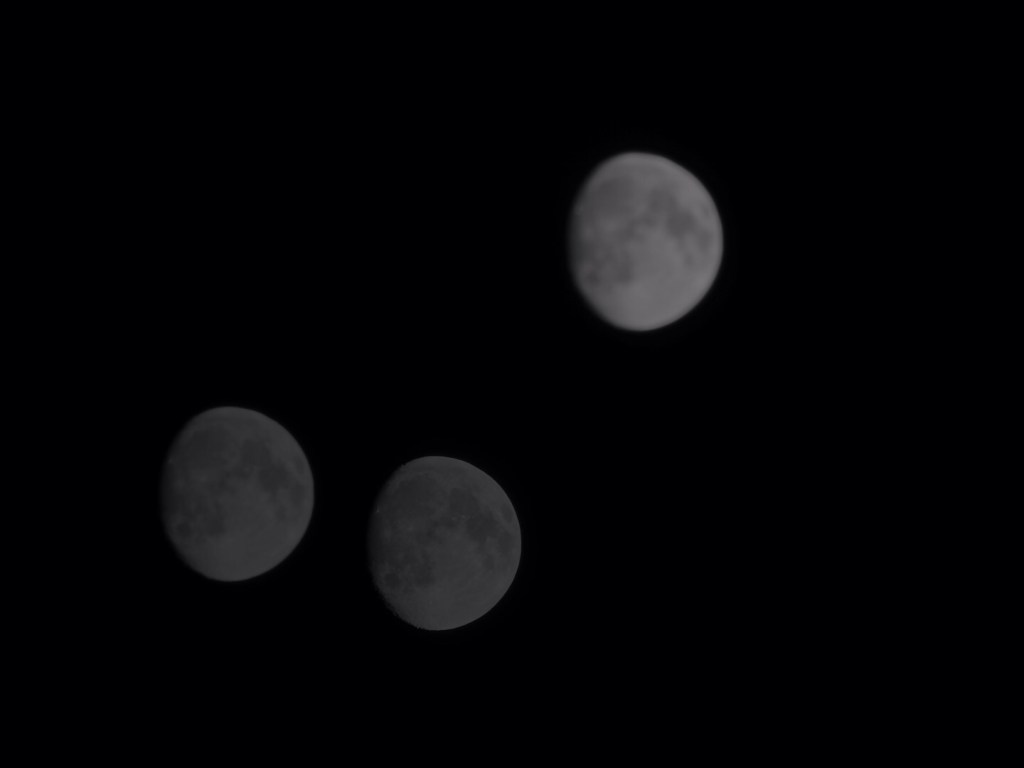
Over the past few months, I’ve been quietly chasing the moon. Through multiple exposure, I’ve been exploring time, movement, and intention. This new collection marks the beginning of a deeper understanding of how to interpret time through past and present within still images. The idea first emerged after my friend, artist Hannah Browne, gifted me a photo featuring a two-week moon exposure by artist Joe Millican.
By Joe Millican
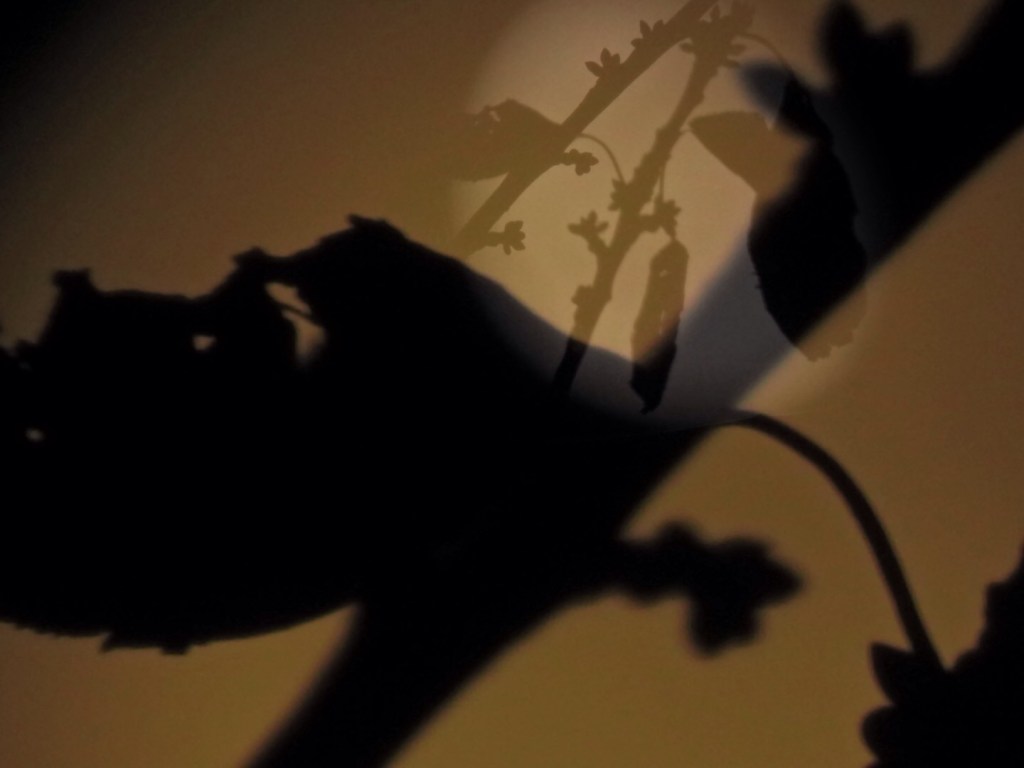
I became curious about how the moon’s presence might behave when paired with something as delicate and earthly as the silhouette of a plant, or when stretched across the frame in a sequence of softened echoes. What could happen if the moon wasn’t captured as a solitary celestial object, but instead as an active participant within a wider composition? These photographs required patience, a negotiation between motion and stillness, and a willingness to embrace the unexpected, also, they opened a wider field of play.
Multiple exposure gives the moon permission to move. It gives shadows permission to speak. It gives the image permission to become something other than what was predicted.This new collection feels like the beginning of a conversation I want to continue. The techniques are still new to me, but they are expanding my understanding of how photography, much like the letters it will eventually accompany, can hold ambiguity, transformation, and layered narratives.
You can now visit my new website: https://dear-moon.art which holds the previous messages and will hopefully grow with new letters, images, and an e-book.
Get involved from anywhere by sending an email to the moon via Dearmoon2025@hotmail.com
Last Friday, I exhibited as part of Ornament–Intent, curated by Emma Rushton at her house in Manchester. The exhibition offered a chance to re-situate my practice within the intimacy of a domestic environment. The curatorial premise, that decoration and political intent flow through the home, aligned closely with my interest in how social and political meaning is transmitted through ordinary gestures, materials and language.
Rushton’s house, transformed into a living exhibition space, blurred the boundaries between art and life. The space carried traces of daily existence, forming a backdrop that resisted the neutrality of the white cube. Within this context, my ceramic works and participatory writing installation became part of an evolving conversation about the home as both refuge and political site.
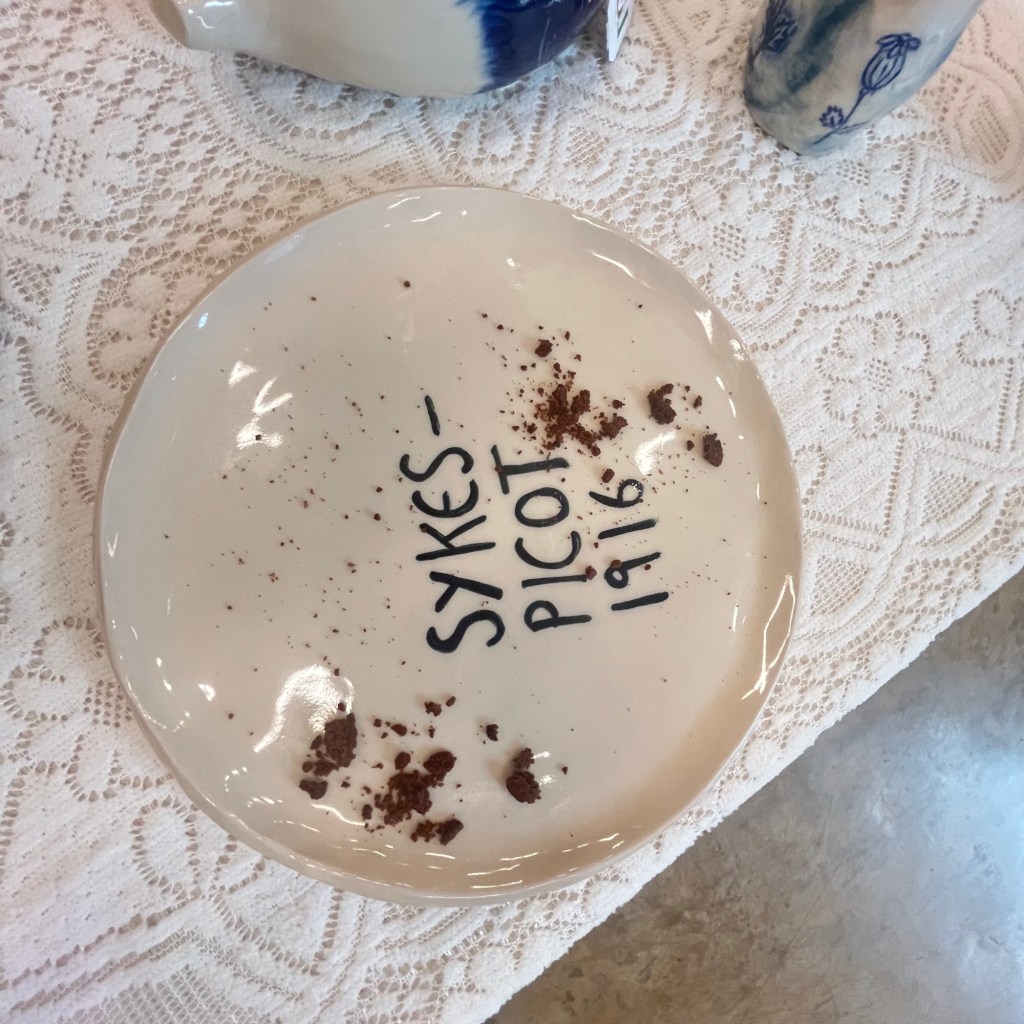
On a handmade ceramic plate inscribed Sykes–Picot 1916, I presented a red velvet cake. The act of division mirrored the historical partition of the Middle East under the Sykes–Picot Agreement. I used the domestic ritual of cake-cutting, usually symbolic of celebration, generosity and communion, to expose its opposite: consumption, greed and geopolitical appetite.
This gesture was performative in the sense Joseph Beuys might describe as Soziale Plastik (social sculpture), where symbolic action and participation become material. The knife, crumbs and creamy surface formed an ephemeral installation that questioned how colonial histories persist within gestures of hospitality and everyday pleasure.
A second ceramic work consisted of 11 handmade spoons arranged in a circular formation across a white table. Each spoon was inscribed with the name of a country and a range of dates, including Gaza, Bosnia, Yemen, Cambodia, Congo, India, Ireland .. etc marking periods of famine, war and conflict. Together, they formed a kind of geopolitical clock, a cycle of recurring histories and unresolved wounds.
Unlike traditional cartography, this piece used domestic utensils, tools of nourishment and care, to map famines/conflicts. The spoons stood in for mouths, stories and silenced voices, suggesting that global politics is not abstract but deeply entangled with the rhythms of everyday life.
In the setting of Ornament–Intent, this work transformed the dining table into a site of memory. It invited viewers to confront histories of violence not through spectacle but through quiet familiarity. The domestic language of tableware became an entry point into questions of accountability and empathy. The work reflects my ongoing interest in social sculpture as an aesthetic of recontextualisation, where meaning is generated through the repositioning of ordinary materials within spaces of shared attention and care.
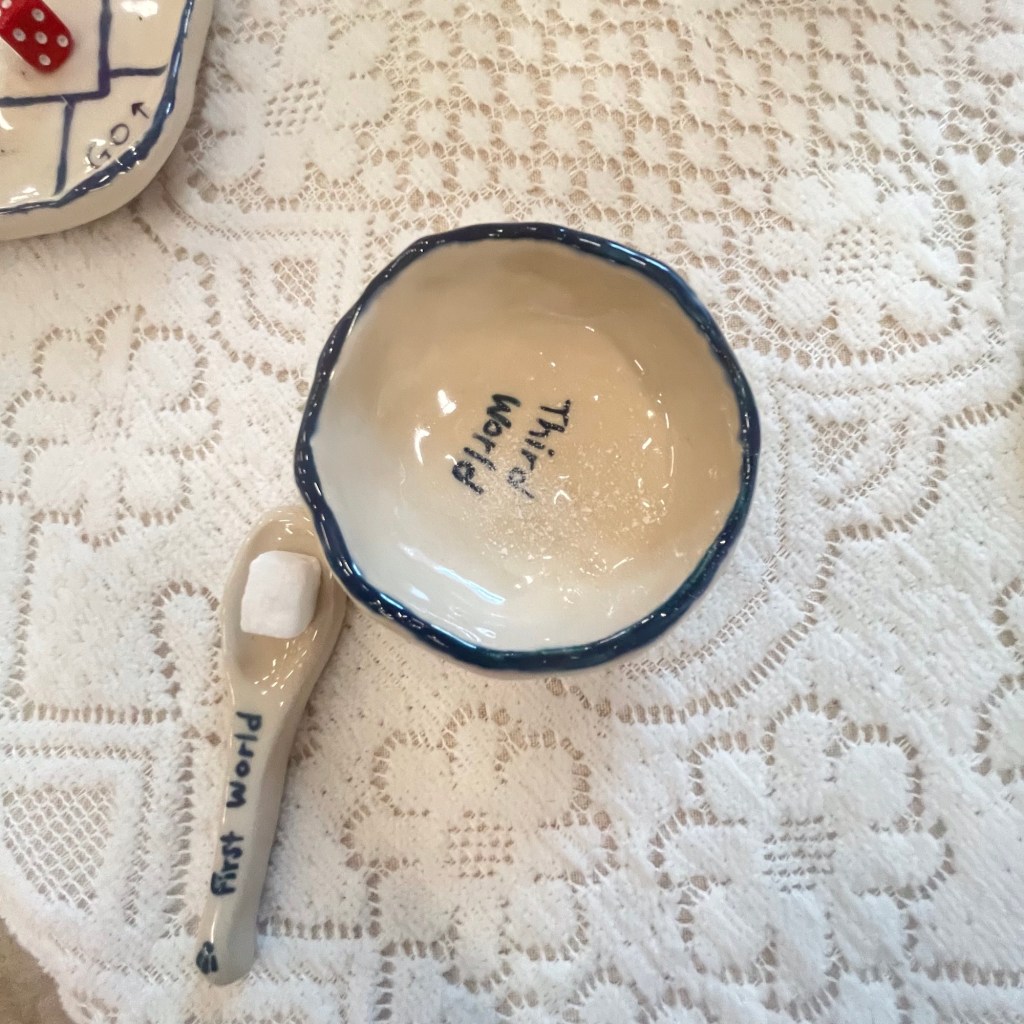
Another ceramic piece juxtaposed a sugar bowl labelled Third World with a spoon marked First World. Sugar, a substance historically tied to trade, slavery and colonial wealth, became a material metaphor for extraction and imbalance.
Placed in a domestic setting, the object drew attention to how structural inequalities are embedded in ordinary life. A simple act such as stirring sugar into tea carries invisible histories of power. In this sense, the work functioned as a micro-political sculpture, where meaning emerges not through spectacle but through subtle provocation within the familiar.
A handwritten note, in Arabic and English, listed key dates in Sudan’s history of famine and conflict: 1984, 1993, 2017, 2024, followed by the line (And Sudan’s issues remain words on paper…) with a ceramic spoon read (Money eats first)
Here, I explored the limits of communication and documentation, and how political struggle often becomes archived as text, detached from lived experience. The translation between languages paralleled the translation between activism and representation, between the urgency of lived crisis and the inertia of global indifference. The work questioned the gap between empathy and action, a recurring concern in my social sculpture practice. What is the role of the artist when language itself becomes complicit in the act of forgetting?
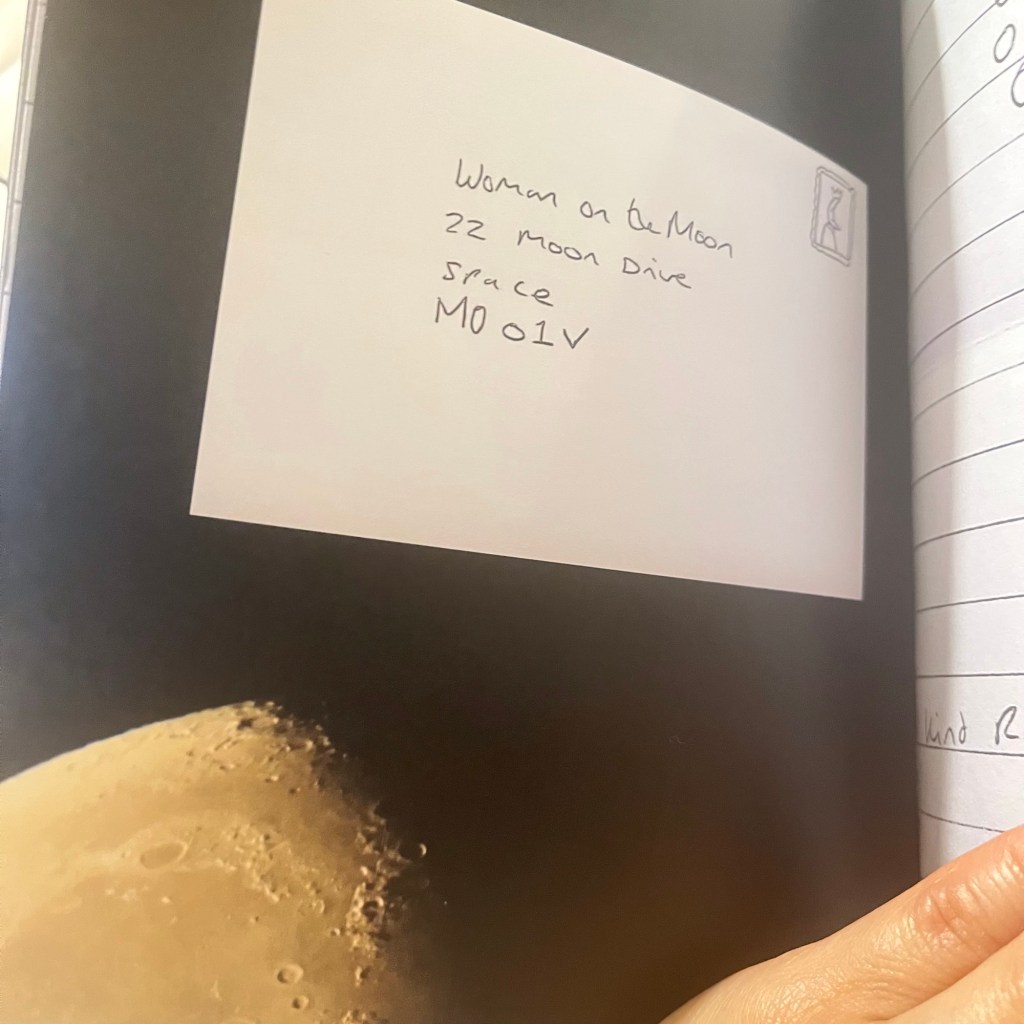
In another part of the house, I presented Dear Moon, a participatory installation inviting visitors to write letters to the moon. A small writing table, paper, envelopes and a black letterbox created a space for reflection and dialogue.
This piece extended my ongoing investigation into correspondence and indirect communication, letters that may never reach their destination yet carry emotional truth. The moon, as an unreachable listener, became a symbol of distance, empathy and collective longing.
Here, the act of writing functioned as a social sculpture, a participatory moment that transformed private thought into shared experience. It also reasserted my belief that art can hold silence as much as speech, offering space for what cannot be articulated in political discourse.
Ornament–Intent revealed how the domestic realm, often coded as private or decorative, is inherently political. Within Emma Rushton’s home, art entered the space of the everyday, resisting the hierarchies that separate aesthetic experience from lived reality.
My contribution sought to hold this tension between care and critique, ornament and intent, intimacy and history. Each ceramic object or written phrase acted as a small social gesture, reanimating the conversation between form, politics and communication.
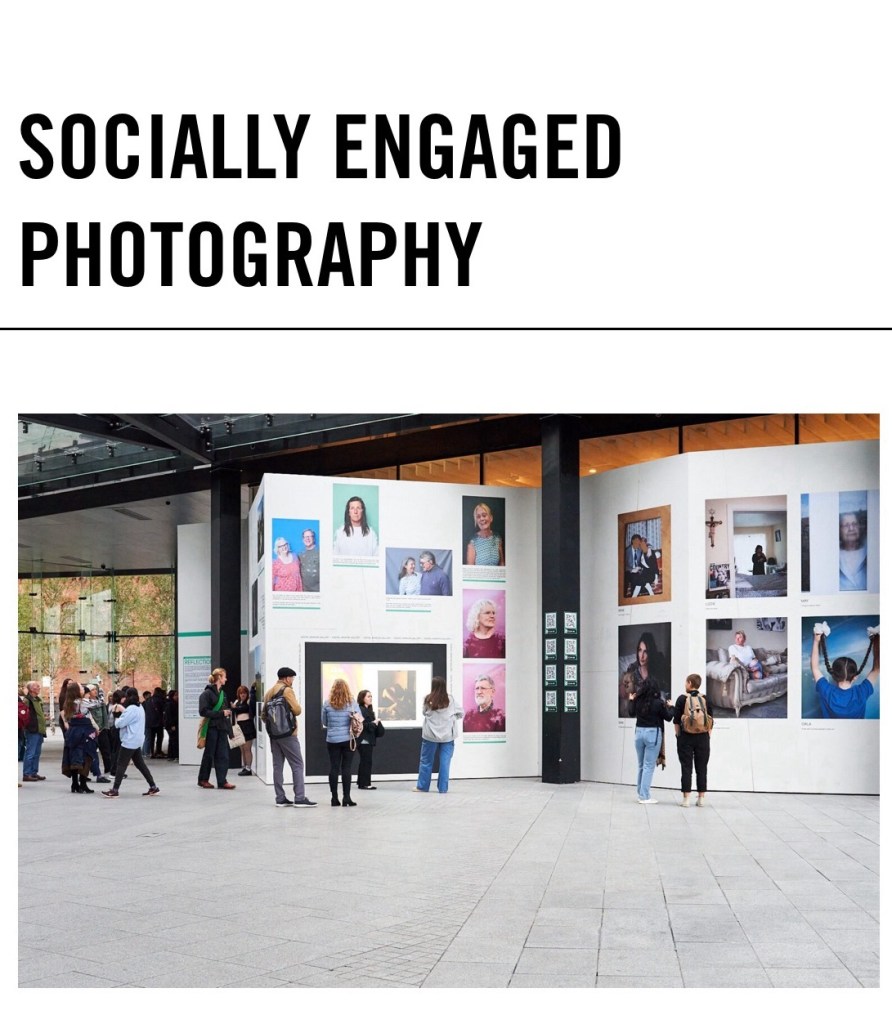
19 artists from across the country and beyond, working across different disciplines, were selected for Open Eye Gallery’s Socially Engaged Photography programme. The session began gently with an icebreaker to help us introduce ourselves and connect, opening into a space full of layered questions and open dialogue.
One phrase stayed with me: “Becoming an audience to your own work.” It’s the idea that the artist creates a framework for others to shape, leading to outcomes unknown even to them. This made me reflect on Dear Moon, a book project I designed. By the end, I felt less like its author and more like its audience. The photographs simply held space—the real substance came from the contributors’ words. Their voices carried the project forward.
In breakout groups, we explored definitions of socially engaged practice. From using art as a collaborative tool for justice (Sholette & Bass) to fostering shared understanding and personal growth (Matarasso), the emphasis was clear: this work is about people, not product. It’s about ethics, active listening, and creating conditions for transformation.
I feel genuinely grateful to have been selected for this course and to be mentored by Elizabeth Wewiora. I look forward to continuing the journey and exploring how it might help shape my research around social sculpture.











 Karema