Posted in 2025-2026, Books, collaboration, Exhibitions, Moon, Reading, Tutorials 2025-26, Writing

1-1 Tutorial 22nd April

Last week I had my final 1–1 tutorial, and it was a very valuable conversation in which I was able to reflect on my work and plan for the coming months, thinking about challenges and what matters most right now. Having this discussion at this stage feels important, because I believe I need Jonathan’s insight and guidance while I’m still in the process of making.

The tutorial gave me a great deal of confidence, and the next day I began designing the bone-dry tea set. I made 21 pieces for the tea set, alongside over 20 small crescent forms, which I will use to make bookmarks for our MA Digital class. Each ceramic piece carrying a story from colonial history. I find that I can’t add anything to the work unless I’m sure it’s relevant and contributes to the overall narrative, and this does slow me down slightly. However, this has been one of the most important lessons during my MA: taking the time to build a cohesive body of work, without unnecessary additions or distractions. I can easily feel overwhelmed and distracted but I have learned to recognise that moment. When it happens, I stop adding and instead spend time reading around the theme or taking a break. This is how my ceramics project develops through slow reading, while the Moon Book has developed through slow writing.

I spent the week working with clay, while also setting up the new show at Liverpool St George’s Hall, where I will be showing Moon Book pages on silk (factory print). I made these last year for The Right Map 2025 but did not have the right opportunity to present them. Now they feel more suited to the theme (Home and Away) and to the space at St George’s Hall. I installed them over a long black heater, where the warm air creates a gentle movement in the work, subtly animating the delicate sheets.

At the core of my social sculpture practice is care and the intention to make a meaningful difference. The Moon Book demonstrates this clearly by connecting people and creating space for shared vulnerability. After the last workshop, some participants began sending me letters in response to others letters. I feel a deep sense of gratitude towards this project and the people involved. Writing letters feels especially meaningful, and I’m  excited about the next book Dear Friend (2027). What I find particularly beautiful is that some children are growing up through this process, and some participants who have never met are writing to each other with genuine care and intimacy. It shows how powerful and delicate these connections are. I feel I owe a great deal to everyone who has taken part.

The tea set also functions as a form of social sculpture. It consists of multiple pieces that invite interaction, through storytelling, through history, and through use. Sharing stories from the past is itself a way of engaging with people who are no longer here. In this sense, the work becomes a way to educate, to encourage questions, and to create opportunities for participation.

For example, discussing the Opium War  came up in my tutorial with Jonathan. We began asking: how many “opium wars” exist today? How many forms of addiction are being created, and how will these stories be told in the future? Simply bringing these questions to the table is part of the work. It opens up dialogue and that is where social sculpture begins to happen.

Posted in 2025-2026, Reflection, Research, Tutorials 2025-26, Uncategorized

1-1 Tutorial 11th February

I took some time to reflect on this tutorial because I was so busy. I also needed to read more carefully, as these kinds of tutorials do not end when they finish; they tend to open further questions and lead me into deeper reading.

In this tutorial I had with Jonathan, we spoke about learning and what learning really means. We reflected on the assimilation and accommodation post, and on the idea that learning is not for display but for use. It should transform how you live. It needs to be functional, active, and embodied.

We also discussed translation and whether my practice is, in itself, a process of translation. I have been thinking that everything I do is a form of translation. There is a language I carry, a language of thoughts and ideas, constructed from the data my brain collects. This data is my lived experience: encounters with people, spaces, and time. Yet data alone is not enough, it must be translated into meaning, and meaning must then be translated into thought and action.

I can’t think about this without turning to Merleau-Ponty’s phenomenology. What interests me most is his insistence that perception is not a detached mental operation but something embodied, something that happens through our being in the world. Our understanding is not separate from our living, it’s shaped through the body’s continuous engagement with its environment.

Language itself offers a powerful example of this phenomenology. Language is collaborative, it’s formed through shared experiences within a community, shaped by surroundings and histories. Using Arabic as an example, because it’s my mother tongue, Arabic is built on a root and pattern system. Most Arabic words derive from a root of three consonants (rarely four). This structure allows the language to remain generative: new words can emerge as long as they remain faithful to the semantic core of the root.

Here are two examples one scientific and one poetic, the word حاسوب (computer) and حاسبة (calculator) both derive from the root ح س ب, meaning “to calculate”, similar to how “computer” and “calculator” trace back to Latin roots. Second one is حب (love), from the root ح ب ب, associated with seeds. Although I have not encountered this interpretation formally in literature, I’m drawn to the poetic possibility that “I love you” could be understood as “I carry/have a seed for you” a seed that has the potential to grow… For me, this aligns with the lived experience of love not as a finished/ready object, but as something cultivated and sustained. Here the language demonstrates embodied perception. Meaning does not emerge abstractly; it grows from how the body, historically and culturally, encounters the world.

Colour offers another compelling example. We identify colours based on how our brains interpret light wavelengths. Yet colour is not an intrinsic property of objects. A green card is not “green” in itself, it absorbs most wavelengths and reflects the one we perceive as green. What we call colour is the result of an interaction between light, object, and perceiver. From a phenomenological perspective, colour is relational. It exists in the encounter. Different animals perceive different spectra, therefore, the world of colour shifts depending on the perceiving body. In this sense, colour is not a fixed external fact but an event that occurs within perception.

This becomes even more complex when considering visual impairment… A relative has Stargardt disease, and many people assume that eye disease results in darkness or emptiness. But in his case the brain uses surrounding visual information (often background colour) to fill in gaps where central vision is weakened. This is not simply a defect, it’s evidence of the brain’s active participation in constructing perception. Perception is not produced by the eyes alone; it’s a whole body phenomenon. The body is not a passive receiver of data; it’s an intelligent, adaptive system constantly negotiating meaning. What my relative experiences demonstrates that perception is collaborative between eye, brain, memory, environment, and prior experience.

This also raises further questions for me: how does the brain decide which colour to use to fill a gap? Why that tone rather than another? These questions do not weaken the phenomenological argument; rather, they reveal how perception is both structured and creative. The body does not merely record reality, it actively composes it. There is undeniably a relational dynamic shaping human perception. At the same time, there is an astonishing intelligence within the body itself a continuous, largely unconscious orchestration. The heart beats, the lungs breathe, cells regenerate, all without instruction from conscious thought… In recognising this, I feel both philosophical and spiritual awe, and all I can say is: glory to the One who created this body.

Finally, I return to learning. Learning is about becoming informed and being able to decode what was previously inaccessible. Ideally, learning should help solve a problem, generate new questions, or bring you closer to an answer. Yet the information we receive is always filtered through perception, our minds process what they are capable of processing and what feels significant within our lived experience.
Posted in 2025-2026, Reflection, Tutorials 2025-26

1–1 Tutorial 17th Nov

I had a tutorial with Jonathan on Monday. As always, it was eye-opening and thoughtful, almost like thinking out loud with someone who asks the questions you don’t necessarily want to confront yourself. We discussed my last two blog posts and reflected on how I feel about my ceramics (as the sugar bowl) which could stand alone in a show, compared with the collective work at the library (as the table-cloth)

Jonathan described the library project as a pure form of social sculpture and I agree with him. I see social sculpture built from “bricks” with each brick made by a volunteer. My ceramics are an interpretation of the world around me, a sculpture that begins with a thought engaged with the world and is then transformed into material. The library work, however, only comes into existence after contributors engage directly with the materials first. That distinction became clearer when I repeated Jonathan’s question to myself..

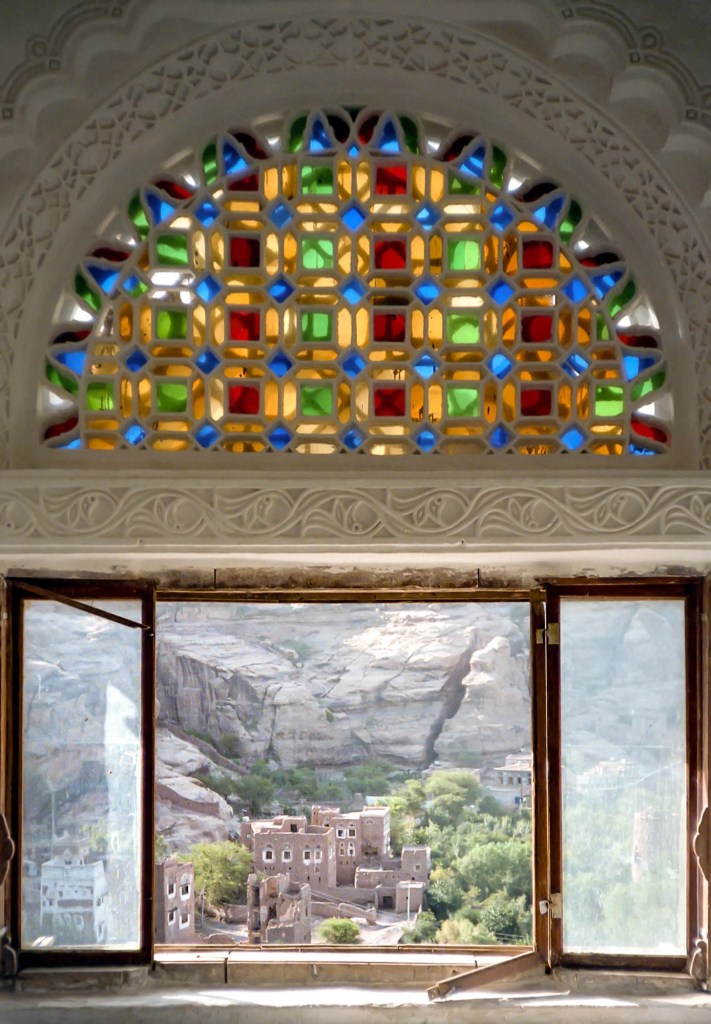
I also shared something that might have sounded a bit silly: an idea to create new work inspired by Yemeni qamariyya (قمرية) the moon windows. Then I discovered a Yemeni artist, Afraa, who is already making them in Egypt. Her beautiful pieces made from plaster and glass. And, I’m genuinely happy that a Yemeni artist is doing this work, but it now feels as though I would simply be repeating what she has already developed.

https://albukhari.com/3835/

I still love the idea because it is part of my culture and such a distinctive feature of Yemeni architecture. But at the moment, I don’t feel I have a new angle that differs from Afraa’s. Unfortunately, I have gaps in my identity; much of what I know comes from stories I’ve heard or fragments of childhood memory. This places us in different positions. Afraa’s work feels rooted in presence, while mine often reflects absence something missing, yet shaping the space around it.

https://www.instagram.com/afraa_ahmed?igsh=bG1sY3o3ZnJobzJo