Posted in 2025-2026, collaboration, Experiments, Social Sculpture, Visit

Reflection on Alex Schady Workshop Collaborative Making and Social Sculpture

I took part in a workshop led by Alex Schady as part of the Fine Art Digital Residency week which thoughtfully organised by Jonathan for both MA classes. 

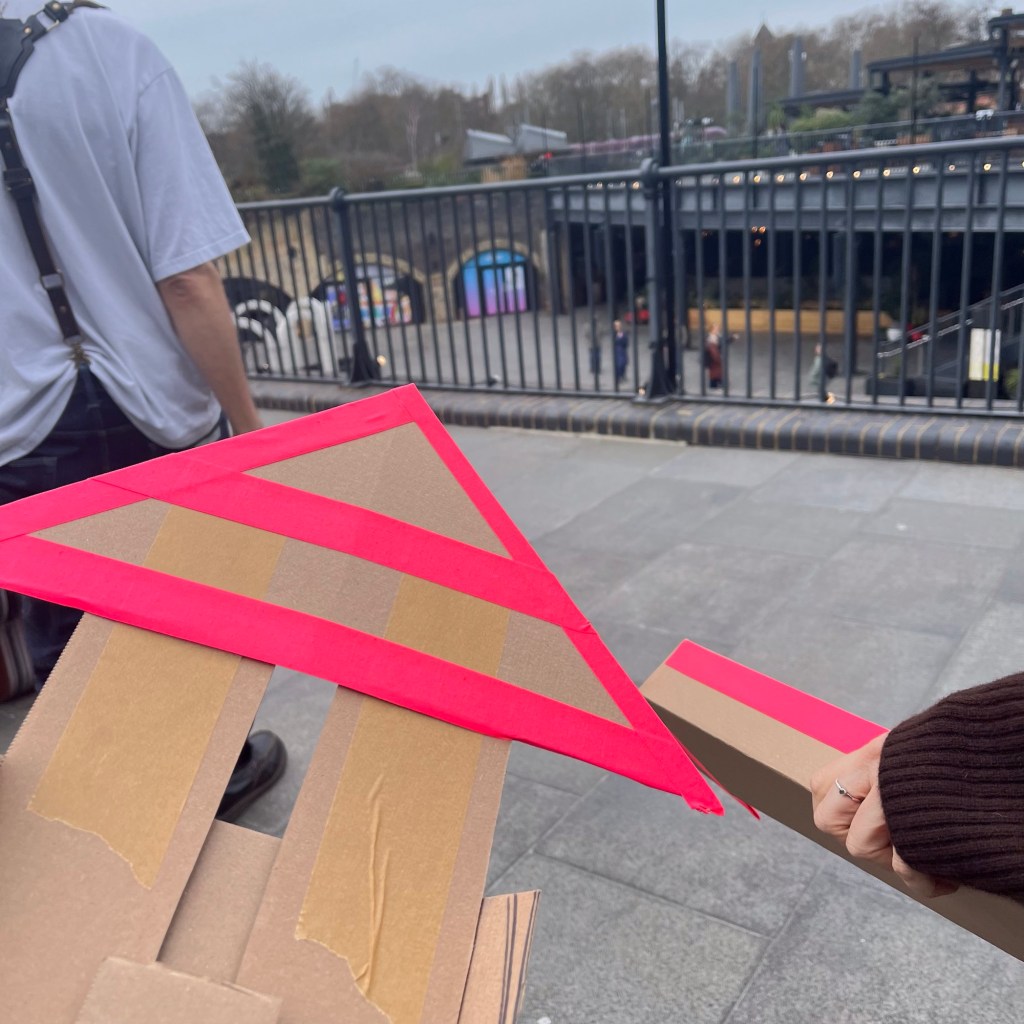
The session focused on collaborative making and began with a simple exercise: a flat sheet of cardboard was shared and each student created an arrow. I made a very simple arrow, similar to Alex’s example, while others explored more playful and experimental shapes. I noticed something familiar about my role in workshops I often observe more than I produce, watching how others approach the task becomes part of my learning process.

We then moved outside to the street and began performing with our objects, engaging with the urban environment and the people around us. The arrows shifted from being simple objects to becoming gestures in public space.. Accusatory fingers!
In the next stage we worked in pairs to create inflatable body extensions using plastic sheets. I collaborated with Rachael, and we agreed to make angel wings. The process was technically tricky, due to delicate material, but we managed to build them, and had a lot of fun experimenting with movement.

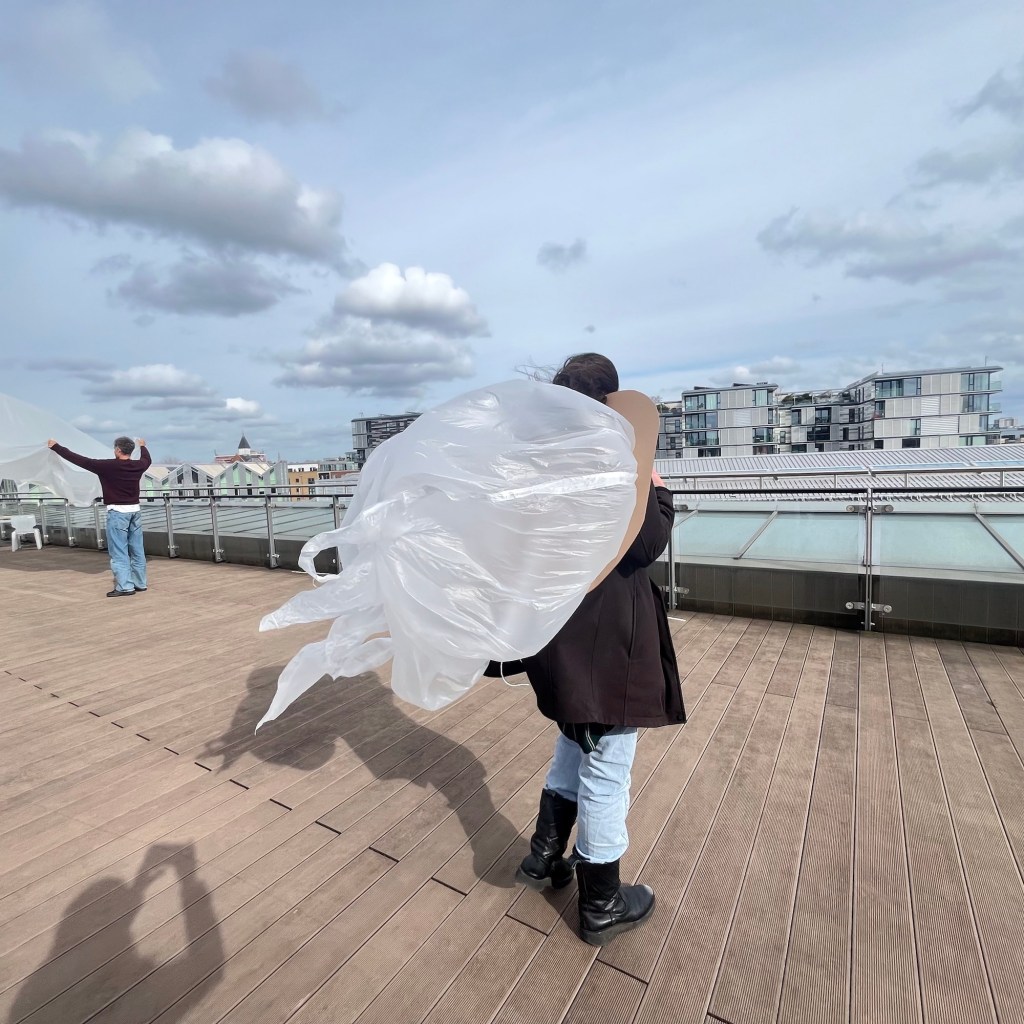
Afterwards we gathered outside for a collective performance where everyone presented their creations. Eventually groups merged and people began wearing multiple extensions, forming a kind of shared body. The performance ended with one large collective body.

What stayed with me most was the way Alex held the space. He allowed collaboration to happen naturally without pressure. No one felt forced to participate in a particular way. This made me think about concept of social sculpture and the idea that society itself can be shaped through collective processes.

The workshop felt like a small example of this idea. Through simple materials and shared actions we created a temporary social structure based on making, negotiating and performing together. 

Afterwards I visited the first-year MA students’ exhibition. It was interesting to see the space and reflect on how quickly time passes during the MA journey. It was also lovely meeting fellow artists in person for the first time there was an immediate sense of familiarity and trust. 

Although I could only stay for a few hours, the experience felt full. Sometimes a few meaningful hours can contain days of learning. Alex’s workshop demonstrated how much can happen in a short time  making, performing and collaborating and it left me wondering how much deeper this process could go if we had the opportunity to continue it over several sessions.

Posted in 2025-2026, Reading, Reflection, Research

Assimilation and Accommodation

On Tuesday, during a strong presentation session, while listening to the last talk about dérive and virtual spaces as alternatives by Pritish, I found my mind returning to a learning theory I had studied many years ago. I could not immediately recall whether it was Vygotsky or Piaget, and this hesitation made me unsure about sharing the thought at the time. Afterwards, I searched…and yes! It was Piaget’s theory of assimilation and accommodation, the idea that learning happens either by fitting new information into existing schemas or by adjusting those schemas when new information does not fit.

Reflecting on this, I began to think about how virtual spaces function in a similar way. Even when people experience digital or alternative environments, their feelings and reactions are still shaped by accumulated past experiences and knowledge. Any first encounter within a virtual space is built upon pre-existing cognitive and emotional structures. So, virtual spaces act more as a mimic or extension of reality rather than a replacement. This process can apply not only to places, but also to human relationships, attachments, and the way knowledge itself is formed. For artists in particular, engaging with new media or environments becomes less about abandoning reality and more about negotiating between what is already known and what is newly encountered.

Artists can be understood through Piaget’s concepts of assimilation and accommodation, where creative practice becomes a continuous process of negotiating between existing internal frameworks and new experiences. In assimilation, artists adopt new media, theories, or environments while maintaining their established emotional language and conceptual concerns. The tools or platforms may change but the underlying schemas remain consistent.

On the other hand, accommodation occurs when new encounters challenge existing schemas and require deeper transformation. This is often where significant artistic shifts emerge, when identity or the understanding of presence itself is reconsidered. This change is not merely stylistic but structural and art education environments sometimes encourage this level of critical adjustment.

Virtual space also reveals how artistic perception is shaped by memory and embodiment. In digital environments, artists still rely on bodily memory, cultural conditioning and early play patterns, while also borrowing physical metaphors such as walking, entering, meeting, or distancing. Virtual space often mirrors or exaggerates reality rather than escaping it entirely, showing that cognition and imagination remain grounded in lived experience.

Play therefore persists as a fundamental mechanism within artistic practice. What begins as childhood experimentation evolves into adult creative inquiry, where testing rules, breaking structures, and negotiating imagination against reality become methods of continuous learning and re-formation.

Below is a short child observation, with an image and a video, which for me explains the theory mentioned above:

The child is my nephew, my brother’s son. In the first image he was two years old, in August 2024. We were at a farmhouse with cousins and aunties. I introduced him to drawing with charcoal that we found the day after a barbecue. We made a few marks on the ground together, and he didn’t stop playing with it, continuing to draw small circles and lines.

Last summer, in August 2025, in the second video, we returned to the same farmhouse with the same family gathering. The next day my nephew found small pieces of charcoal and began making circles again. When the charcoal finished, he picked up a small stone and continued drawing on the floor. This happened without my involvement or guidance, I was simply nearby watching him play outside. What amazed me, and what I could not resist recording, was the moment he began showing his cousins what to do and teaching them. They were all having fun, and I was quietly enjoying this very human moment at a child’s level.

2025

This observation functions as a small case study of assimilation and accommodation in everyday life. The first encounter with charcoal represents assimilation, where the child integrates a new material into existing playful behaviours such as drawing circles and lines. The second encounter, one year later, demonstrates accommodation, when the charcoal is no longer available, the child searches for an alternative and selects a stone, adjusting both the tool and the physical effort required while maintaining the same intention to draw. The act of later teaching other children reinforces this learning socially, showing how knowledge becomes shared rather than individual.

In an artistic context, this example illustrates how creative practice is not only about materials but about cognitive continuity. The surface, gesture, and intention remain consistent while the medium changes. This mirrors how artists adapt to new technologies or environments without abandoning their internal motivations. The child’s behaviour reveals that creativity operates through repetition, substitution, and social exchange, suggesting that artistic development, much like childhood learning, is a cycle of experimentation rather than a linear progression… which this also can relate to the cyclicality that mentioned in Eleanor’s presentation.

Posted in 2025-2026, collaboration, Motivations, Reflection, Research, Uncategorized, Writing

Feedback!

What can I say… this experience has reminded me why I love working collectively and why it is so important not to rely on a single resource or only on self-knowledge.

Giving feedback as a group is such a powerful idea and such a beautiful way to enrich one another’s reflection on our practice. I genuinely loved sharing my thoughts with each of my peers and reading theirs in return. The work is amazing, it expresses human experience in such diverse ways, full of richness, honesty and genuine emotion. I felt truly honoured to be among them and lucky to witness their progress over time.

It was emotional to reflect on how we are growing together, holding each other’s hands virtually on this journey with such care and generosity. It reminded me of Jonathan’s first session in October 2024, when he spoke about kindness and compassion and how these could become the strength of our collective and our cohort. Throughout the course, he has guided us with constant care and kindness, so it is no surprise that he created this opportunity: for each of us to write short feedback for one another on a shared Miro board dedicated to every artist.

My peers’ feedback has genuinely boosted my confidence and trust in my practice. Of course, there are always things missing, intentionally or not, due to circumstances and the challenges of process. But receiving feedback that recognises your efforts is deeply energising, especially as a socially engaged artist, where the social aspect is the heart of the work.

I will definitely return to this Miro board whenever I need to. It has become a beautiful space, full of thoughts floating in this quiet corner of cyberspace.

Posted in 2025-2026, Experiments, Moon, Research

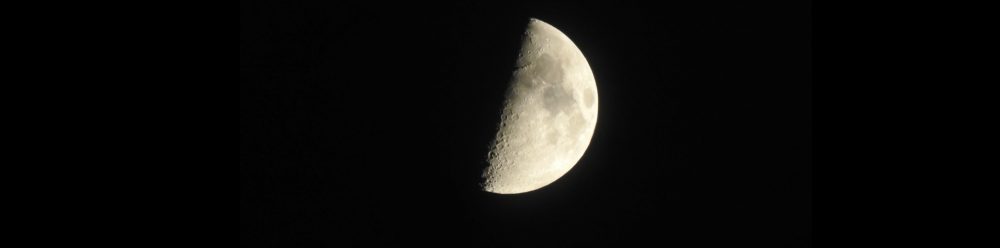
A New Collection of Moon Images

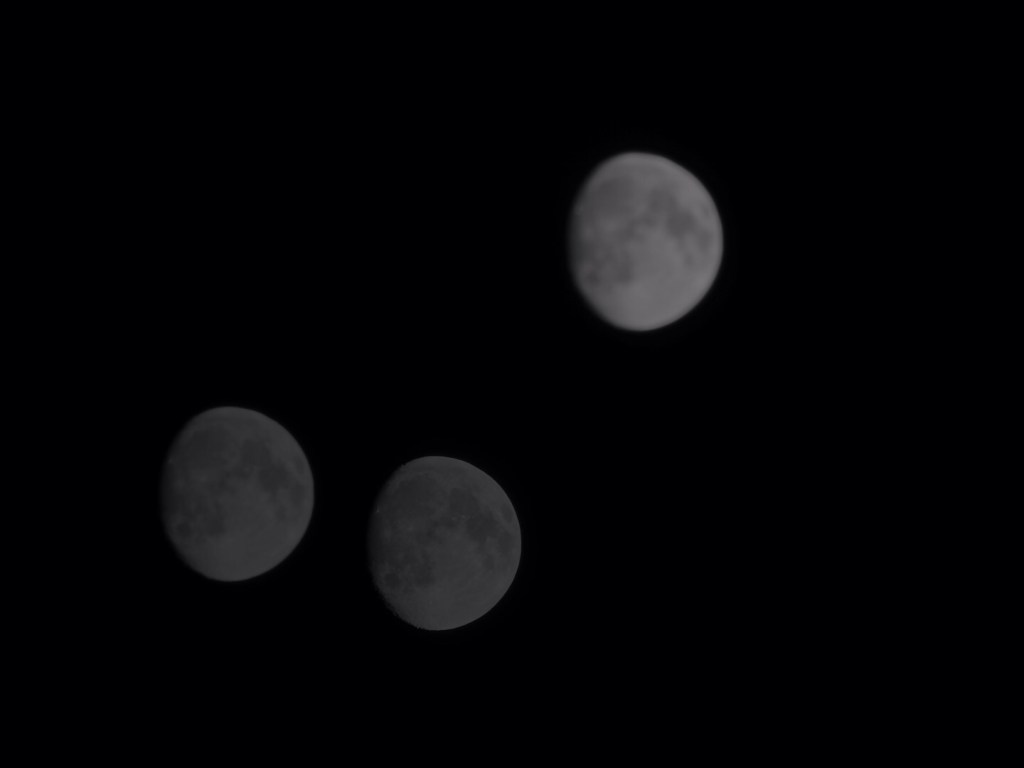
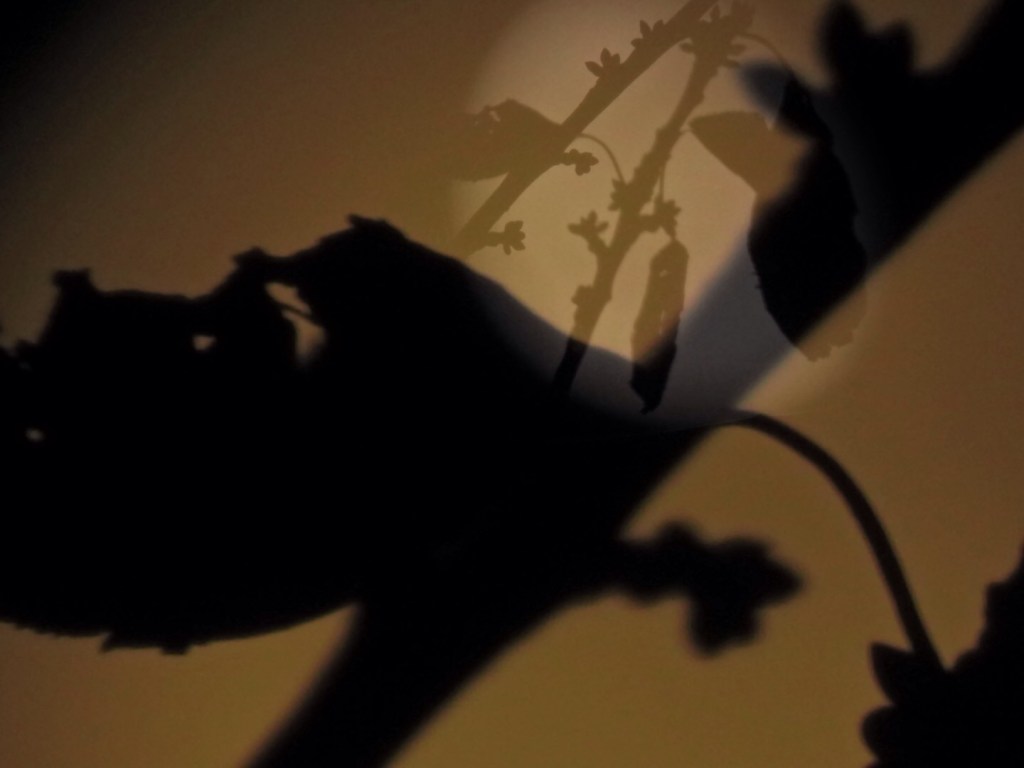
Over the past few months, I’ve been quietly chasing the moon. Through multiple exposure, I’ve been exploring time, movement, and intention. This new collection marks the beginning of a deeper understanding of how to interpret time through past and present within still images. The idea first emerged after my friend, artist Hannah Browne, gifted me a photo featuring a two-week moon exposure by artist Joe Millican.

By Joe Millican

I became curious about how the moon’s presence might behave when paired with something as delicate and earthly as the silhouette of a plant, or when stretched across the frame in a sequence of softened echoes. What could happen if the moon wasn’t captured as a solitary celestial object, but instead as an active participant within a wider composition? These photographs required patience, a negotiation between motion and stillness, and a willingness to embrace the unexpected, also, they opened a wider field of play.

Multiple exposure gives the moon permission to move. It gives shadows permission to speak. It gives the image permission to become something other than what was predicted.This new collection feels like the beginning of a conversation I want to continue. The techniques are still new to me, but they are expanding my understanding of how photography, much like the letters it will eventually accompany, can hold ambiguity, transformation, and layered narratives.

You can now visit my new website: https://dear-moon.art which holds the previous messages and will hopefully grow with new letters, images, and an e-book.

Get involved from anywhere by sending an email to the moon via Dearmoon2025@hotmail.com

Posted in 2025-2026, curation, Exhibitions, Experiments, Project, Reflection, Research, Social Sculpture

Last Reflection on The Right Map

As I write this final reflection on The Right Map, I can see how many threads hold this project together. There is the community garden that Tom Doubtfire leads with steady optimism. There is the fundraiser that Tom and I organised as members of Ghost Art School, with generous support in kind from The Bakery in Liverpool. And there is the final day itself, which happened only because of the effort and kindness shown by Rory Macbeth, there was no funding and no safety net, there were only people who care and people who give far more than anyone could fairly expect.

The Community Garden

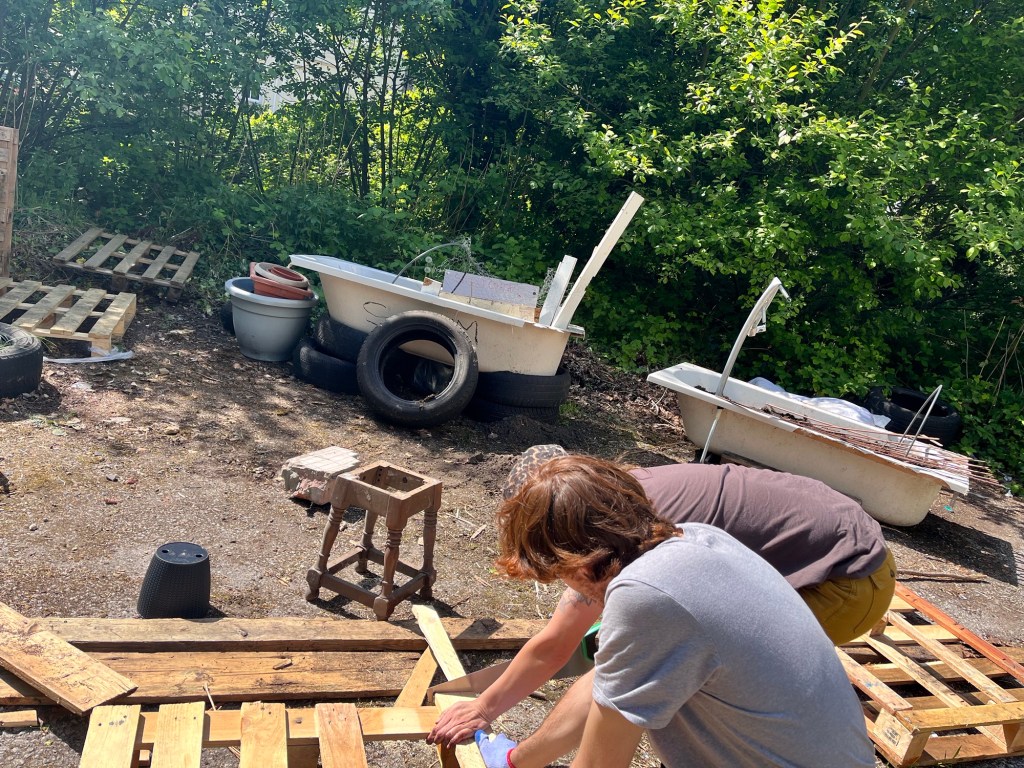
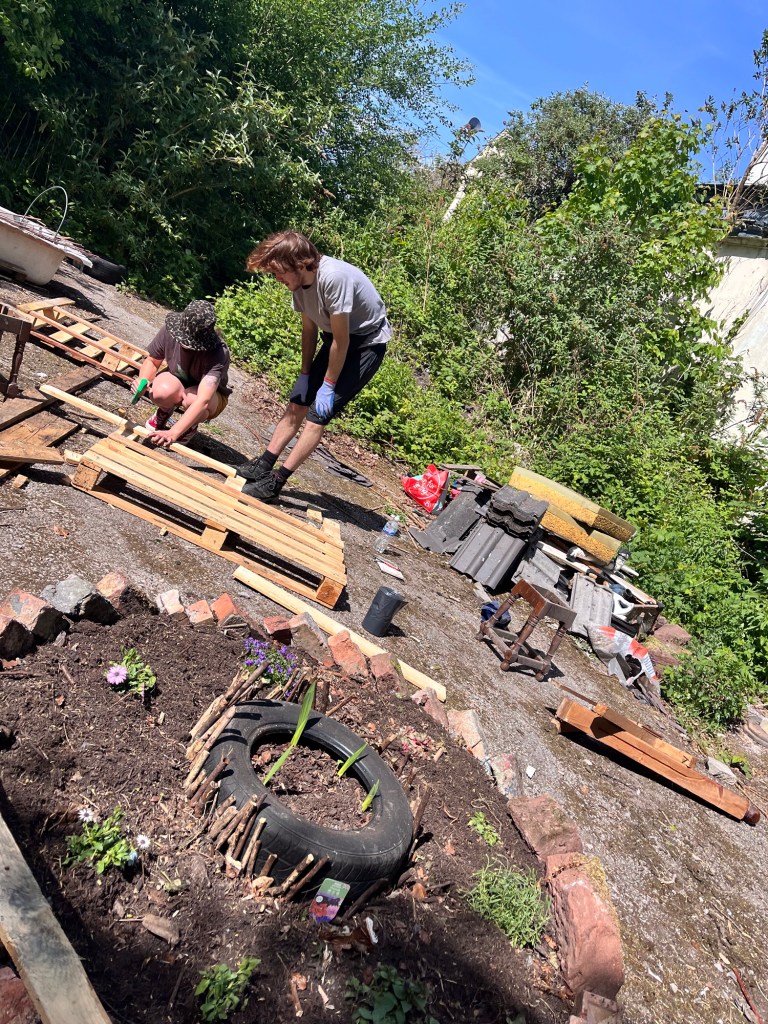
The garden at the old social club-Kensington was meant to be a shared space, a place for people to grow food, spend time, and reclaim something green together. We cleaned it again and again. We cleared rubbish, made plans and planted possibilities… Yet there were days when I felt defeated. Rubbish would reappear as soon as we removed it.. Things were stolen! Many times it felt as if the effort was swallowed by indifference!

But Tom is different.. He keeps turning up with a sense of commitment that is both hopeful and stubborn. He holds a belief in slow change that I respect deeply and I’ll continue to support him, not only as a friend but as an artist I respect.

Fundraising as a Collective Gesture

The fundraiser at The Bakery was a small moment when collective energy came together. With the help of visitors, friends, and many acts of generosity, we raised £300 for Thamara Organisation.

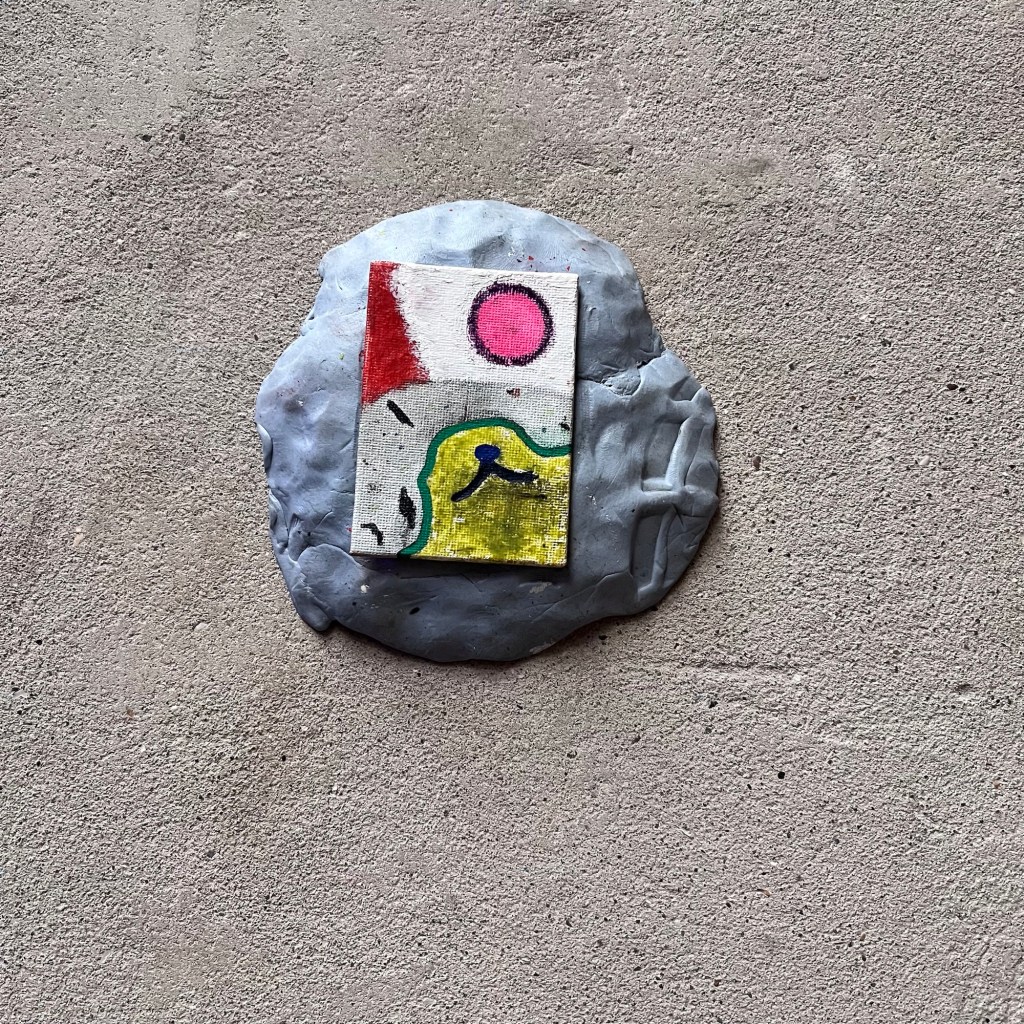
The rooms held an installation by Tom D, inspired by the community garden. There were drawings made by children in previous workshops Tom led. There were my political ceramics. There was a tiny painting by Tom Kelly, fixed to a huge blob of blue tack. There were paintings prints by Alison Reid.

And from food sales and prints and T shirts that I printed, some showing the map of Palestine and others carrying the Ghost Art School logo designed by Rory Macbeth, along with extra donations, the amount slowly gathered. It felt modest, but it carried meaning. It was a gesture of care that reflected the spirit of The Right Map.

The Final Day: Unstable 4 

The final day of The Right Map was full of beautiful chaos.. I was working in other side at Crosby Library until the afternoon for a Liverpool Biennial event with the collective DARCH, so I arrived with no time to prepare anything special. Once again it was Rory who brought the day to a close and who held everything together with calmness and capability. I will not forget the amazing large carousel installation by Marie-Sofie Braune, who is now doing an MFA at CSM. It arrived from Germany and was too large to ship at a reasonable cost, so Rory travelled to deliver it and installed it.

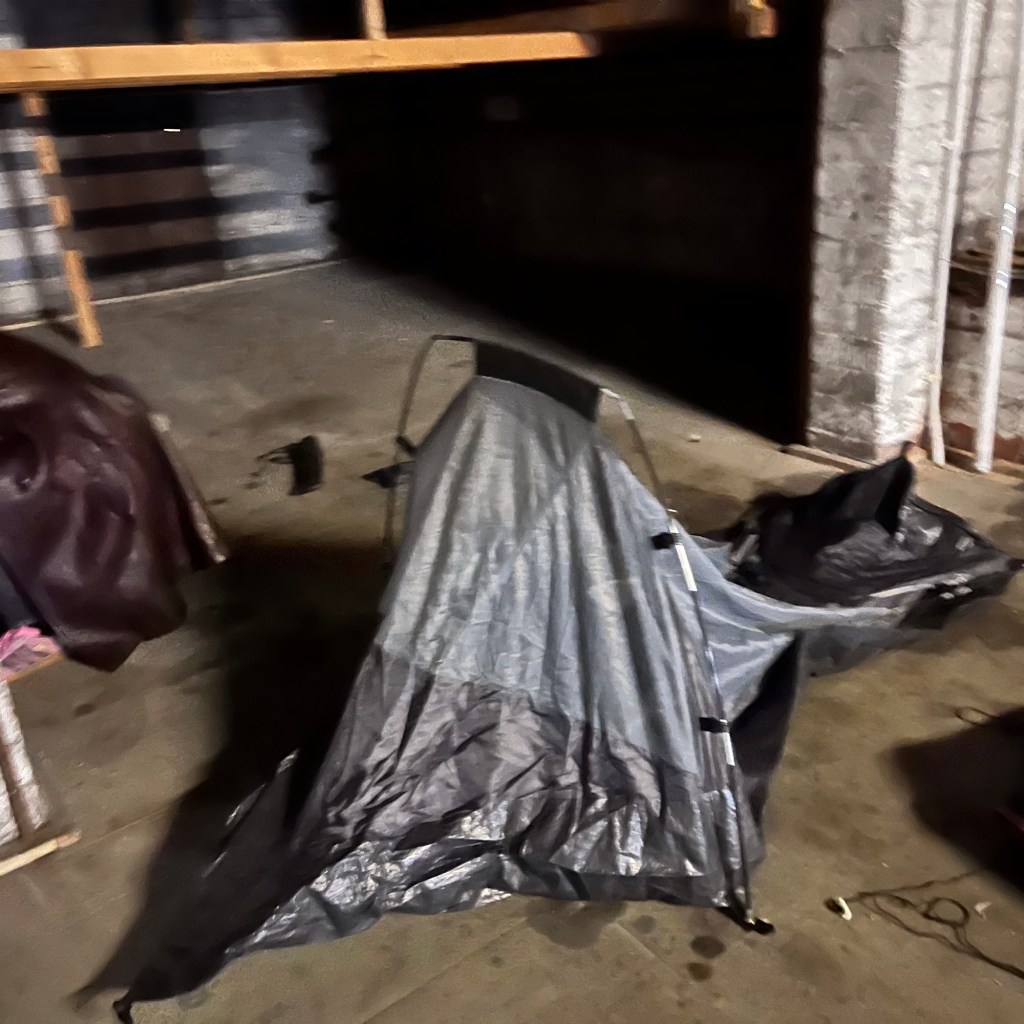
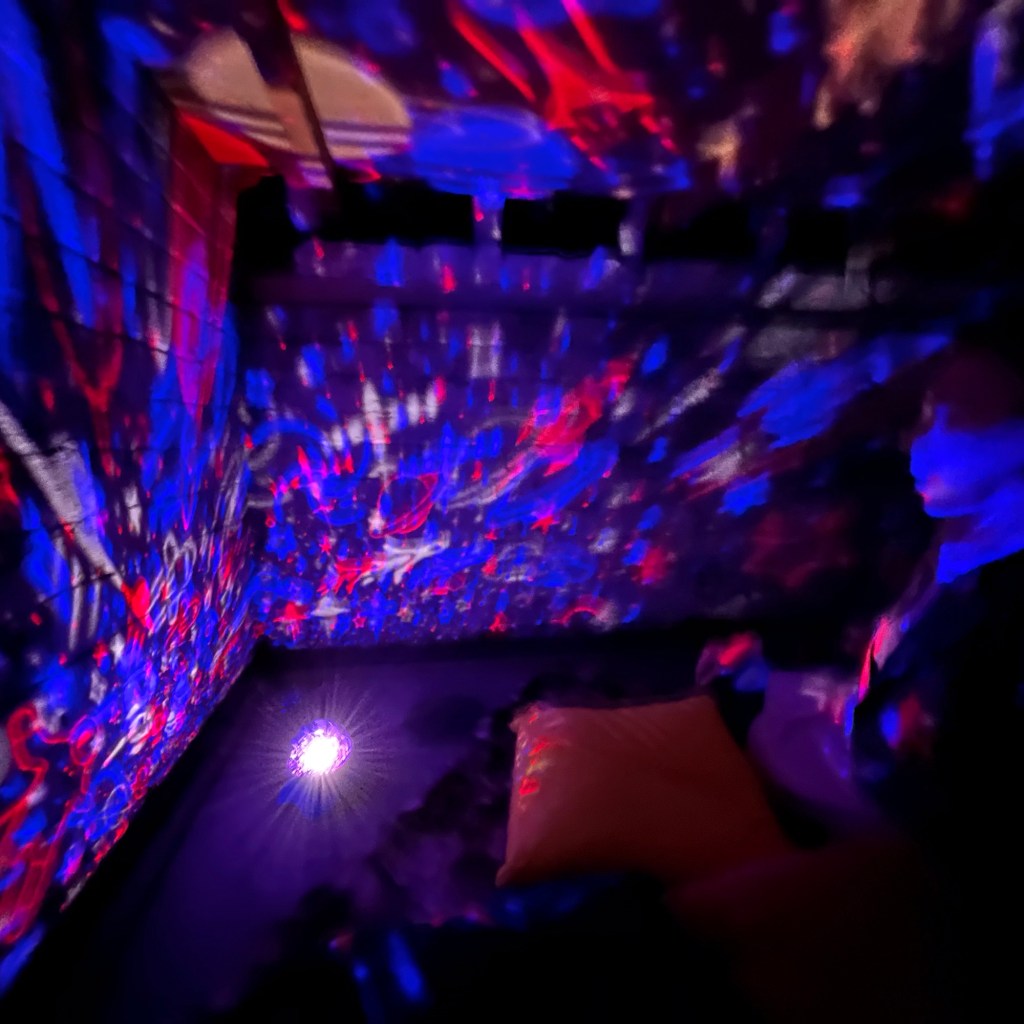
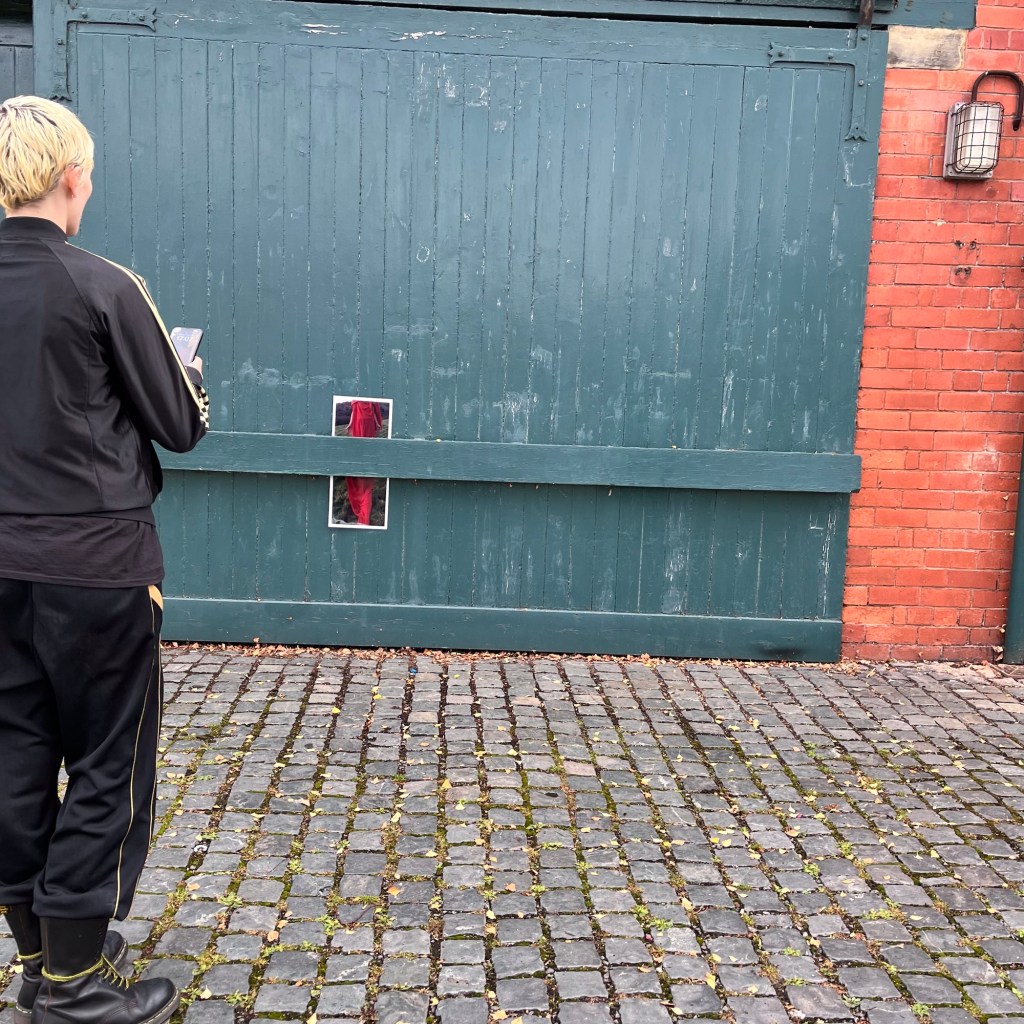
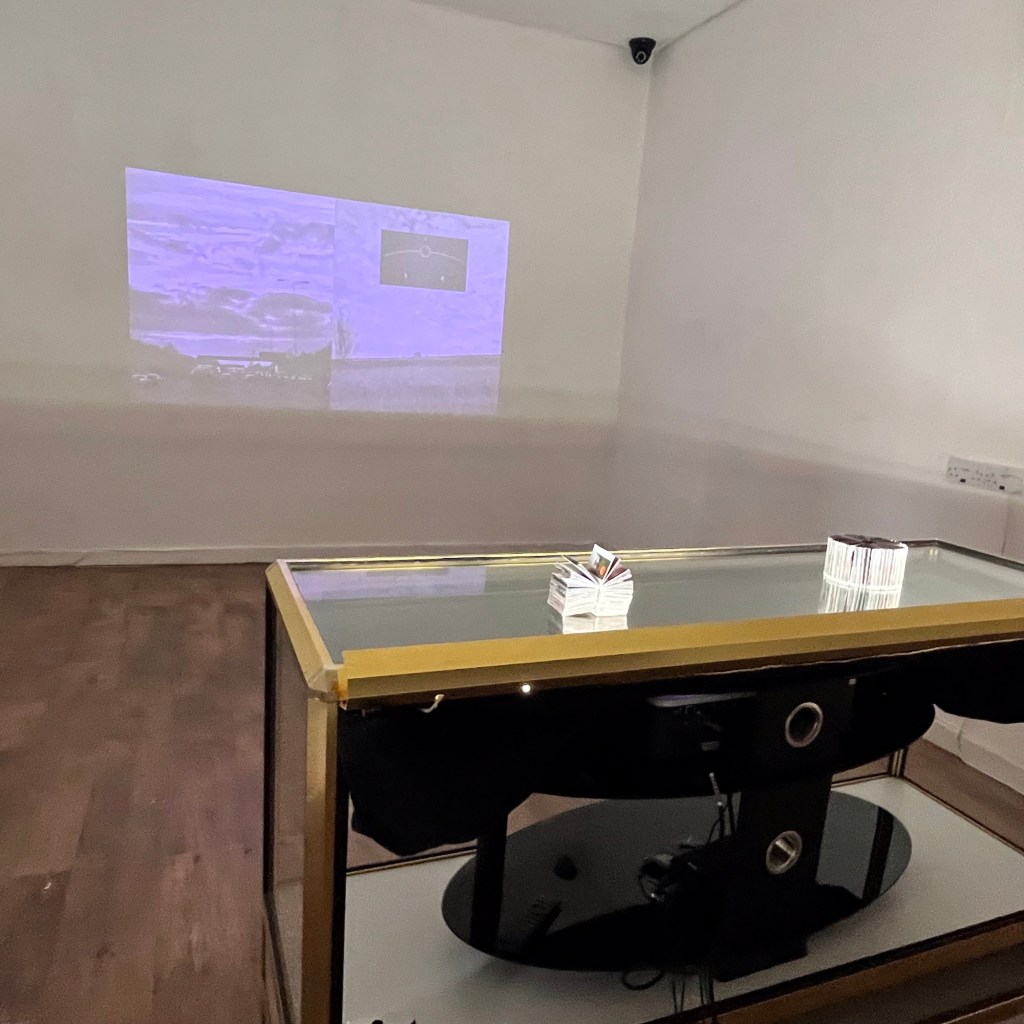
As Rory described it, the event became:“Unstable 4. The final event of Unstable at Port Sunlight fully embraced instability. A broken fever dream of a fairground carousel, a car trying to get into the gallery while playing dislocated tape loops, surplus images spat out of a machine, surplus films looping, noise performed, letters to the moon, records playing off centre, photographic sculptures hiding in half light, one to one performances in a tent.”

Somehow all of this disorder made sense. It was the right ending to a project that was never about polish but about presence. It showed what happens when artists, friends, and communities choose to take action even when resources are limited, even when schedules do not match, and even when the project is held together by human effort rather than funding.

Finally, The Right Map did not map places. It mapped relationships, labour, generosity, frustration, and persistence. It mapped the hidden work that supports community spaces and the unstability that becomes a creative method rather than a barrier.

The Right Map artists: Alison Reid, Alma Stritt, Charli Kleeman, Chelsea Johnson, Chris Roberts, Colm Moore, Conner Browne, Cos Ahmet, Danielle Freakley, David W Hicks, Eleanor Capstick, Finn Roberts, Gary Finnegan, Gwendolin Kircali, Halyna Maystrenko-Grant, Hannah Browne, Harriet Morley, Igor Prato Luna, Jasmir Creed, Jessica Crowe, Karema Munassar, Lily Patricija, Mai Sanchez, Marie-Sofie Braune, Molly Lindsay, Molly Mousdell, Phoebe Thomas, Priya Foster, Ritu Arya, Rory Macbeth, Sonic Relics, Theodora Koumbouzis, Tom Doubtfire, Tom Kelly, Valentina Passerini, and Xueying Zhang 

Posted in 2025-2026, Reflection, Tutorials 2025-26

1–1 Tutorial 17th Nov

I had a tutorial with Jonathan on Monday. As always, it was eye-opening and thoughtful, almost like thinking out loud with someone who asks the questions you don’t necessarily want to confront yourself. We discussed my last two blog posts and reflected on how I feel about my ceramics (as the sugar bowl) which could stand alone in a show, compared with the collective work at the library (as the table-cloth)

Jonathan described the library project as a pure form of social sculpture and I agree with him. I see social sculpture built from “bricks” with each brick made by a volunteer. My ceramics are an interpretation of the world around me, a sculpture that begins with a thought engaged with the world and is then transformed into material. The library work, however, only comes into existence after contributors engage directly with the materials first. That distinction became clearer when I repeated Jonathan’s question to myself..

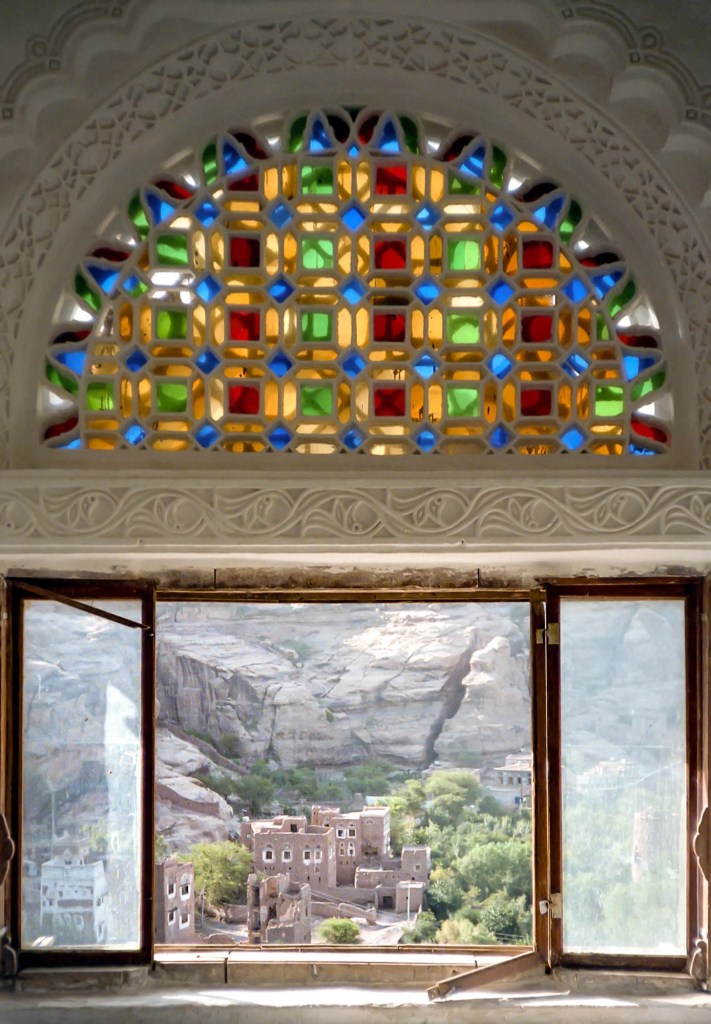
I also shared something that might have sounded a bit silly: an idea to create new work inspired by Yemeni qamariyya (قمرية) the moon windows. Then I discovered a Yemeni artist, Afraa, who is already making them in Egypt. Her beautiful pieces made from plaster and glass. And, I’m genuinely happy that a Yemeni artist is doing this work, but it now feels as though I would simply be repeating what she has already developed.

https://albukhari.com/3835/

I still love the idea because it is part of my culture and such a distinctive feature of Yemeni architecture. But at the moment, I don’t feel I have a new angle that differs from Afraa’s. Unfortunately, I have gaps in my identity; much of what I know comes from stories I’ve heard or fragments of childhood memory. This places us in different positions. Afraa’s work feels rooted in presence, while mine often reflects absence something missing, yet shaping the space around it.

https://www.instagram.com/afraa_ahmed?igsh=bG1sY3o3ZnJobzJo

Posted in Exhibitions, Experiments, Moon, Reflection, Research, Visit, Writing

Trusting the Process.. Interim Show 2025

Since October, I’ve been immersed in the making of Dear Moon. What began as a simple idea grew into something layered and full of meaning. Over these months, I’ve learnt so much, not just about putting together a book, but about myself. The skills I’ve had to call on managing, organising, communicating, publishing, sharing all came with challenges. I had to practise patience.. I had to listen. And more than anything, I had to trust the process!

There were many moments when I didn’t know exactly where it was heading, but I allowed myself to follow the rhythm of the work, and something beautiful came through. I’m especially grateful that the work is expanding being read, being held and I’ve been watching it with a sort of quiet pride.

Still, I have to be honest. Sharing Dear Moon in public spaces hasn’t felt completely right. I tried presenting it in a vibrant setting, but I could feel the book asking for something else, something slower, more still. It asks the reader to sit, pause, and take time. And that’s hard to find in environments filled with movement.

So, although I didn’t quite succeed in the way I had imagined, I don’t see it as failure. Instead, I see it as another learning. The challenge now is to explore different ways a book like this can live in public space. How do I present it in a way that honours its pace and stillness? How can I guide people toward it gently, instead of expecting it to compete for attention?

I’m still learning, and I’m open. I’m proud of Dear Moon, and I know it will keep finding its way as long as I keep listening.

Posted in 2024/2025, Exhibitions, Motivations, Reflection, Writing

First Review in Art in Liverpool

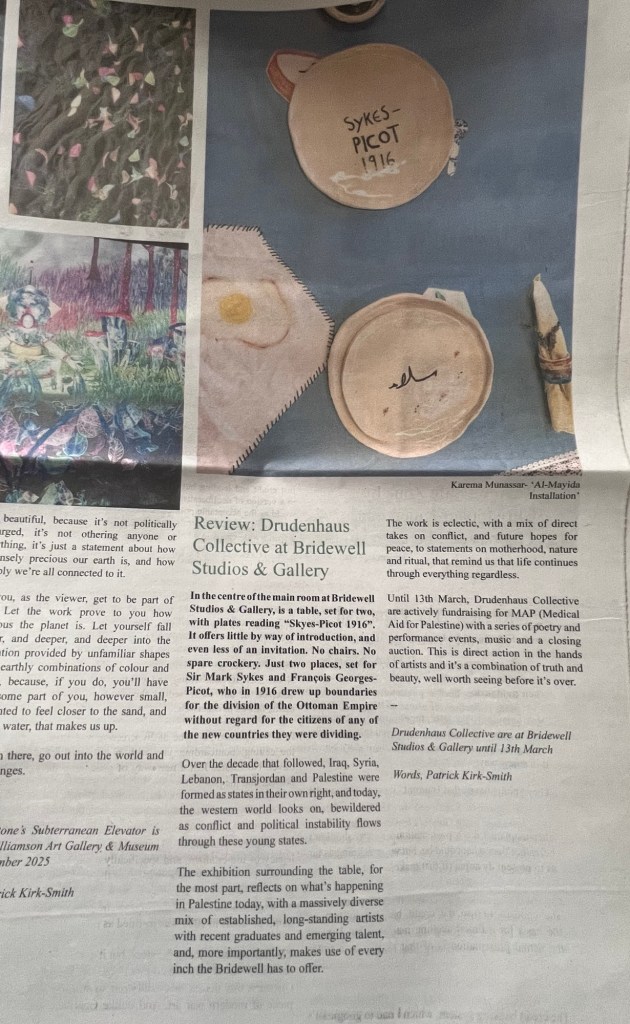
I recently received my first review (which I see as feedback) in Art in Liverpool, written by Patrick Kirk-Smith, about my Al-Mayida installation as part of the Drudenhaus Collective at Bridewell Studios & Gallery. Seeing my work in print, positioned within a broader reflection on history, conflict, and artistic response—has given me space to consider how this moment connects with my ongoing practice.

He writes:

“In the centre of the main room at Bridewell Studios & Gallery is a table, set for two, with plates reading ‘Sykes-Picot 1916’. It offers little by way of introduction, and even less of an invitation. No chairs. No spare crockery. Just two places, set for Sir Mark Sykes and François Georges-Picot, who in 1916 drew up boundaries for the division of the Ottoman Empire without regard for the citizens of any of the new countries they were dividing…”

This review captures the essence of Al-Mayida, how history’s decisions linger in the present, shaping lives and political realities.

As I navigate my MA, this review serves as both encouragement and reflection. It affirms that my work is engaging with complex socio-political themes in a way that resonates beyond the gallery. It also challenges me to refine my approach, how can I sharpen these conversations while maintaining the poetic, unsettling subtlety that Al-Mayida holds?

The Drudenhaus Collective’s fundraising for Medical Aid for Palestine (MAP) adds another layer to this. Art, for me, has always been a site of action as much as expression. This project reinforces my belief that creative practice can exist in solidarity, bringing history into the present not just for reflection, but for tangible impact.

Posted in Exhibitions, Motivations, Research, Visit

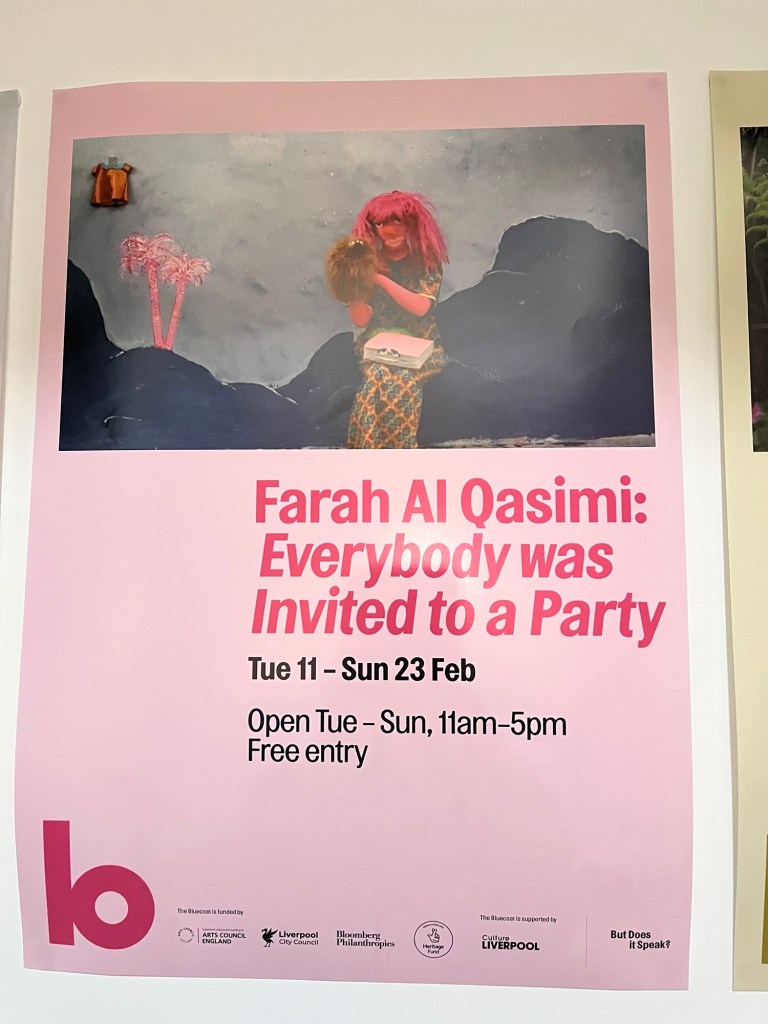
Farah Al Qasimi’s Everybody was Invited to a Party

Yesterday, I stepped into The Bluecoat and found myself transported back to my childhood in Dubai. Farah Al Qasimi’s work immediately struck a chord, filling the space with images, sounds, and moments that felt intimately familiar. In this exhibition, I wasn’t just observing, I was reliving something personal, something nostalgic. I laughed, paused, and travelled back home through her lens.

Al Qasimi, an artist from the UAE, weaves humour, memory, and language into a beautifully immersive world. Her film, Everybody was Invited to a Party, takes inspiration from Iftah Ya Simsim, the 1980s Arabic adaptation of Sesame Street. Using hand-sewn puppets and a playful approach to translation, the film highlights the fluidity , and at times, the struggles of communication.

One of the moments that resonated most with me was the pink Arabic-speaking monster struggling to order food in English. The monster’s eventual decision to learn English felt both humorous and deeply familiar. Another example was the book puppet with  text saying “I made a book to help me say the right things”. That line lingered with me. It felt so aligned with my own practice. Using language as both a tool and an obstacle, playing with its structures while trying to express something truthful.

Her use of puppetry and humour in dealing with linguistic struggles felt particularly relevant to me. I have always been interested in how objects and visual storytelling can reveal the nuances of human communication. Seeing her work has sparked new ideas about how I might further explore these themes, especially in my MA research and upcoming projects.

This exhibition reminded me that language is never just about words, it’s about memory, culture, and the ways we find (and sometimes lose) ourselves in translation. And in those moments of uncertainty, there is humour, resilience, and the power to create new meaning.

Posted in Lectures 2024/2025, Motivations, Reflection, Research

Reflections on Professionalism and Unprofessionalism

I missed the last lecture on professionalism and unprofessionalism due to family circumstances. Ironically, missing out on topics that interest me most. But watching the recording was still a rich experience, listening to the discussions and the different perspectives people brought to the conversation. 

I read the article How to Be an Unprofessional Artist by Andrew Berardini, which Jonathan shared in the lecture. And, I think the word “unprofessional” carries a certain weight, often with negative connotations. It reminds me of how the word “steal” is used provocatively in Steal Like An Artist by Austin Kleon, or how “disabled” can be perceived in different ways, negative for some, yet embraced by others as a form of identity and empowerment. Language is powerful; it doesn’t just describe the world, it shapes it. It influences how we see ourselves, how others perceive us, and what opportunities are available to us.

A key point in the discussion was how professionalism is often framed by rigid, exclusionary standards, ones that can erase individuality, lived experience, or even care. But does professionalism have to mean conforming to a narrow, predetermined image? Many so-called unprofessional traits: honesty, vulnerability, and unconventional approaches are actually strengths. They challenge existing systems, create space for new ways of thinking, and foster deeper engagement.

The tension between professional and unprofessional seems to lie in whether professionalism is dictated by external standards or defined through integrity, care, and dedication to one’s practice. If professionalism means respect for oneself, for others, and for the work, then it doesn’t have to mean suppressing individuality or creativity. I see professionalism not as following a strict rulebook, but as a commitment to craft, ethics, and meaningful engagement.

As a mother of a child with special needs, I’m particularly aware of how language shapes perception. In different contexts, the term “disabled” can be either empowering or limiting. Could “unprofessional” also be reclaimed? Maybe, but only if doing so truly empowers rather than undermines.

My own art practice naturally resists traditional notions of professionalism. Coming from multiple backgrounds, embracing mistakes, and working in multidisciplinary ways, I see value in experimentation and non-traditional approaches. Rejecting conventional professionalism doesn’t mean rejecting care, commitment, or quality. It means refusing to be boxed into a system that wasn’t designed for people with diverse experiences and ways of working. Above all, rejecting traditional professionalism can be an act of resistance, challenging exclusionary structures that dictate who belongs and what is deemed acceptable work.

I navigate between institutional and freelance work, moving fluidly between structured and independent spaces. Working with institutions while maintaining my own perspective allows me to challenge the system from within while also creating alternative ways of working. It’s about understanding the rules but choosing when and how to break them in ways that are meaningful.

This ability to shift between spaces sometimes fitting in, sometimes disrupting gives me agency. It also allows me to act as a bridge for others who feel like they don’t fit into traditional structures. This is something I see in my work, whether through Moon Letters, Creative Peers, or other social sculpture projects.

Rather than seeing professionalism and unprofessionalism as rigid opposites, I see them as fluid. True professionalism, to me, is about care, respect, and meaningful engagement, qualities that don’t require conforming to outdated norms, but rather, reimagining them.

Somewhere in Oxford…