Posted in Research, Reflection, 2025-2026, Reading

Assimilation and Accommodation

On Tuesday, during a strong presentation session, while listening to the last talk about dérive and virtual spaces as alternatives by Pritish, I found my mind returning to a learning theory I had studied many years ago. I could not immediately recall whether it was Vygotsky or Piaget, and this hesitation made me unsure about sharing the thought at the time. Afterwards, I searched…and yes! It was Piaget’s theory of assimilation and accommodation, the idea that learning happens either by fitting new information into existing schemas or by adjusting those schemas when new information does not fit.

Reflecting on this, I began to think about how virtual spaces function in a similar way. Even when people experience digital or alternative environments, their feelings and reactions are still shaped by accumulated past experiences and knowledge. Any first encounter within a virtual space is built upon pre-existing cognitive and emotional structures. So, virtual spaces act more as a mimic or extension of reality rather than a replacement. This process can apply not only to places, but also to human relationships, attachments, and the way knowledge itself is formed. For artists in particular, engaging with new media or environments becomes less about abandoning reality and more about negotiating between what is already known and what is newly encountered.

Artists can be understood through Piaget’s concepts of assimilation and accommodation, where creative practice becomes a continuous process of negotiating between existing internal frameworks and new experiences. In assimilation, artists adopt new media, theories, or environments while maintaining their established emotional language and conceptual concerns. The tools or platforms may change but the underlying schemas remain consistent.

On the other hand, accommodation occurs when new encounters challenge existing schemas and require deeper transformation. This is often where significant artistic shifts emerge, when identity or the understanding of presence itself is reconsidered. This change is not merely stylistic but structural and art education environments sometimes encourage this level of critical adjustment.

Virtual space also reveals how artistic perception is shaped by memory and embodiment. In digital environments, artists still rely on bodily memory, cultural conditioning and early play patterns, while also borrowing physical metaphors such as walking, entering, meeting, or distancing. Virtual space often mirrors or exaggerates reality rather than escaping it entirely, showing that cognition and imagination remain grounded in lived experience.

Play therefore persists as a fundamental mechanism within artistic practice. What begins as childhood experimentation evolves into adult creative inquiry, where testing rules, breaking structures, and negotiating imagination against reality become methods of continuous learning and re-formation.

Below is a short child observation, with an image and a video, which for me explains the theory mentioned above:

The child is my nephew, my brother’s son. In the first image he was two years old, in August 2024. We were at a farmhouse with cousins and aunties. I introduced him to drawing with charcoal that we found the day after a barbecue. We made a few marks on the ground together, and he didn’t stop playing with it, continuing to draw small circles and lines.

Last summer, in August 2025, in the second video, we returned to the same farmhouse with the same family gathering. The next day my nephew found small pieces of charcoal and began making circles again. When the charcoal finished, he picked up a small stone and continued drawing on the floor. This happened without my involvement or guidance, I was simply nearby watching him play outside. What amazed me, and what I could not resist recording, was the moment he began showing his cousins what to do and teaching them. They were all having fun, and I was quietly enjoying this very human moment at a child’s level.

2025

This observation functions as a small case study of assimilation and accommodation in everyday life. The first encounter with charcoal represents assimilation, where the child integrates a new material into existing playful behaviours such as drawing circles and lines. The second encounter, one year later, demonstrates accommodation, when the charcoal is no longer available, the child searches for an alternative and selects a stone, adjusting both the tool and the physical effort required while maintaining the same intention to draw. The act of later teaching other children reinforces this learning socially, showing how knowledge becomes shared rather than individual.

In an artistic context, this example illustrates how creative practice is not only about materials but about cognitive continuity. The surface, gesture, and intention remain consistent while the medium changes. This mirrors how artists adapt to new technologies or environments without abandoning their internal motivations. The child’s behaviour reveals that creativity operates through repetition, substitution, and social exchange, suggesting that artistic development, much like childhood learning, is a cycle of experimentation rather than a linear progression… which this also can relate to the cyclicality that mentioned in Eleanor’s presentation.

Posted in 2025-2026, Books, Reading, Reflection, Research, Translation, Writing

Translation #2

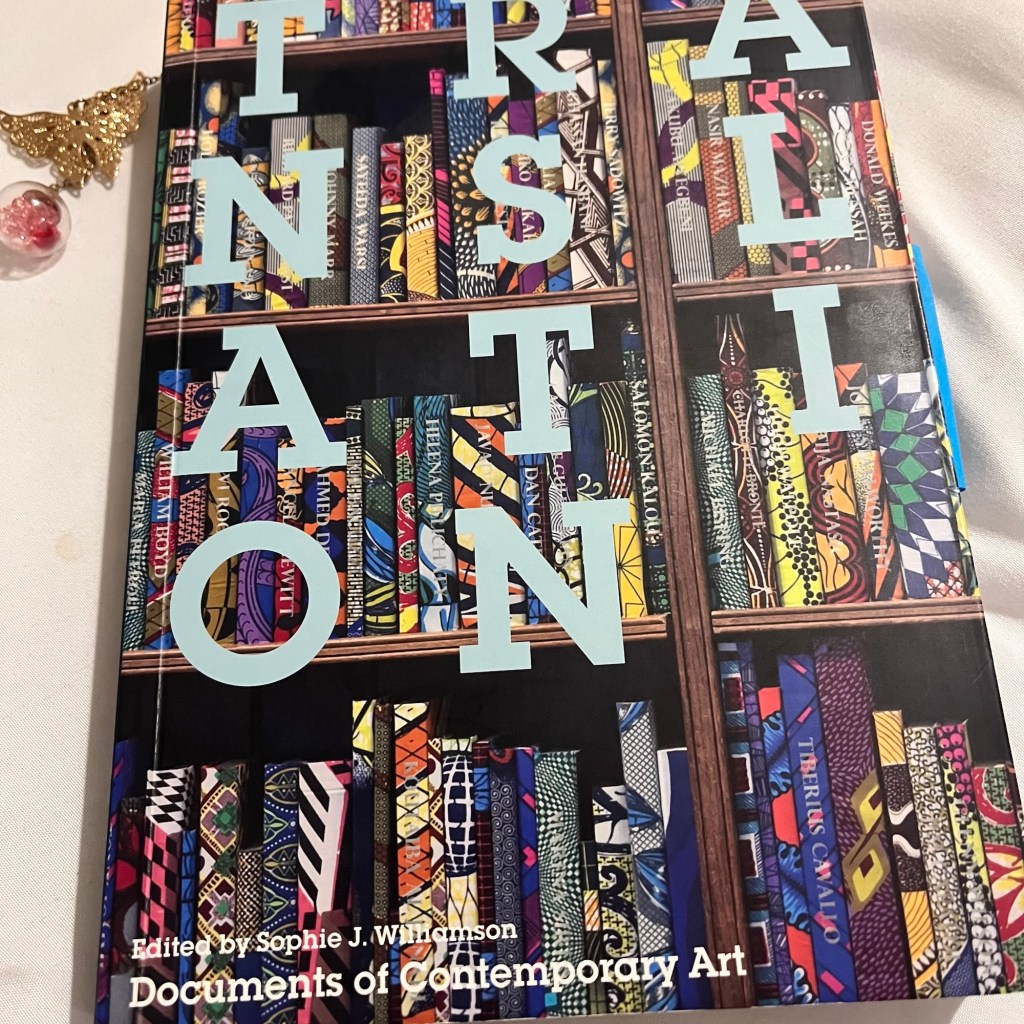
After reading Translation, I found myself asking what I would add if I were given the chance to contribute more pages to the book. Three came to mind: Omar Bahabri the translator, Arnaud Balard’s Deaf Flag, Adriano Celentano’s Prisencolinensinainciusol, and Wanderer by Rory Macbeth particularly after What Is a Minor Literature?//1986 by Deleuze and Guattari page.

The first story is a Yemeni tale set during the period of British occupation in southern Yemen. Omar Bahabri was a Yemeni tea merchant who spoke English through his work with foreign traders. At a time when the British struggled to communicate with the local population due to the lack of Arabic translators, Omar was called upon to help. The British asked him to translate pamphlets intended to win the trust and loyalty of the Yemeni people. Omar translated their demands into Arabic, and pamphlets were printed and distributed by aircraft across the country.

Some time later, a British general visited Aden to inspect the situation. He was familiar with Arabic, so he picked up a handful of the pamphlets and read them. He asked the officer in charge about their purpose and was told they were meant to encourage public support for British rule. The officer explained that the pamphlets called on people to join the Allies and support them. The general replied that the pamphlets read “Buy the finest tea from Omar Bahabri” . And here only reference I found in English: https://www.jstor.org/stable/48752006

Whether the story is true or not is hardly important here. What matters is how brilliantly it portrays the fate of outsiders who believe they can exploit local language and people for their own ends, only to find those intentions quietly undermined in favour of distinctly Yemeni interests. It also led me to reflect on the fact that the British occupied Aden for 128 years, from 1839 to 1967, yet hardly any of them learned Arabic. From this, it becomes easier to understand why the French aggressively imposed their language in colonised territories, and how English was forced upon Indigenous populations in North America, Australia, and New Zealand. This reinforces my belief that language is essential to the survival of culture and heritage.

Thinking about this story alongside Translation, I realised that what draws me in is not accuracy, but refusal. Translation here is not a neutral act. It becomes a space of misalignment, humour, survival, and agency. Language appears to serve power, while quietly redirecting it elsewhere.

So yes, I already know what my next ceramic piece will be.. A tea set! A familiar site of hospitality, negotiation, and politeness. Cups that sit between people, holding conversation, holding silence or things that are never quite said…

Posted in 2025-2026, Reading, Reflection, Writing

Translation by Sophie J. Williamsons

Jonathan recommended this book to me twice. Before I ordered it, I assumed it might be similar to Against Expression by Kenneth Goldsmith and Craig Dworkin, a great book in its own right on conceptual writing. But I found myself loving Williamson’s Translation much more. It feels like a fruit salad, a wide variety of flavours, each sweet or sour in its own way, yet deeply enjoyable together. While Against Expression is larger in size, Translation feels more balanced and brings together a broader range of international voices.

Before even reading the Translation introduction, I couldn’t resist starting with Frantz Fanon and James Baldwin. I love both of their styles, it’s heavy, yet smooth in motion and settling deep in the soul. The anthology brings together an impressive mix of writers and artists, including Shirin Neshat, Jess Darling, Yinka Shonibare, Stephen Morton, Susan Hiller, Walid Raad, Walter Benjamin, and many others.

There were several moments where I had to pause, wanting to comment or reflect. Although the contributors come from very different backgrounds and perspectives, you still feel that they share something. Language is not just words or signs; it reflects how far the human mind can reach in understanding its surroundings what is seen and unseen. It is about comprehension, and about noticing what might otherwise remain incomprehensible.

Shirin Neshat’s page took me back to my childhood in Dubai. Growing up across different cultures, I’ve come to see communication as a vast ocean. It can feel overwhelming and frightening at times, but it also has a magical quality: moments where connection happens without you fully understanding how.

Where I grew up, our neighbours formed a small, diverse world. To the right was an Iranian Shia family; to the left, a Yemeni one. After our Emirati neighbours moved away, we had Palestinian, Pakistani and Omani neighbours opposite us. They were all kind and friendly, with children who played together on the sandy street before the area became very posh and built up. Our relationships were friendly, formal, and respectful, shaped by care and sharing.

I formed a close bond with our Iranian neighbours, and their daughter became my best friend. We grew into each other’s families, spending time playing and eating together, getting into trouble, being told off, and sharing fun (she’s the one I mentioned in the Dear Moon preface). Her parents did not speak Arabic well, and in their home they spoke Farsi. I loved listening to them, I couldn’t understand but I relied on facial expressions and tone of voice, especially when we were in trouble and her translations were completely inaccurate..

I didn’t learn about Sunni and Shia differences until middle school. I once asked my friend to join my prayer, She refused, because I was Sunni and she was Shia..terms I had never heard before, and which were never discussed in my family. When I asked my father, he simply said: they are Shia, we are Sunni, and their prayer is slightly different. My response was simple “i thought we are just Muslims”.

I became more curious.. my religion teacher with patience and care became the target of my endless questions, until I moved to secondary school, where I continued my research. So did my library teachers, who would quietly prepare books for me to borrow. Reading history gave me joy and deeper understanding. I began to realise how many of our problems come from judging events without understanding their roots or contexts.

Prayer might seem like a diversion here, but it still feels connected to languages. I began practising prayer at around 11 or 12 years old, not through parental guidance but after being dared by a cousin, I was the youngest in my extended family to do so and he mocked my attempts.

What I’ll never forget, my very very first attempt. I was almost 5 years old. My second sister had been born ill, and when she was one month old, my father took her to hospital one evening while my mother was unwell. No one explained anything to me.. and I was scared seeing my mum crying… I took a prayer mat, faced a random direction, put one of my mother’s headscarves on and stood there silently. I didn’t know what to say.. No one had taught me how to speak to God. I only knew that we believe in Allah our creator (Allah is the Arabic word for God, used by Arab Christians too)… So I just cried and simply said “please don’t let my baby sister die”. She came home the next day and grew up to become my moody sister!

Later, I understood why my parents were soo panicked. Back in Yemen, they had lost their first child, a baby boy… I was born after him, small and sick. My grandmother took responsibility for caring for me, and five women from her family and circle breastfed me until my mother recovered. I grew up with five “milk mothers” and milk siblings. In my village, some babies had one or two. I had five! Perhaps that explains why I grew up with the smallest body, it might have been that extra dose😂

This came back to me while reading Gayatri Spivak’s The Politics of Translation page. She mentioned Mahasweta Devi’s story Stanadayini’s translations. One English translation is titled Breast-Giver, another The Wet Nurse. Spivak notes that when you read both translations side by side, the loss of rhetorical silence from one translation to the other becomes clear. This reminded me of Rory Macbeth’s Wanderer the translation of Kafka’s Metamorphosis translated from German into English without him being able to read or speak German. Years ago, he told me: “I don’t believe there is such a thing as an accurate translation”.

This thought led me to the Qur’an. As Muslims, we believe the Arabic Qur’an to be the direct word of God, linguistically, structurally, and even mathematically unique. No Arabic writer has ever matched its form. Translations exist, but they are treated as interpretations, not replacements. The Arabic text itself is carried and protected by Muslims across languages and cultures, unchanged and only recited in Arabic.

Perhaps that, is part of what this anthology keeps circling back to: the beauty, limits, and responsibility of language and everything that slips through when we try to carry meaning from one place to another. I do believe that a translator can’t separate their life experience and feelings from their work; these inevitably shape their understanding. In this way, the translator and the original writer become new collaborators.

Posted in 2025-2026, Assignments, Reading, Research, Social Sculpture, Writing

MA Fine Art Digital Student Research Paper

Some advice from someone who went through this during one of the strangest periods of my life: first, believe me you will be fine! Secondly, anyone who has reached this point is capable and already moving in the right direction.

Choose what genuinely interests you. Read from different sources and use their reading lists, references, and resources to trace where ideas began. Have conversations with yourself about your work, explain what you are doing as if you were lecturing a BA student or leading a workshop; ask yourself what you would share and why!

You don’t need to read every book from the first page to the last.. Use the index to search for your key words, this is especially helpful when time is tight.

After I submitted my final assignments, I shared my research draft with my artist friends and just received praise. Later, I shared it with a friend who is a midwife and a PhD researcher in gynaecology. She gave me the most valuable feedback and asked thoughtful, constructive questions. This made me feel genuinely confident about the work; if someone outside your field can engage with your writing , that is a very good sign. My advice, therefore, is to share your second draft with the right non-artist friend from a different profession. It can open your eyes to perspectives that no artist including yourself could see.

Some “Don’t” Advice I Wish I Had Given Myself!

  • Don’t leave “small” tasks until the last minute.

They are the easiest to forget and can cause unnecessary stress close to submission, title’s page, formatting, construction, references, PDF …etc

  • Don’t rely on memory alone when submitting work.

Overwhelm and fatigue can make important details easy to miss, use a checklist instead, revisit the research guid’s page on your course blog!!

  • Don’t rename files by changing word order.

Playing with wording in file names can quickly become confusing; numbering drafts is far clearer.

  • Don’t hesitate to explain personal circumstances.

Even if it feels close to the deadline, communicating difficulties puts you on safer ground.

  • Don’t limit your reading to your own cohort’s blogs.

You miss valuable learning by not looking at work from earlier years.

Final Paper:

Third Final Draft:

Second Draft :

First Draft:

Posted in 2025-2026, Reading, Reflection, Research, Writing

Beuys and Sylvester

When I was reading for my research paper, I kept thinking about the unusual and slightly funny relationship between the German artist Joseph Beuys and the British critic David Sylvester! They were both major figures in modern art, but they never managed to build a close or comfortable connection.

Sylvester saw how important Beuys was. He never denied Beuys’s impact or how strongly he shaped his time, just as Duchamp had done for modern art. Even so, their relationship never became warm or collaborative. Sylvester had deep, ongoing conversations with many artists, but with Beuys he stayed distant, almost cautious.

This shows clearly in his writing. Sylvester never wrote a whole book about Beuys, nor explored him in the focused way he did with others. Beuys appears only here and there, usually as one example inside bigger discussions about conceptual art and post Duchamp ideas. Important, yes, but never at the centre.

The moment that captures their dynamic best is a small story Sylvester shared in About Modern Art, 2002 p.514-15. Beuys came to visit him at his flat in South London, bringing his wife, children and another friend. Before they entered, Sylvester asked him to remove his shoes, which he always asked visitors to do to protect his antique Persian carpets. Beuys refused!! His hat and clothes were part of his artistic identity and he would not take them off.. Sylvester refused too!! So they stood outside on the pavement, stuck between two different kinds of pride.

The more I think about it, the more I wonder what felt most important at that moment. For Sylvester, was it the artwork he lived with the antique rugs he treasured and protected or the chance to welcome an artist who was reshaping the art world? And for Beuys, a well established artist known for his big ideas, what mattered more being treated as a significant cultural figure, someone above everyday rules, or simply being a human guest respecting the home he was entering?!

In that moment, neither chose flexibility… And because of that, the visit never really began!

I find this story surprisingly touching…These were people who changed the direction of art, yet a simple request about shoes created a pause they could not overcome. Their relationship was always a mix of respect, misunderstanding, admiration and a bit of irritation.

They never became close, but their awkward meetings reveal something real about personality, ego and the small rituals of daily life. Maybe that is why I keep returning to this story. It shows how the biggest ideas in art can be interrupted by tiny habits and decisions. And sometimes, the most memorable parts of art history are not the grand gestures, but the little ones, like the moment when two strong characters collide at a doorway🙃

Posted in 2025-2026, Experiments, Moon, Research

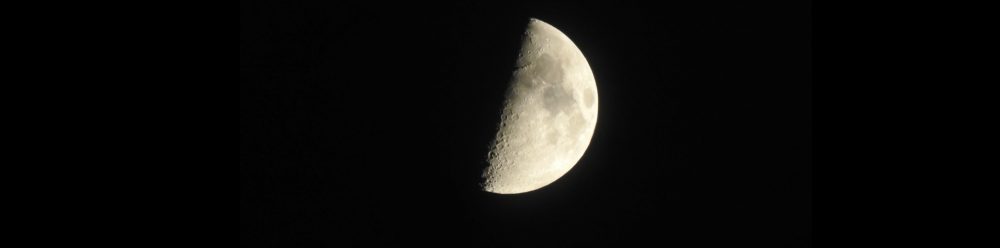
A New Collection of Moon Images

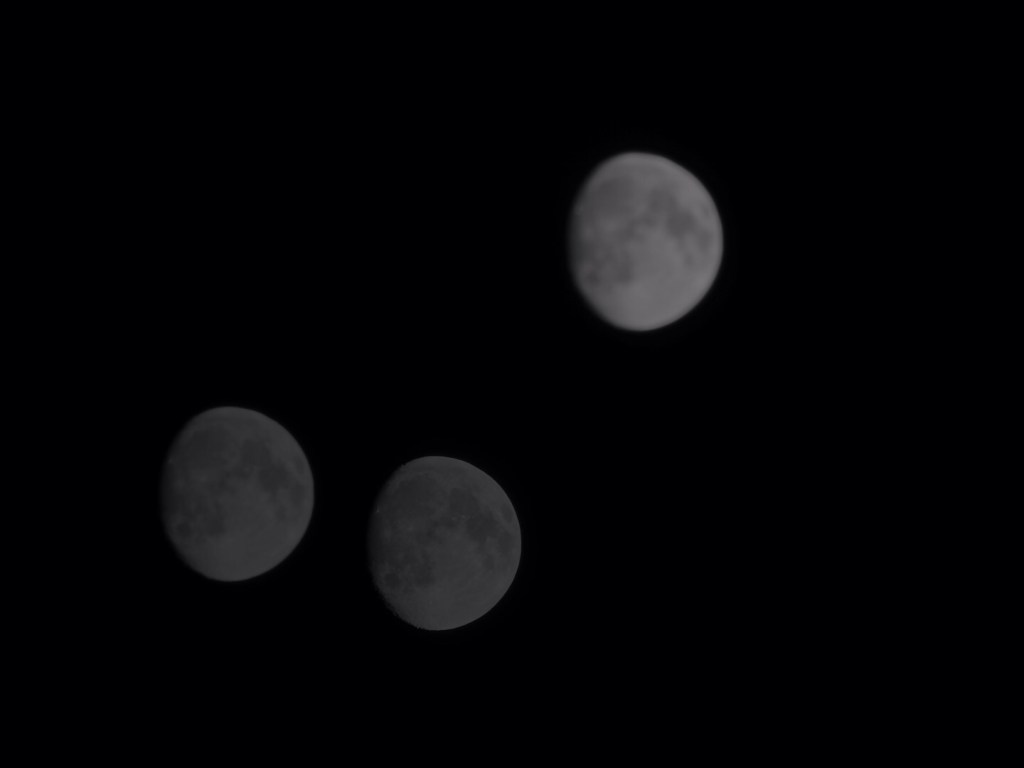
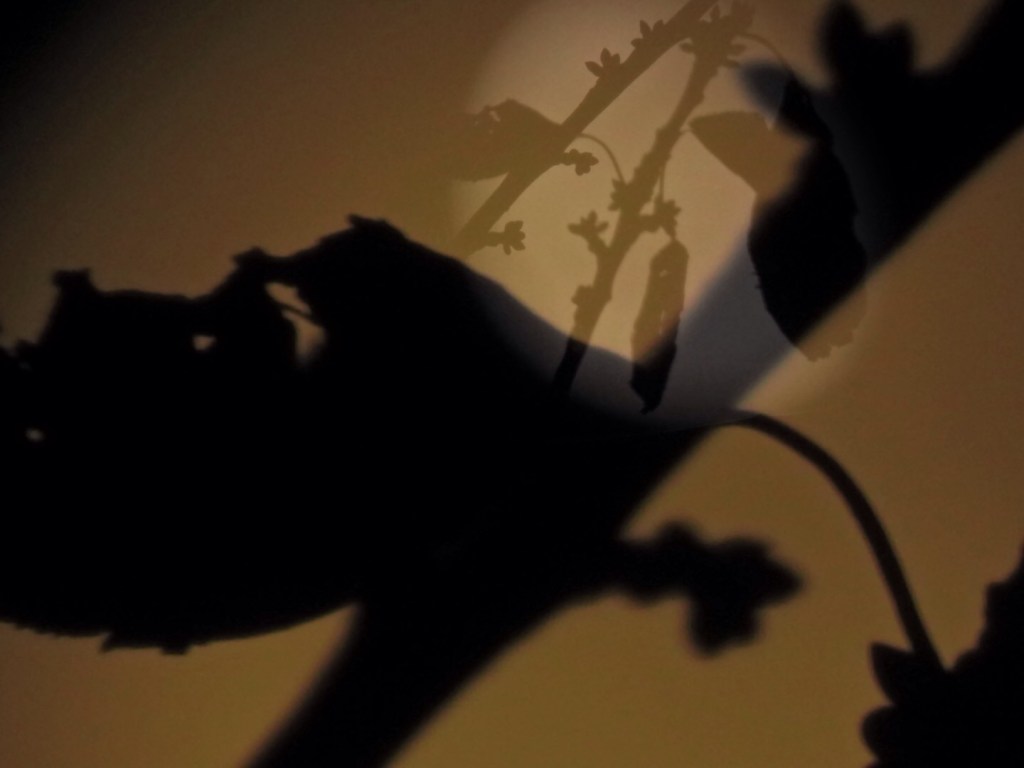
Over the past few months, I’ve been quietly chasing the moon. Through multiple exposure, I’ve been exploring time, movement, and intention. This new collection marks the beginning of a deeper understanding of how to interpret time through past and present within still images. The idea first emerged after my friend, artist Hannah Browne, gifted me a photo featuring a two-week moon exposure by artist Joe Millican.

By Joe Millican

I became curious about how the moon’s presence might behave when paired with something as delicate and earthly as the silhouette of a plant, or when stretched across the frame in a sequence of softened echoes. What could happen if the moon wasn’t captured as a solitary celestial object, but instead as an active participant within a wider composition? These photographs required patience, a negotiation between motion and stillness, and a willingness to embrace the unexpected, also, they opened a wider field of play.

Multiple exposure gives the moon permission to move. It gives shadows permission to speak. It gives the image permission to become something other than what was predicted.This new collection feels like the beginning of a conversation I want to continue. The techniques are still new to me, but they are expanding my understanding of how photography, much like the letters it will eventually accompany, can hold ambiguity, transformation, and layered narratives.

You can now visit my new website: https://dear-moon.art which holds the previous messages and will hopefully grow with new letters, images, and an e-book.

Get involved from anywhere by sending an email to the moon via Dearmoon2025@hotmail.com

Posted in 2025-2026, Reflection, Tutorials 2025-26

1–1 Tutorial 17th Nov

I had a tutorial with Jonathan on Monday. As always, it was eye-opening and thoughtful, almost like thinking out loud with someone who asks the questions you don’t necessarily want to confront yourself. We discussed my last two blog posts and reflected on how I feel about my ceramics (as the sugar bowl) which could stand alone in a show, compared with the collective work at the library (as the table-cloth)

Jonathan described the library project as a pure form of social sculpture and I agree with him. I see social sculpture built from “bricks” with each brick made by a volunteer. My ceramics are an interpretation of the world around me, a sculpture that begins with a thought engaged with the world and is then transformed into material. The library work, however, only comes into existence after contributors engage directly with the materials first. That distinction became clearer when I repeated Jonathan’s question to myself..

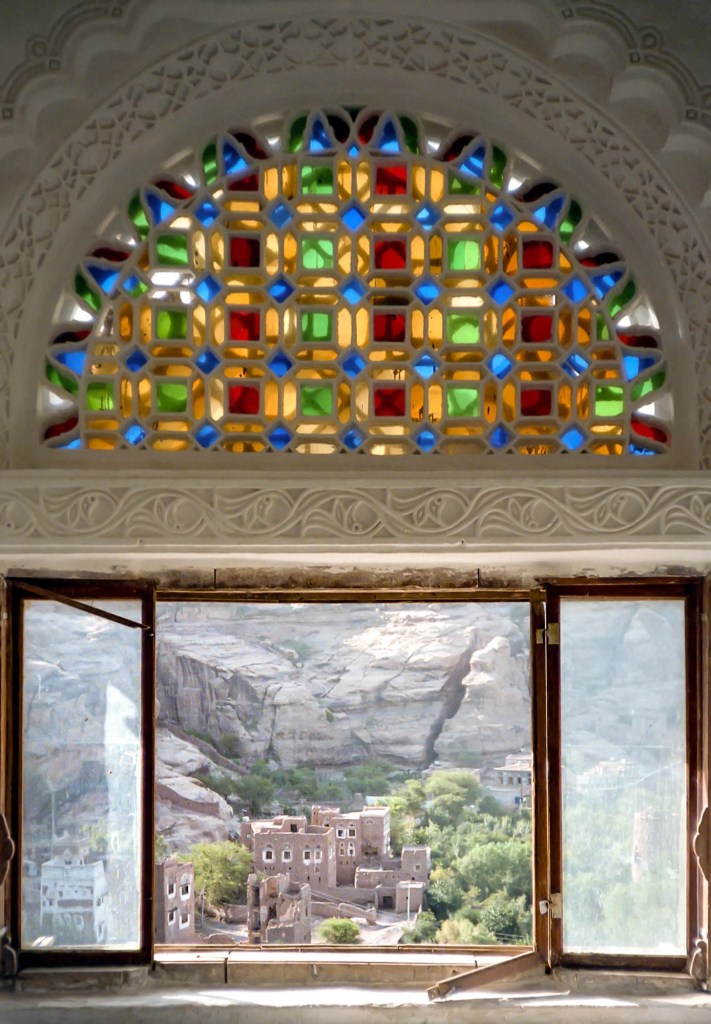
I also shared something that might have sounded a bit silly: an idea to create new work inspired by Yemeni qamariyya (قمرية) the moon windows. Then I discovered a Yemeni artist, Afraa, who is already making them in Egypt. Her beautiful pieces made from plaster and glass. And, I’m genuinely happy that a Yemeni artist is doing this work, but it now feels as though I would simply be repeating what she has already developed.

https://albukhari.com/3835/

I still love the idea because it is part of my culture and such a distinctive feature of Yemeni architecture. But at the moment, I don’t feel I have a new angle that differs from Afraa’s. Unfortunately, I have gaps in my identity; much of what I know comes from stories I’ve heard or fragments of childhood memory. This places us in different positions. Afraa’s work feels rooted in presence, while mine often reflects absence something missing, yet shaping the space around it.

https://www.instagram.com/afraa_ahmed?igsh=bG1sY3o3ZnJobzJo

Posted in 2025-2026, Reflection, Research, Writing

Animals Metaphors in Art

When revisiting my research statement from last year, I found myself returning to the ideas of care and failure within social sculpture. These themes continue to shape my practice and felt essential to include in my research paper. However, my section on animals in art grew too large for the word count and began to pull the paper away from its main focus. I removed it, but after simplifying and editing it, the section stands on its own and is worth sharing here.

My interest in non-human metaphors comes from noticing how artists and writers use animals to express political tension, historical memory and emotional states that might otherwise be silenced. These strategies reveal relationships between power, vulnerability and resistance, and they raise questions about ethics and communication that deeply influence my practice.

Animals and Non-human Metaphors in the Work of Joseph Beuys and Tania Bruguera

Animals sit at the centre of Joseph Beuys’s practice, shaping his ideas on power, vulnerability and transformation. The coyote in I Like America and America Likes Me symbolised Indigenous people and the pre-colonial landscape. For Beuys, it embodied an idealised belief in the intelligence and vitality of the natural world. The coyote represented resistance to American imperialism during the Vietnam War and carried his hopes for future healing between cultures and species.

In How to Explain Pictures to a Dead Hare, Beuys moved slowly through the gallery with his face covered in honey and gold leaf, whispering explanations to the dead animal in his arms. The hare, associated with intuition, knowledge and resurrection, became a metaphor for what cannot be reached by rational language. Marina Abramović’s re-performance in 2005 affirmed the lasting resonance of this symbolic encounter between human and non-human life.

Where Beuys often turned to animals as partners in myth, intuition and healing, Tania Bruguera approaches them in relation to power, authority and political memory. Her interventions expose the structures that shape public life and the institutional spaces that maintain them.

In Tatlin’s Whisper 5, Bruguera used two mounted police officers and their horses to carry out crowd-control tactics inside Tate Modern. The horses were trained for authority and control and entered the space with an unmistakable sense of force. Their presence transformed the gallery from a site of passive viewing into a charged environment where visitors were physically steered, separated and confronted. The work made visible the techniques of state power, such as dispersal, redirection and intimidation, which usually operate outside cultural institutions.

This action gained further weight when placed in the context of the building itself. Tate Modern stands on a history shaped by colonial wealth. Henry Tate’s fortune, although not derived from enslaved ownership, came from the sugar industry, which relied on enslaved labour in the Caribbean. The arrival of horses trained for policing, inside a space funded by a colonial economy, formed a powerful collision of past and present. Visitors were not only witnessing a performance but experiencing an enactment of authority within a space built from historical exploitation. The work stripped away any illusion of institutional neutrality and revealed how cultural venues remain entwined with systems of control.

Bruguera’s The Burden of Guilt, created between 1997 and 1999, offers another approach to the animal body. Drawing on a Cuban story of Indigenous resistance, she performed with a lamb carcass around her neck and ate soil mixed with saltwater. The lamb suggested innocence and sacrifice, becoming a sign of communal grief and historical responsibility. Eating earth became a way to carry memory physically, as if the body itself were absorbing history and mourning.

Bruguera and Beuys both use animals to raise moral, political and spiritual questions, yet their motivations diverge. Beuys turns towards healing, intuition and mythic reconciliation. Bruguera challenges institutional power, colonial violence and endurance under authority. In both cases, animals operate as active agents of meaning rather than decorative symbols. Their presence forces audiences to confront issues that are emotional, ethical and political.

Although the symbolism in both artists’ use of animals is powerful, I remain uneasy about the incorporation of real animals and human parts in art. Ethical questions arise about the process, the treatment of bodies and the implications of using them. I also wonder whether there are clear rules or guidelines, and how far artists are permitted to go.

Animal Metaphors in Literature

My favourite use of animals since childhood has always been in literature, storytelling and cartoons (Oh God, who does not like Shaun the Sheep!).. It feels playful, imaginative and often a very indirect way to speak the truth, especially when living under a dictatorship or in a place where free speech is a crime. Writers across cultures have used non-human characters to challenge authority and reflect on the human condition. Here are three examples from different cultures that I read and appreciate for their political and social insights.

In George Orwell’s Animal Farm, the animals rise up in search of equality, only for their revolution to collapse into tyranny. The pigs become the new political leaders, while the other animals represent broader society. I cannot help thinking about the Arab Spring when I read it. As someone who witnessed those moments of hope, I later realised how much of it was false, planned in advance and driven by forces far beyond ordinary people. Many were drawn into it with naivety, without knowledge, and without considering the consequences.

Kafka’s The Metamorphosis uses Gregor Samsa’s transformation into an insect to explore alienation and the erosion of identity. His inability to communicate and his slow disappearance from the concerns of his family reflect the conditions that made him feel powerless long before he changed form. It reminds me a great deal of social life in Europe. There is a sense of absence that hides beneath the appearance of belonging, and a feeling that you are present, yet not fully seen.

Kalila wa Dimna  (کلیله و دمنه), is a collection of fables in which animals take on human roles and dilemmas. The book contains fifteen chapters filled with stories that feature animal characters as heroes, advisers and rulers. One of the central figures is the lion, who appears as a king, attended by his loyal ox and two jackals of the title, Kalila and Dimna, serve both as narrators and as key characters within the tales. The work most likely originated from an ancient Indian text, translated to Arabic and later travelled across cultures and languages.

The stories appear simple but contain hidden meanings that allowed authors to criticise rulers while avoiding punishment. The animal characters become subtle tools for examining authority and ethical responsibility. For me, this is one of the best examples of how wisdom was taught during the Islamic Golden Age. It shows that people have always found ways to teach, influence and communicate important ideas while reducing the risks that come with speaking openly.

Finally, in Orwell, animals reveal the collapse of idealism. In Kafka, they expose psychological and social erasure. In Kalila wa Dimna, they protect dissenting views. In Bruguera and Beuys, they carry political, spiritual and historical weight. Non-human imagery creates space for reflection on power, vulnerability and the possibility of transformation. It encourages viewers to reconsider the boundaries between human and animal, self and other, institution and individual.

Books :

Kafka, F.Metamorphosis. Franz Kafka

Munshi, N. Kalila and Dimna. Translated by W. Thackston.

Orwell, G. Animal farm.

Posted in 2025-2026, Ceramic, Exhibitions, Moon, Reflection, Social Sculpture, Uncategorized, Writing

Reflections on Ornament–Intent: Home as Political Medium

Last Friday, I exhibited as part of Ornament–Intent, curated by Emma Rushton at her house in Manchester. The exhibition offered a chance to re-situate my practice within the intimacy of a domestic environment. The curatorial premise, that decoration and political intent flow through the home, aligned closely with my interest in how social and political meaning is transmitted through ordinary gestures, materials and language.

Rushton’s house, transformed into a living exhibition space, blurred the boundaries between art and life. The space carried traces of daily existence, forming a backdrop that resisted the neutrality of the white cube. Within this context, my ceramic works and participatory writing installation became part of an evolving conversation about the home as both refuge and political site.

On a handmade ceramic plate inscribed Sykes–Picot 1916, I presented a red velvet cake. The act of division mirrored the historical partition of the Middle East under the Sykes–Picot Agreement. I used the domestic ritual of cake-cutting, usually symbolic of celebration, generosity and communion, to expose its opposite: consumption, greed and geopolitical appetite.

This gesture was performative in the sense Joseph Beuys might describe as Soziale Plastik (social sculpture), where symbolic action and participation become material. The knife, crumbs and creamy surface formed an ephemeral installation that questioned how colonial histories persist within gestures of hospitality and everyday pleasure.

A second ceramic work consisted of 11 handmade spoons arranged in a circular formation across a white table. Each spoon was inscribed with the name of a country and a range of dates, including Gaza, Bosnia, Yemen, Cambodia, Congo, India, Ireland .. etc marking periods of famine, war and conflict. Together, they formed a kind of geopolitical clock, a cycle of recurring histories and unresolved wounds.

Unlike traditional cartography, this piece used domestic utensils, tools of nourishment and care, to map famines/conflicts. The spoons stood in for mouths, stories and silenced voices, suggesting that global politics is not abstract but deeply entangled with the rhythms of everyday life.

In the setting of Ornament–Intent, this work transformed the dining table into a site of memory. It invited viewers to confront histories of violence not through spectacle but through quiet familiarity. The domestic language of tableware became an entry point into questions of accountability and empathy. The work reflects my ongoing interest in social sculpture as an aesthetic of recontextualisation, where meaning is generated through the repositioning of ordinary materials within spaces of shared attention and care.

Another ceramic piece juxtaposed a sugar bowl labelled Third World with a spoon marked First World. Sugar, a substance historically tied to trade, slavery and colonial wealth, became a material metaphor for extraction and imbalance.

Placed in a domestic setting, the object drew attention to how structural inequalities are embedded in ordinary life. A simple act such as stirring sugar into tea carries invisible histories of power. In this sense, the work functioned as a micro-political sculpture, where meaning emerges not through spectacle but through subtle provocation within the familiar.

A handwritten note, in Arabic and English, listed key dates in Sudan’s history of famine and conflict: 1984, 1993, 2017, 2024, followed by the line (And Sudan’s issues remain words on paper…) with a ceramic spoon read (Money eats first)

Here, I explored the limits of communication and documentation, and how political struggle often becomes archived as text, detached from lived experience. The translation between languages paralleled the translation between activism and representation, between the urgency of lived crisis and the inertia of global indifference. The work questioned the gap between empathy and action, a recurring concern in my social sculpture practice. What is the role of the artist when language itself becomes complicit in the act of forgetting?

In another part of the house, I presented Dear Moon, a participatory installation inviting visitors to write letters to the moon. A small writing table, paper, envelopes and a black letterbox created a space for reflection and dialogue.

This piece extended my ongoing investigation into correspondence and indirect communication, letters that may never reach their destination yet carry emotional truth. The moon, as an unreachable listener, became a symbol of distance, empathy and collective longing.

Here, the act of writing functioned as a social sculpture, a participatory moment that transformed private thought into shared experience. It also reasserted my belief that art can hold silence as much as speech, offering space for what cannot be articulated in political discourse.

Ornament–Intent revealed how the domestic realm, often coded as private or decorative, is inherently political. Within Emma Rushton’s home, art entered the space of the everyday, resisting the hierarchies that separate aesthetic experience from lived reality.

My contribution sought to hold this tension between care and critique, ornament and intent, intimacy and history. Each ceramic object or written phrase acted as a small social gesture, reanimating the conversation between form, politics and communication.

Posted in 2025-2026, Lectures 2025-2026, Reflection, Research, Writing

1–1 Tutorial 6th October 2025

On Monday, I joined the open 1–1 tutorial with Jonathan. I really needed that conversation, my thoughts were fighting inside my head, and sometimes talking is the best way to organise them.

We discussed many different things. Jonathan has a great way of asking the kind of questions I should be asking myself. I feel that if I had one good question every day, I’d probably write on my blog much more often.

We talked about The Right Map exhibition series and my experiences, how much I learned from working with different people, and how I feel about working with different groups: one more formal and structured, and the other relaxed and informal. Although I’m an organised person who likes to plan ahead, I found that I have the ability to be adaptable and ready to work in fast-paced situations, finding solutions in the moment. It was a challenge, but it also increased my confidence.

I know people have different styles of thinking and working, and as long as we trust each other’s intentions and skills, things go smoothly. We can fill each other’s gaps, and I was definitely learning so much from our team.

For me, the goal of The Right Map was to create a free and welcoming space where everyone could learn and grow together. That’s what makes a social sculpture, and that’s the goal of making this kind of art.

We also talked about the CBS show Sculpture (see my previous post), which reminded me that I should share the short text I wrote for it, along with the 50-word bio I submitted, and the one I received written by artist Cos Ahmet, which my sculpture responded to.

Here are the two secret bios:

Cos Ahmet:

Tropes corporeal fragmented, human, other. Limbs without a host, the skin of things physical, digital. Choreographic. The material’s immaterial states between liminal space on the threshold of self, other. Dust.

Me:

A child took up her pen, signing walls with her name. We’ll play socially… I’ll sculpt the riddle. Language won’t matter; wisdom gathered on page 104–105. Forgive the broken clock!

Another part of our discussion was about Social Publishing, a lecture by Allegra Baggio Corradi that I listened to after the printing meeting with Alex Schady. Jonathan had attended that session too, so it was wonderful to exchange thoughts and notes with someone who was there. We both agreed how inspiring it was. I realised how much it connected with my ongoing project Writing Letters to the Moon.

Learning about Social Publishing, even just understanding its definition, helped me see what I’ve been doing from a new perspective. I’ve always thought of my book as a sculpture, its process far removed from traditional publishing. I don’t see myself as an author but as an artist, still figuring out what that means!!

These days it’s hard not to wonder are artists becoming celebrities, activists, or something in between? Genuine voices, attention-seekers or good actors? There’s definitely more to write about this.. I feel like I’ve gathered so much new information, yet the more I learn, the more I realise how far I am from finding the right answers.. And the higher I try to rise, the lighter I have to become, learning to let go of things and sometimes people along the way..