Posted in 2025-2026, Reflection, Research, Tutorials 2025-26, Uncategorized

1-1 Tutorial 11th February

I took some time to reflect on this tutorial because I was so busy. I also needed to read more carefully, as these kinds of tutorials do not end when they finish; they tend to open further questions and lead me into deeper reading.

In this tutorial I had with Jonathan, we spoke about learning and what learning really means. We reflected on the assimilation and accommodation post, and on the idea that learning is not for display but for use. It should transform how you live. It needs to be functional, active, and embodied.

We also discussed translation and whether my practice is, in itself, a process of translation. I have been thinking that everything I do is a form of translation. There is a language I carry, a language of thoughts and ideas, constructed from the data my brain collects. This data is my lived experience: encounters with people, spaces, and time. Yet data alone is not enough, it must be translated into meaning, and meaning must then be translated into thought and action.

I can’t think about this without turning to Merleau-Ponty’s phenomenology. What interests me most is his insistence that perception is not a detached mental operation but something embodied, something that happens through our being in the world. Our understanding is not separate from our living, it’s shaped through the body’s continuous engagement with its environment.

Language itself offers a powerful example of this phenomenology. Language is collaborative, it’s formed through shared experiences within a community, shaped by surroundings and histories. Using Arabic as an example, because it’s my mother tongue, Arabic is built on a root and pattern system. Most Arabic words derive from a root of three consonants (rarely four). This structure allows the language to remain generative: new words can emerge as long as they remain faithful to the semantic core of the root.

Here are two examples one scientific and one poetic, the word حاسوب (computer) and حاسبة (calculator) both derive from the root ح س ب, meaning “to calculate”, similar to how “computer” and “calculator” trace back to Latin roots. Second one is حب (love), from the root ح ب ب, associated with seeds. Although I have not encountered this interpretation formally in literature, I’m drawn to the poetic possibility that “I love you” could be understood as “I carry/have a seed for you” a seed that has the potential to grow… For me, this aligns with the lived experience of love not as a finished/ready object, but as something cultivated and sustained. Here the language demonstrates embodied perception. Meaning does not emerge abstractly; it grows from how the body, historically and culturally, encounters the world.

Colour offers another compelling example. We identify colours based on how our brains interpret light wavelengths. Yet colour is not an intrinsic property of objects. A green card is not “green” in itself, it absorbs most wavelengths and reflects the one we perceive as green. What we call colour is the result of an interaction between light, object, and perceiver. From a phenomenological perspective, colour is relational. It exists in the encounter. Different animals perceive different spectra, therefore, the world of colour shifts depending on the perceiving body. In this sense, colour is not a fixed external fact but an event that occurs within perception.

This becomes even more complex when considering visual impairment… A relative has Stargardt disease, and many people assume that eye disease results in darkness or emptiness. But in his case the brain uses surrounding visual information (often background colour) to fill in gaps where central vision is weakened. This is not simply a defect, it’s evidence of the brain’s active participation in constructing perception. Perception is not produced by the eyes alone; it’s a whole body phenomenon. The body is not a passive receiver of data; it’s an intelligent, adaptive system constantly negotiating meaning. What my relative experiences demonstrates that perception is collaborative between eye, brain, memory, environment, and prior experience.

This also raises further questions for me: how does the brain decide which colour to use to fill a gap? Why that tone rather than another? These questions do not weaken the phenomenological argument; rather, they reveal how perception is both structured and creative. The body does not merely record reality, it actively composes it. There is undeniably a relational dynamic shaping human perception. At the same time, there is an astonishing intelligence within the body itself a continuous, largely unconscious orchestration. The heart beats, the lungs breathe, cells regenerate, all without instruction from conscious thought… In recognising this, I feel both philosophical and spiritual awe, and all I can say is: glory to the One who created this body.

Finally, I return to learning. Learning is about becoming informed and being able to decode what was previously inaccessible. Ideally, learning should help solve a problem, generate new questions, or bring you closer to an answer. Yet the information we receive is always filtered through perception, our minds process what they are capable of processing and what feels significant within our lived experience.

Posted in 2025-2026, collaboration, curation, Experiments, Motivations, Research, Social Sculpture, Visit

Free Workshops

Last Sunday, I spent a rewarding day with Ghost Art School and creatives from October Salon (a new collective in Preston led byHannah Browne). My aim was to organise a free workshops day, focused on sharing knowledge and skills without the need for materials or money. I offered an introductory session in British Sign Language (BSL), while Liverpool-based artists Tom Kelly and Tom Doubtfire generously shared aspects of their practices. Hannah provided the space in Preston, making the event possible through collaboration rather than institutional support.

The day had several clear intentions. Firstly, I wanted to gather with peers and begin the year in a meaningful, collaborative way, learning together and exchanging knowledge. Secondly, the event allowed us to engage with October Salon, an emerging creative group, and to demonstrate what can happen through collective artistic practice.

The programme began with Tom Doubtfire leading a discussion on the role of the artist and the relationship between art and activism. His reflections centred on disturbance, sustainability, sacrifice, and focus. The group discussed what it means for art to be disturbing, what sustainable practice might look like, how much we are willing to sacrifice and the importance of setting limits, also how to remain focused on our aims.

This was followed by my one-hour introduction to BSL. My motivation for teaching BSL stems from both personal conviction and historical awareness. The language was banned in the United Kingdom between 1880 and 1970, and despite its cultural and social importance, it still receives limited funding in education. BSL was officially recognised as a language in 2003 and granted legal status in 2022, yet it is still not included in the GCSE curriculum. In this context, teaching BSL freely can be understood as a quiet form of activism! Challenging ableism, questioning unequal access to culture, and sharing knowledge rather than gatekeeping it.

BSL is also highly visual and expressive, connecting strongly with creative disciplines. It can influence performance, filmmaking, choreography, and storytelling, functioning not only as a language but also as an artistic medium. More broadly, offering knowledge without payment can be seen as a response to the increasing commercialisation of the arts. It reminds us that generosity and collective growth still hold value.

The day concluded with a workshop led by Tom Kelly, which provided a joyful ending. His approach to clowning demonstrated that it’s not simply about being silly, but about exploring human emotions through humour and vulnerability. Through simple games and spontaneous interaction, the group communicated naturally, without preparation. There was a strong sense of care, kindness, and mutual respect among participants.

The structure of the day loosely echoed Joseph Beuys’ idea of the Free International University, an artist-led model of education independent from institutions and grounded in dialogue and shared learning. By offering knowledge freely and prioritising exchange over production, the gathering became less about outcomes and more about shaping a temporary community through participation.

For me, the impact of this day was more meaningful than any individual artwork I’ve made recently. It highlighted the importance of shared time, laughter, and informal learning within creative communities. It felt like an encouraging and significant beginning for the group, grounded in connection rather than productivity alone

Posted in Research, Reflection, 2025-2026, Reading

Assimilation and Accommodation

On Tuesday, during a strong presentation session, while listening to the last talk about dérive and virtual spaces as alternatives by Pritish, I found my mind returning to a learning theory I had studied many years ago. I could not immediately recall whether it was Vygotsky or Piaget, and this hesitation made me unsure about sharing the thought at the time. Afterwards, I searched…and yes! It was Piaget’s theory of assimilation and accommodation, the idea that learning happens either by fitting new information into existing schemas or by adjusting those schemas when new information does not fit.

Reflecting on this, I began to think about how virtual spaces function in a similar way. Even when people experience digital or alternative environments, their feelings and reactions are still shaped by accumulated past experiences and knowledge. Any first encounter within a virtual space is built upon pre-existing cognitive and emotional structures. So, virtual spaces act more as a mimic or extension of reality rather than a replacement. This process can apply not only to places, but also to human relationships, attachments, and the way knowledge itself is formed. For artists in particular, engaging with new media or environments becomes less about abandoning reality and more about negotiating between what is already known and what is newly encountered.

Artists can be understood through Piaget’s concepts of assimilation and accommodation, where creative practice becomes a continuous process of negotiating between existing internal frameworks and new experiences. In assimilation, artists adopt new media, theories, or environments while maintaining their established emotional language and conceptual concerns. The tools or platforms may change but the underlying schemas remain consistent.

On the other hand, accommodation occurs when new encounters challenge existing schemas and require deeper transformation. This is often where significant artistic shifts emerge, when identity or the understanding of presence itself is reconsidered. This change is not merely stylistic but structural and art education environments sometimes encourage this level of critical adjustment.

Virtual space also reveals how artistic perception is shaped by memory and embodiment. In digital environments, artists still rely on bodily memory, cultural conditioning and early play patterns, while also borrowing physical metaphors such as walking, entering, meeting, or distancing. Virtual space often mirrors or exaggerates reality rather than escaping it entirely, showing that cognition and imagination remain grounded in lived experience.
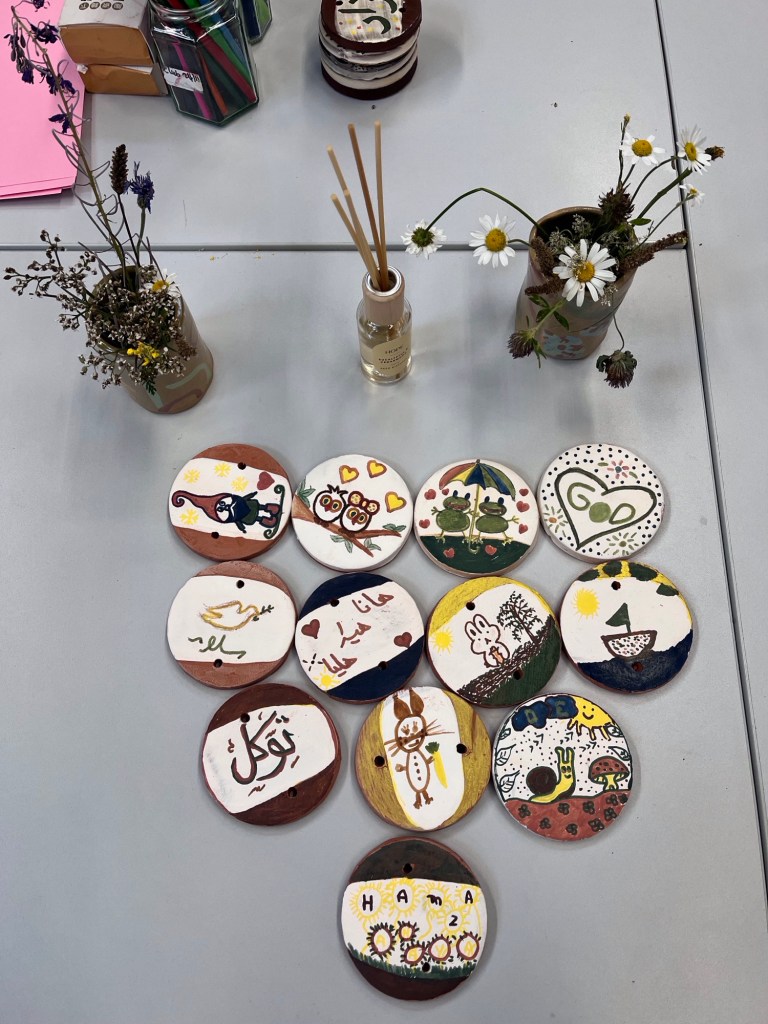
Play therefore persists as a fundamental mechanism within artistic practice. What begins as childhood experimentation evolves into adult creative inquiry, where testing rules, breaking structures, and negotiating imagination against reality become methods of continuous learning and re-formation.

Below is a short child observation, with an image and a video, which for me explains the theory mentioned above:

The child is my nephew, my brother’s son. In the first image he was two years old, in August 2024. We were at a farmhouse with cousins and aunties. I introduced him to drawing with charcoal that we found the day after a barbecue. We made a few marks on the ground together, and he didn’t stop playing with it, continuing to draw small circles and lines.

Last summer, in August 2025, in the second video, we returned to the same farmhouse with the same family gathering. The next day my nephew found small pieces of charcoal and began making circles again. When the charcoal finished, he picked up a small stone and continued drawing on the floor. This happened without my involvement or guidance, I was simply nearby watching him play outside. What amazed me, and what I could not resist recording, was the moment he began showing his cousins what to do and teaching them. They were all having fun, and I was quietly enjoying this very human moment at a child’s level.

2025

This observation functions as a small case study of assimilation and accommodation in everyday life. The first encounter with charcoal represents assimilation, where the child integrates a new material into existing playful behaviours such as drawing circles and lines. The second encounter, one year later, demonstrates accommodation, when the charcoal is no longer available, the child searches for an alternative and selects a stone, adjusting both the tool and the physical effort required while maintaining the same intention to draw. The act of later teaching other children reinforces this learning socially, showing how knowledge becomes shared rather than individual.

In an artistic context, this example illustrates how creative practice is not only about materials but about cognitive continuity. The surface, gesture, and intention remain consistent while the medium changes. This mirrors how artists adapt to new technologies or environments without abandoning their internal motivations. The child’s behaviour reveals that creativity operates through repetition, substitution, and social exchange, suggesting that artistic development, much like childhood learning, is a cycle of experimentation rather than a linear progression… which this also can relate to the cyclicality that mentioned in Eleanor’s presentation.

Posted in 2025-2026, Books, Reading, Reflection, Research, Translation, Writing

Translation #2

After reading Translation, I found myself asking what I would add if I were given the chance to contribute more pages to the book. Three came to mind: Omar Bahabri the translator, Arnaud Balard’s Deaf Flag, Adriano Celentano’s Prisencolinensinainciusol, and Wanderer by Rory Macbeth particularly after What Is a Minor Literature?//1986 by Deleuze and Guattari page.

The first story is a Yemeni tale set during the period of British occupation in southern Yemen. Omar Bahabri was a Yemeni tea merchant who spoke English through his work with foreign traders. At a time when the British struggled to communicate with the local population due to the lack of Arabic translators, Omar was called upon to help. The British asked him to translate pamphlets intended to win the trust and loyalty of the Yemeni people. Omar translated their demands into Arabic, and pamphlets were printed and distributed by aircraft across the country.

Some time later, a British general visited Aden to inspect the situation. He was familiar with Arabic, so he picked up a handful of the pamphlets and read them. He asked the officer in charge about their purpose and was told they were meant to encourage public support for British rule. The officer explained that the pamphlets called on people to join the Allies and support them. The general replied that the pamphlets read “Buy the finest tea from Omar Bahabri” . And here only reference I found in English: https://www.jstor.org/stable/48752006

Whether the story is true or not is hardly important here. What matters is how brilliantly it portrays the fate of outsiders who believe they can exploit local language and people for their own ends, only to find those intentions quietly undermined in favour of distinctly Yemeni interests. It also led me to reflect on the fact that the British occupied Aden for 128 years, from 1839 to 1967, yet hardly any of them learned Arabic. From this, it becomes easier to understand why the French aggressively imposed their language in colonised territories, and how English was forced upon Indigenous populations in North America, Australia, and New Zealand. This reinforces my belief that language is essential to the survival of culture and heritage.

Thinking about this story alongside Translation, I realised that what draws me in is not accuracy, but refusal. Translation here is not a neutral act. It becomes a space of misalignment, humour, survival, and agency. Language appears to serve power, while quietly redirecting it elsewhere.

So yes, I already know what my next ceramic piece will be.. A tea set! A familiar site of hospitality, negotiation, and politeness. Cups that sit between people, holding conversation, holding silence or things that are never quite said…

Posted in 2025-2026, Assignments, Reading, Research, Social Sculpture, Writing

MA Fine Art Digital Student Research Paper

Some advice from someone who went through this during one of the strangest periods of my life: first, believe me you will be fine! Secondly, anyone who has reached this point is capable and already moving in the right direction.

Choose what genuinely interests you. Read from different sources and use their reading lists, references, and resources to trace where ideas began. Have conversations with yourself about your work, explain what you are doing as if you were lecturing a BA student or leading a workshop; ask yourself what you would share and why!

You don’t need to read every book from the first page to the last.. Use the index to search for your key words, this is especially helpful when time is tight.

After I submitted my final assignments, I shared my research draft with my artist friends and just received praise. Later, I shared it with a friend who is a midwife and a PhD researcher in gynaecology. She gave me the most valuable feedback and asked thoughtful, constructive questions. This made me feel genuinely confident about the work; if someone outside your field can engage with your writing , that is a very good sign. My advice, therefore, is to share your second draft with the right non-artist friend from a different profession. It can open your eyes to perspectives that no artist including yourself could see.

Some “Don’t” Advice I Wish I Had Given Myself!

  • Don’t leave “small” tasks until the last minute.

They are the easiest to forget and can cause unnecessary stress close to submission, title’s page, formatting, construction, references, PDF …etc

  • Don’t rely on memory alone when submitting work.

Overwhelm and fatigue can make important details easy to miss, use a checklist instead, revisit the research guid’s page on your course blog!!

  • Don’t rename files by changing word order.

Playing with wording in file names can quickly become confusing; numbering drafts is far clearer.

  • Don’t hesitate to explain personal circumstances.

Even if it feels close to the deadline, communicating difficulties puts you on safer ground.

  • Don’t limit your reading to your own cohort’s blogs.

You miss valuable learning by not looking at work from earlier years.

Final Paper:

Third Final Draft:

Second Draft :

First Draft:

Posted in 2025-2026, collaboration, curation, Project, Research, Social Sculpture

Wedding At The Library

12/12/2025

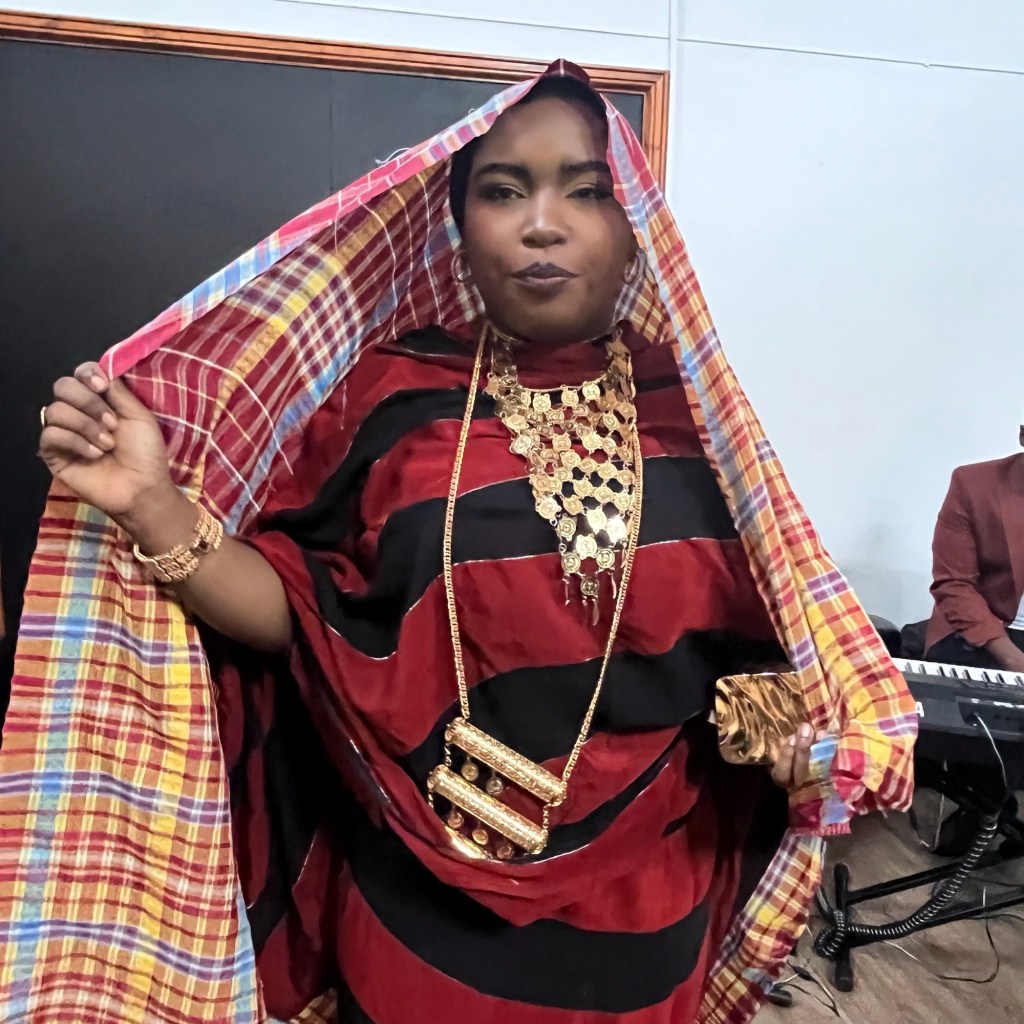
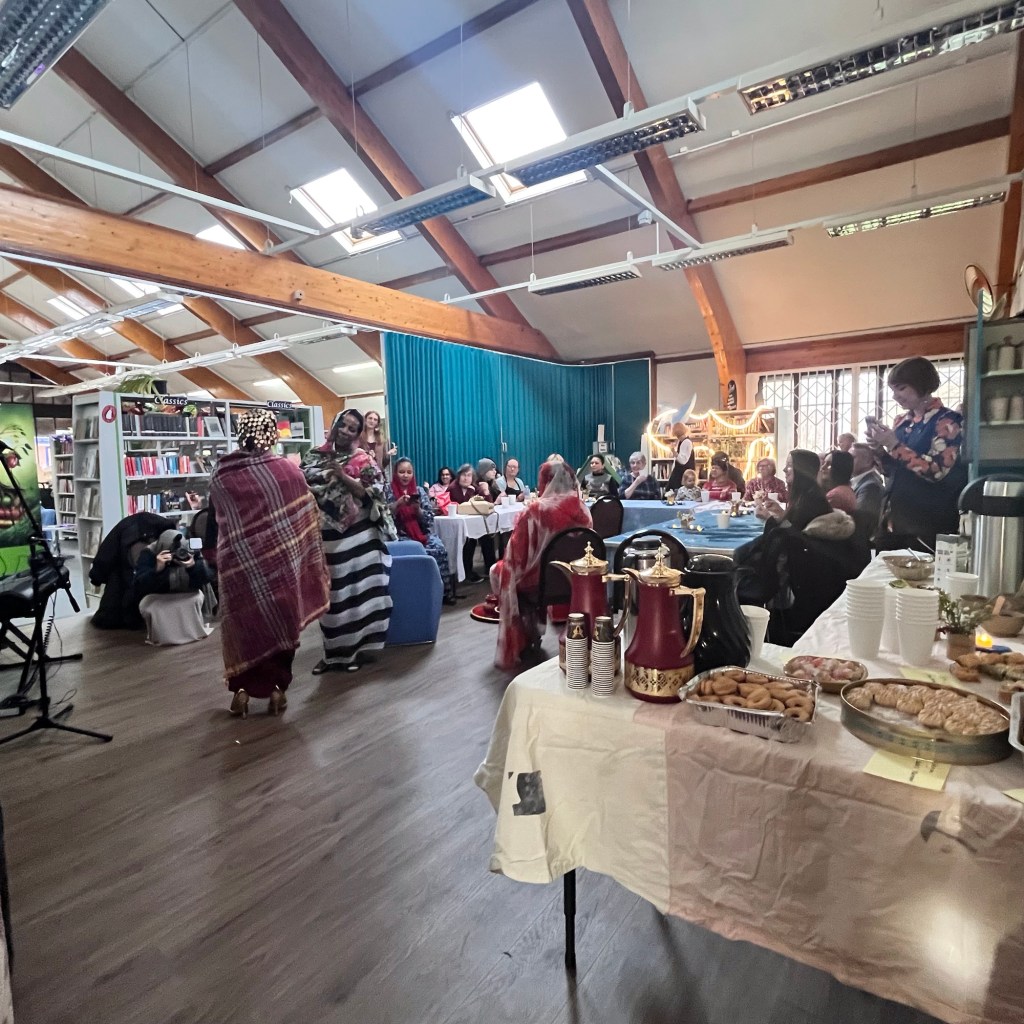
This month I co produced a Sudanese wedding ceremony at the library. The work used a familiar civic space to hold a cultural practice that is usually private, celebratory and communal, placing it in dialogue with public life. While the process was challenging, it opened the library as a site of encounter rather than quiet consumption, attracting visitors who came not only to observe but to learn and witness together.

The project emerged from my fortnightly creative sessions at the library, which I facilitate with a group of participants to support newly arrived women and children to connect, settle in Bootle, make friendships and practise English through informal and collective activity. These sessions operate as a slow infrastructure of care rather than a fixed outcome. The wedding ceremony was not pre planned by me, but proposed by the Sudanese women themselves, who expressed a strong desire to share their wedding traditions.

My favourite clip shows a library visitor dancing at the back with a child

At a time when Sudan is experiencing profound political and humanitarian crisis, my role was not to represent suffering but to create conditions for self representation. Social sculpture, in this context, becomes an ethical practice of listening, redistribution of authorship and trust. Two women developed the idea of the ceremony, another joined to perform the pride ritual wearing traditional jewellery and clothing, while a Sudanese musician volunteered to provide live music. A young filmmaker offered to document the event, and participants brought desserts to share with guests. Each contribution shifted the work further away from individual authorship and towards collective agency.

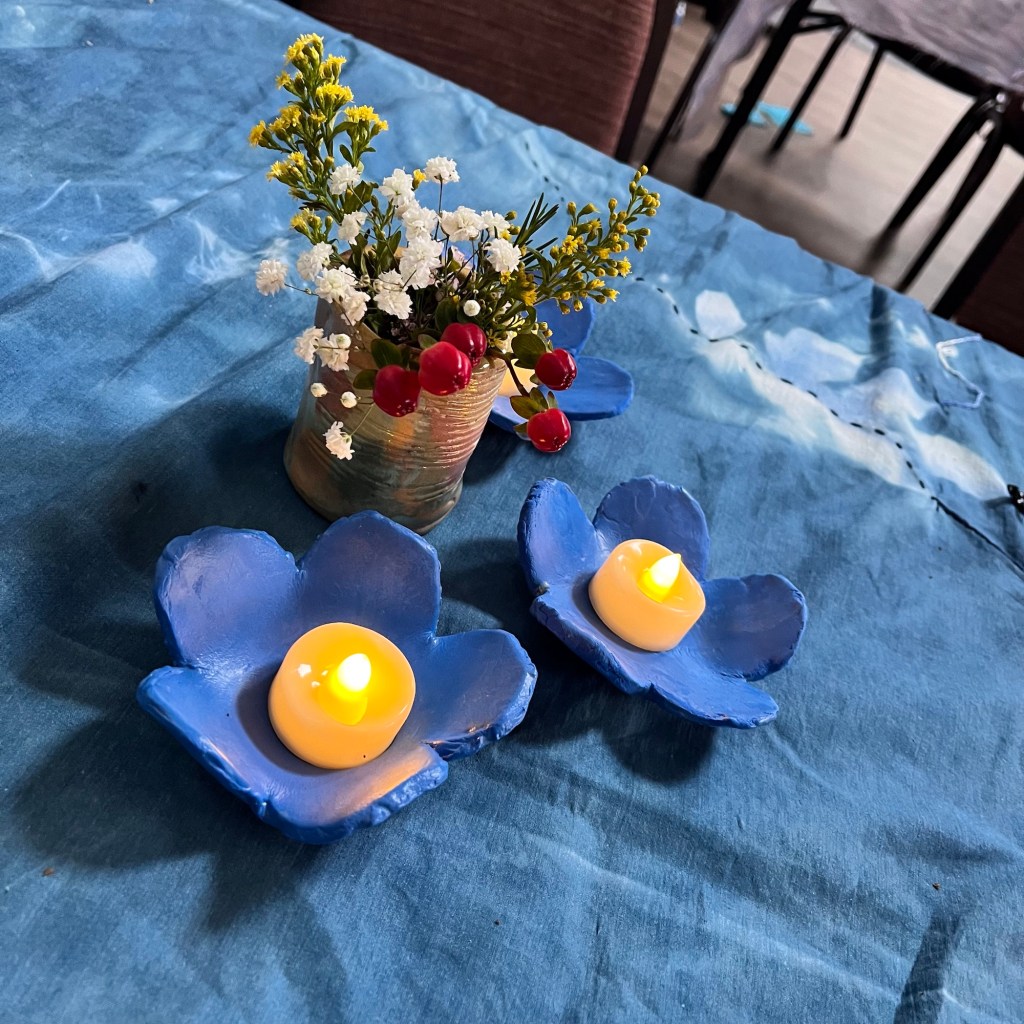
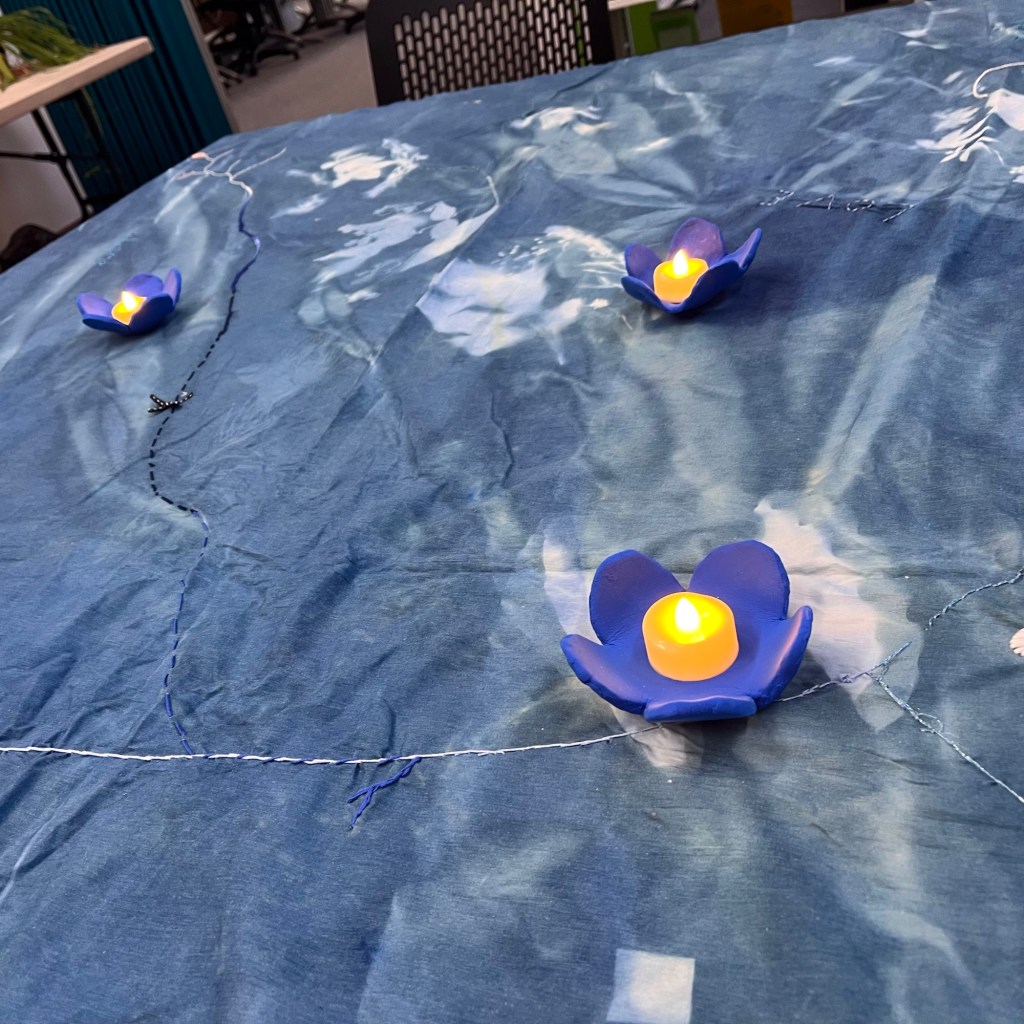
The material and practical elements of the event were equally collaborative. My colleagues from the Kitchen Library, Niamh and Greg, cooked a Sudanese ful recipe alongside one of our Sudanese participant and other regular volunteers. In an earlier session, we made tealight candle holders specifically for the ceremony. A young native English speaker asked to help, so I invited her to lead a simple workshop using air dry clay. This gesture disrupted assumed roles of helper and helped, positioning participation as reciprocal rather than charitable.

The work required shared energy and care, particularly during a period when I was navigating significant personal challenges. It would not have been possible without collective support, especially from artist Joe Goff, who co produced the programme with me. Social sculpture here is not symbolic but logistical, emotional and temporal, shaped by availability, exhaustion and trust. It asks not what is produced, but how people are held, and what it means to be human here and elsewhere.

The audience reflected a wide range of cultural backgrounds, with many people wearing traditional dress. What continues to surprise me is that white, native visitors often attend these gatherings in greater numbers than people from the global majority. Their presence is marked by curiosity and attentiveness, contradicting dominant narratives that frame cultural difference as a threat. The work quietly resists fear by offering proximity, time and shared experience rather than explanation.

This approach connects to last year Iranian celebration I produced at the library during a period of heightened political tension. Food prepared by an Iranian participant and an Iranian chef, including vegan rice and saffron pudding, was shared alongside music. Ceramic coasters I had made and later decorated by women and children were placed on the tables, functioning as both objects and traces of process. 

The music and dancing marked the most memorable moment at the end of the event. The shared rhythms of Iranian, Kurdish and Afghan cultures brought people together to dance, filling the space as others looked on with quiet admiration.

Visitors, including people from the Afghan Refugee Centre and staff from Sefton Council, expressed gratitude for the experience, not as an act of hospitality delivered to them, but as a moment of living!Within my MA research, these projects operate as social sculptures that prioritise relational labour, slowness and care. They resist spectacle and instead test how public institutions can temporarily become spaces where people are not spoken about, but speak, host and shape meaning themselves.

Posted in 2025-2026, collaboration, Motivations, Reflection, Research, Uncategorized, Writing

Feedback!

What can I say… this experience has reminded me why I love working collectively and why it is so important not to rely on a single resource or only on self-knowledge.

Giving feedback as a group is such a powerful idea and such a beautiful way to enrich one another’s reflection on our practice. I genuinely loved sharing my thoughts with each of my peers and reading theirs in return. The work is amazing, it expresses human experience in such diverse ways, full of richness, honesty and genuine emotion. I felt truly honoured to be among them and lucky to witness their progress over time.

It was emotional to reflect on how we are growing together, holding each other’s hands virtually on this journey with such care and generosity. It reminded me of Jonathan’s first session in October 2024, when he spoke about kindness and compassion and how these could become the strength of our collective and our cohort. Throughout the course, he has guided us with constant care and kindness, so it is no surprise that he created this opportunity: for each of us to write short feedback for one another on a shared Miro board dedicated to every artist.

My peers’ feedback has genuinely boosted my confidence and trust in my practice. Of course, there are always things missing, intentionally or not, due to circumstances and the challenges of process. But receiving feedback that recognises your efforts is deeply energising, especially as a socially engaged artist, where the social aspect is the heart of the work.

I will definitely return to this Miro board whenever I need to. It has become a beautiful space, full of thoughts floating in this quiet corner of cyberspace.

Posted in 2025-2026, Reading, Reflection, Research, Writing

Beuys and Sylvester

When I was reading for my research paper, I kept thinking about the unusual and slightly funny relationship between the German artist Joseph Beuys and the British critic David Sylvester! They were both major figures in modern art, but they never managed to build a close or comfortable connection.

Sylvester saw how important Beuys was. He never denied Beuys’s impact or how strongly he shaped his time, just as Duchamp had done for modern art. Even so, their relationship never became warm or collaborative. Sylvester had deep, ongoing conversations with many artists, but with Beuys he stayed distant, almost cautious.

This shows clearly in his writing. Sylvester never wrote a whole book about Beuys, nor explored him in the focused way he did with others. Beuys appears only here and there, usually as one example inside bigger discussions about conceptual art and post Duchamp ideas. Important, yes, but never at the centre.

The moment that captures their dynamic best is a small story Sylvester shared in About Modern Art, 2002 p.514-15. Beuys came to visit him at his flat in South London, bringing his wife, children and another friend. Before they entered, Sylvester asked him to remove his shoes, which he always asked visitors to do to protect his antique Persian carpets. Beuys refused!! His hat and clothes were part of his artistic identity and he would not take them off.. Sylvester refused too!! So they stood outside on the pavement, stuck between two different kinds of pride.

The more I think about it, the more I wonder what felt most important at that moment. For Sylvester, was it the artwork he lived with the antique rugs he treasured and protected or the chance to welcome an artist who was reshaping the art world? And for Beuys, a well established artist known for his big ideas, what mattered more being treated as a significant cultural figure, someone above everyday rules, or simply being a human guest respecting the home he was entering?!

In that moment, neither chose flexibility… And because of that, the visit never really began!

I find this story surprisingly touching…These were people who changed the direction of art, yet a simple request about shoes created a pause they could not overcome. Their relationship was always a mix of respect, misunderstanding, admiration and a bit of irritation.

They never became close, but their awkward meetings reveal something real about personality, ego and the small rituals of daily life. Maybe that is why I keep returning to this story. It shows how the biggest ideas in art can be interrupted by tiny habits and decisions. And sometimes, the most memorable parts of art history are not the grand gestures, but the little ones, like the moment when two strong characters collide at a doorway🙃

Posted in 2025-2026, Experiments, Moon, Research

A New Collection of Moon Images

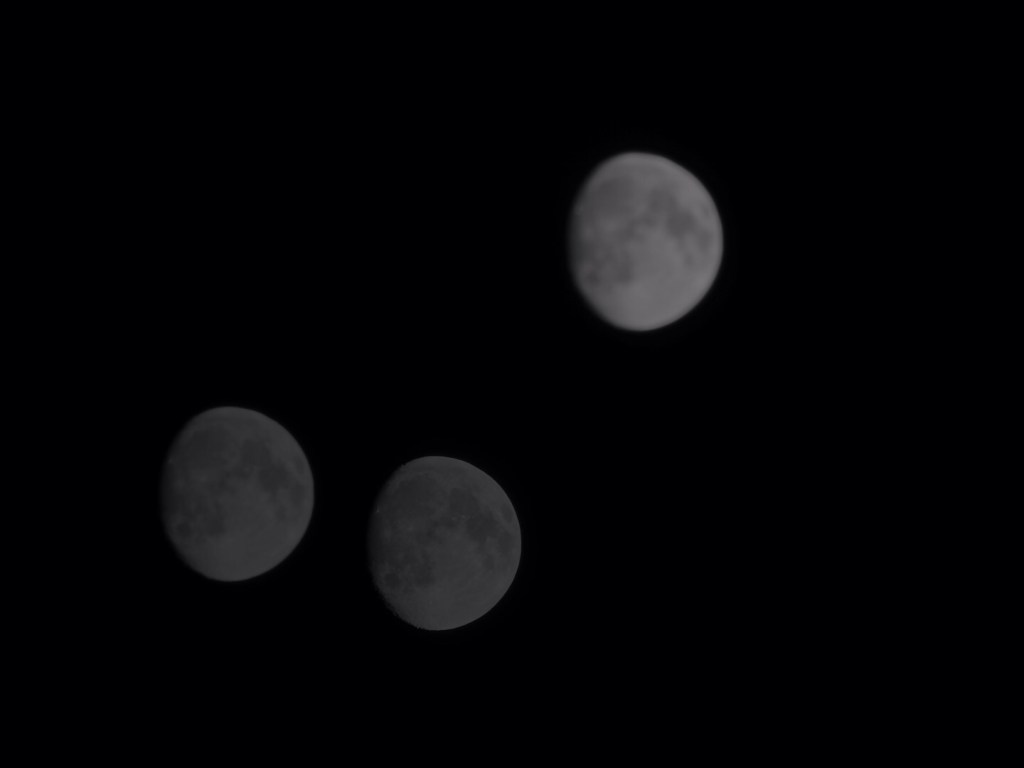
Over the past few months, I’ve been quietly chasing the moon. Through multiple exposure, I’ve been exploring time, movement, and intention. This new collection marks the beginning of a deeper understanding of how to interpret time through past and present within still images. The idea first emerged after my friend, artist Hannah Browne, gifted me a photo featuring a two-week moon exposure by artist Joe Millican.

By Joe Millican

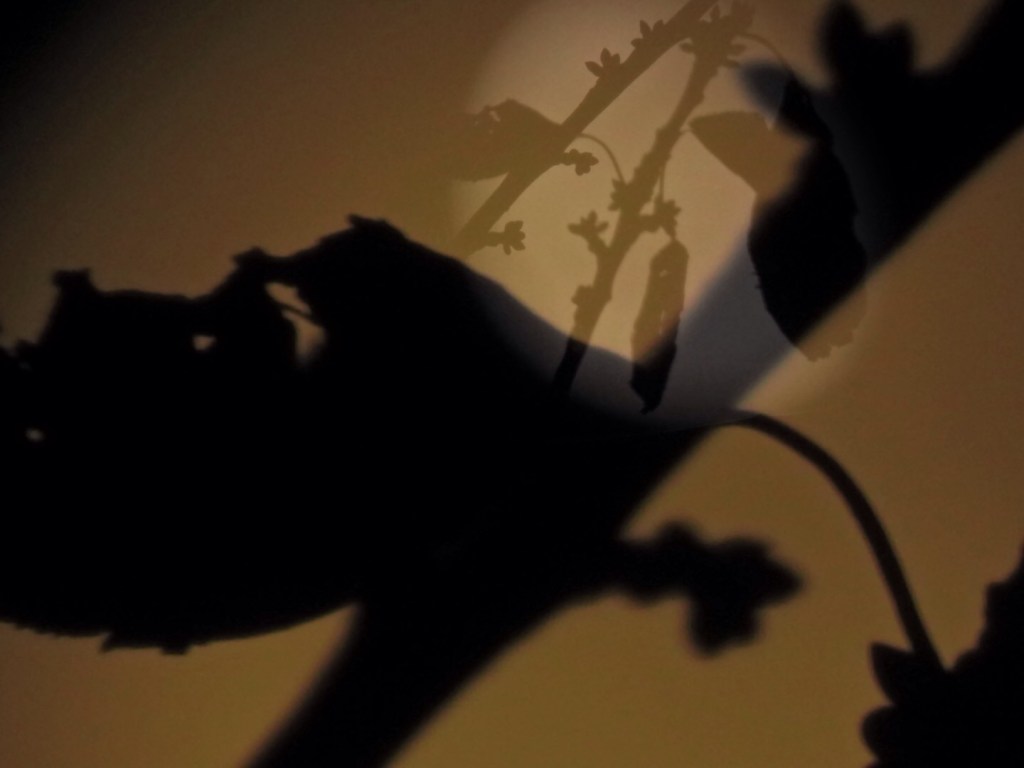
I became curious about how the moon’s presence might behave when paired with something as delicate and earthly as the silhouette of a plant, or when stretched across the frame in a sequence of softened echoes. What could happen if the moon wasn’t captured as a solitary celestial object, but instead as an active participant within a wider composition? These photographs required patience, a negotiation between motion and stillness, and a willingness to embrace the unexpected, also, they opened a wider field of play.

Multiple exposure gives the moon permission to move. It gives shadows permission to speak. It gives the image permission to become something other than what was predicted.This new collection feels like the beginning of a conversation I want to continue. The techniques are still new to me, but they are expanding my understanding of how photography, much like the letters it will eventually accompany, can hold ambiguity, transformation, and layered narratives.

You can now visit my new website: https://dear-moon.art which holds the previous messages and will hopefully grow with new letters, images, and an e-book.

Get involved from anywhere by sending an email to the moon via Dearmoon2025@hotmail.com

Posted in 2025-2026, curation, Exhibitions, Experiments, Project, Reflection, Research, Social Sculpture

Last Reflection on The Right Map

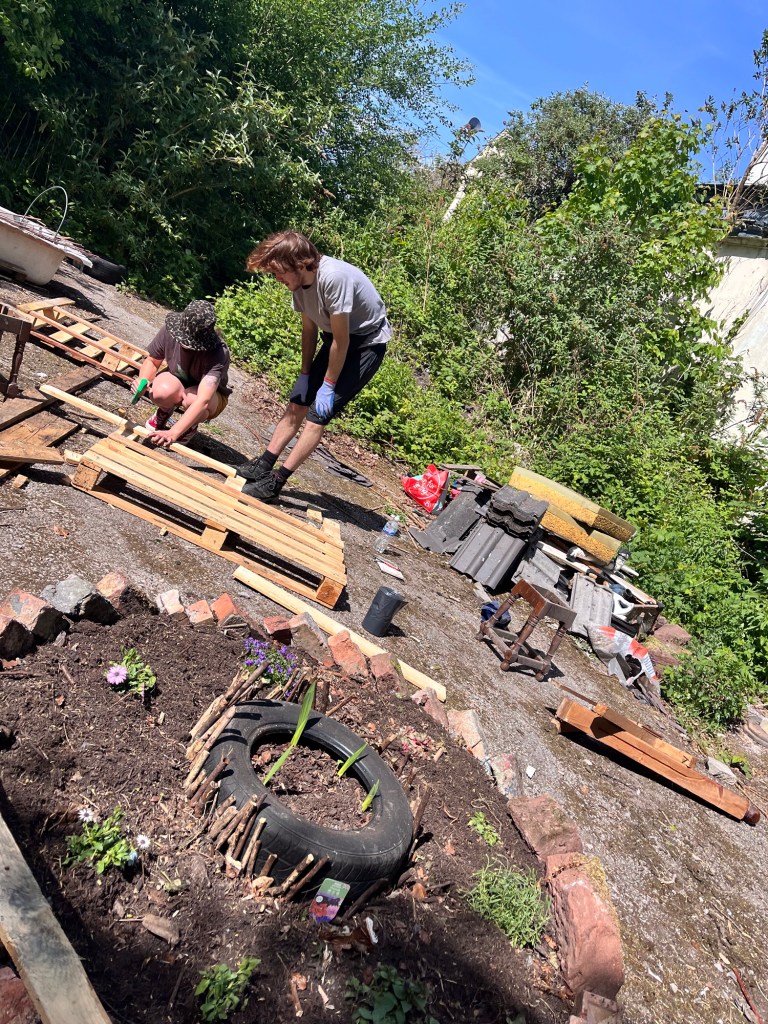
As I write this final reflection on The Right Map, I can see how many threads hold this project together. There is the community garden that Tom Doubtfire leads with steady optimism. There is the fundraiser that Tom and I organised as members of Ghost Art School, with generous support in kind from The Bakery in Liverpool. And there is the final day itself, which happened only because of the effort and kindness shown by Rory Macbeth, there was no funding and no safety net, there were only people who care and people who give far more than anyone could fairly expect.

The Community Garden

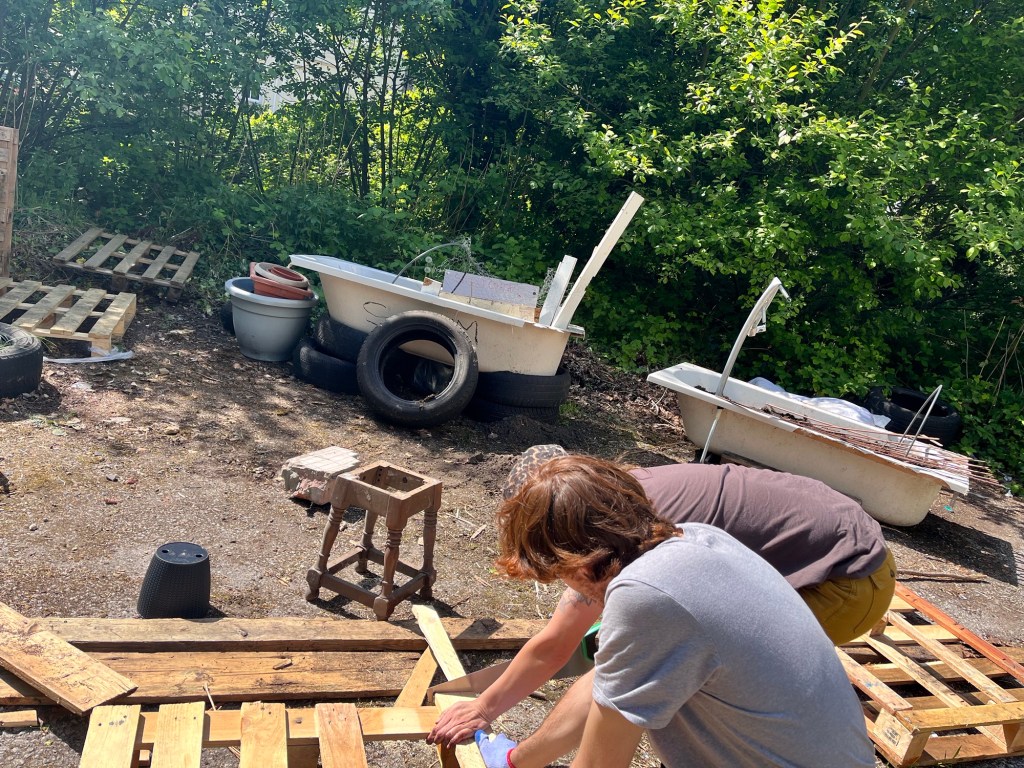
The garden at the old social club-Kensington was meant to be a shared space, a place for people to grow food, spend time, and reclaim something green together. We cleaned it again and again. We cleared rubbish, made plans and planted possibilities… Yet there were days when I felt defeated. Rubbish would reappear as soon as we removed it.. Things were stolen! Many times it felt as if the effort was swallowed by indifference!

But Tom is different.. He keeps turning up with a sense of commitment that is both hopeful and stubborn. He holds a belief in slow change that I respect deeply and I’ll continue to support him, not only as a friend but as an artist I respect.

Fundraising as a Collective Gesture

The fundraiser at The Bakery was a small moment when collective energy came together. With the help of visitors, friends, and many acts of generosity, we raised £300 for Thamara Organisation.

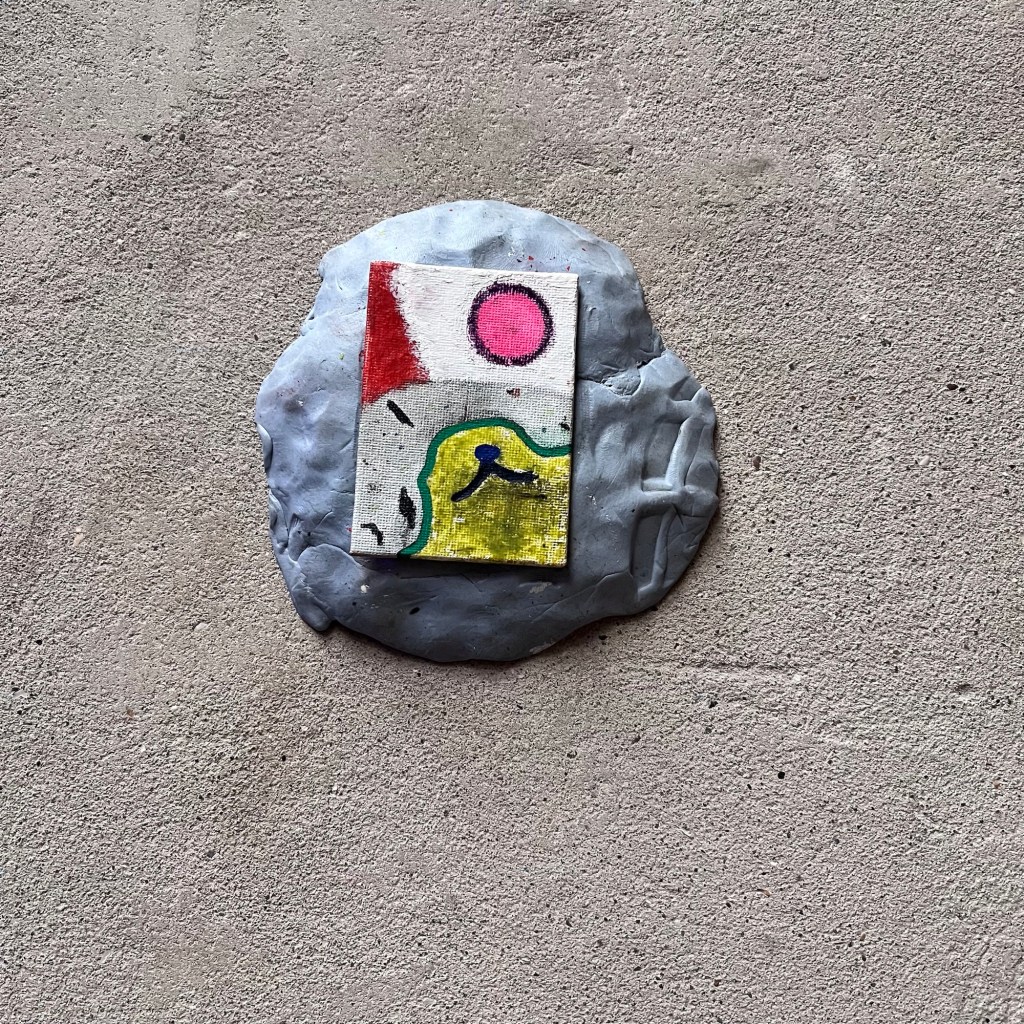
The rooms held an installation by Tom D, inspired by the community garden. There were drawings made by children in previous workshops Tom led. There were my political ceramics. There was a tiny painting by Tom Kelly, fixed to a huge blob of blue tack. There were paintings prints by Alison Reid.

And from food sales and prints and T shirts that I printed, some showing the map of Palestine and others carrying the Ghost Art School logo designed by Rory Macbeth, along with extra donations, the amount slowly gathered. It felt modest, but it carried meaning. It was a gesture of care that reflected the spirit of The Right Map.

The Final Day: Unstable 4 

The final day of The Right Map was full of beautiful chaos.. I was working in other side at Crosby Library until the afternoon for a Liverpool Biennial event with the collective DARCH, so I arrived with no time to prepare anything special. Once again it was Rory who brought the day to a close and who held everything together with calmness and capability. I will not forget the amazing large carousel installation by Marie-Sofie Braune, who is now doing an MFA at CSM. It arrived from Germany and was too large to ship at a reasonable cost, so Rory travelled to deliver it and installed it.

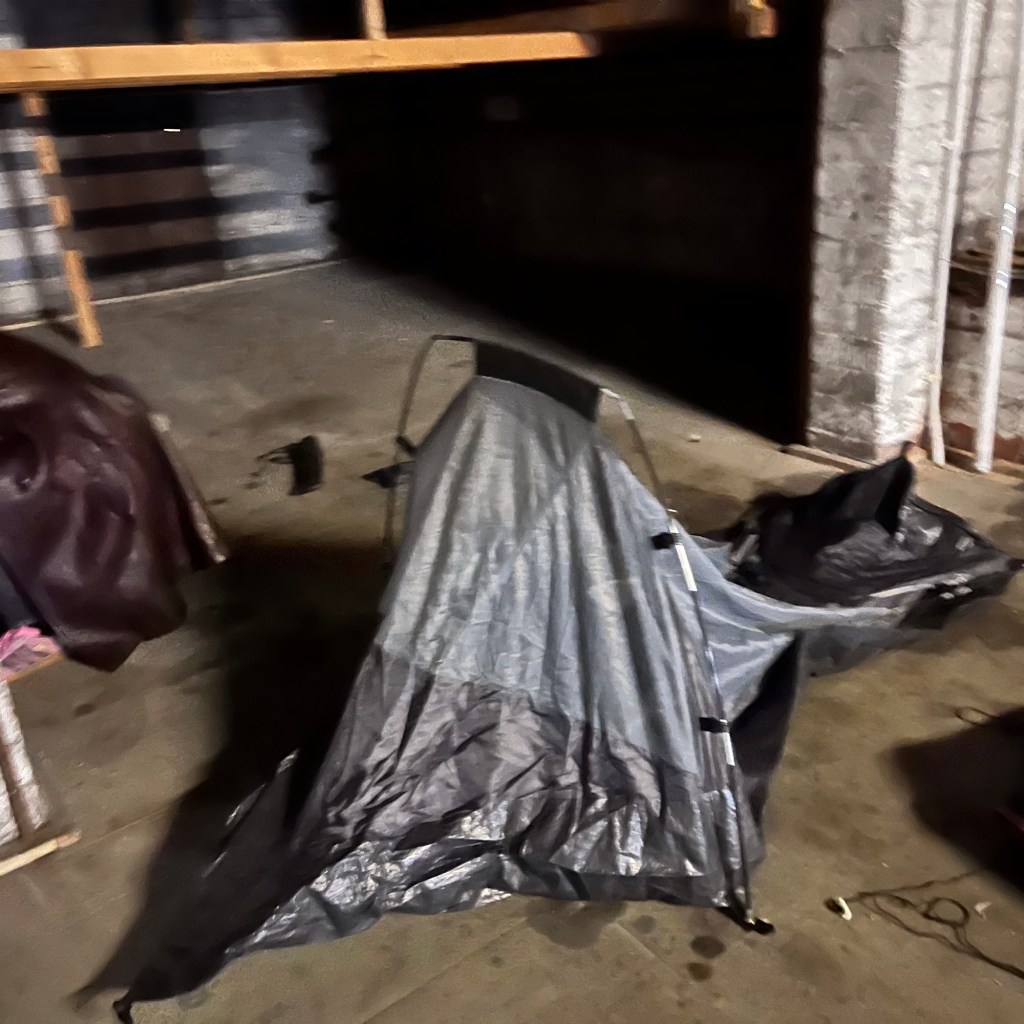
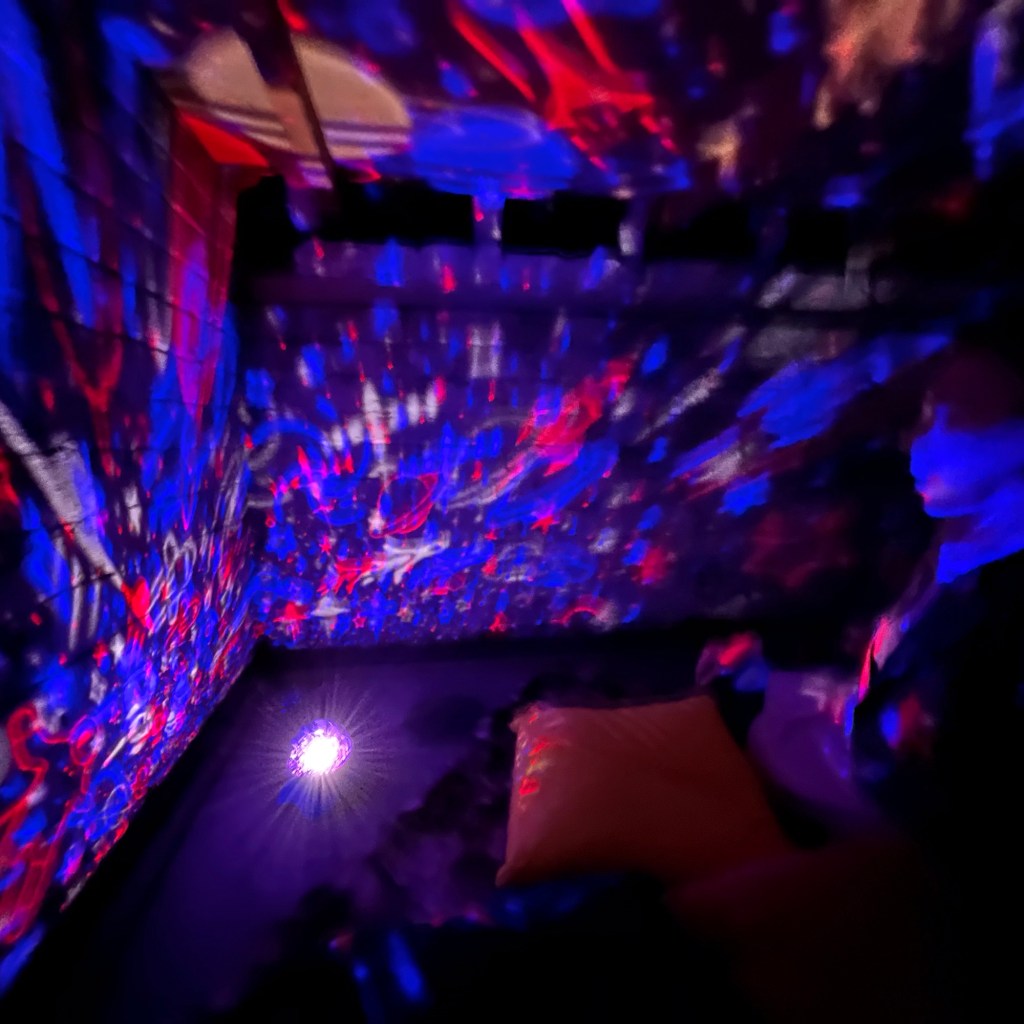
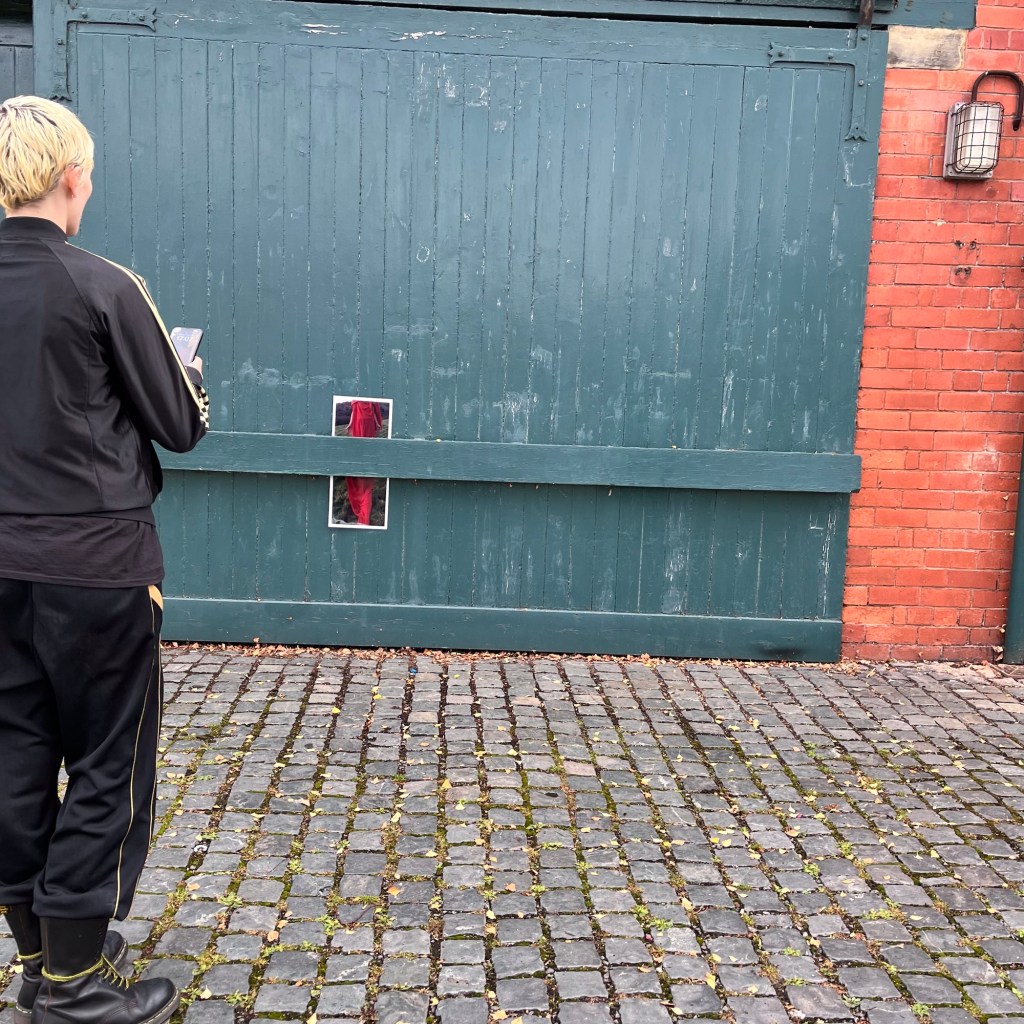
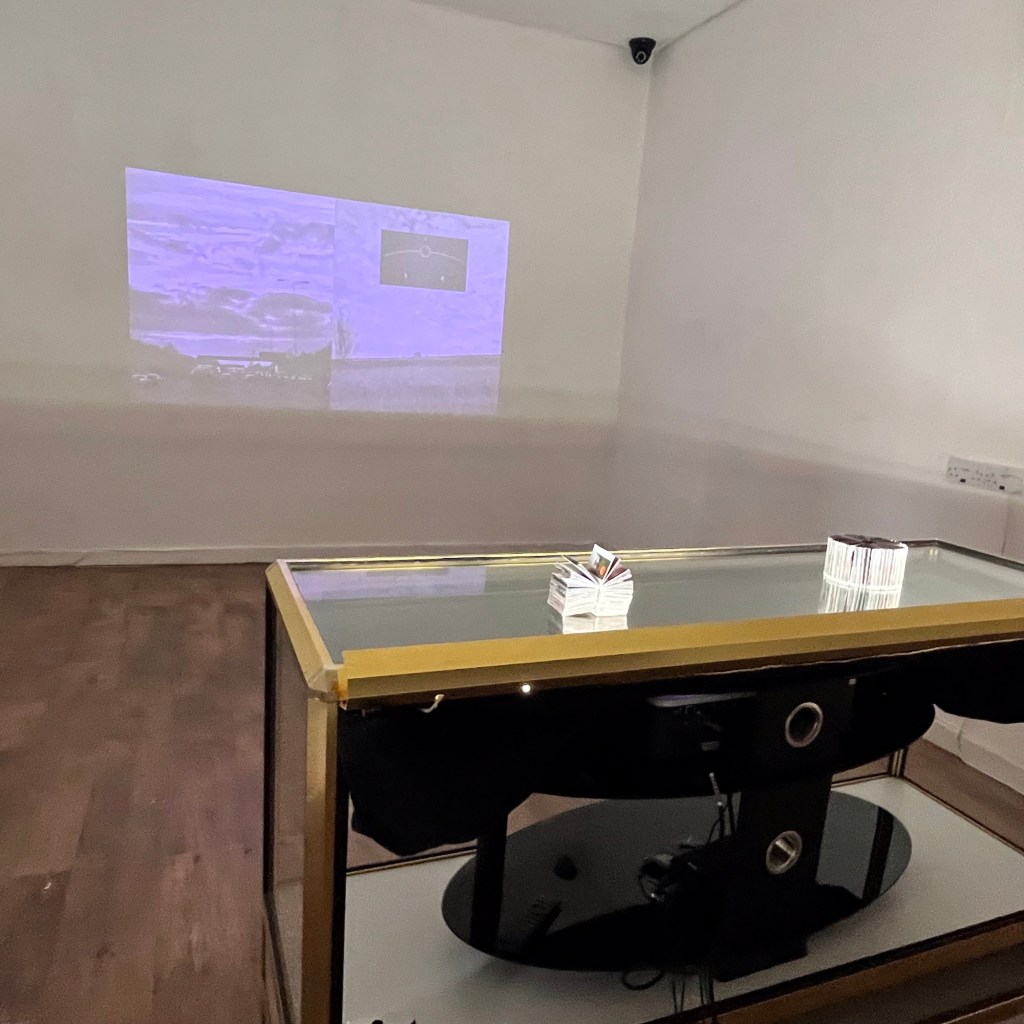
As Rory described it, the event became:“Unstable 4. The final event of Unstable at Port Sunlight fully embraced instability. A broken fever dream of a fairground carousel, a car trying to get into the gallery while playing dislocated tape loops, surplus images spat out of a machine, surplus films looping, noise performed, letters to the moon, records playing off centre, photographic sculptures hiding in half light, one to one performances in a tent.”

Somehow all of this disorder made sense. It was the right ending to a project that was never about polish but about presence. It showed what happens when artists, friends, and communities choose to take action even when resources are limited, even when schedules do not match, and even when the project is held together by human effort rather than funding.

Finally, The Right Map did not map places. It mapped relationships, labour, generosity, frustration, and persistence. It mapped the hidden work that supports community spaces and the unstability that becomes a creative method rather than a barrier.
The Right Map artists: Alison Reid, Alma Stritt, Charli Kleeman, Chelsea Johnson, Chris Roberts, Colm Moore, Conner Browne, Cos Ahmet, Danielle Freakley, David W Hicks, Eleanor Capstick, Finn Roberts, Gary Finnegan, Gwendolin Kircali, Halyna Maystrenko-Grant, Hannah Browne, Harriet Morley, Igor Prato Luna, Jasmir Creed, Jessica Crowe, Karema Munassar, Lily Patricija, Mai Sanchez, Marie-Sofie Braune, Molly Lindsay, Molly Mousdell, Phoebe Thomas, Priya Foster, Ritu Arya, Rory Macbeth, Sonic Relics, Theodora Koumbouzis, Tom Doubtfire, Tom Kelly, Valentina Passerini, and Xueying Zhang