

Last Friday, I exhibited as part of Ornament–Intent, curated by Emma Rushton at her house in Manchester. The exhibition offered a chance to re-situate my practice within the intimacy of a domestic environment. The curatorial premise, that decoration and political intent flow through the home, aligned closely with my interest in how social and political meaning is transmitted through ordinary gestures, materials and language.
Rushton’s house, transformed into a living exhibition space, blurred the boundaries between art and life. The space carried traces of daily existence, forming a backdrop that resisted the neutrality of the white cube. Within this context, my ceramic works and participatory writing installation became part of an evolving conversation about the home as both refuge and political site.

On a handmade ceramic plate inscribed Sykes–Picot 1916, I presented a red velvet cake. The act of division mirrored the historical partition of the Middle East under the Sykes–Picot Agreement. I used the domestic ritual of cake-cutting, usually symbolic of celebration, generosity and communion, to expose its opposite: consumption, greed and geopolitical appetite.
This gesture was performative in the sense Joseph Beuys might describe as Soziale Plastik (social sculpture), where symbolic action and participation become material. The knife, crumbs and creamy surface formed an ephemeral installation that questioned how colonial histories persist within gestures of hospitality and everyday pleasure.

A second ceramic work consisted of 11 handmade spoons arranged in a circular formation across a white table. Each spoon was inscribed with the name of a country and a range of dates, including Gaza, Bosnia, Yemen, Cambodia, Congo, India, Ireland .. etc marking periods of famine, war and conflict. Together, they formed a kind of geopolitical clock, a cycle of recurring histories and unresolved wounds.
Unlike traditional cartography, this piece used domestic utensils, tools of nourishment and care, to map famines/conflicts. The spoons stood in for mouths, stories and silenced voices, suggesting that global politics is not abstract but deeply entangled with the rhythms of everyday life.
In the setting of Ornament–Intent, this work transformed the dining table into a site of memory. It invited viewers to confront histories of violence not through spectacle but through quiet familiarity. The domestic language of tableware became an entry point into questions of accountability and empathy. The work reflects my ongoing interest in social sculpture as an aesthetic of recontextualisation, where meaning is generated through the repositioning of ordinary materials within spaces of shared attention and care.

Another ceramic piece juxtaposed a sugar bowl labelled Third World with a spoon marked First World. Sugar, a substance historically tied to trade, slavery and colonial wealth, became a material metaphor for extraction and imbalance.
Placed in a domestic setting, the object drew attention to how structural inequalities are embedded in ordinary life. A simple act such as stirring sugar into tea carries invisible histories of power. In this sense, the work functioned as a micro-political sculpture, where meaning emerges not through spectacle but through subtle provocation within the familiar.

A handwritten note, in Arabic and English, listed key dates in Sudan’s history of famine and conflict: 1984, 1993, 2017, 2024, followed by the line (And Sudan’s issues remain words on paper…) with a ceramic spoon read (Money eats first)
Here, I explored the limits of communication and documentation, and how political struggle often becomes archived as text, detached from lived experience. The translation between languages paralleled the translation between activism and representation, between the urgency of lived crisis and the inertia of global indifference. The work questioned the gap between empathy and action, a recurring concern in my social sculpture practice. What is the role of the artist when language itself becomes complicit in the act of forgetting?

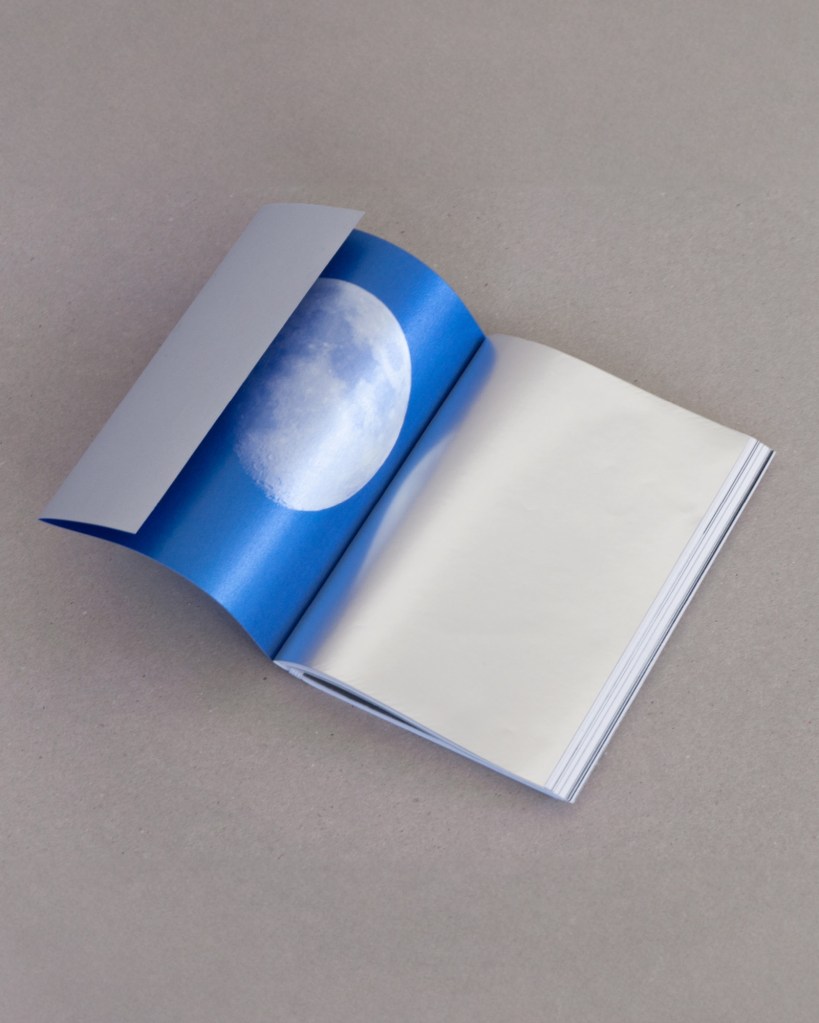
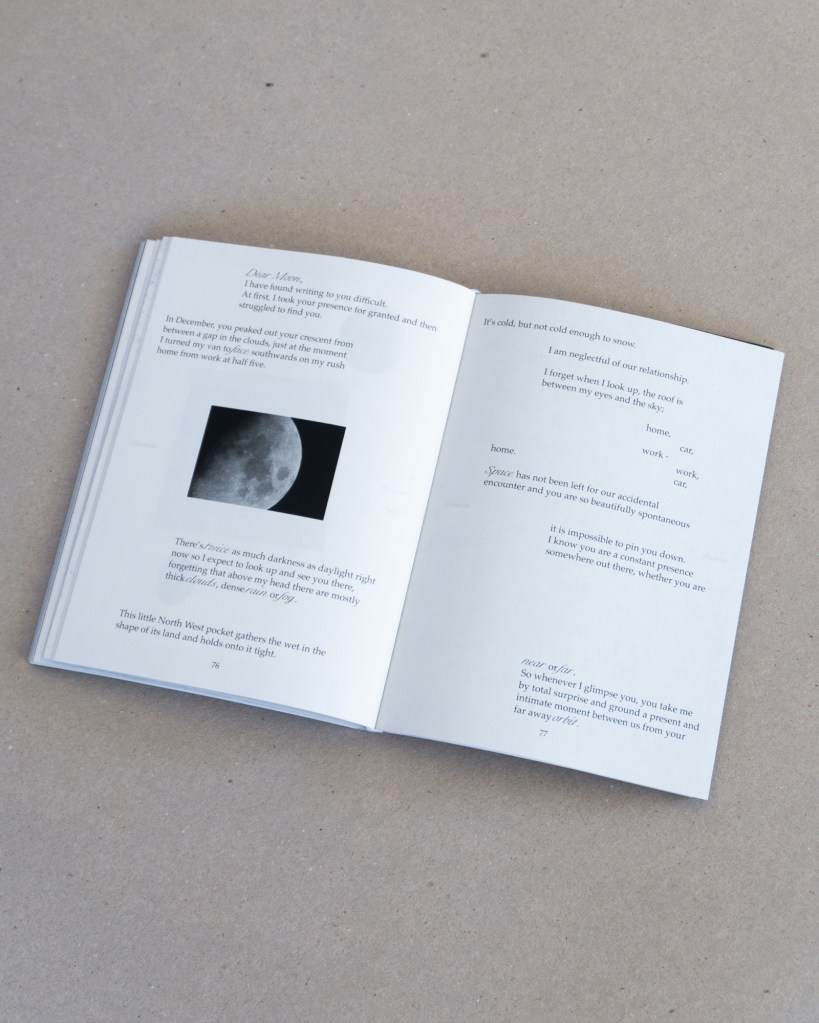
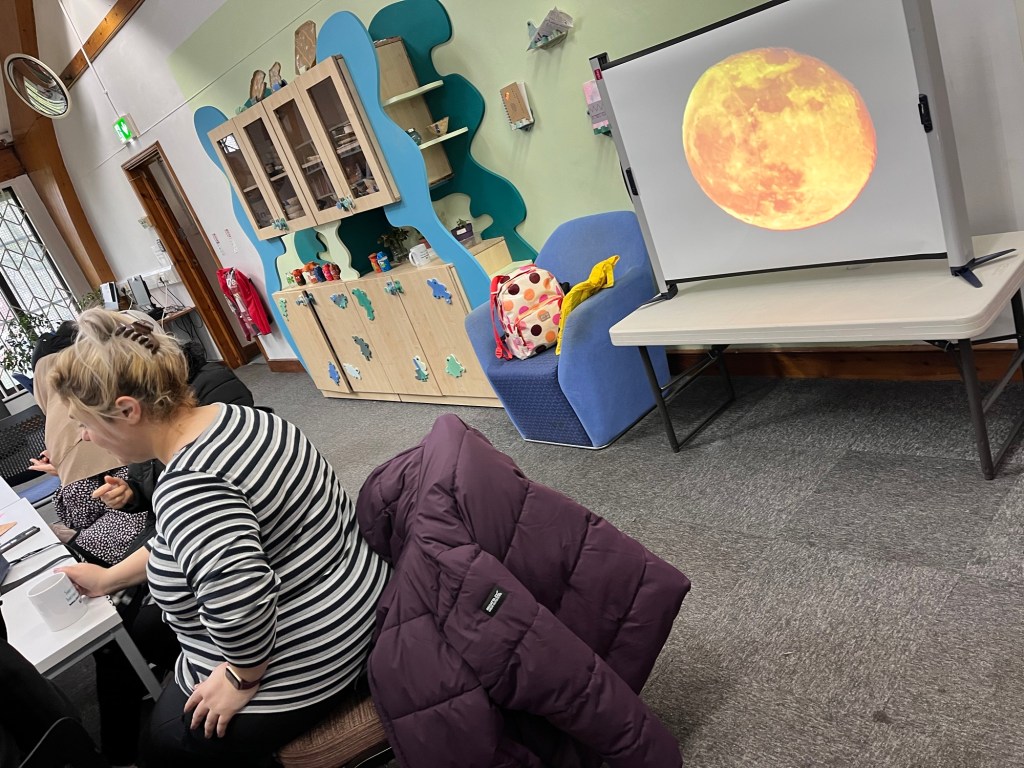
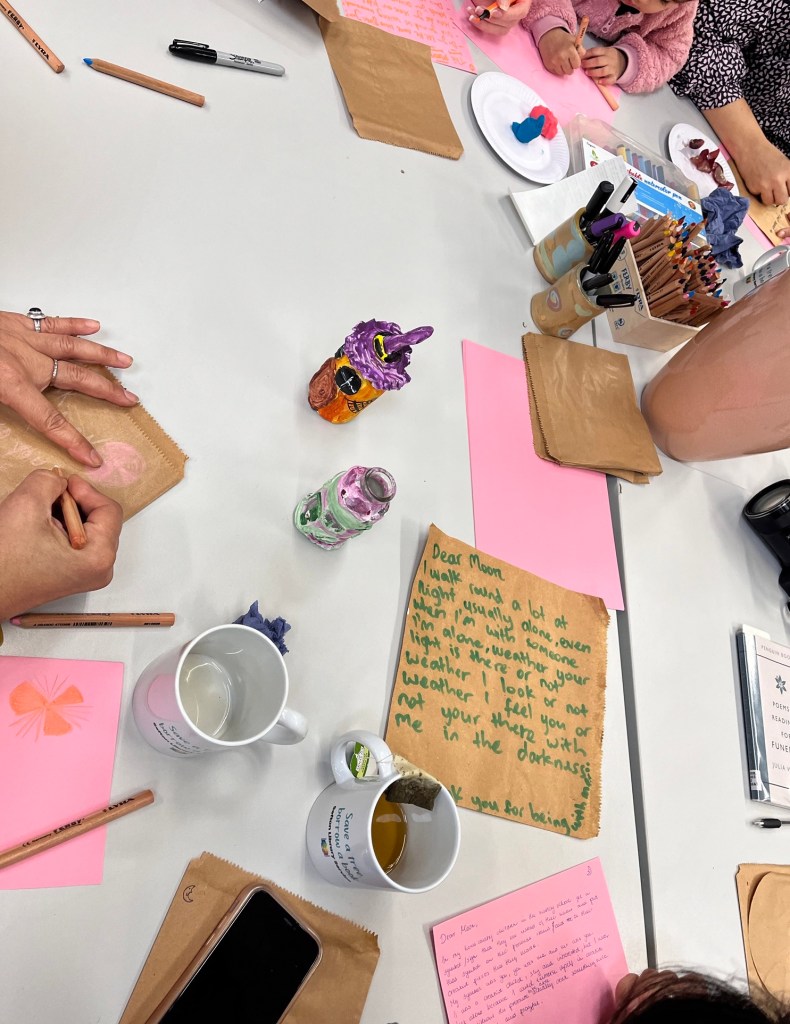
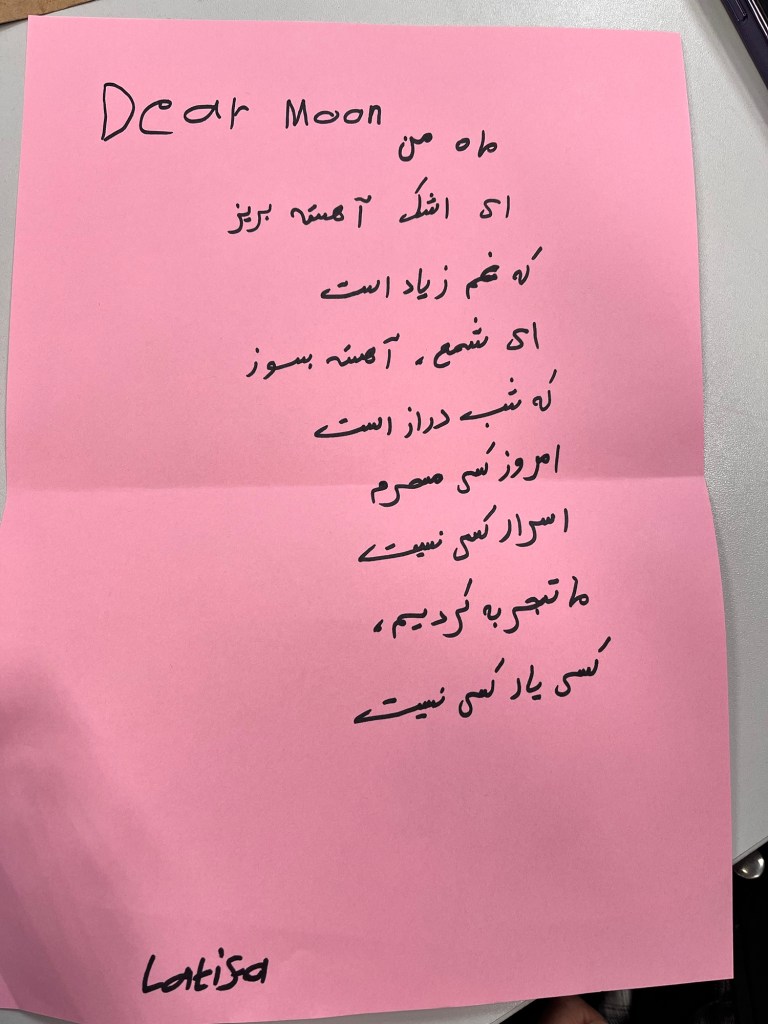
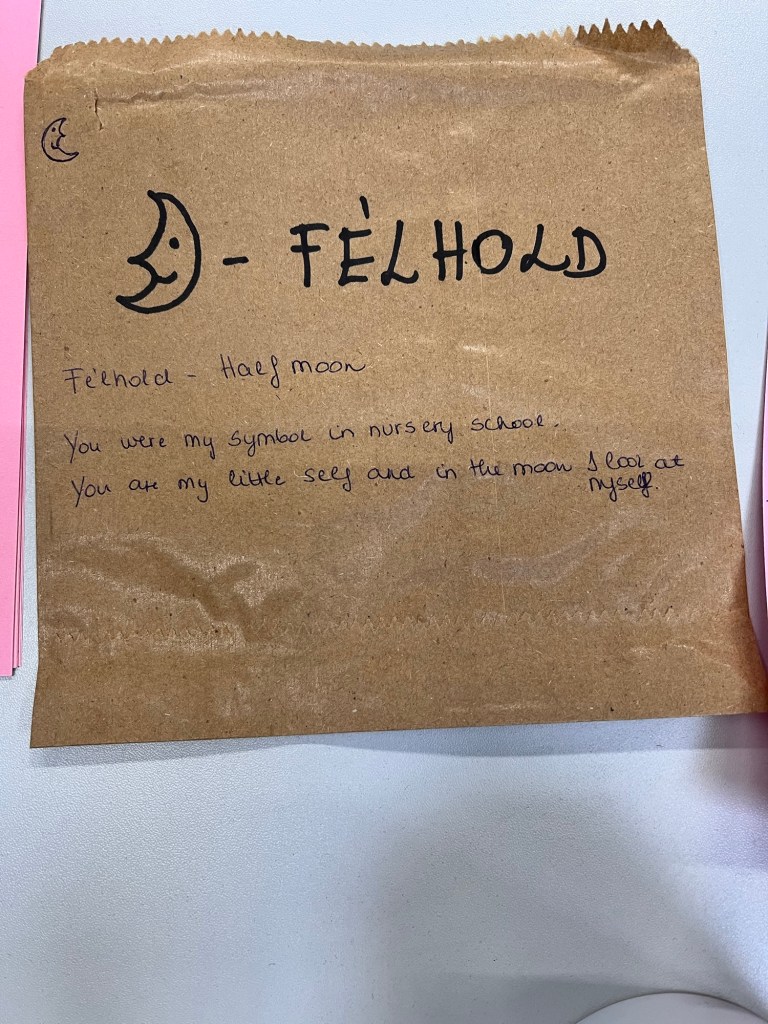
In another part of the house, I presented Dear Moon, a participatory installation inviting visitors to write letters to the moon. A small writing table, paper, envelopes and a black letterbox created a space for reflection and dialogue.
This piece extended my ongoing investigation into correspondence and indirect communication, letters that may never reach their destination yet carry emotional truth. The moon, as an unreachable listener, became a symbol of distance, empathy and collective longing.
Here, the act of writing functioned as a social sculpture, a participatory moment that transformed private thought into shared experience. It also reasserted my belief that art can hold silence as much as speech, offering space for what cannot be articulated in political discourse.
Ornament–Intent revealed how the domestic realm, often coded as private or decorative, is inherently political. Within Emma Rushton’s home, art entered the space of the everyday, resisting the hierarchies that separate aesthetic experience from lived reality.
My contribution sought to hold this tension between care and critique, ornament and intent, intimacy and history. Each ceramic object or written phrase acted as a small social gesture, reanimating the conversation between form, politics and communication.




 Karema