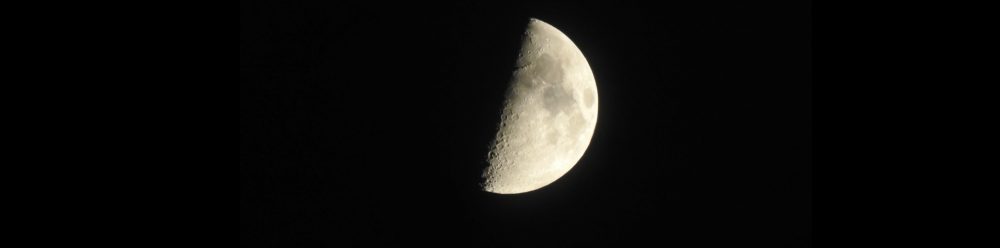
Watching the last full moon of 2025 felt unexpectedly emotional. It was calm, yet it carried the feeling of an ending. Standing beneath it, I became aware of how much the year had held, and knowing it was the final full moon of the year added to its weight.
The year won’t close with certainty or clarity, but that feels honest. Some things remain unsettled, and perhaps they are meant to. Was it a success or a failure? Worth it or not? Happy or sad? Peace or war? Friend or enemy? Continue or leave? Life always carries these questions. But the moon reminds us that there is always a return. A new moon will be born, and the phases will continue, because the moon does not seek resolution.
There was a quiet mix of emotions, gratitude, sadness, relief, they all sharing the same space. I felt small under the sky, but not alone. The moon remained constant shining whether it was seen or not, especially in UK weather and that brought a sense of comfort. Sometimes it is not important to be seen, as long as you carry your own light. Clouds may block it for a while, but they can never take that light away.
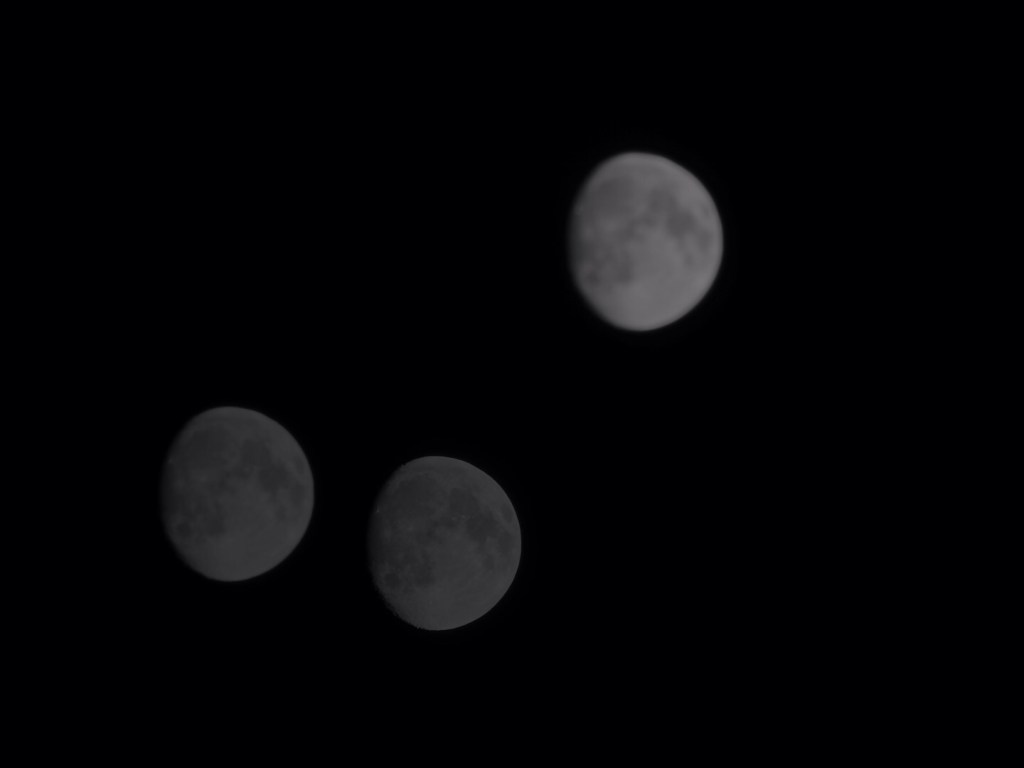
Over the past few months, I’ve been quietly chasing the moon. Through multiple exposure, I’ve been exploring time, movement, and intention. This new collection marks the beginning of a deeper understanding of how to interpret time through past and present within still images. The idea first emerged after my friend, artist Hannah Browne, gifted me a photo featuring a two-week moon exposure by artist Joe Millican.
By Joe Millican
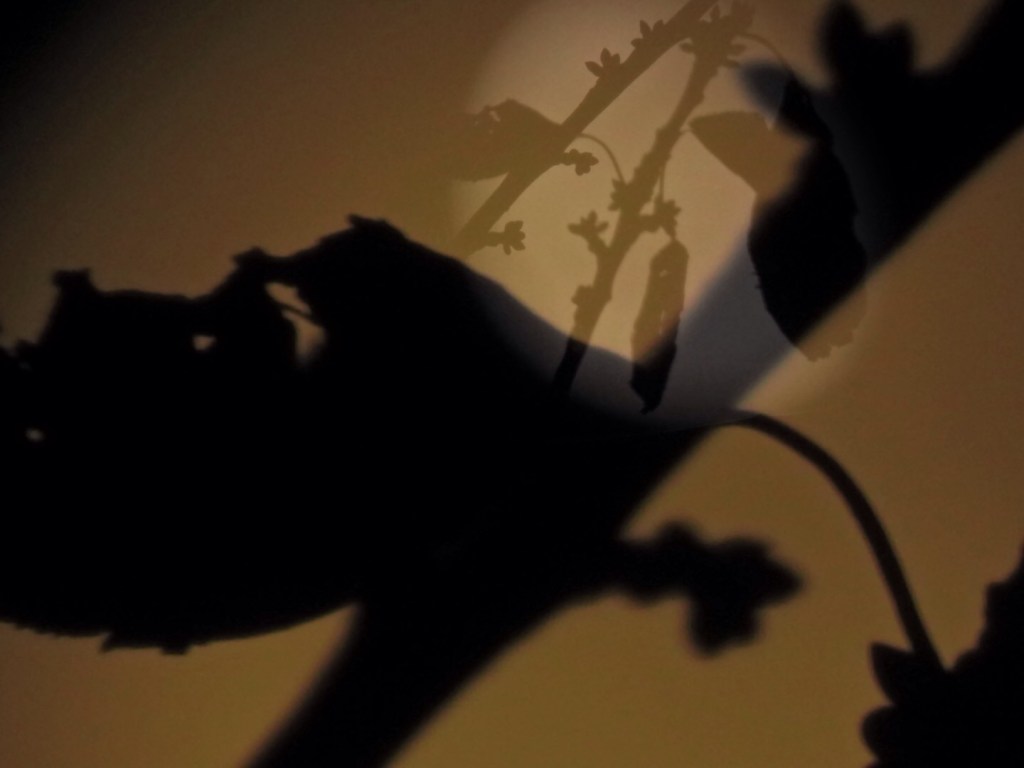
I became curious about how the moon’s presence might behave when paired with something as delicate and earthly as the silhouette of a plant, or when stretched across the frame in a sequence of softened echoes. What could happen if the moon wasn’t captured as a solitary celestial object, but instead as an active participant within a wider composition? These photographs required patience, a negotiation between motion and stillness, and a willingness to embrace the unexpected, also, they opened a wider field of play.
Multiple exposure gives the moon permission to move. It gives shadows permission to speak. It gives the image permission to become something other than what was predicted.This new collection feels like the beginning of a conversation I want to continue. The techniques are still new to me, but they are expanding my understanding of how photography, much like the letters it will eventually accompany, can hold ambiguity, transformation, and layered narratives.
You can now visit my new website: https://dear-moon.art which holds the previous messages and will hopefully grow with new letters, images, and an e-book.
Get involved from anywhere by sending an email to the moon via Dearmoon2025@hotmail.com
Last Friday, I exhibited as part of Ornament–Intent, curated by Emma Rushton at her house in Manchester. The exhibition offered a chance to re-situate my practice within the intimacy of a domestic environment. The curatorial premise, that decoration and political intent flow through the home, aligned closely with my interest in how social and political meaning is transmitted through ordinary gestures, materials and language.
Rushton’s house, transformed into a living exhibition space, blurred the boundaries between art and life. The space carried traces of daily existence, forming a backdrop that resisted the neutrality of the white cube. Within this context, my ceramic works and participatory writing installation became part of an evolving conversation about the home as both refuge and political site.
On a handmade ceramic plate inscribed Sykes–Picot 1916, I presented a red velvet cake. The act of division mirrored the historical partition of the Middle East under the Sykes–Picot Agreement. I used the domestic ritual of cake-cutting, usually symbolic of celebration, generosity and communion, to expose its opposite: consumption, greed and geopolitical appetite.
This gesture was performative in the sense Joseph Beuys might describe as Soziale Plastik (social sculpture), where symbolic action and participation become material. The knife, crumbs and creamy surface formed an ephemeral installation that questioned how colonial histories persist within gestures of hospitality and everyday pleasure.
A second ceramic work consisted of 11 handmade spoons arranged in a circular formation across a white table. Each spoon was inscribed with the name of a country and a range of dates, including Gaza, Bosnia, Yemen, Cambodia, Congo, India, Ireland .. etc marking periods of famine, war and conflict. Together, they formed a kind of geopolitical clock, a cycle of recurring histories and unresolved wounds.
Unlike traditional cartography, this piece used domestic utensils, tools of nourishment and care, to map famines/conflicts. The spoons stood in for mouths, stories and silenced voices, suggesting that global politics is not abstract but deeply entangled with the rhythms of everyday life.
In the setting of Ornament–Intent, this work transformed the dining table into a site of memory. It invited viewers to confront histories of violence not through spectacle but through quiet familiarity. The domestic language of tableware became an entry point into questions of accountability and empathy. The work reflects my ongoing interest in social sculpture as an aesthetic of recontextualisation, where meaning is generated through the repositioning of ordinary materials within spaces of shared attention and care.
Another ceramic piece juxtaposed a sugar bowl labelled Third World with a spoon marked First World. Sugar, a substance historically tied to trade, slavery and colonial wealth, became a material metaphor for extraction and imbalance.
Placed in a domestic setting, the object drew attention to how structural inequalities are embedded in ordinary life. A simple act such as stirring sugar into tea carries invisible histories of power. In this sense, the work functioned as a micro-political sculpture, where meaning emerges not through spectacle but through subtle provocation within the familiar.
A handwritten note, in Arabic and English, listed key dates in Sudan’s history of famine and conflict: 1984, 1993, 2017, 2024, followed by the line (And Sudan’s issues remain words on paper…) with a ceramic spoon read (Money eats first)
Here, I explored the limits of communication and documentation, and how political struggle often becomes archived as text, detached from lived experience. The translation between languages paralleled the translation between activism and representation, between the urgency of lived crisis and the inertia of global indifference. The work questioned the gap between empathy and action, a recurring concern in my social sculpture practice. What is the role of the artist when language itself becomes complicit in the act of forgetting?
In another part of the house, I presented Dear Moon, a participatory installation inviting visitors to write letters to the moon. A small writing table, paper, envelopes and a black letterbox created a space for reflection and dialogue.
This piece extended my ongoing investigation into correspondence and indirect communication, letters that may never reach their destination yet carry emotional truth. The moon, as an unreachable listener, became a symbol of distance, empathy and collective longing.
Here, the act of writing functioned as a social sculpture, a participatory moment that transformed private thought into shared experience. It also reasserted my belief that art can hold silence as much as speech, offering space for what cannot be articulated in political discourse.
Ornament–Intent revealed how the domestic realm, often coded as private or decorative, is inherently political. Within Emma Rushton’s home, art entered the space of the everyday, resisting the hierarchies that separate aesthetic experience from lived reality.
My contribution sought to hold this tension between care and critique, ornament and intent, intimacy and history. Each ceramic object or written phrase acted as a small social gesture, reanimating the conversation between form, politics and communication.
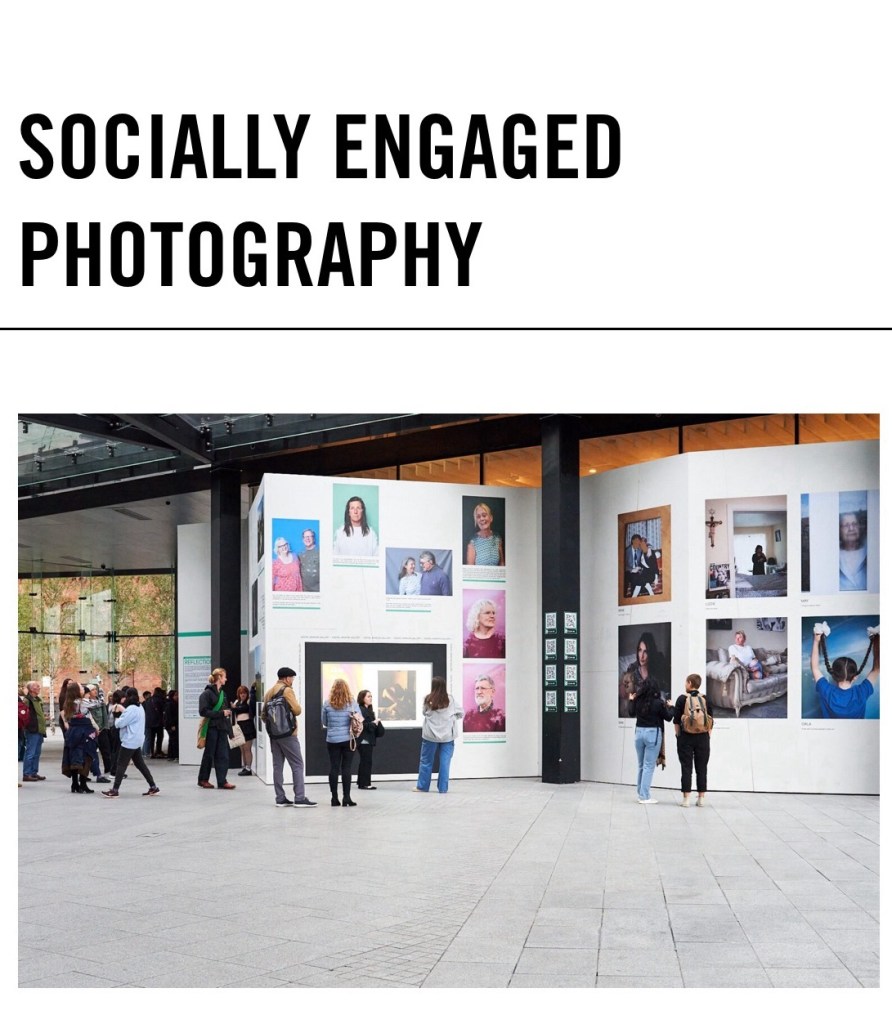
19 artists from across the country and beyond, working across different disciplines, were selected for Open Eye Gallery’s Socially Engaged Photography programme. The session began gently with an icebreaker to help us introduce ourselves and connect, opening into a space full of layered questions and open dialogue.
One phrase stayed with me: “Becoming an audience to your own work.” It’s the idea that the artist creates a framework for others to shape, leading to outcomes unknown even to them. This made me reflect on Dear Moon, a book project I designed. By the end, I felt less like its author and more like its audience. The photographs simply held space—the real substance came from the contributors’ words. Their voices carried the project forward.
In breakout groups, we explored definitions of socially engaged practice. From using art as a collaborative tool for justice (Sholette & Bass) to fostering shared understanding and personal growth (Matarasso), the emphasis was clear: this work is about people, not product. It’s about ethics, active listening, and creating conditions for transformation.
I feel genuinely grateful to have been selected for this course and to be mentored by Elizabeth Wewiora. I look forward to continuing the journey and exploring how it might help shape my research around social sculpture.
Since October, I’ve been immersed in the making of Dear Moon. What began as a simple idea grew into something layered and full of meaning. Over these months, I’ve learnt so much, not just about putting together a book, but about myself. The skills I’ve had to call on managing, organising, communicating, publishing, sharing all came with challenges. I had to practise patience.. I had to listen. And more than anything, I had to trust the process!
There were many moments when I didn’t know exactly where it was heading, but I allowed myself to follow the rhythm of the work, and something beautiful came through. I’m especially grateful that the work is expanding being read, being held and I’ve been watching it with a sort of quiet pride.
Still, I have to be honest. Sharing Dear Moon in public spaces hasn’t felt completely right. I tried presenting it in a vibrant setting, but I could feel the book asking for something else, something slower, more still. It asks the reader to sit, pause, and take time. And that’s hard to find in environments filled with movement.
So, although I didn’t quite succeed in the way I had imagined, I don’t see it as failure. Instead, I see it as another learning. The challenge now is to explore different ways a book like this can live in public space. How do I present it in a way that honours its pace and stillness? How can I guide people toward it gently, instead of expecting it to compete for attention?
I’m still learning, and I’m open. I’m proud of Dear Moon, and I know it will keep finding its way as long as I keep listening.
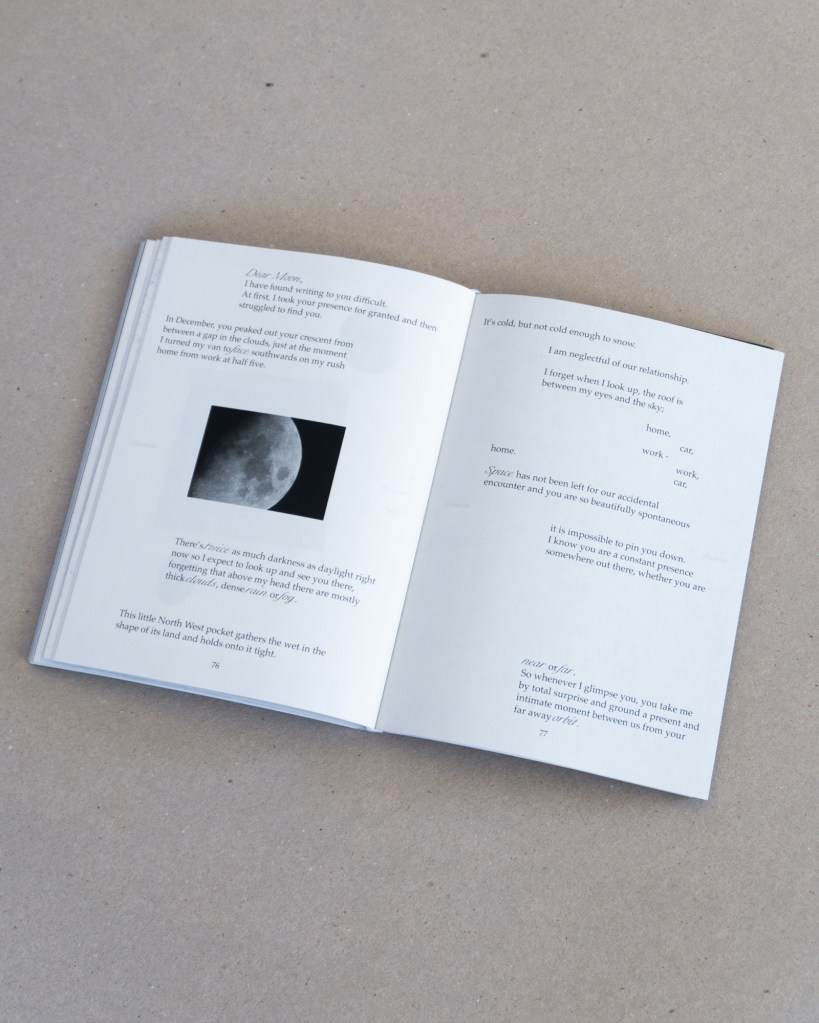
Working on Dear Moon has been one of the most personal and expansive projects I’ve ever taken on. While the words came slowly, shaped by honesty and quiet reflection, the visual form of the book took a different kind of journey, one that became stronger and more meaningful through collaboration.
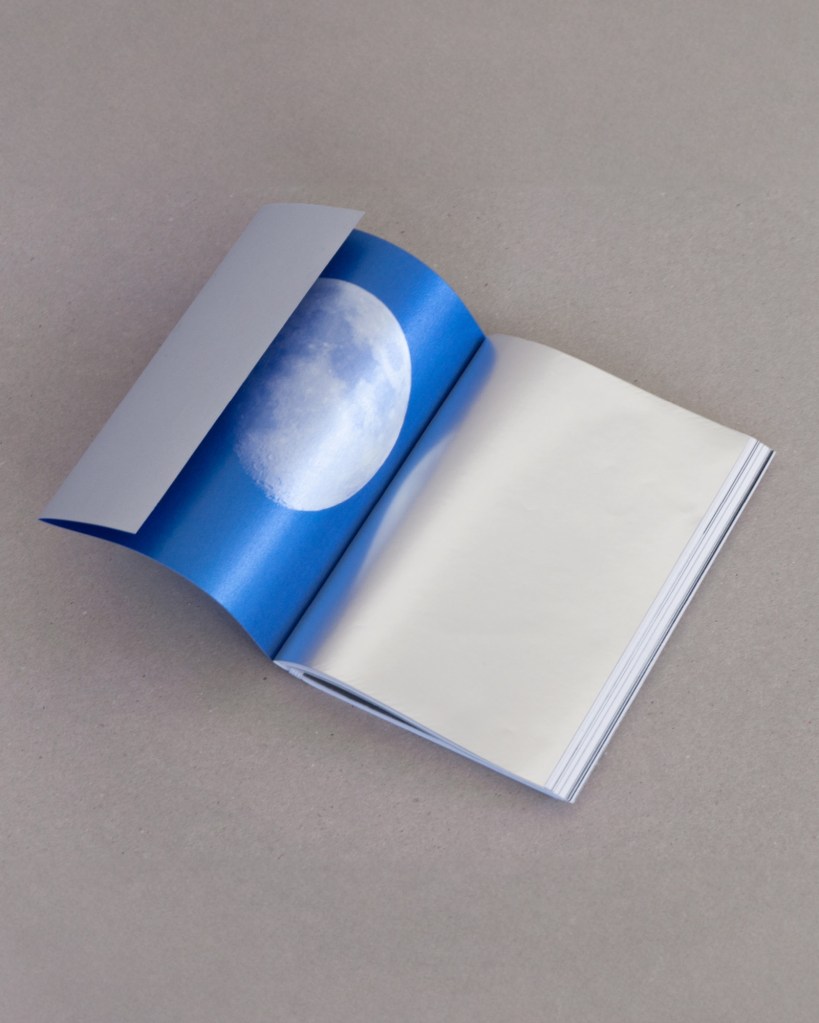
I had the pleasure of working with Jiayi and GG, two recent MA Graphic Design graduates from the university. They took on the challenge of designing Dear Moon and brought their own vision to it. Where I had initially imagined something simple, quiet, and almost invisible in its design letting the words do all the work they brought something else entirely: depth, elegance, and boldness in aesthetic.
Their design sensibility was so different from mine. I approached the book with simplicity, wanting to preserve the gentle rhythm of the letters and photographs without interruption. I didn’t want the visuals to overpower the messages within. But what Jiayi and GG brought was not overpowering it was enhancing. They introduced a poetic visual language: deep blues, moonscapes that speak for themselves, layout choices that echo the movement of tides and emotion. They weren’t just decorating; they were interpreting.
Looking at the final book now, I see a true collaboration. It’s no longer just a collection of letters; it’s a designed experience. A conversation between stillness and form.
Collaborating in this way has taught me the value of letting go. Of sharing creative control. Of trusting others to hold your work with care and transform it with love and intention. I feel Dear Moon is stronger because of this process, and I’m grateful to Jiayi and GG for reminding me how powerful cross-disciplinary work can be.





 Karema