I had fun playing with a new scanner I bought to help me upload the physical Moon Letters to my computer. The quality is great, and I immediately thought—this would be perfect for digitising my Asemic writing.
I decided to experiment: I uploaded a piece of Asemic writing, then tried a translation tool to read the text from the image. I wasn’t expecting much, Asemic writing is by definition without a fixed meaning, existing in a space between language and pure form. But to my surprise, I got three translated lines.
This unexpected outcome was a moment of algorithmic improvisation, a piece of text I never wrote was suddenly part of the work. The machine involved itself in the process, introducing an element beyond my control, much like the way audiences reinterpret asemic writing in unpredictable ways.
Two questions immediately came to mind:
• What does it mean for an asemic text to be “translated”?
• Does this process create a new kind of auto-generated asemic language, where machine logic meets human mark-making?
This might just be the beginning of a new asemic project. And, I’m excited to experiment more, to invite the machine into the asemic process, and to see where this unexpected collaboration between human intention and machine misinterpretation leads me.
Our last session of Art for Earth’s Sake Peer Learning, was a powerful experience exploring the intersection of creativity, sustainability, and community action.
Key Highlights:
1- Leading by Example: We discussed how artists can practise sustainably, acting as role models for others by reducing their carbon footprint and promoting eco-friendly approaches. This includes minimising the use of fossil fuels and exploring innovative tools such as digital carbon offset initiatives like Ecology.
2- Art as a Vehicle for Transition: Art has the power to shape people’s decisions and inspire social and environmental change. We explored how slow, mindful processes can create space for reflection and dialogue about the future we want to build.
3- The Role of Heart and Mind: It’s not just about being an artist but about raising awareness and fostering learning. We emphasised the importance of balancing rational thinking with heartfelt creativity to address environmental.
We took inspiration from artists such as Rebecca Chesney and Anthony Hall, and projects like the Soil Exhibition in Somerset. Additionally, ideas from thinkers like Stephen Covey’s “Three Spheres of Influence” helped us focus on what we can control, what we can influence, and what we need to let go of as individuals and as a collective.
We are encouraged to continue organising events, engaging the community, and taking part in initiatives like the Engage. By working together, we can use art as a catalyst for positive change in the world.
Stephen Covey’s concept of the Three Spheres of Influence is a framework that helps individuals focus their energy on what they can truly affect. This idea is derived from his book, The 7 Habits of Highly Effective People. The three spheres, also known as the Circles of Concern, Influence, and Control, are a way to prioritise actions and efforts effectively. The Three Spheres Explained:
1. Circle of Concern:
This represents everything you care about, including external issues such as climate change, world events, and things you have no direct control over. While it’s important to be aware of these issues, focusing too much energy here can lead to feelings of helplessness.
2. Circle of Influence:
This sphere includes aspects you can influence, such as your local community, workplace, and people around you. By focusing efforts here, you can make a meaningful impact even if you can’t solve global issues. This is where actions like raising awareness, inspiring others, and leading by example can make a difference.
3. Circle of Control:
This is the smallest sphere, encompassing only what you can directly control, your own actions, decisions, mindset, and responses. By focusing on this sphere, you ensure that your efforts are grounded in what you can actually change.
By prioritising your focus on the Circle of Control and the Circle of Influence rather than the Circle of Concern, you can channel your energy more productively, avoid burnout, and create more positive impact. This approach is particularly valuable in projects related to sustainability and social change, where large-scale problems can feel overwhelming.
In the context of “Art for Earth’s Sake” understanding these spheres can help artists and activists focus on what they can do, such as creating art that inspires action, practising sustainability in their own work, and building local community initiatives that promote change.
Yesterday, I had a 1-1 tutorial with Jonathan, and it was a great opportunity to think aloud about my practice and research. It helped me reflect on where I’m, what comes next, and how I want to present my work in the interim show. More importantly, it allowed me to articulate the intentions behind my work—what I’m truly trying to communicate through it.
At the moment, I’m working on collecting all the moon letters people have submitted into a book, which I see as a sculpture—not just because of the process involved, but also due to the layers I’ve applied throughout its creation. Here, I wanted to make a book—not just a representation of one, but a real, physical book as a sculptural form. I wasn’t trying to turn a book into a sculpture; rather, I wanted to sculpt a book itself. This distinction has been crucial for me, and I feel I’ve achieved a lot through this approach.
The process remains ongoing—collecting letters, designing the book, and considering communication in both content and form. The creative process has pushed me in new ways and opening many doors.
Jonathan shared some useful links to researchers and artists, including Donna Haraway, Claire Bishop and Lucy & Jorge Orta. He also gave valuable advice on selecting the right paper type for the book, its cover, and how different inks could react on specific papers.
We also discussed different ways the book could be displayed, which made me think more deeply about its presence in a space and how the audience will engage with it—what I could add or take away. This reaffirmed that my work is not just about making an object; it’s about layering meaning, process, and interaction.
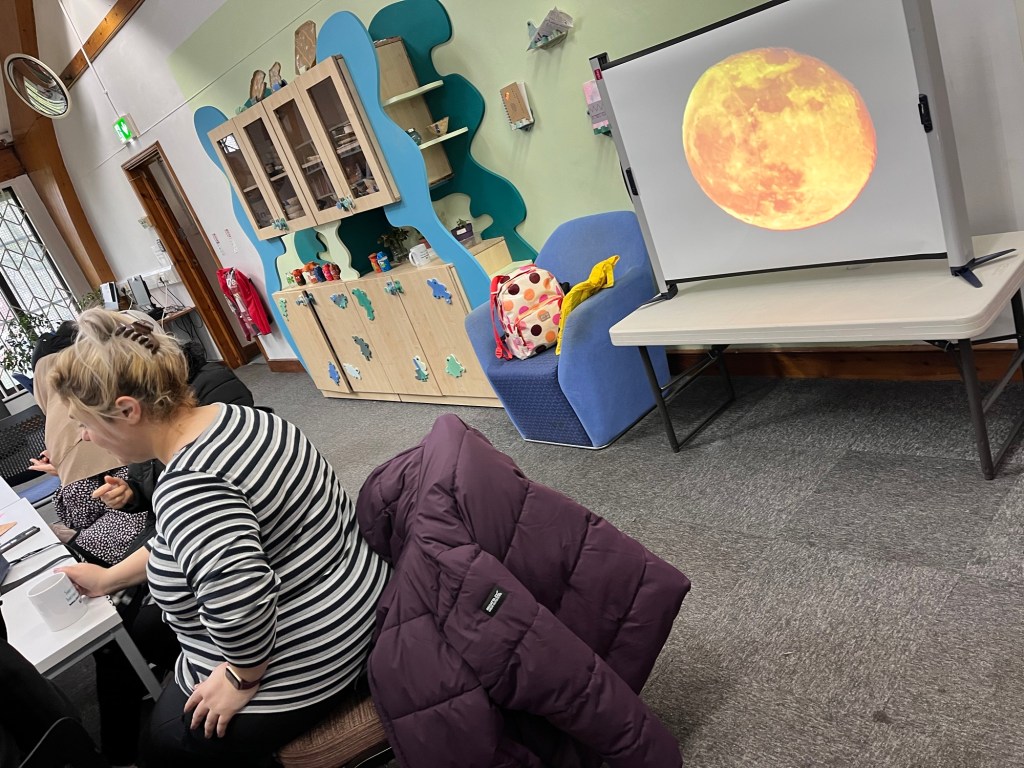
Today, I led a session at Bootle Library with my usual cultural group of ladies, joined by my colleagues from Rule of Threes, a representative from Liverpool Biennial, and artists from Darch Collective. It was a special gathering, as we’ll be contributing to their work for Liverpool Biennial: Bedrock 2025.
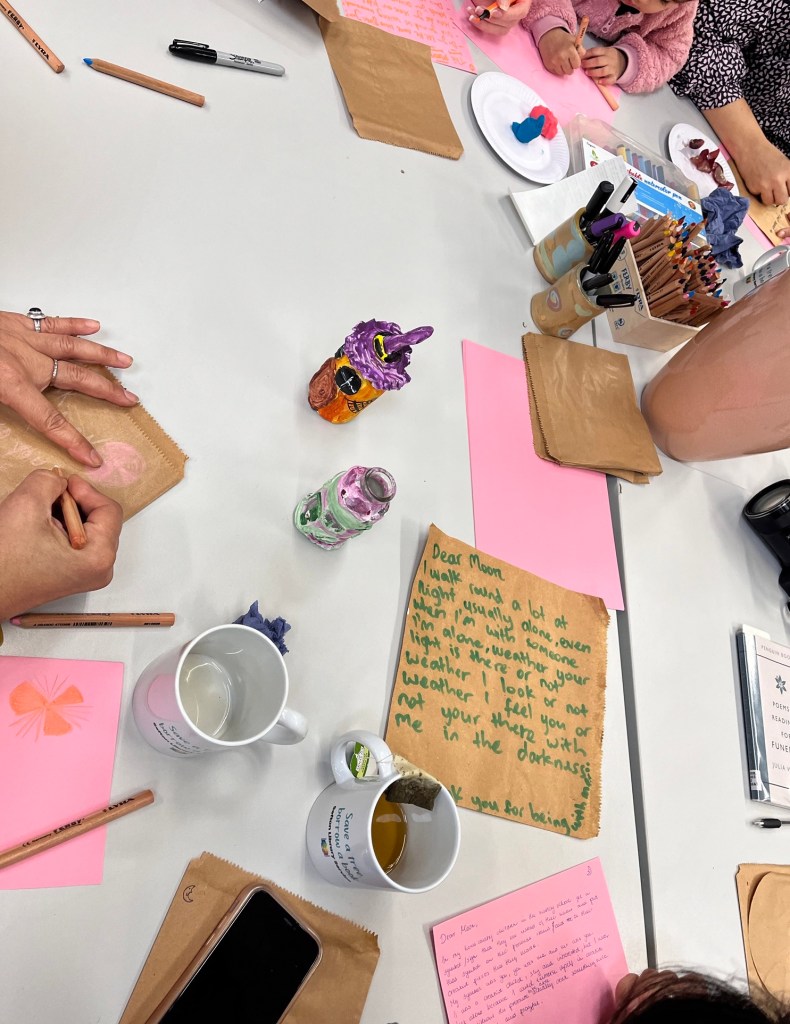
The session had a wonderful turnout, and I received 15 more letters for The Moon Letters project. I’m so grateful to everyone who has taken the time to contribute, and I can’t wait for the moment when I finally hold the book in my hands.
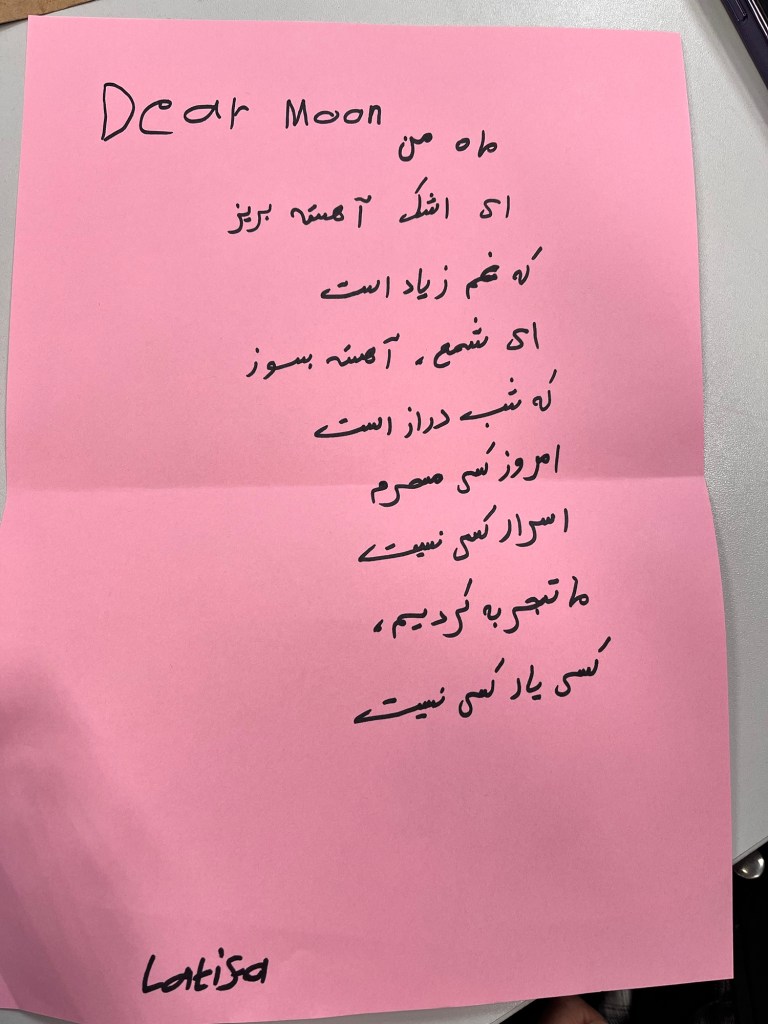
There’s something deeply personal about letters. I find myself attached to each one, treating them as precious objects. They arrive in different ways: through messages, emails, and in person. Each carrying unique thoughts, emotions, and perspectives. People respond in their own way, and I appreciate every word, every feeling that has been shared.
This project is becoming more than just a collection of letters, and I’m excited to see where it leads and to share these stories with a wider audience.
In my ongoing exploration of social sculpture, Letters to the Moon stands as a testament to how art can shape social spaces through collaboration. Rooted in Joseph Beuys’ concept that everyone is an artist and society itself is a work of art, this project reflects the interconnectedness between individuals and their collective contributions.
The project is inherently collaborative. By engaging artists and the public, I aimed to dissolve barriers between “individual” and “community” artmaking. Each submission becomes part of a greater whole—like letters sent to a shared destination, carrying unique perspectives yet contributing to a collective narrative.
This process mirrors my research interest in social sculpture: how creative practice can transform not just physical objects, but relationships and shared understanding. Letters to the Moon creates a social space where people from diverse backgrounds, ages, abilities, and styles co-exist, their works forming an invisible conversation with one another.
At its core, my work often explores the complexities of communication. In Letters to the Moon, the art itself becomes a form of communication—visual “letters” that reflect feelings, thoughts, and experiences. By curating these individual voices into a unified book, I aim to highlight how creative gestures, when shared, can transcend the limits of language and hierarchy.
Social sculpture is about more than the artwork itself; it is about the relationships, processes, and transformations that occur along the way. Through Letters to the Moon, I have witnessed how this project fosters a sense of belonging, participation, and emotional resonance. It invites artists to engage in a collaborative process and, in doing so, creates an artwork that is as much about the process as the final outcome.
Photo credit: Donald Takeshita-guyDear Moon,
I know why you are called the Moon–because you say ‘mo’ and ‘on’. By Arwa (6 yrs old)
Letters to the Moon is a social sculpture that explores how art can connect diverse experiences, emotions, and perspectives, fostering meaningful dialogue between art and the wider public.
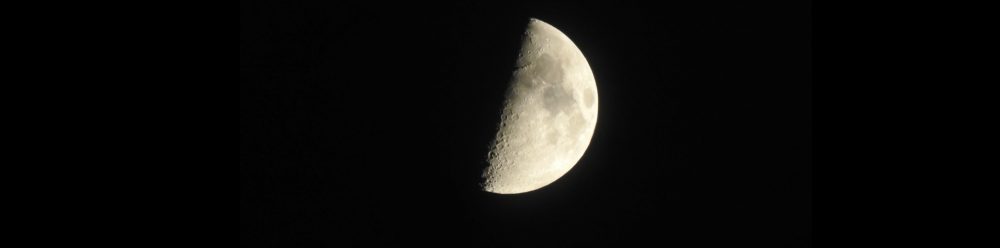
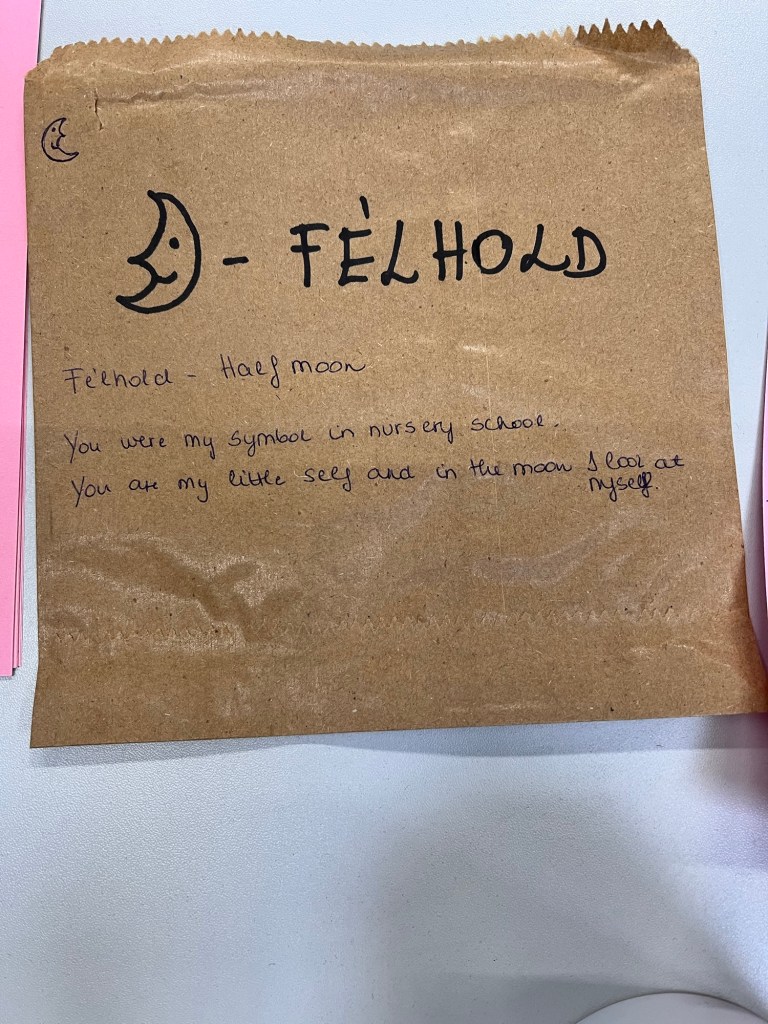
To bring this vision to life, I invited family, friends, artists from Creative Peers, members of Ghost Art School, MA classmates, and the public. Donald kindly extended the invitation and offered people some brown paper bags to write their letters on. This act of kindness touched me and made these letters more special as they are handwritten. Each participant receives a unique moon photograph, carefully selected from a collection of 670 images I have captured since 2018.
The responses have been both inspiring and humbling. People with distinctive styles and personal voices have contributed works that reflect a broad range of emotions and narratives. A key aim of this project is to ensure that people outside the art world feel encouraged to take part, breaking down the barriers that can make creative engagement feel intimidating.
This project, while still ongoing, has already reminded me of the importance of artistic variety and community. While numbers have been promising, I hope they will continue to grow as more people see themselves reflected in this vision. I look forward to the next steps—curating these works, weaving them into a book, and creating something that speaks to the complexity of art as both a personal and collective process.
This week, I attended a truly inspiring lecture by The White Pube, a collective I’ve admired for their influence in the art world, especially in championing new and emerging artists. Gabrielle de la Puente and Zarina Muhammad, who started their journey as students at Central Saint Martins, have since grown into influential voices in the contemporary art scene. Their candid and relatable approach resonates deeply, and it was fascinating to learn more about their evolution.
The collective has recently released a book titled Poor Artist, and I was intrigued by their process and approach to publishing. As someone planning to create a book for our upcoming exhibition in March 2025, their journey felt particularly relevant. Gabrielle and Zarina shared how they ventured into publishing without prior experience in creative writing or the publishing industry, relying instead on the foundation of their studio practice. This reminded me of Roy Claire Potter’s words about how creative work stems from lived experience, a sentiment that deeply connects with my own artistic practice.
A highlight for me was when Gabrielle reflected on a conversation with her tutor. She had asked, “How do I become an artist?” to which her tutor replied, “Don’t stop making art.” That phrase stayed with me—not just for its simplicity but for its broader implications. Making art isn’t confined to producing physical pieces; it extends to engaging with the art world in multiple ways: reading, writing, reflecting, and staying informed about what’s happening around us.
The lecture also highlighted how The White Pube began writing for themselves, creating a voice that spoke to two audiences at once: the critical, often inaccessible world of theory, and the everyday experience of artists. They carved out a niche by addressing what they felt was missing—a relatable, conversational space in art writing that didn’t conform to traditional academic or journalistic norms.
This approach inspires me to reflect on my own work and how I can make my practice and writing more accessible, honest, and personal. Gabrielle and Zarina’s story is a reminder that starting small, writing for yourself, and embracing your voice can lead to impactful outcomes.
As I think about the book we’ll be creating for our exhibition, their journey offers a template for how to take risks and embrace the unknown. It’s not about perfection but about authenticity and a willingness to keep going.
This lecture was not only insightful but also a reminder of the power of persistence and self-expression in art. I’m grateful for their honesty and look forward to delving into Poor Artist for more inspiration.
This summer, I had the opportunity to showcase Al-Mayida (The Dining Table) at Birkenhead Central Library, an installation exploring the universal and symbolic significance of the dining table. And recently, the work was selected for Hypha Studios and Dispensary Gallery’s group show in Wrexham, adding a new layer of meaning by placing it in dialogue with other multidisciplinary pieces in a 15,000-square-foot exhibition space. With its vibrant, community-centered focus, Al-Mayida became a platform for discussing culture, peace, and the shared human experience of gathering. Moving the installation from Birkenhead Library to the larger venue in Wrexham taught me to consider how an artwork’s message and impact evolve with changes in environment and scale.
The dining table holds a unique, cross-cultural significance, serving as a setting for family meals, heartfelt conversations, and shared memories. With Al-Mayida, I aimed to capture these moments by creating an immersive, interactive experience that emphasises gathering, storytelling, and unity. Drawing from a blend of artistic mediums—ceramics, textiles, and Arabic calligraphy—the installation celebrates the act of coming together, inviting audiences to reflect on what it means to share a meal, both literally and symbolically.
On the final day of Al-Mayida, I introduced a dinner set, with each item inscribed with the Arabic word for peace—سلام (Salam). “Peace,” as a concept and a word, transcends borders, symbolising our shared humanity and fostering dialogue around unity and understanding. This white ceramic set, with its minimalist design, carries a calm, contemplative energy, resonating with the installation’s message of harmony.
As a closing touch to the exhibition, I crafted three large plates inscribed with references to the Sykes-Picot Agreement, the 1916 colonial pact that divided the Middle East into spheres of influence and reshaped its geopolitical landscape. This historical reference acknowledged the dining table not only as a place for personal stories but also as a platform for global reflection. These plates became symbols of resilience, encouraging visitors to consider how history shapes our identities, our relationships, and our ongoing quest for self-determination.
The presence of these plates alongside the Salam ceramic set introduces a compelling tension—a juxtaposition between the ideals of peace and unity and the complex legacies of political history. I hope these pieces spark conversations about the ways past injustices continue to impact the present, inspiring a shared commitment to a more peaceful future.
Reflecting on Al-Mayida, I see a pathway forward that embraces community involvement, broadens cultural exploration, and deepens historical reflection. This work has laid the foundation for a practice rooted in dialogue, shared experience, and the powerful simplicity of gathering around a table.
This week I had a meaningful 1-1 tutorial with Jonathan, my mentor and program leader, where we explored some key themes about my practice, my personal journey through the MA course, and what I aim to achieve. It felt like an opportunity to articulate where I stand, what’s driving me, and the challenges I face both as an artist and an individual in this phase of learning and growth.
Understanding My Strengths and Struggles
One of the core topics I touched upon was my relationship with my practice and how I feel about myself in the process. I’ve come to recognise that my strength lies in my sensitivity to my surroundings, which deeply influences my work. This sensitivity fuels a duty and responsibility to respond to the world, but I also know that it can sometimes slow me down. That sense of being attuned to everything around me means I can easily be overwhelmed, especially when I’m stressed.
However, I also realise that this sensitivity is an asset—it makes my work honest, grounded, and connected to the social and political contexts that inspire me. Even when my practice slows, it’s because I’m thinking deeply, processing, and making space for genuine ideas to emerge. I’ve learned to trust that.
Embracing Experimentation and the Joy of “Wrongness”
One of the things Jonathan and I discussed was my openness to experimentation. I’m tolerant when it comes to the technical side of my work—I love to play with any medium that comes my way. There’s something liberating about embracing “wrongness,” about leaning into mistakes and seeing where they take me. I like surprises in the process, and I’ve found that those surprises often lead to new insights or shifts in my work that I wouldn’t have discovered otherwise.
But no matter the medium or method, there’s always a thread of honesty in my concepts. They consistently reflect the social and political themes that matter to me. The work might take different shapes or directions, but the core is always about addressing or engaging with the world in a real and meaningful way.
Mapping the Next Steps
I know I need to design a roadmap—one that helps me navigate where I want to go with my social sculpture practice and what will truly feed my hunger for growth in this area. I have so many ideas simmering, and I want to channel them in a structured way, giving myself the best chance to explore new depths in my work. I believe having a map, a vision for where I want to go, will help me find that balance between responding to the world around me and moving forward with intention.
In the end, this tutorial left me feeling more clear about my strengths and more prepared to tackle the next phase of my MA. There’s always room for growth, and I’m excited to see where this exploration takes me.




 Karema