Posted in 2025-2026, collaboration, curation, Project, Social Sculpture

Iftar as Social Sculpture

Last year I was invited to organise a community iftar a few months after the Southport attack and the rise of far right protests. I accepted immediately, but I kept the first event simple. It felt important to move carefully. After it went well, we decided to make it a regular gathering that people in the community could expect and look forward to.

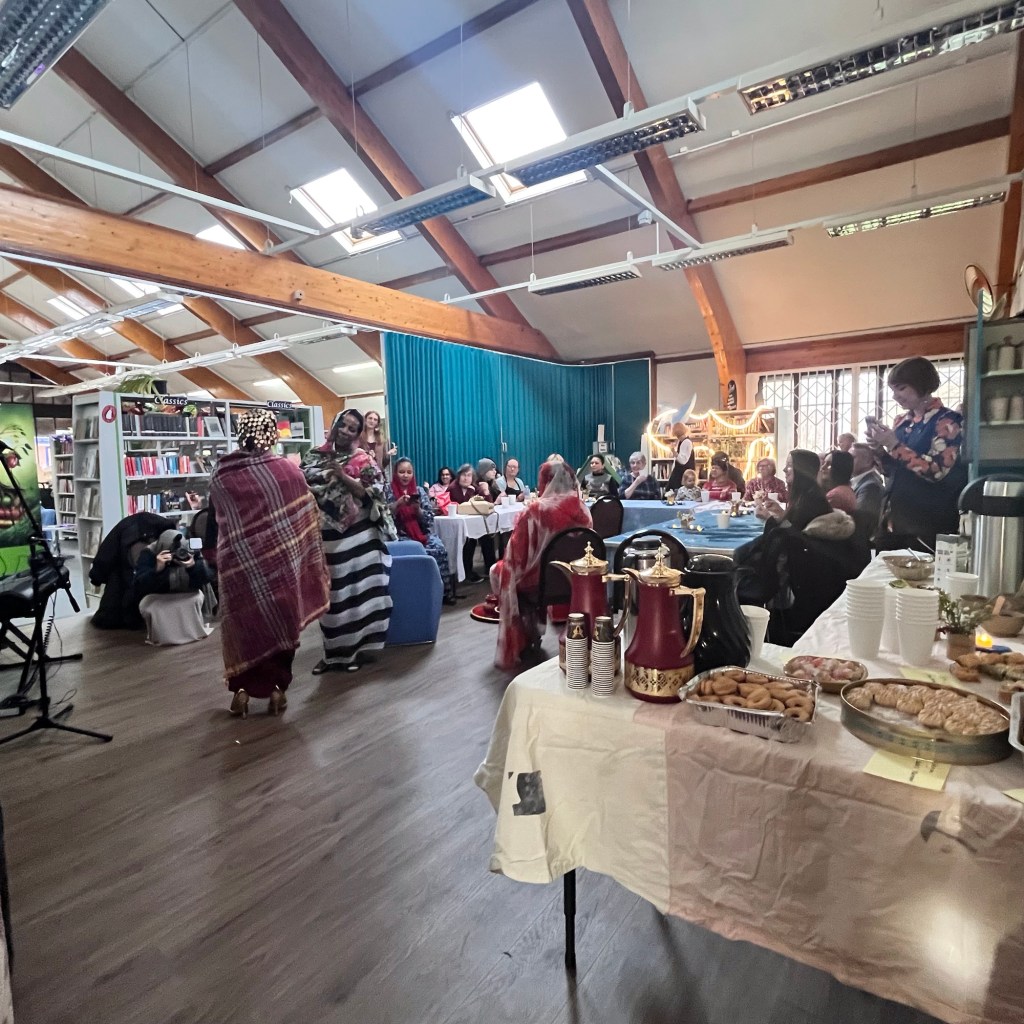
This year the project developed in three connected parts. The first was a shared reading session on the second day of Ramadan ( check previous post). The second was an anti racism cooking workshop. The third was a collective iftar meal at the library where around forty people gathered to break the fast together.

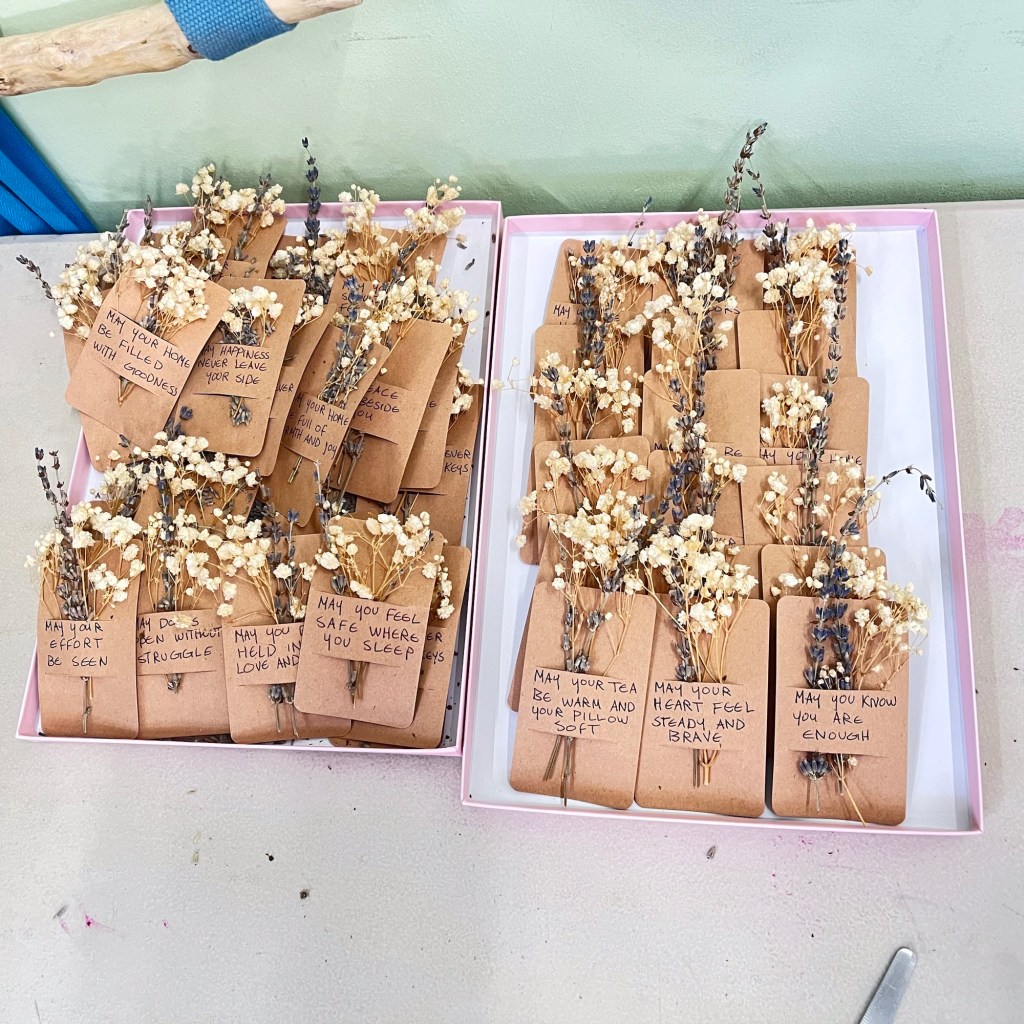
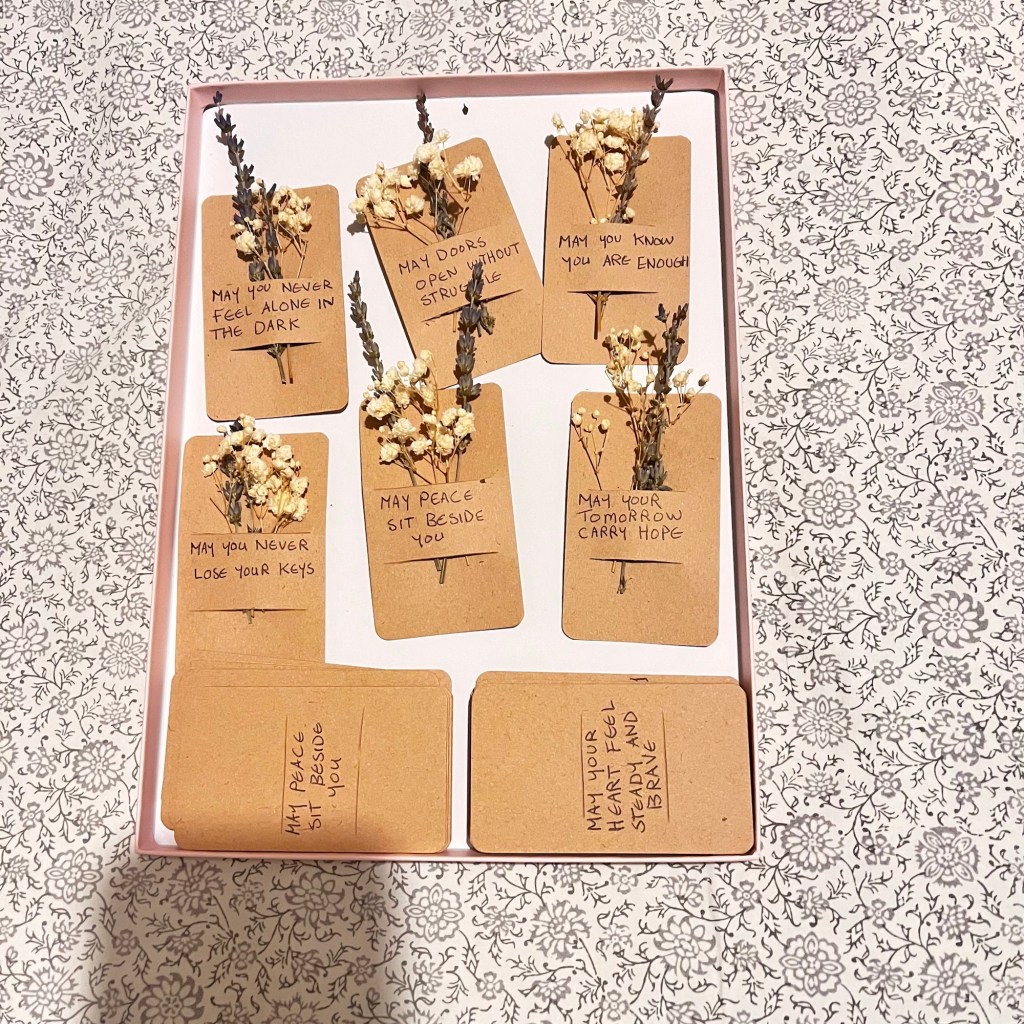
For the cooking session I invited an Iranian chef to lead a workshop where we prepared a vegetable curry. Participants from the Kitchen Library, mostly local English speaking volunteers, joined colleagues and other volunteers. People cooked together, shared food, and stayed to talk before leaving. Later that day I prepared small blessing cards for the following evening.

The next day my colleague Niamh, artist and producer for the Kitchen Library, and I went shopping for ingredients and refreshments. Back at the library we started preparing the meal. Niamh made stuffed dates for dessert. I cooked a vegan curry and bulgur while Greg and Joe helped with preparation and logistics. At the same time we rearranged the library space so it felt less like an institutional environment and more like a shared domestic space.

By the time the guests arrived everything was ready. Before breaking the fast I welcomed everyone and spoke briefly about Ramadan. I also shared this small story:

Recently I called my sister to ask how the first day of Ramadan had gone. She told me that her youngest daughter 4 yrs old  saw the dinner table prepared and suddenly asked “Where is he?” They asked, “Who?”.. She replied, “Ramadan! Everything is ready.. Why hasn’t he arrived?” 

For my niece, Ramadan was not an abstract period of time..it was a guest expected at the table!

In many ways this reflects how the month is often experienced. People prepare for it, welcome it, and look forward to its arrival. In Arabic we say Ahlan Ramadan. The phrase comes from Ahlan wa sahlan ( أهلا وسهلاً) which has been used to welcome guests in Arabic culture for centuries.

It is often translated as “welcome”, but the meaning is deeper. Ahlan comes from ahl (أهل) meaning family. It suggests that the guest is not a stranger but someone among their own people. Sahlan comes from (سهل)sahl, meaning ease or smooth ground. It suggests that the path between host and guest should be easy and open. Together the phrase expresses a form of hospitality that goes beyond politeness. It means you belong here and this space is open to you. Another common greeting is (مرحبا)marhaban. The word comes from (رحب) rahb, meaning wide or spacious. It also suggests openness and generosity. After sharing this, I invited people to say “welcome” in their own languages. We heard it in Chinese, Dari, Farsi, Urdu, German, Norwegian, and Portuguese. This small moment helped set the tone for the evening.

Ramadan is the ninth month of the Islamic lunar calendar, and fasting during this month is one of the five pillars of Islam. From before sunrise until sunset, Muslims do not eat or drink.. They also avoid smoking and intimacy. Not everyone fasts, children, people who are ill, elderly people, pregnant or breastfeeding women, women during menstruation, and travellers are exempt.

The fast is usually broken with dates and water. After a long day without food or drink the body returns to eating slowly. But fasting is not only about the body. It is also about awareness. It interrupts habits of consumption and invites reflection about what we need and what shapes our desires. Hunger changes how we feel and how we see the world. It makes the body more present, but it also reminds us of people who live with food insecurity every day. For a moment the difference between abundance and scarcity becomes more visible.. This can open space for empathy!

The project worked with the fragile conditions through which community is formed. Cooking, waiting, and breaking the fast together created a pause in everyday life. For a short time the library changed from an institutional space into a shared domestic space shaped by the people who were there. The iftar was not only an event. It became a temporary social form created through shared work, food, and conversation. Even small acts of welcome can change how a public space feels, even if only for a short time.

Posted in 2025-2026, collaboration, Project, Reading, Social Sculpture, Writing

March Shared Reading

We recently started a new group in my programme called International Shared Reading, with the support of The Reader. Instead of taking the training myself, I recommended two women from my group an assistant from Afghanistan and a volunteer from Portugal to take the paid training and co-lead the sessions alongside my co-producer, while I support them where needed. I believe that our strength comes from building a strong team rather than individual effort.

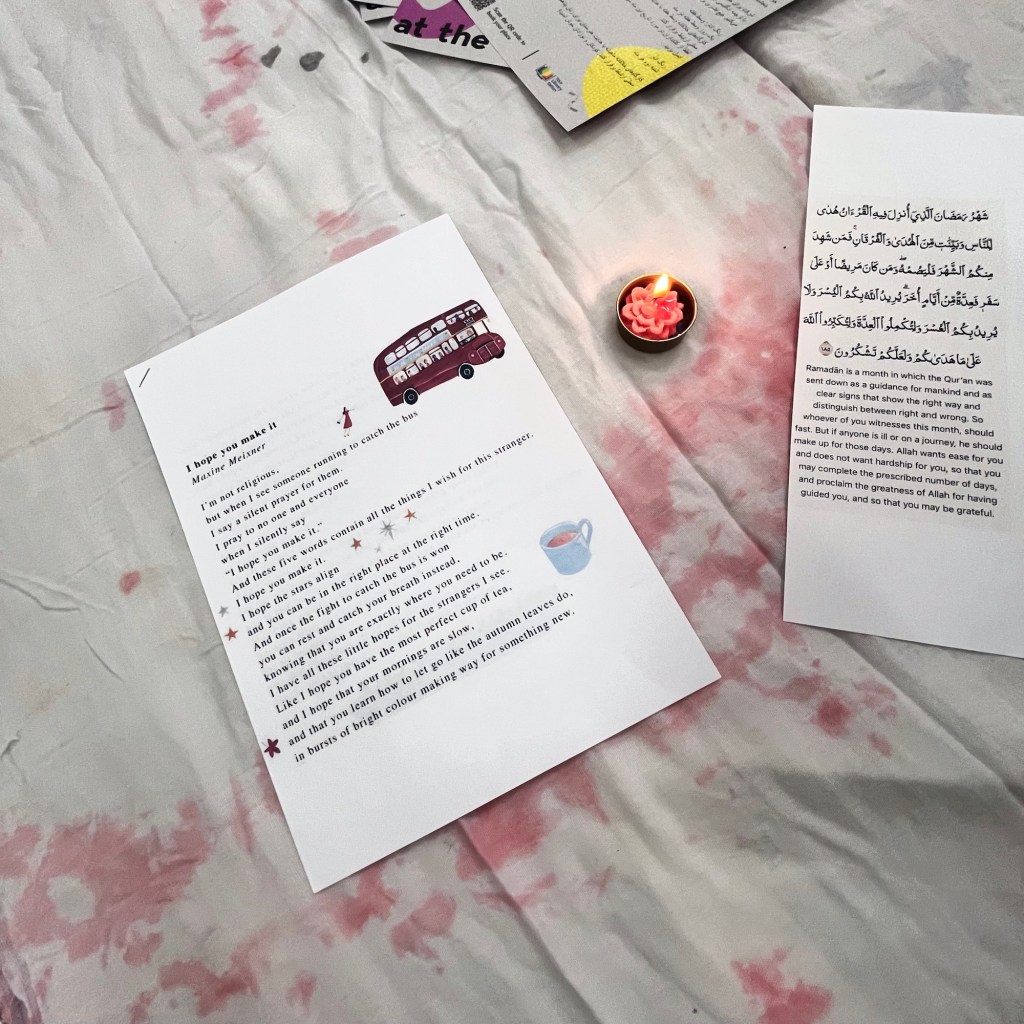
As part of the preparations for our upcoming Iftar gathering, I led a special reading session. It created a space to ask questions and learn more about Ramadan. We read a poem together, spoke about prayer, and people asked many questions about fasting and other related topics. Questions are welcome, they help clarify misunderstandings. When I went home that evening, I kept thinking about our conversation. Later, a volunteer sent a beautiful message in our group chat thanking me for the session.

The next day I decided to create small blessing or affirmation cards for our guests, inspired by the poem we read together. I Hope You Make It, a poem by Maxine Meixner, is written in a simple and beautiful way. The words can reach people without challenging them with difficult language. I spent the day writing my simple prayers and preparing the cards so I could finish them at the library the next day.

The cards are simple and decorated with flowers. I chose lavender because it has a gentle, calming scent. In a way, the cards became a small social sculpture, something guests could take with them, carrying the memory of the Iftar after they leave.

Posted in 2025-2026, collaboration, curation, Project, Research, Social Sculpture

Wedding At The Library

12/12/2025

This month I co produced a Sudanese wedding ceremony at the library. The work used a familiar civic space to hold a cultural practice that is usually private, celebratory and communal, placing it in dialogue with public life. While the process was challenging, it opened the library as a site of encounter rather than quiet consumption, attracting visitors who came not only to observe but to learn and witness together.

The project emerged from my fortnightly creative sessions at the library, which I facilitate with a group of participants to support newly arrived women and children to connect, settle in Bootle, make friendships and practise English through informal and collective activity. These sessions operate as a slow infrastructure of care rather than a fixed outcome. The wedding ceremony was not pre planned by me, but proposed by the Sudanese women themselves, who expressed a strong desire to share their wedding traditions.

My favourite clip shows a library visitor dancing at the back with a child

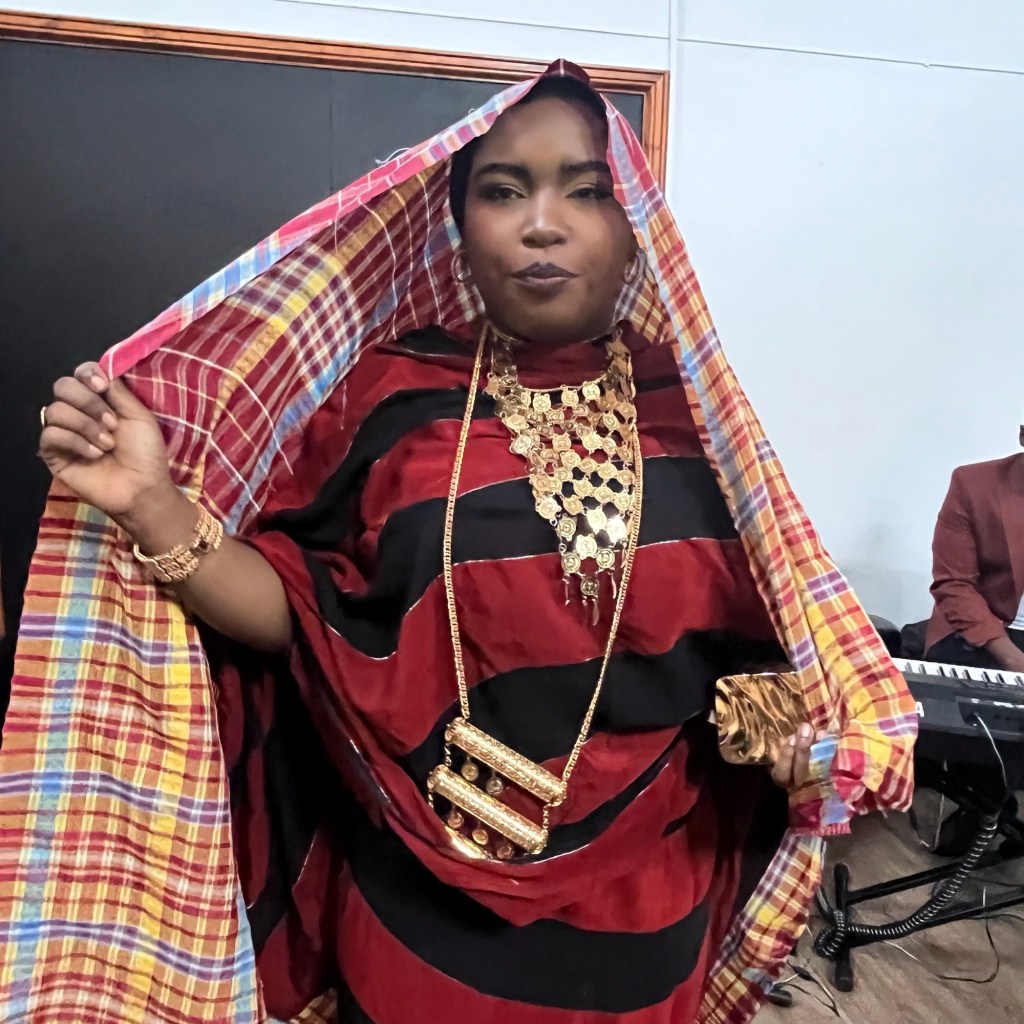
At a time when Sudan is experiencing profound political and humanitarian crisis, my role was not to represent suffering but to create conditions for self representation. Social sculpture, in this context, becomes an ethical practice of listening, redistribution of authorship and trust. Two women developed the idea of the ceremony, another joined to perform the pride ritual wearing traditional jewellery and clothing, while a Sudanese musician volunteered to provide live music. A young filmmaker offered to document the event, and participants brought desserts to share with guests. Each contribution shifted the work further away from individual authorship and towards collective agency.

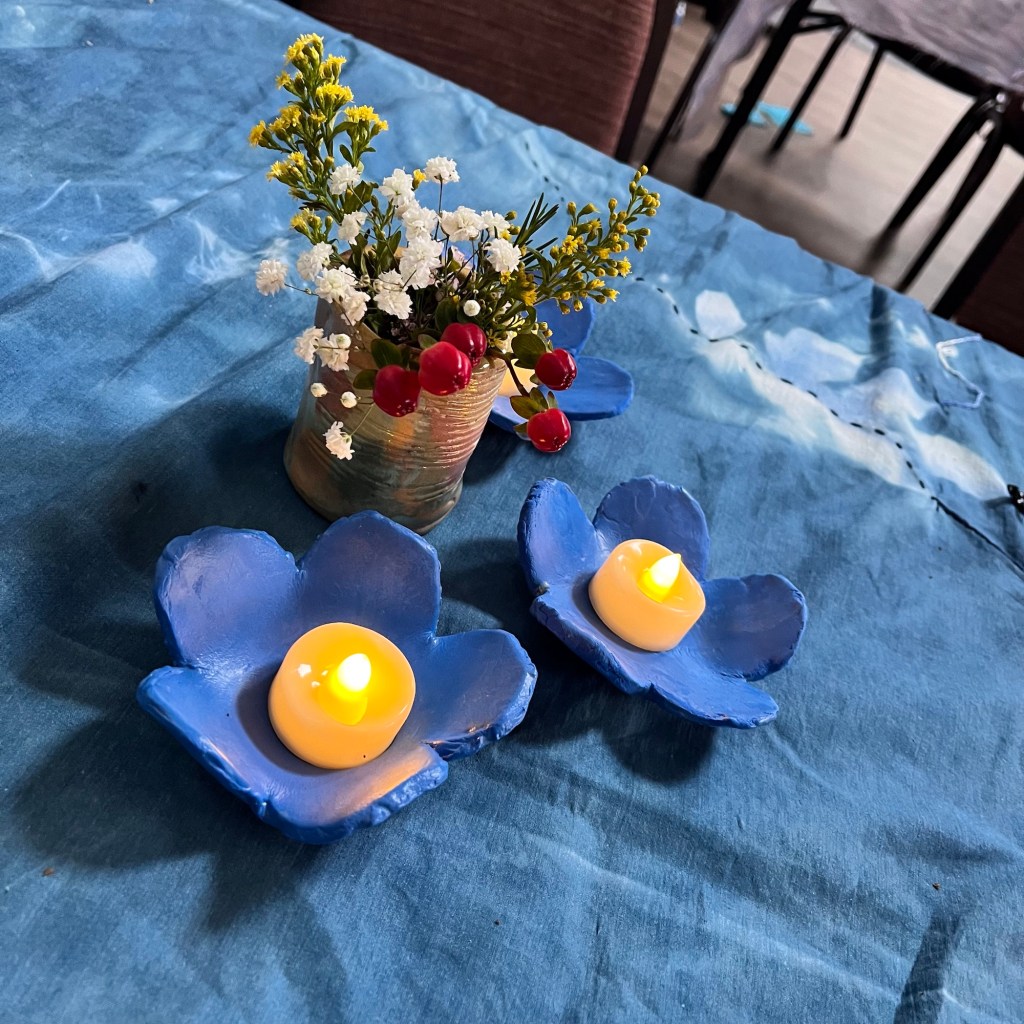
The material and practical elements of the event were equally collaborative. My colleagues from the Kitchen Library, Niamh and Greg, cooked a Sudanese ful recipe alongside one of our Sudanese participant and other regular volunteers. In an earlier session, we made tealight candle holders specifically for the ceremony. A young native English speaker asked to help, so I invited her to lead a simple workshop using air dry clay. This gesture disrupted assumed roles of helper and helped, positioning participation as reciprocal rather than charitable.

The work required shared energy and care, particularly during a period when I was navigating significant personal challenges. It would not have been possible without collective support, especially from artist Joe Goff, who co produced the programme with me. Social sculpture here is not symbolic but logistical, emotional and temporal, shaped by availability, exhaustion and trust. It asks not what is produced, but how people are held, and what it means to be human here and elsewhere.
The audience reflected a wide range of cultural backgrounds, with many people wearing traditional dress. What continues to surprise me is that white, native visitors often attend these gatherings in greater numbers than people from the global majority. Their presence is marked by curiosity and attentiveness, contradicting dominant narratives that frame cultural difference as a threat. The work quietly resists fear by offering proximity, time and shared experience rather than explanation.
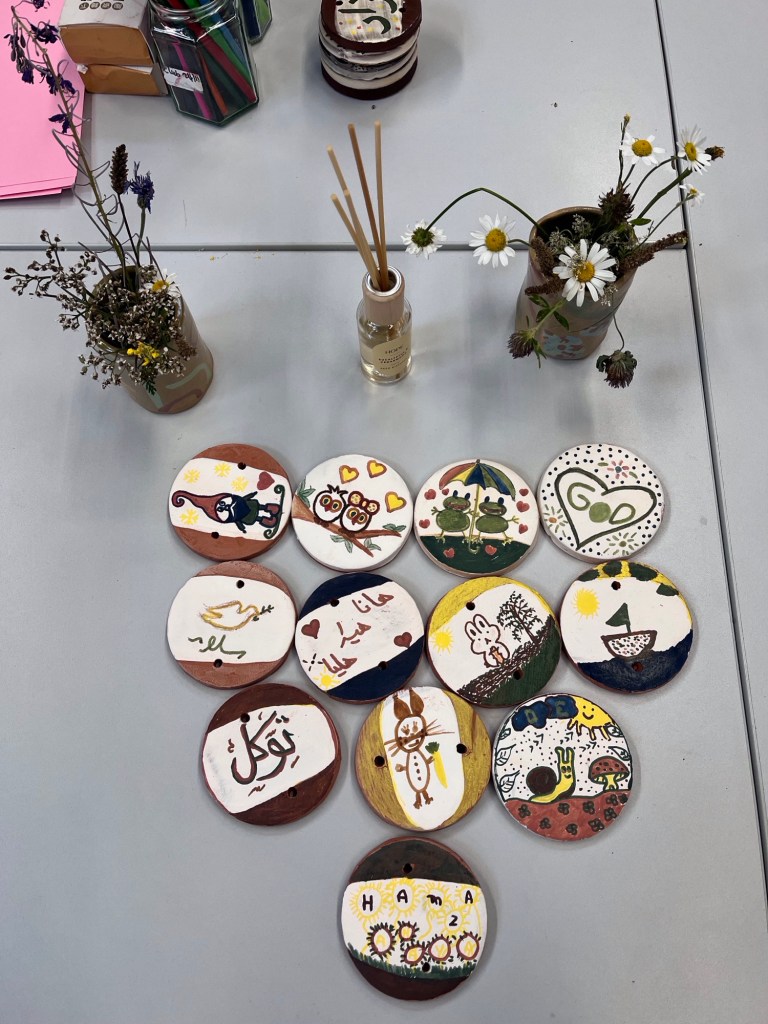
This approach connects to last year Iranian celebration I produced at the library during a period of heightened political tension. Food prepared by an Iranian participant and an Iranian chef, including vegan rice and saffron pudding, was shared alongside music. Ceramic coasters I had made and later decorated by women and children were placed on the tables, functioning as both objects and traces of process. 

The music and dancing marked the most memorable moment at the end of the event. The shared rhythms of Iranian, Kurdish and Afghan cultures brought people together to dance, filling the space as others looked on with quiet admiration.

Visitors, including people from the Afghan Refugee Centre and staff from Sefton Council, expressed gratitude for the experience, not as an act of hospitality delivered to them, but as a moment of living!Within my MA research, these projects operate as social sculptures that prioritise relational labour, slowness and care. They resist spectacle and instead test how public institutions can temporarily become spaces where people are not spoken about, but speak, host and shape meaning themselves.

Posted in 2025-2026, curation, Exhibitions, Experiments, Project, Reflection, Research, Social Sculpture

Last Reflection on The Right Map

As I write this final reflection on The Right Map, I can see how many threads hold this project together. There is the community garden that Tom Doubtfire leads with steady optimism. There is the fundraiser that Tom and I organised as members of Ghost Art School, with generous support in kind from The Bakery in Liverpool. And there is the final day itself, which happened only because of the effort and kindness shown by Rory Macbeth, there was no funding and no safety net, there were only people who care and people who give far more than anyone could fairly expect.

The Community Garden

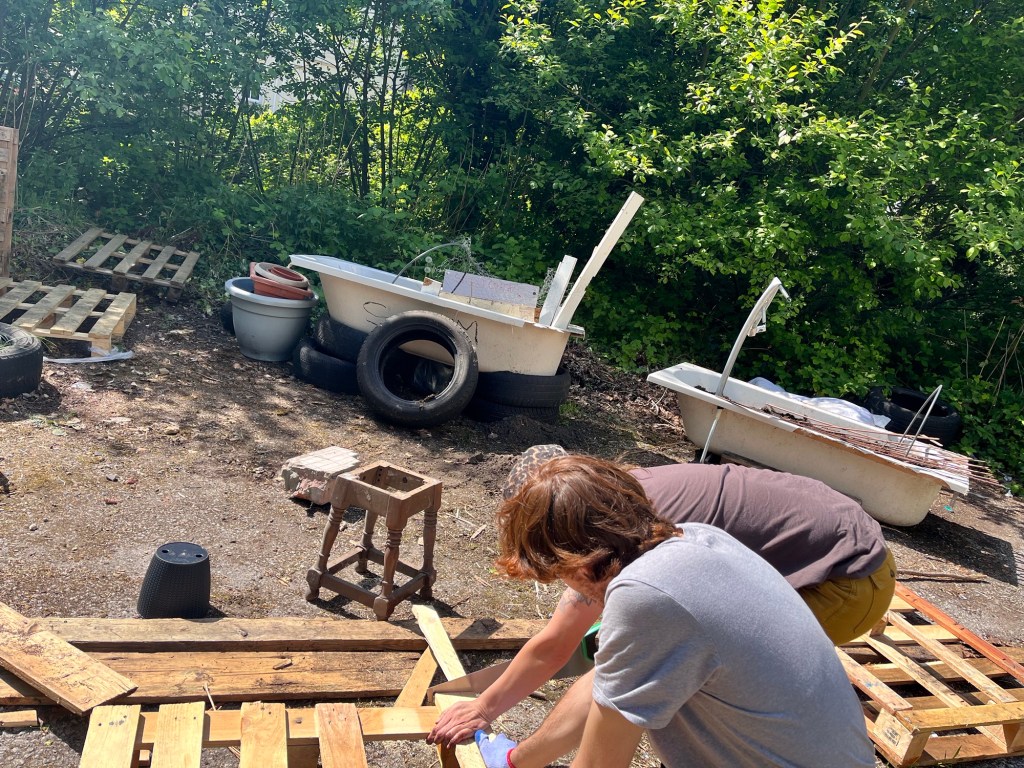
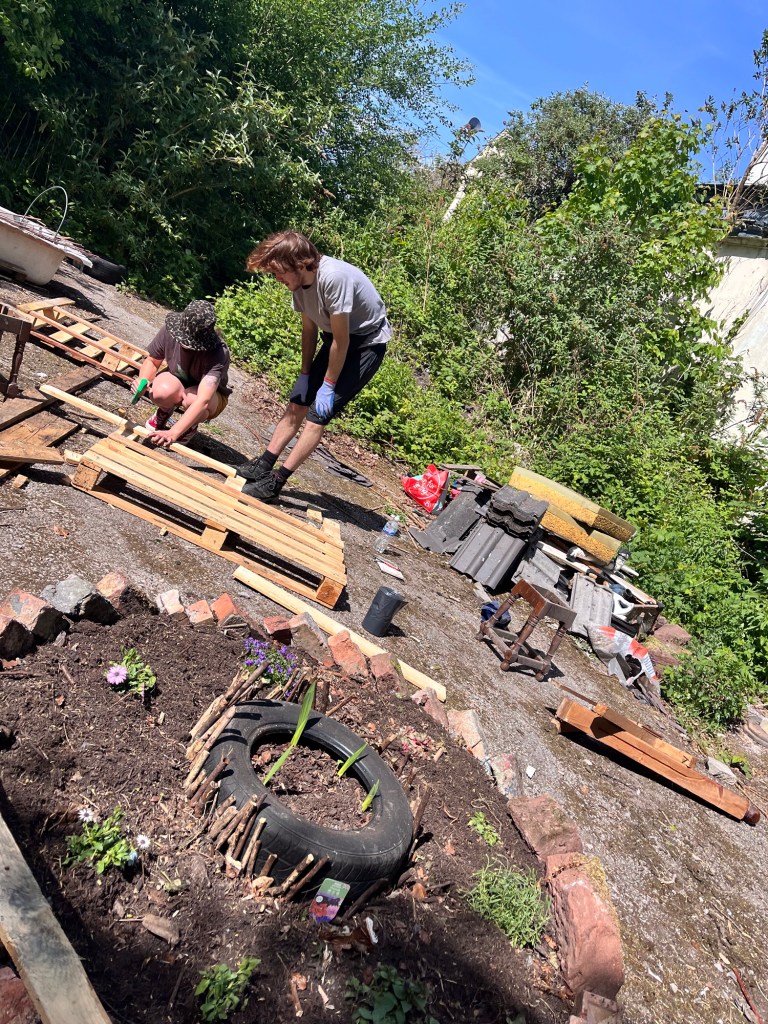
The garden at the old social club-Kensington was meant to be a shared space, a place for people to grow food, spend time, and reclaim something green together. We cleaned it again and again. We cleared rubbish, made plans and planted possibilities… Yet there were days when I felt defeated. Rubbish would reappear as soon as we removed it.. Things were stolen! Many times it felt as if the effort was swallowed by indifference!

But Tom is different.. He keeps turning up with a sense of commitment that is both hopeful and stubborn. He holds a belief in slow change that I respect deeply and I’ll continue to support him, not only as a friend but as an artist I respect.

Fundraising as a Collective Gesture

The fundraiser at The Bakery was a small moment when collective energy came together. With the help of visitors, friends, and many acts of generosity, we raised £300 for Thamara Organisation.

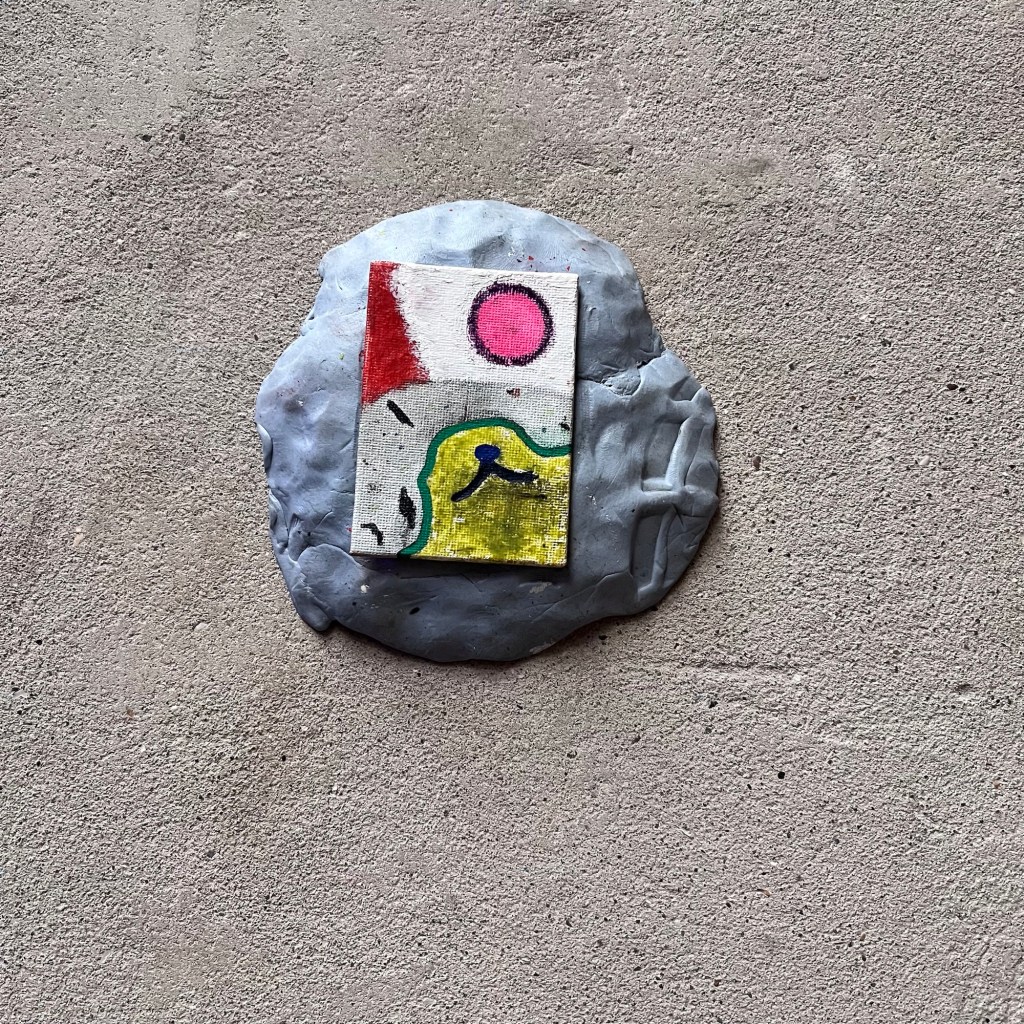
The rooms held an installation by Tom D, inspired by the community garden. There were drawings made by children in previous workshops Tom led. There were my political ceramics. There was a tiny painting by Tom Kelly, fixed to a huge blob of blue tack. There were paintings prints by Alison Reid.

And from food sales and prints and T shirts that I printed, some showing the map of Palestine and others carrying the Ghost Art School logo designed by Rory Macbeth, along with extra donations, the amount slowly gathered. It felt modest, but it carried meaning. It was a gesture of care that reflected the spirit of The Right Map.

The Final Day: Unstable 4 

The final day of The Right Map was full of beautiful chaos.. I was working in other side at Crosby Library until the afternoon for a Liverpool Biennial event with the collective DARCH, so I arrived with no time to prepare anything special. Once again it was Rory who brought the day to a close and who held everything together with calmness and capability. I will not forget the amazing large carousel installation by Marie-Sofie Braune, who is now doing an MFA at CSM. It arrived from Germany and was too large to ship at a reasonable cost, so Rory travelled to deliver it and installed it.

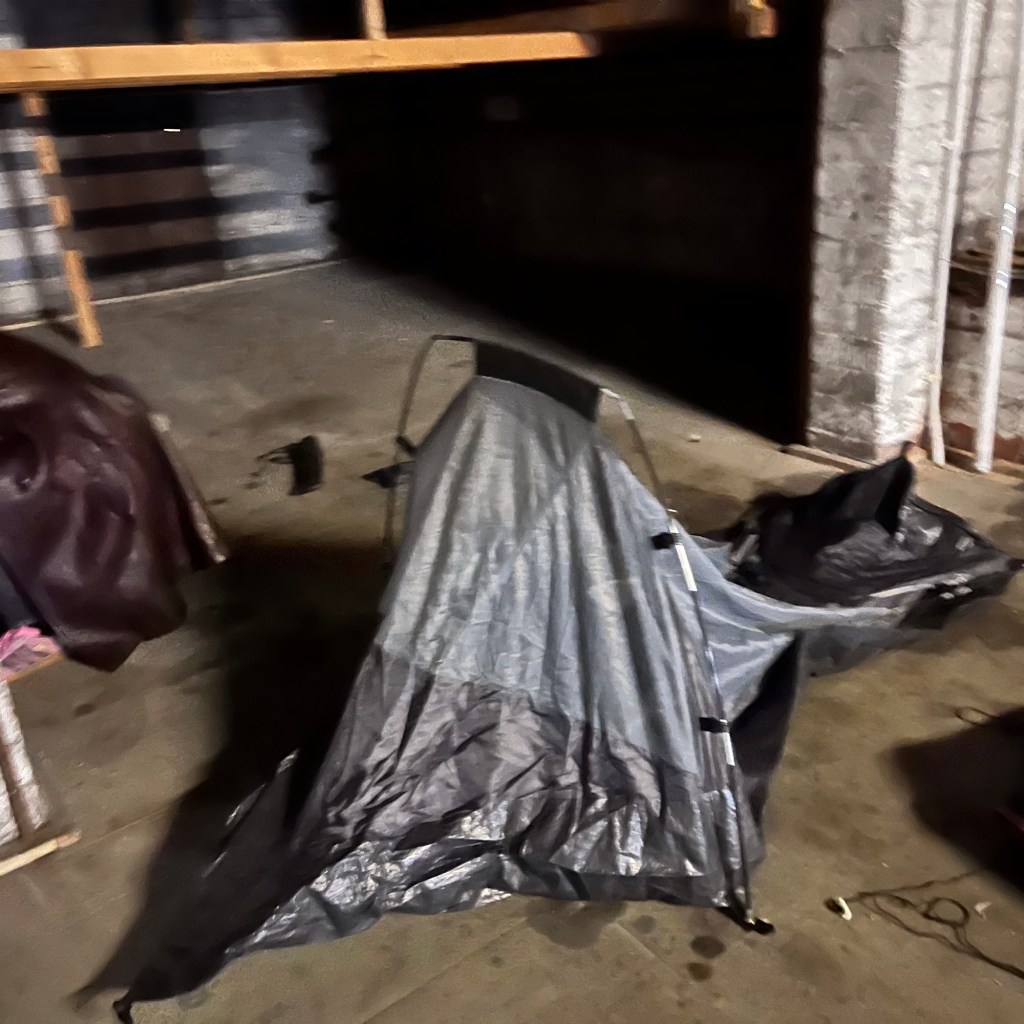
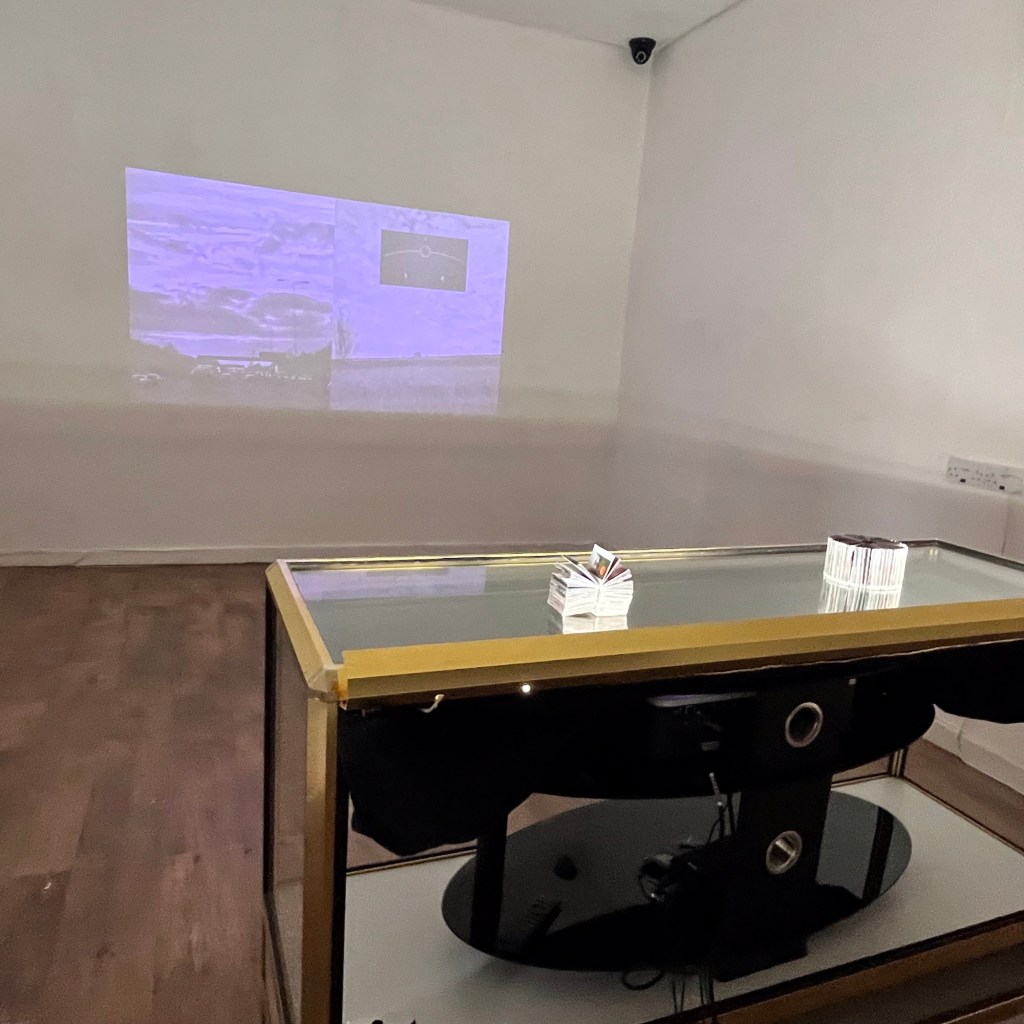
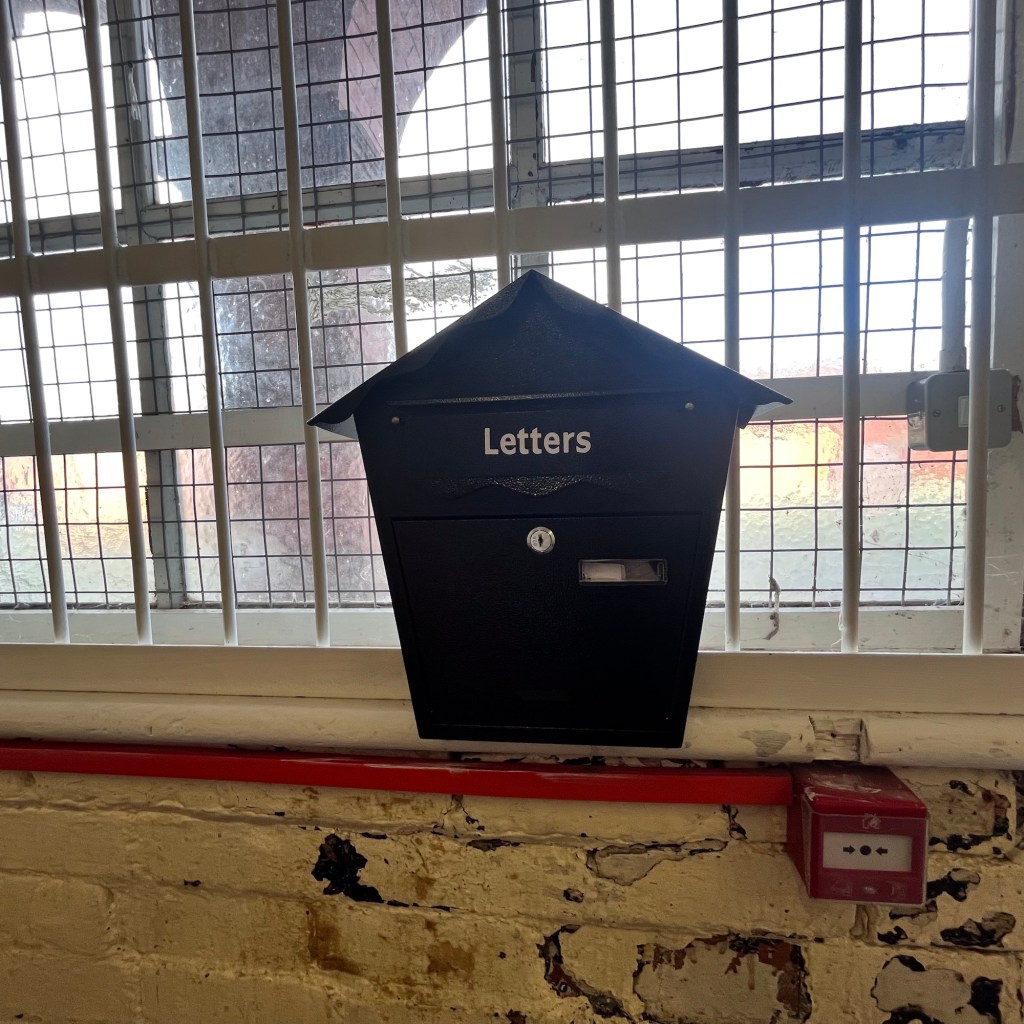
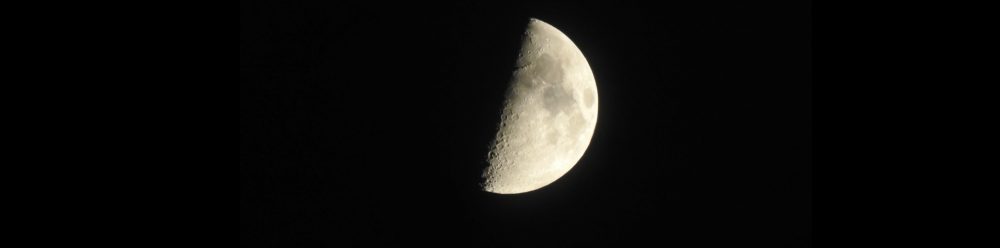
As Rory described it, the event became:“Unstable 4. The final event of Unstable at Port Sunlight fully embraced instability. A broken fever dream of a fairground carousel, a car trying to get into the gallery while playing dislocated tape loops, surplus images spat out of a machine, surplus films looping, noise performed, letters to the moon, records playing off centre, photographic sculptures hiding in half light, one to one performances in a tent.”

Somehow all of this disorder made sense. It was the right ending to a project that was never about polish but about presence. It showed what happens when artists, friends, and communities choose to take action even when resources are limited, even when schedules do not match, and even when the project is held together by human effort rather than funding.

Finally, The Right Map did not map places. It mapped relationships, labour, generosity, frustration, and persistence. It mapped the hidden work that supports community spaces and the unstability that becomes a creative method rather than a barrier.

The Right Map artists: Alison Reid, Alma Stritt, Charli Kleeman, Chelsea Johnson, Chris Roberts, Colm Moore, Conner Browne, Cos Ahmet, Danielle Freakley, David W Hicks, Eleanor Capstick, Finn Roberts, Gary Finnegan, Gwendolin Kircali, Halyna Maystrenko-Grant, Hannah Browne, Harriet Morley, Igor Prato Luna, Jasmir Creed, Jessica Crowe, Karema Munassar, Lily Patricija, Mai Sanchez, Marie-Sofie Braune, Molly Lindsay, Molly Mousdell, Phoebe Thomas, Priya Foster, Ritu Arya, Rory Macbeth, Sonic Relics, Theodora Koumbouzis, Tom Doubtfire, Tom Kelly, Valentina Passerini, and Xueying Zhang 

Posted in 2025-2026, collaboration, curation, Project, Reflection, Social Sculpture

Tablecloth for a Feast at the Library

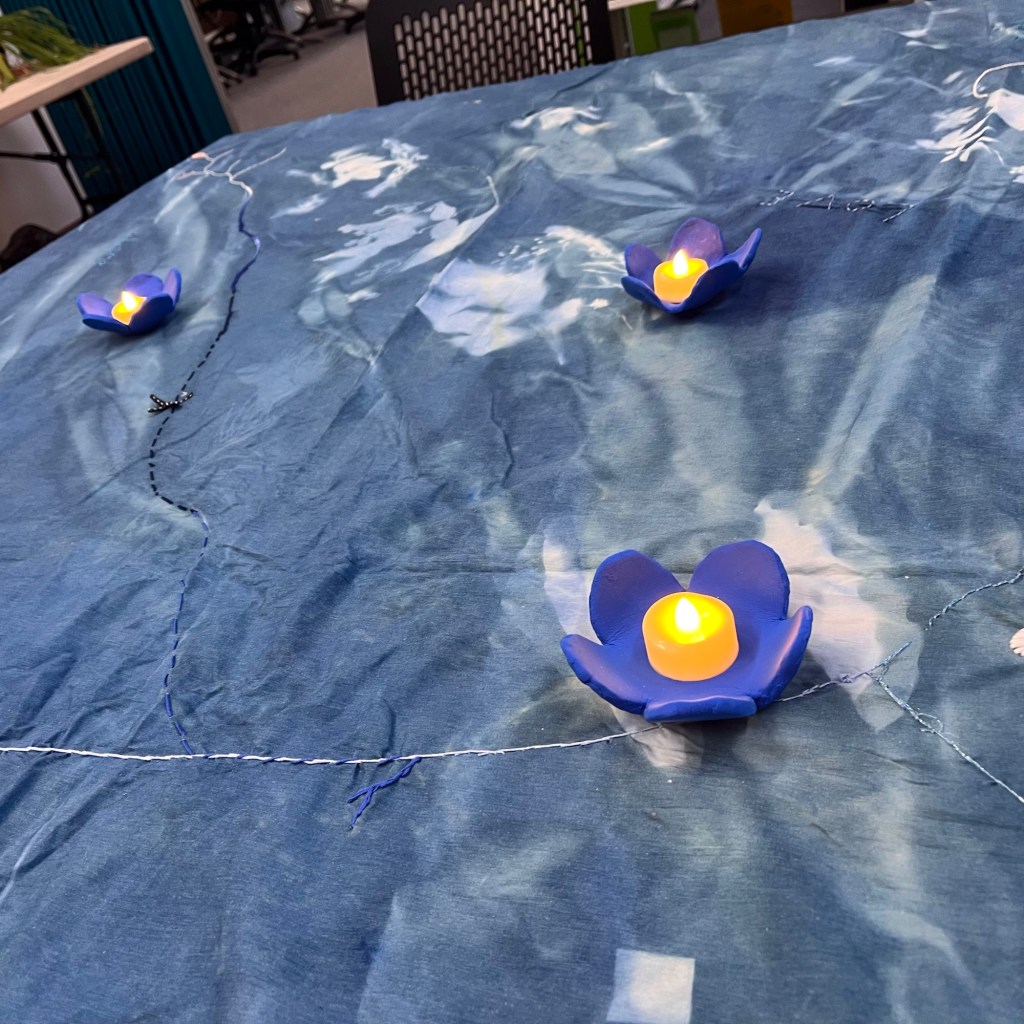
In the summer, I coated large pieces of fabric (a single bed sheet) with a light sensitive solution and left them to dry in a dark room. After a few days, I invited participants from a group of women and children to a cyanotype workshop. We used plants and flowers collected during the library’s foraging sessions led by Kitchen Library artists George Herbert and Niamh Riordan, and artist in residence Hannah Fincham, linking our work directly to the local environment.

When the fabric was laid out under the sun, the women and children carefully arranged the plants, holding them down with stones and found objects. Leaves, stems and other gathered items became areas of negative space, and the sunlight painted around them. After rinsing the fabric in water, deep blues emerged, revealing the delicate silhouettes of each plant. For many in the group, particularly those who had recently arrived in the UK, this process offered something simple and grounding. Cyanotype is slow and gentle. It does not require previous artistic training or a shared language… The sun does most of the work!

In a second workshop, we returned to the dried and cured cyanotype cloth, now covered with ghostly plant impressions. The women and volunteers stitched messages into the fabric, simple words that carried enormous emotional weight such as Love, Welcome, Root, We Are Here, along with others that expressed hope and belonging. These stitched messages felt like offerings, small acts of care placed directly into the surface of a communal object that would later host a shared meal. For many of the refugee participants, displacement, uncertainty and cultural disconnection are part of daily life. Embroidery, however, is familiar across so many cultures. Hands know how to hold fabric, how to push a needle through, how to make a mark that lasts.

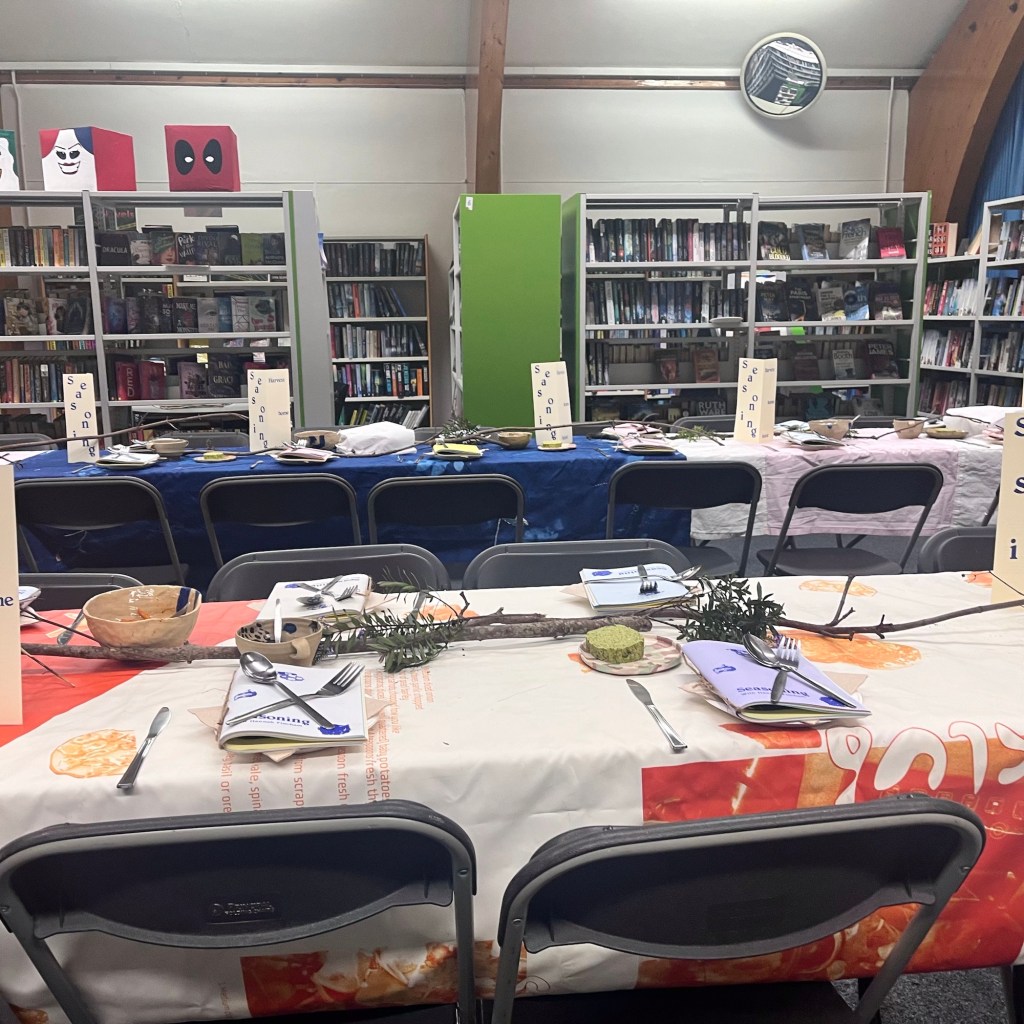
Finally, last week on Friday night we had a feast in Bootle Library. The tablecloth ran along the length of one of the tables reserved for my group. It carried the plants of Sefton, the light of our summer workshops, and the stitched words of women and children who are rebuilding their lives. Seeing it in place, surrounded by food, conversation and the warm buzz of At the Library’s artists and team, was profoundly moving. I wanted to reflect on it because it is so connected to my social sculpture research and my own practice. I felt it reflected much of what we do at the library and echoed what Jonathan taught us last week about Contact Zones. The library is, for me, the clearest physical Contact Zone.

Working alongside colleagues, each contributing their own talent and care, reminded me how these projects are held in harmony by many hands. The feast was not about showcasing artwork, it was about celebrating community, connection and the slow work of building trust through creativity. The feast project by the Kitchen Library feels to me like a multilayered social sculpture. It unfolded across different times, places and relationships. Each layer held a different group of people including colleagues, refugee women, children and artists in residence, and each contributed something unique such as their labour, their stories, their presence and their materials.

The tablecloth project deepened my understanding of social sculpture and care through art. More importantly, in a time when many communities are fractured, the involvement of refugee women and children revealed how creativity can bring us together, even if only for a moment. The tablecloth is only one visible layer. Beneath it lies the invisible sculpture of conversations, gestures, learning, trust building, cultural exchange and the shared act of preparing for a communal feast. All of these intangible elements shaped the social form just as much as the physical cloth.

Posted in 2025-2026, collaboration, curation, Exhibitions, Project, Reflection, Research, Social Sculpture

Account Not Recognised- Reflection of The Right Map

Account Not Recognised at Birch in June was part of The Right Map programme by Ghost Art School. The exhibition took place in the Hamilton building, which was once a bank. This setting shaped my thinking about the title and the idea of value, exchange and belonging. The phrase Account Not Recognised came from my digital text piece and reflected both a technical error and a human condition. It suggested exclusion, misunderstanding and the unstable ways in which identities and actions are acknowledged or denied.

Co- curating this show was a process of collaboration and care. We wanted to create a space that could hold protest and rest, activism and absurdity, humour and exhaustion. The title Account Not Recognised came from the familiar digital message, but in this context it became about being unseen or misread, and about the tensions between visibility and erasure.

My own contributions included a pillow, a fragment of wall text and a digital LED display. The pillow was printed with an image found online showing a crowded boat of migrants at sea, overlaid with a pixelated speech bubble saying “HELLO”. It appeared soft and domestic, yet the image beneath disrupted that comfort. The LED panel displayed inverted scrolling red text Account Not Recognised and the wall text read “Dear Moon, The war has sto…” and referred to my Dear Moon project. It was a sentence left unfinished, a letter that could not be completed…

In the centre of the gallery stood a large boat containing soil and growing sunflowers. The boat came from the Kensington community garden project by Tom D and functioned as a living sculpture. It was both landlocked and adrift, a fragile symbol of movement, care and survival.

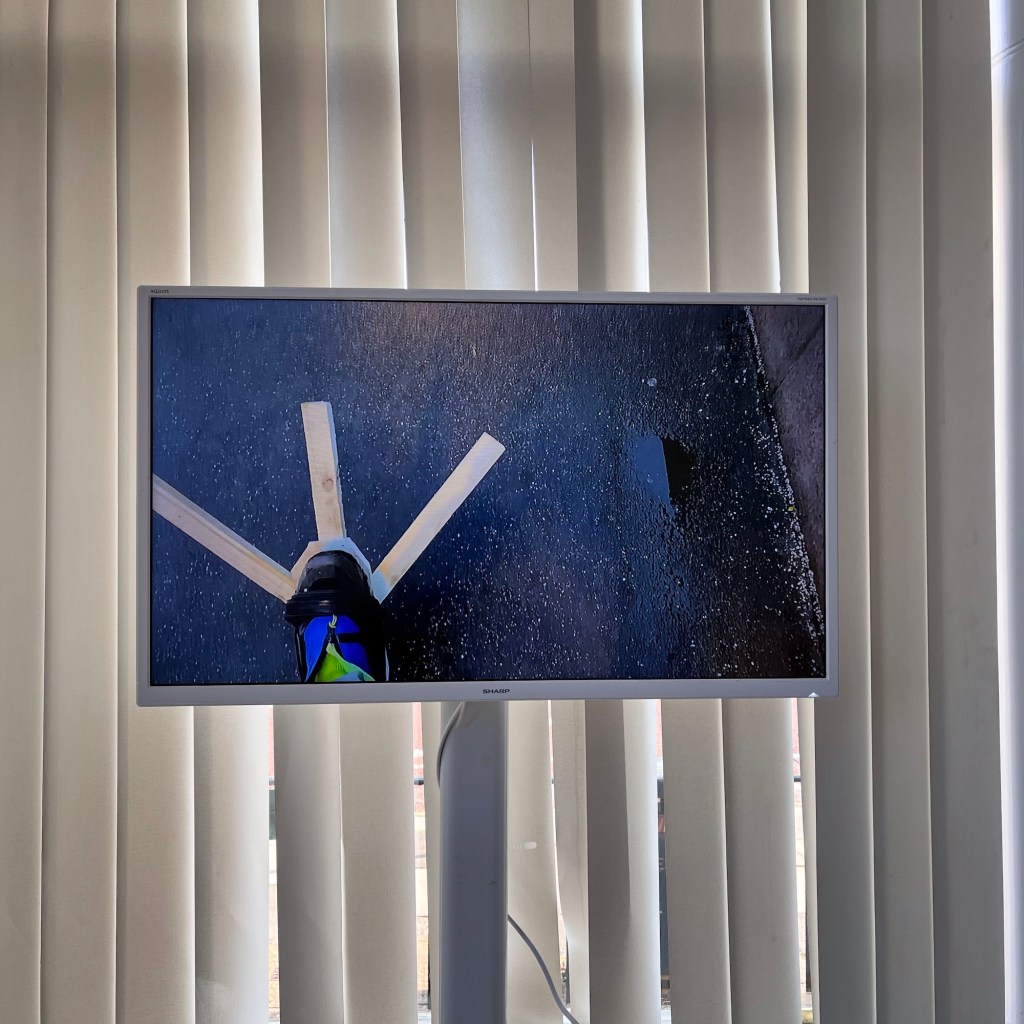
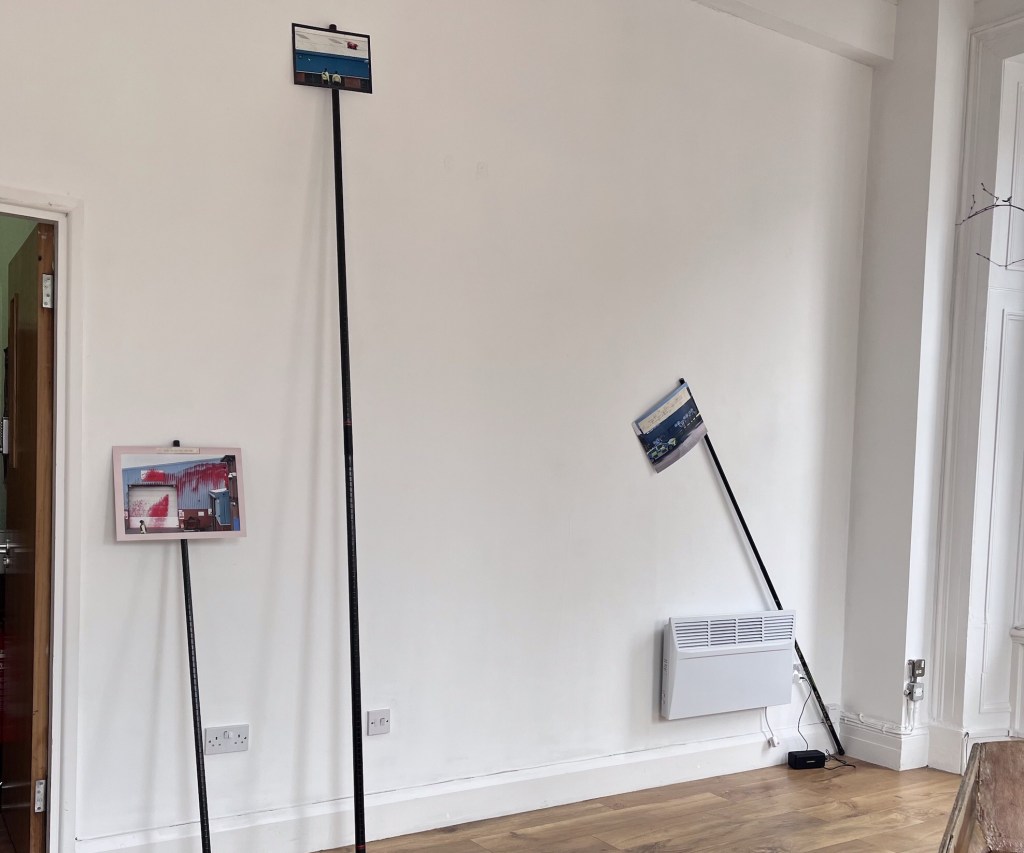
Other artists’ works brought further layers to the exhibition. Rory’s video showed a chicken foot strapped to his shoe, filmed during a protest in Russia on the second anniversary of the invasion of Ukraine. It was a quiet but powerful gesture that turned absurdity into endurance. Tom D’s photographs documented a Palestine Action protest at the Elbit Systems site in Oldham, where activists succeeded in stopping the production of weapons for the Israeli military. The red-stained facade of the building became both a wound and a mark of resistance.

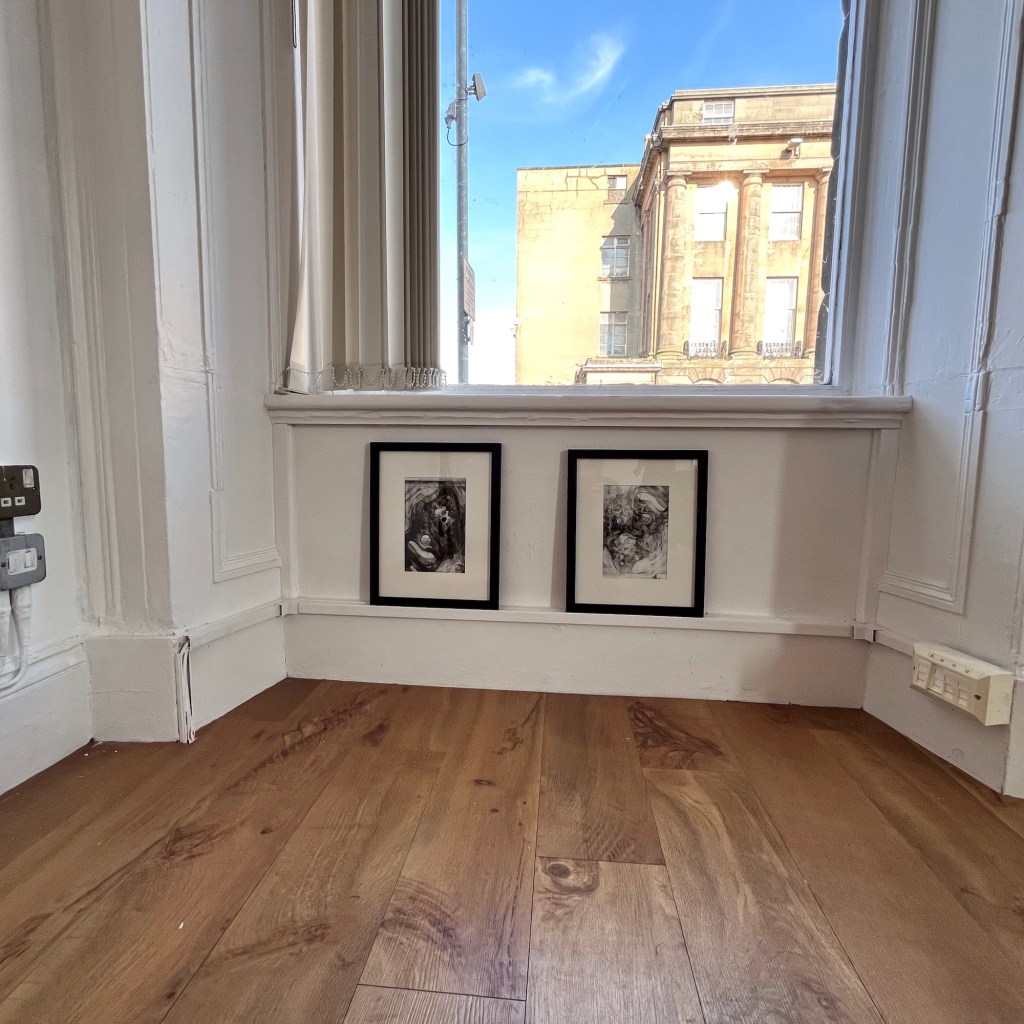
Molly’s black and white drawings added a more abstract presence.. Lily’s film, projected inside a small metal alcove, appeared to be caught mid-edit, reflecting on itself as it played.

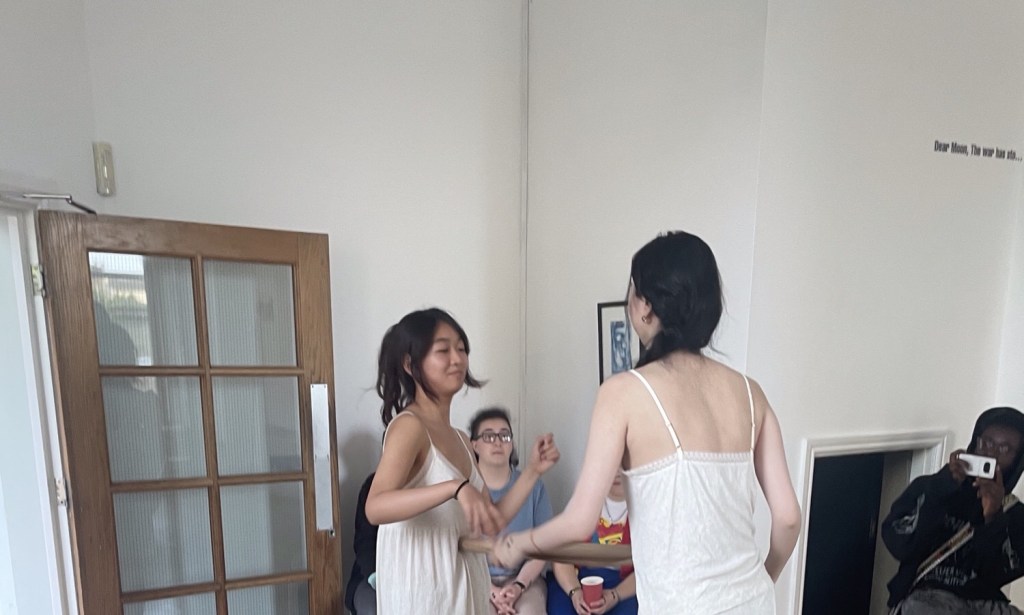
Two live performances took place on the opening night. Soop, by Hannah, Marie and Tom K, involved the audience in making a communal soup. It was messy, generous and unpredictable, reminding me of how collaboration relies on trust as well as misunderstanding. Xueying Zhang’s performance with her collaborator involved holding a cardboard pole between their bodies while slapping each other. It expressed the tension between cooperation and conflict, both intimate and absurd.

The work here whether documentary, performative or digital, asked what it means to be recognised and what is lost or gained in that process. It confirmed my interest in social sculpture and the politics of communication.

Finally, recognition is never simple or complete, yet within its uncertainty there is always room for empathy..

Posted in 2025-2026, collaboration, Exhibitions, Project, Reflection

The Right Map Reflection: Communication Through Hands

I showed a new work in the group exhibition Slip Stream at CBS Gallery 1st July , curated by Phoebe Thomas. The curatorial framework set us an unusual challenge: each artist was given a 50-word anonymous biography of another contributor. Without names, without identities, we had to respond to these fragments and create a work that became, in some way, a conversation.

My response was a sculpture that invited people to communicate through their hands. The idea began with a conversation I had with my tutor, Jonathan, about how deafblind people often use touch as their primary language. That image stayed with me, of words transformed into hand movements, of dialogue carried through the skin.

I worked with a carpenter to build a wooden structure, box-like and slightly absurd. In fact, he thought it was a lab project at first, not an artwork. It has two circular holes on each side, just large enough for a hand to slip through. Inside, participants could meet in the middle, fingertips searching for another human presence.

What unfolded was fascinating. Some people laughed, finding the whole set-up comical. Others hesitated, uncertain about the strangeness of touching an unseen hand. A few lingered, holding on quietly as though the box had suspended time and language. I loved how the responses varied, awkwardness, tenderness, curiosity, even vulnerability.

For me, the sculpture is about the fragility of communication. We take for granted the ease of speaking or looking, but when those channels are removed, what remains? What does it mean to reach out when you cannot see or hear the other person? In the gallery, the box became a stage for these encounters: funny, intimate, and unsettling all at once.

This work revealed something important about my practice. I often circle back to questions of language, misunderstanding, and how people find ways to connect across barriers. I came to see how even the simplest gestures can be at once symbolic and deeply tangible. In its awkwardness, the sculpture echoed the curatorial task we had taken on blindly, while also reflecting my interest in co-production: an exploration of indirect connection, partial knowledge, and the fragile space between concealment and encounter.

Posted in 2025-2026, collaboration, curation, Exhibitions, Project, Reflection, Research

The Right Map – My wild Summer 

For more than three months this year, my life was consumed by The Right Map. Coordinating and organising eight shows ( Unstable 1,2,3,4, Account, Account Not Recognised, Slip Stream and In Search of Swallow and Amazon show/fundraising event) across Liverpool was a huge undertaking logistically, emotionally, and artistically. It was intense work: curating, communicating with artists and collaborators, solving problems on the spot, and carrying the responsibility of holding so many different voices together in one programme.

During the summer, I couldn’t write about it.. The pace was too fast, the demands too many, and on top of that, family responsibilities and personal challenges were pulling me in different directions. I was tired, grateful, overwhelmed, and very often carrying mixed feelings that left little room for reflection.

Looking back, I see the full image: what worked, what I loved, what was difficult, and where I grew. Writing from this distance feels possible, even necessary. I realise that part of my practice is not only in the making or the showing but also in reflecting.

The Right Map reminded me of this: the gaps, the tensions and the silences were as important as the works themselves. The experience was more than making artworks. It was about what happens when we work together, recognising where we succeeded so we can carry that forward, and where things did not work so we can avoid them in the future.

In the next posts, I want to unpack some of the moments that stayed with me: the artworks that resonated deeply, the tensions that tested me, the negotiations and miscommunications that revealed the realities of working collectively, and the unexpected joys that reminded me why I do this work.

I needed time to arrive here. To allow the intensity to pass, and to feel ready to write. Now, I can see The Right Map not only as a demanding project but as a turning point in how I think about curation, collaboration, and care in my practice..

The Right Map was a series of exhibitions presented by Ghost Art School as part of the Independents Biennial. Emerging from the spirit of Ghost Art School, it celebrated artists who move between margins, who learn in the cracks, who map their own routes when none are given.

Here, the map was never fixed, drawn in gestures, erased by time, redrawn in conversation, in defiance, in care. The Right Map asked not where we are going, but how we move… and who gets to move with us.

The Right Map 36 artists: Alison Reid, Alma Stritt, Charli Kleeman, Chelsea Johnson, Chris Roberts, Colm Moore, Conner Browne, Cos Ahmet, Danielle Freakley, David W Hicks, Eleanor Capstick, Finn Roberts, Gary Finnegan, Gwendolin Kircali, Halyna Maystrenko-Grant, Hannah Browne, Harriet Morley, Igor Prato Luna, Jasmir Creed, Jessica Crowe, Karema Munassar, Lily Patricija, Mai Sanchez, Marie-Sofie Braune, Molly Lindsay, Molly Mousdell, Phoebe Thomas, Priya Foster, Ritu Arya, Rory Macbeth, Sonic Relics, Theodora Koumbouzis, Tom Doubtfire, Tom Kelly, Valentina Passerini, and Xueying Zhang 

Posted in Drawings, Exhibitions, Experiments, Project, Reflection, Writing

Crash Test

Earlier this month, a group of us, friends/artists gathered at Birch Studios & Gallery in Wirral, for a one-night experiment we called Crash Test. Half exhibition, half crit, half scratch night. Crash Test was a place to try things out, to test-drive new work and unfinished thoughts in a space where feedback was as valued as the visuals.

The idea was simple: set up something raw, something you’re unsure about, and invite others to respond. The name Crash Test seemed fitting, not just for its visual punch, but because it captured the risk, the speed, and the impact of trying something unpolished in public.

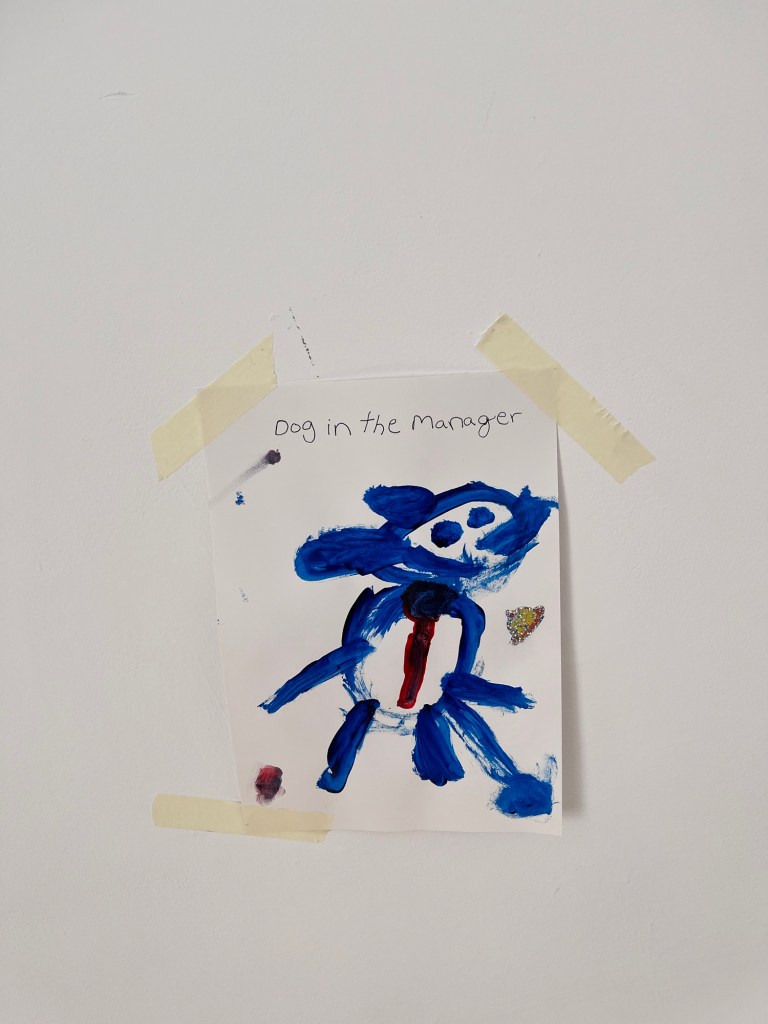
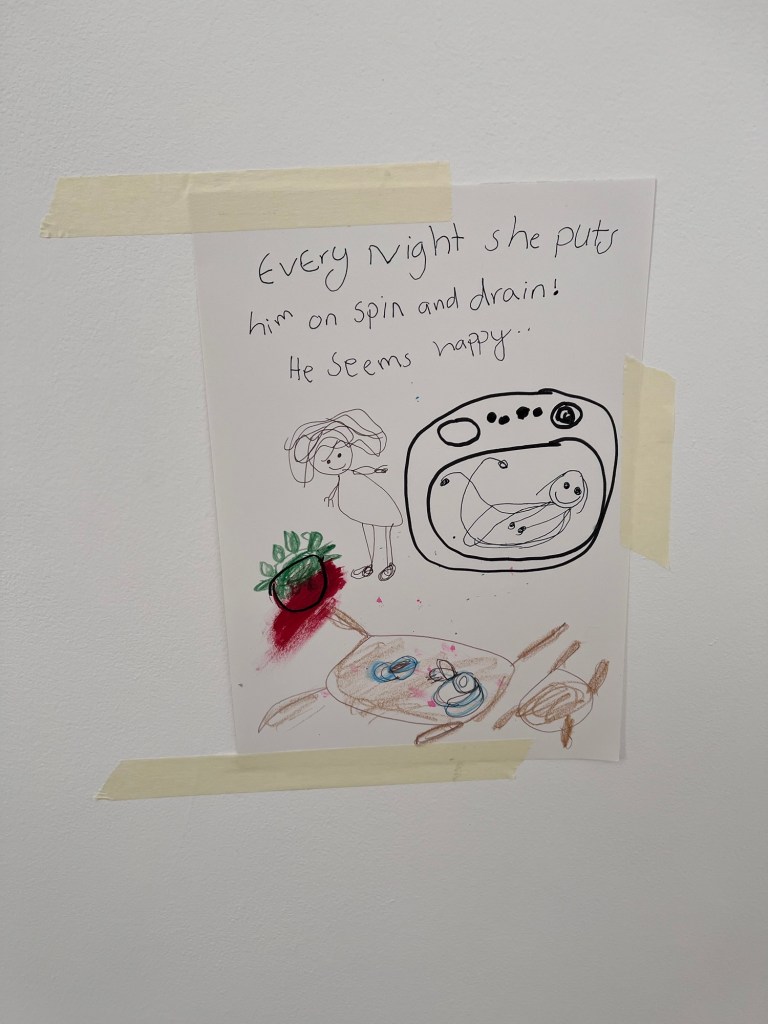
I brought along some child-like drawings, experimenting with simplicity, ambiguity, and humour. The feedback I received was encouraging, people connected with the looseness, the absurdity, and the layered messages behind the bright colours and crayon lines.

That said, for the upcoming Show ‘Unstable’ as part of the Independents Biennial, I want to develop something more dynamic and expansive, something less stable and more open-ended. I’m thinking of revisiting the Moon Litters idea. There’s something about the unpredictability of that work, the way it can shift and change over the exhibition’s duration that feels right for where I’m at now. It allows space for other voices, movements, and moments to enter.

My work 😬
Posted in Experiments, Moon, Project, Reflection, Research

Becoming an Audience to Our Own Work!

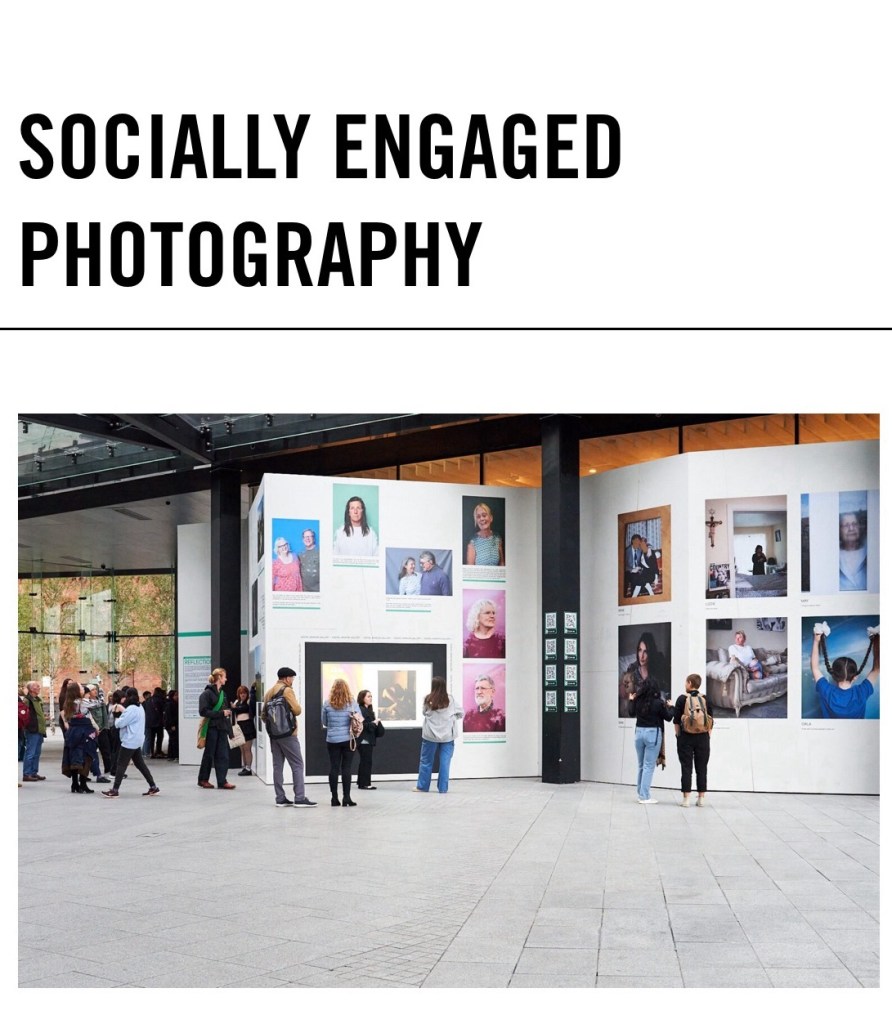
19 artists from across the country and beyond, working across different disciplines, were selected for Open Eye Gallery’s Socially Engaged Photography programme. The session began gently with an icebreaker to help us introduce ourselves and connect, opening into a space full of layered questions and open dialogue.

One phrase stayed with me: “Becoming an audience to your own work.” It’s the idea that the artist creates a framework for others to shape, leading to outcomes unknown even to them. This made me reflect on Dear Moon, a book project I designed. By the end, I felt less like its author and more like its audience. The photographs simply held space—the real substance came from the contributors’ words. Their voices carried the project forward.

In breakout groups, we explored definitions of socially engaged practice. From using art as a collaborative tool for justice (Sholette & Bass) to fostering shared understanding and personal growth (Matarasso), the emphasis was clear: this work is about people, not product. It’s about ethics, active listening, and creating conditions for transformation.

I feel genuinely grateful to have been selected for this course and to be mentored by Elizabeth Wewiora. I look forward to continuing the journey and exploring how it might help shape my research around social sculpture.