
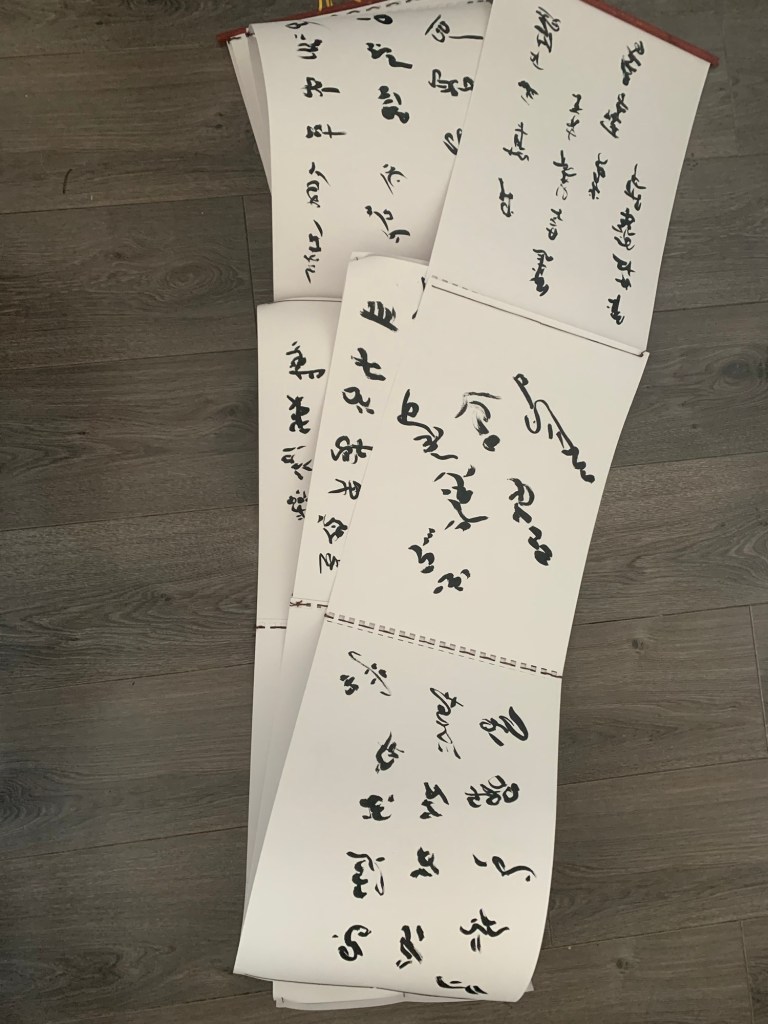
After an inspiring conversation with my MA coursemate, Josh Well, on asemic writing, I felt compelled to revisit a research project I undertook three years ago. This project delved into the intriguing realms of semic and asemic writing, semiotics theory, and examples of art that explore these ideas. My 2021 project, Blah Blah Blah Banner, sits within this dialogue, exploring the relationship between form and meaning in text and language. Through tutorials, workshops, and experiments with different materials, I examined how artists use text within art and the rich distinctions between semic and asemic writing.
Semiotics, the study of signs, opens up the boundless potential for experimenting with words and symbols. Art historian Anne D’Alleva reminds us that “signs can take many different forms” (D’Alleva, 2012, p.26), showing that meaning is both created and perceived. Here, semic writing refers to symbols or representations that carry meaning, while asemic writing is purely visual, existing outside formal language or communication.
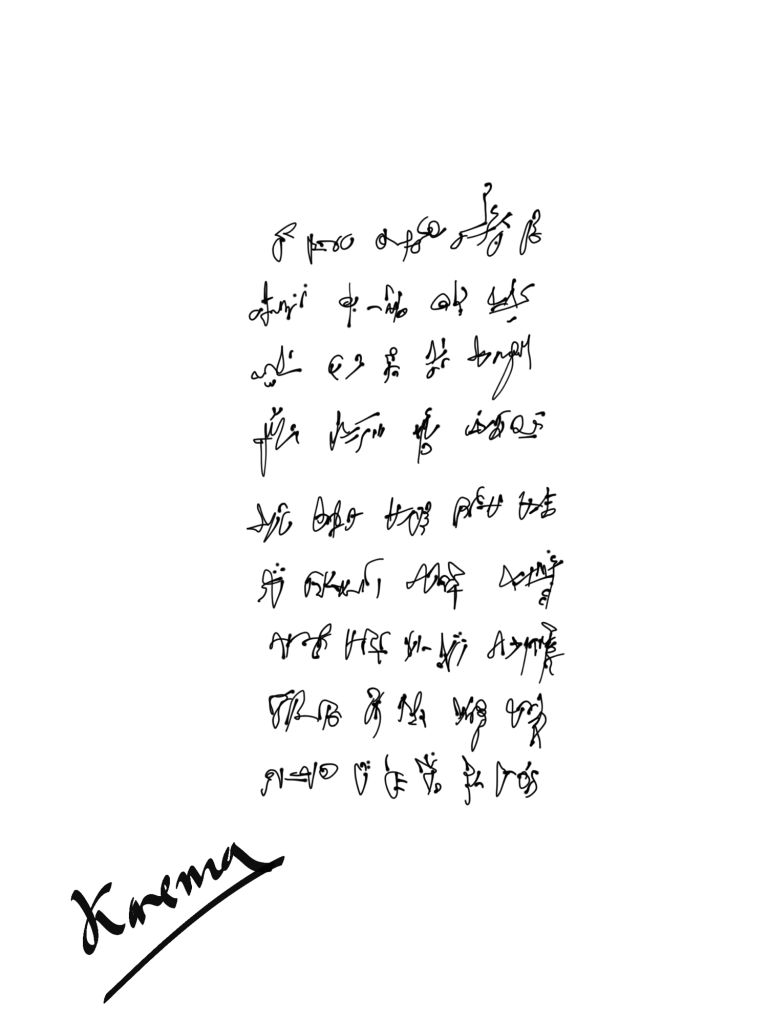
The power of asemic writing lies in its ability to transcend direct interpretation. Research by Tim Gaze describes asemic writing as any form resembling writing but unreadable to viewers, often evoking primal marks like children’s scribbles or ancient cave art. My initial encounters with asemic forms reminded me of the unfamiliarity of a foreign language—an idea I explored deeply in Blah Blah Blah Banner. Here, asemic “poems” embrace visuality without linguistic meaning, inviting viewers to interpret solely through form.
From this project, I came to realise that asemic text can convey a universal sense of expression, allowing the imagination to interpret across languages and cultures. Language may ground us, but asemic writing frees us… Each brushstroke a wordless, universal rhythm.


 Karema